

 Bekijk op ware grootte
 Verstuur
 Delen
Delen
 Details bekijken
 Gids voor studentenkunstwerken

 Download
 Vergelijkbare items
 Röntgenonderzoek
 Diavoorstelling
 Statistieken
Deposition
 Acrylic On Canvas
- WallArt
- Renaissance Classicism
 1520
1520 141.0 x 128.0 cm
 Museo Nacional del Prado
 Lees meer
Handgemaakte olieverfreproductie
Met de hand geschilderd in olieverf op canvas in uw gewenste maat en lijst, op bestelling gemaakt door onze kunstenaars. ( Schakel over naar print Schakel over naar digitale afbeeldingen)




P118B €10

P118H €10

P118W €10

P438Z €10

P508JH €12

P508YH €12

P805H €10

P805Z €10

P919BZ €10

P919G €10

P919XJ €10

P959ZH €10

P968JZ €12

W106C €8

W218G €10

W218JH €8

W218Y €10

W307PJ €10

W316G €10

W316PJ €8

W316Y €10

W398PJ €8

W4111J €10

W500HY €15

W500JH €15

W692G €12

W849H €8

W940BG €15

W953PJ €8




Kies uit onze vooraf ingestelde maten die overeenkomen met de originele verhoudingen van het kunstwerk.

Voer de breedte en de hoogte in die u nodig heeft, passend bij uw lijst of uw muur. Dit is handgeschilderd, dus bij een afmeting met een andere vormverhouding kan de kunstenaar iets meer rondom het schilderij schilderen of juist iets meer weglaten — u kiest zelf. Wij sturen u een digitaal mockup ter goedkeuring voordat het schilderwerk begint. De afbeelding die op deze pagina wordt getoond, is niet het uiteindelijke resultaat — alleen de mockup geeft dit weer.
Na de bestelling zal het team van OriginalUniqueArt.com per e-mail contact opnemen met de klant voor instructies en een mockup-voorbeeld sturen.
Wereldwijde levering () binnen 3 tot 4 weken in plaats van de standaard 5 weken. (21 oktober). Zonder concessies aan de kwaliteit.

Gratis wereldwijde expressverzending

Hoogwaardig linnen canvas

Volledige verzendverzekering

Garantie op terugbetaling van invoerrechten

Garantie op exacte kleurweergave

Retourbeleid van 100 dagen (alleen bij defecten)

100% Geld-terug-garantie

Korting bij meerdere afnames
 De optie voor glas is alleen beschikbaar bij een formaat kleiner dan 110 cm.

Deposition
Reproductiemethode
Formaat reproductie
-


Totaalprijs
€ 262
The Weight of Sorrow: An Exploration of Machuca’s Deposition
Pedro Machuca's “Deposition,” painted circa 1520-23, isn’t merely a depiction of a biblical scene; it’s a profound meditation on loss, faith, and the precarious balance between earthly suffering and divine grace. Born in Toledo during a period of burgeoning Renaissance fervor – a time when classical ideals wrestled with emerging humanism – Machuca was deeply influenced by the artistic currents flowing from Italy, particularly the Venetian masters who championed rich color and emotive expression. This painting, housed within the Museo Nacional del Prado in Madrid, stands as a remarkable testament to his ability to synthesize these influences into a uniquely Spanish style.
The scene itself is instantly arresting: Christ’s lifeless body, carefully lowered from the cross by figures identified as Joseph of Arimathea and Nicodemus, dominates the composition. The stark contrast between the cool blues and purples of the night sky – a deliberate choice that evokes both sorrow and the promise of resurrection – immediately establishes a somber mood. Machuca masterfully employs a flattened perspective, characteristic of the period, to heighten the emotional intensity. Figures are rendered with a certain schematic quality, their faces conveying raw grief rather than striving for photographic realism. This stylistic decision underscores the painting’s focus on expressing profound feeling over meticulous detail.
A Window into 16th-Century Spain: Context and Influences
To fully appreciate “Deposition,” it's crucial to understand its historical context. Machuca was working in Granada, a city still reeling from the recent Reconquista – the Christian reconquest of Spain from Moorish rule. The painting reflects this complex cultural landscape; while rooted in Christian iconography, there’s an undeniable echo of the opulent and decorative styles prevalent in Islamic art, subtly integrated into the composition through color palettes and architectural elements. Machuca's association with Michelangelo and Pontormo, figures known for their expressive use of color and dynamic compositions, further illuminates his artistic lineage.
Furthermore, Machuca’s work emerged during a period of intense political and religious upheaval in Spain. The Spanish monarchy was consolidating its power, and the Catholic Church held immense influence over all aspects of life. The painting's solemnity and focus on Christian martyrdom resonated deeply with this prevailing atmosphere of piety and national identity. It is believed that Machuca’s work was commissioned by Doña Inés de Castillo, a noblewoman who had recently lost her husband.
Symbolism and Emotional Resonance: A Study in Human Suffering
The painting is rich with symbolic detail. Mary Magdalene, kneeling at the foot of the cross, embodies maternal grief – her posture conveying an almost unbearable sorrow. The figures surrounding Christ are not simply witnesses to his death; they represent humanity’s collective response to loss and suffering. Machuca's use of light and shadow further amplifies this emotional impact. The dark background emphasizes the vulnerability of the figures, while subtle highlights draw attention to their faces, revealing the depth of their anguish.
Notably, Machuca departs from traditional depictions of the Deposition by emphasizing the physicality of Christ’s body – his limbs are rendered with a palpable sense of weight and decay. This deliberate choice underscores the reality of death and the profound loss experienced by those who mourn him. The painting isn't simply about religious iconography; it’s about the universal human experience of grief, mortality, and the search for solace in faith.
Bringing Machuca Home: Reproductions and Artistic Legacy
Reproductions of “Deposition” offer a remarkable opportunity to bring this powerful work into any setting. 1st Art Gallery offers high-quality reproductions on canvas or paper, allowing you to experience the painting’s emotional depth and artistic brilliance in your own home. Whether you're an art enthusiast, a collector seeking to expand your collection, or simply someone drawn to evocative imagery, Machuca’s “Deposition” remains a timeless masterpiece – a poignant reminder of humanity’s shared capacity for both sorrow and grace.
Vragen & Antwoorden
Wat is het kleurenpalet van "Deposition" door Pedro Machuca?
"Deposition" wordt gekenmerkt door een Earthy palet met Black (#0b0b0b) als dominante kleur.
Wat zijn de vorm en afmetingen van "Deposition" door Pedro Machuca?
"Deposition" door Pedro Machuca is een Square compositie met de originele afmetingen van 141 x 128 cm.
Welk kleurenpalet wordt gebruikt in "Deposition" door Pedro Machuca?
"Deposition" door Pedro Machuca maakt gebruik van een Earthy kleurenpalet. Het palet vat het algemene kleurkarakter van het werk samen.
Biografie van de kunstenaar
A Renaissance Visionary of Toledo
The life of Pedro Machuca remains partially veiled by the mists of history, yet his enduring legacy is etched into the very stone and canvas of the Spanish Renaissance. Born in Toledo, Spain, Machuca emerged from a period of profound cultural transformation, where classical ideals began to intertwine with the burgeoning humanism of the age. While he is celebrated for his evocative paintings, he was also a master architect whose vision helped redefine the Spanish landscape. His journey took him far beyond the borders of his homeland, as he traveled to Italy, an experience that would fundamentally alter the trajectory of his artistic development and infuse his work with a sophisticated, international flair.
During his time in Italy, Machuca became deeply immersed in the vibrant artistic currents of the era. His style suggests a profound connection to the Raphael workshop, particularly through the influence of the frescoes found within the Vatican Stanze. This exposure to the masters of the Italian Renaissance allowed him to absorb the elegance of classical composition and the emotive power of Venetian color. Traces of this period can be seen in his ability to synthesize these foreign influences into a uniquely Spanish aesthetic, creating a bridge between the traditions of his birth and the revolutionary techniques of the Italian masters.
The Intersection of Architecture and Art
Beyond the realm of painting, Machuca holds a position of immense historical significance as an architect. He is most notably remembered for his monumental contribution to the Palace of Charles V in Granada. This ambitious project, which began in 1528, stands as a landmark of architectural history, representing likely the first major classic Renaissance style building in Spain. Through this work, Machuca sought to introduce a new architectural language that challenged the prevailing Moorish hegemony in the recently acquired province of Granada, utilizing classical elements to reflect the power and cultural ambitions of the Spanish court.
His architectural sensibilities were not separate from his painterly pursuits but rather complemented them. The meticulous craftsmanship seen in the frames of his artworks often reflects his deep understanding of structural design and classical proportion. This dual mastery allowed him to approach both canvas and stone with a unified vision of harmony and grandeur, making him a pivotal figure in the transition toward a more classicized Renaissance identity within the Iberian Peninsula.
Mastery of Emotion and Light
The paintings of Pedro Machuca are profound meditations on the human condition, often exploring themes of faith, loss, and divine grace. His works, such as the Deposition and the Descent from the Cross, demonstrate a remarkable ability to capture visceral emotion through the use of light and shadow. In these compositions, he masterfully employs techniques that anticipate the dramatic flourishes of later movements, utilizing deep shadows to amplify somber moods while highlighting key figures with a luminous intensity.
His artistic development is characterized by several defining elements:
- Emotional Depth: A capacity to render the agonizing weight of grief and the spiritual tension of biblical narratives.
- Stylistic Synthesis: The seamless blending of Spanish tradition with the influence of Italian Mannerism and Venetian color.
- Architectural Precision: An integration of classical proportions and structural elegance into his visual compositions.
- Dramatic Lighting: The use of light to reveal the soul of his subjects, creating a sense of transcendence and movement.
Through his contributions to both architecture and painting, Machuca left an indelible mark on the Spanish Golden Age. His ability to navigate the complexities of different artistic movements—from the classical Renaissance to the early stirrings of Mannerism—ensures that his work remains a vital subject of study for those seeking to understand the profound cultural shifts of the sixteenth century.

Pedro Machuca
1490 - 1550 , Spain
Snelle feiten
- Artistic Movement Or Style: Renaissance and Mannerism
- Artists Who Influenced This Artist:
- Raphael's workshop
- Venetian masters
- Michelangelo
- Full Name: Pedro Machuca
- Notable Artworks:
- Descent from the Cross
- Deposition
- Holy Family with Saint John
- Place Of Birth: Toledo, Spain
- Date Of Birth: 1490
- Date Of Death: 1550
Gerelateerde artikelen
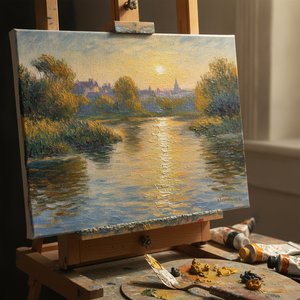
The Soul of Impressionism: Why Oil on Canvas Captures Eternal Light and Timeless Emotion
Discover the enchanting alchemy of Impressionism. Explore how the mastery of oil on canvas, through glazing and impasto, captures eternal light and emotion. Perfect for lovers of Monet and Van Gogh seeking the profound depth of hand-painted fine art.

Oil on Canvas: A Historical & Technical Exploration of a Timeless Artistic Medium
Explore the rich history & enduring techniques of oil painting on canvas. Discover the science behind its longevity, conservation practices, and contemporary relevance. Expert insights for art enthusiasts.

The Enduring Power of Painting: A Historical & Contemporary Exploration of Form and Emotion
Explore the rich history & enduring techniques of oil painting with OriginalUniqueArt. Discover masterpieces, learn about art collecting, and find authentic handmade reproductions crafted by skilled artists.

The Enduring Legacy of Oil on Canvas: Technique, History & Aesthetic Impact
Explore the rich history & techniques of oil painting – from Renaissance masters to Impressionism. Discover pigments, layering methods, and why this timeless medium endures. Expert insights for artists & art enthusiasts.

De Blijvende Erfenis van Olieverf op Doek: Techniek, Geschiedenis en Hedendaagse Praktijk
Ontdek de rijke geschiedenis en technieken van olieverfschilderen. Van Renaissance meesterwerken tot moderne toepassingen, leer over pigmenten, glazuur en conservering.