

 Bekijk op ware grootte
 Verstuur
 Delen
Delen
 Details bekijken
 Gids voor studentenkunstwerken

 Download
 Vergelijkbare items
 Röntgenonderzoek
 Diavoorstelling
 Statistieken
The Stag Hunt
 Oil On Canvas
- WallArt
- Northern Mannerism
 1590
1590 105.0 x 137.0 cm
 Louvre
 Lees meer
Giclée / Kunstafdrukken
Giclée- of canvasafdruk van museumkwaliteit met een snelle productie en flexibele afwerkingsmogelijkheden. ( Koop handgeschilderd kunstwerk Schakel over naar digitale afbeeldingen)




P118B €10

P118H €10

P118W €10

P438Z €10

P508JH €12

P508YH €12

P805H €10

P805Z €10

P919BZ €10

P919G €10

P919XJ €10

P959ZH €10

P968JZ €12

W106C €8

W218G €10

W218JH €8

W218Y €10

W307PJ €10

W316G €10

W316PJ €8

W316Y €10

W398PJ €8

W4111J €10

W500HY €15

W500JH €15

W692G €12

W849H €8

W940BG €15

W953PJ €8




Kies uit onze vooraf ingestelde maten die overeenkomen met de originele verhoudingen van het kunstwerk.

Voer de breedte en de hoogte in die u nodig heeft, passend bij uw lijst of uw muur. Een afdruk kan alleen worden ingekort, nooit groter worden gemaakt dan het origineel, waardoor een formaat met een andere verhouding een deel van de afbeelding verliest. Wij sturen u een digitaal mockup ter goedkeuring voordat we iets drukken. De afbeelding op deze pagina toont niet de werkelijke uitsnede — dit is alleen te zien op het mockup.
Wereldwijde levering () binnen 2 weken in plaats van de standaard 4/5 weken. (23 oktober)

Gratis wereldwijde expressverzending

Hoogwaardig linnen canvas

Volledige verzendverzekering

Garantie op terugbetaling van invoerrechten

Garantie op exacte kleurweergave

Retourbeleid van 100 dagen (alleen bij defecten)

100% Geld-terug-garantie

Korting bij meerdere afnames
 De optie voor glas is alleen beschikbaar bij een formaat kleiner dan 110 cm.

The Stag Hunt
Giclée / Kunstafdrukken
Formaat reproductie
-


Totaalprijs
€ 71
The Stag Hunt: A Northern Mannerist Masterpiece
Paul Bril’s “The Stag Hunt,” painted in 1590, is more than just a hunting scene; it's a meticulously crafted tableau of power, nobility, and the intricate relationship between humanity and the natural world. Housed within the hallowed halls of the Louvre Museum in Paris, this oil on canvas offers a captivating glimpse into the Northern Mannerist style – an artistic movement characterized by its dramatic use of light, shadow, and detailed realism. Bril’s work transcends mere representation, instead inviting us to contemplate the complex dynamics at play within this carefully orchestrated drama.
The painting depicts a group of richly attired hunters, led by a mounted figure wielding a spear, pursuing a magnificent stag through a dense, almost claustrophobic forest. The composition is remarkably balanced, drawing the eye across the scene with a deliberate sense of movement and purpose. Notice how Bril masterfully employs perspective – not to create an illusionistic depth, but rather to subtly guide our gaze towards the central action. The figures themselves are rendered with a striking level of detail; their clothing, armor, and expressions convey both confidence and a hint of controlled aggression. The stag, too, is depicted with astonishing realism, its muscular form and alert posture suggesting a formidable opponent.
A Window into Northern Mannerism
Bril’s “The Stag Hunt” stands as a pivotal work within the Northern Mannerist tradition. Emerging from the artistic circles of Antwerp and later flourishing in Rome, this style rejected the exuberant naturalism of its Italian counterparts, favoring instead a more restrained and intellectual approach to landscape painting. Unlike the vibrant colors and dynamic compositions of artists like Titian or Veronese, Bril’s palette is muted and earthy, dominated by deep greens, browns, and ochres. The lighting is equally subdued, creating an atmosphere of cool drama rather than bright illumination. This deliberate restraint serves to heighten the sense of mystery and foreboding within the scene.
The influence of earlier Flemish masters like Joachim Patinir is readily apparent in Bril’s use of atmospheric perspective – the subtle blurring of distant objects to create a sense of depth. However, Bril departs from his predecessors by incorporating elements of classical composition and a heightened emphasis on narrative. The hunt itself becomes symbolic, representing not just the pursuit of game but also themes of honor, skill, and the inherent tension between humanity and nature. The carefully arranged figures and their interactions suggest a complex social hierarchy, with the mounted hunter at the apex of power.
Symbolism and Emotional Resonance
Beyond its technical brilliance, “The Stag Hunt” is rich in symbolic meaning. The act of hunting itself has long been associated with notions of control, dominance, and the assertion of human will over the natural world. Yet, Bril subtly complicates this narrative by depicting a scene of both triumph and potential tragedy. The stag, though pursued relentlessly, retains an air of dignity and resilience – a reminder that even in defeat, there is beauty and nobility.
The dense forest surrounding the hunters can be interpreted as a metaphor for the unknown, representing the challenges and uncertainties that lie ahead. The muted colors and dramatic lighting contribute to a sense of unease, suggesting that the hunt is not merely a sporting activity but also a perilous undertaking. The overall emotional impact of the painting is one of restrained intensity – a captivating blend of action, drama, and subtle psychological depth. It’s a scene that lingers in the mind long after viewing, prompting reflection on the enduring themes of power, mortality, and the human condition.
Bringing “The Stag Hunt” to Life
Reproductions of Paul Bril's "The Stag Hunt" offer art enthusiasts a unique opportunity to experience this masterpiece firsthand. OriginalUniqueArt.com meticulously recreates the painting’s intricate details and atmospheric qualities, ensuring that each reproduction captures the essence of Bril’s original vision. Whether displayed in a grand salon or a cozy study, these handcrafted reproductions will undoubtedly serve as a stunning focal point – a testament to the enduring legacy of Northern Mannerist art.
For more information about Paul Bril and his remarkable artistic journey, please visit OriginalUniqueArt.com’s artist page. Discover how you can own a piece of history and bring the drama and beauty of “The Stag Hunt” into your home today.
Vragen & Antwoorden
Behoort "The Stag Hunt" van Paulus Bril tot het publiek domein, en zo ja, waarom?
"The Stag Hunt" door Paulus Bril is bevindt zich in het publiek domein - de auteursrechten zijn verlopen. De auteursrechten worden berekend vanaf het overlijden van de kunstenaar, en Paulus Bril is overleden in 1626.
Stelt het auteursrecht van "The Stag Hunt" door Paulus Bril reproducties toe?
Het originele "The Stag Hunt" bevindt zich in Louvre en het werk is bevindt zich in het publiek domein - de auteursrechten zijn verlopen.
Kan ik een olieverfreproductie van "The Stag Hunt" bestellen?
U kunt een met de hand geschilderde reproductie van "The Stag Hunt" door Paulus Bril rechtstreeks bestellen op de Met de hand geschilderde reproductie pagina: een met de hand geschilderde olieverfreproductie op linnen canvas, op bestelling vervaardigd.
Biografie van de kunstenaar
Paulus Bril (Paul Brill): Een Meester van het Italiaanse Landschap
Paulus Bril, ook wel bekend als Paul Brill (1554-1626), was een uiterst invloedrijke Vlaamse schilder en graveur die wereldwijd wordt gevierd om zijn pioniersrol in de ontwikkeling van het Italiaanse landschapstype. Geboren in Antwerpen, België, bracht hij het grootste deel van zijn carrière door in Rome. Het was juist daar dat zijn werk een blijvende stempel drukte op zowel de Italiaanse als de Noord-Europese landschapsschilderkunst. Zijn artistieke nalatenschap schuilt in zijn unieke vermogen om de schoonheid en grootsheid van het Italiaanse platteland te vangen, waarbij hij klassieke motieven naadloos verweefde met een kenmerkend atmosferisch perspectief.
Vroege Leven en Artistieke Ontwikkeling
De wortels van Bril liggen in het artistieke hart van Vlaanderen. Hoewel sommige bronnen Breda als mogelijke geboorteplaats noemen, werd hij in Antwerpen geboren en groeide op in een familie waar kunst de dagelijkse realiteit was; zijn vader was zowel schilder als kunsthandelaar, wat de jonge Paulus al vroeg introduceerde in de wonderlijke wereld van de esthetiek. Zijn eerste vorming vond waarschijnlijk plaats binnen deze vertrouwde kring, waar hij de rijke tradities van de Vlaamse landschapsschilderkunst in zich opnam. Deze basis legde een sterke nadruk op atmosferische effecten – het meesterlijke gebruik van licht, kleur en luchtperspectief om diepte en stemming te creëren. Zijn vroege werken weerspiegelen deze invloed door hun minutieuze details en een focus op realistische representatie.
Een beslissend moment in de carrière van Bril was zijn verhuizing naar Rome. Deze migratie bracht hem in directe aanraking met de zonovergoten landschappen van Italië, wat hem de vrijheid gaf om zijn eigen, kenmerkende stijl te perfectioneren: het Italiaanse landschap. Hier transformeerde hij van een getalenteerd leerling tot een visionair meester.
Het Italiaanse Landschap en Artistieke Vernieuwingen
De kern van Brils oeuvre wordt gevormd door zijn geïdealiseerde visies op het Italiaanse landschap. Zijn composities worden gekenmerkt door pittoreske waterwegen, weelderige vegetatie en idyllische pastorale scènes, vaak doorkruist door de stille getuigen van de oudheid: klassieke ruïnes zoals tempels, bogen en zuilen. Hij slaagde erin om deze architecturale elementen op een gracieuze wijze in zijn composities te integreren, waardoor een harmonieuze versmelting van natuur en antieke grandeur ontstond. Zijn landschappen zijn veel meer dan loutere afbeeldingen van de omgeving; ze roepen een gevoel van geschiedenis en tijdloze schoonheid op.
De kracht van zijn werk ligt eveneind in het meesterlijke spel van licht en kleur. Bril maakte gebruik van warme tonen en subtiele gradaties om een lumineuze atmosfeer te creëren die de toeschouwer direct het schilderij in trekt. Zijn diepgaande begrip van het luchtperspectief – waarbij objecten in de verte vervagen en blauwer lijken – voegt een ongekende diepte en realisme toe aan zijn scènes. Deze innovatieve benadering had een enorme impact op zijn tijdgenoten, met name op Claude Lorrain, die Brils methode van landschapsschilderen met grote bewondering overnam en nadeed. Ook Willem van Nieulandt werd beïnvloed door de gedeelde passie voor het afbeelden van Italiaanse ruïnes.
Grote Prestaties en Historische Betekenis
Paulus Bril wordt beschouwd als een sleutelfiguur die de landschapsschilderkunst revolutioneerde. Door de ontwikkeling van het Italiaanse landschapstype te stimuleren, stelde hij een nieuwe standaard vast voor zowel Italië als Noord-Europa. Tijdens zijn leven waren zijn werken zeer gewild, wat getuigt van zijn grote populariteit onder verzamelaars en belangrijke opdrachtgevers.
Zijn nalatenschap is onmiskenbaar; de nadruk die hij legde op klassieke motieven, atmosferisch perspectief en de geïdealiseerde weergave van de natuur heeft generaties landschapsschilders beïnvloed. Dankzij zijn toewijding hielp hij het genre van de landschapsschilderkunst te verheffen van een secundair onderwerp naar een kunstvorm van aanzienlijke artistieke waarde en prestige.
Collecties en Verdere Verkenning
Werken van Paulus Bril zijn vandaag de dag te bewonderen in prestigieuze musea en collecties verspreid over heel Europa. Enkele belangrijke locaties waar zijn meesterwerken worden bewaard, zijn:
- Groeningemuseum, Brugge, België
- Roger van der Meymuseum (Rockox House), Antwerpen, België
Om meer te ontdekken over zijn indrukwekkende oeuvre, nodigen wij u uit om de Paulus Bril artiestenpagina te bezoeken en gerelateerde kunstwerken te verkennen op OriginalUniqueArt.com.

Paulus Bril
1554 - 1626 , België
Snelle feiten
- Artistic Movement Or Style: Italiaanse landschappen, Maniërisme
- Artists Or Movements Influenced By This Artist: ['Claude Lorrain']
- Date Of Birth: 1554
- Date Of Death: 1626
- Full Name: Paulus Bril / Paul Brill
- Nationality: Vlaams
- Notable Artworks:
- Gezicht op Bracciano
- Landschap met Erminia
- Place Of Birth (City And Country): Antwerpen, België
Gerelateerde artikelen

Romantische Landschappen: Top 10 Meesterwerken voor een Sfeervol Interieur | OriginalUniqueArt.nl
Ontdek de 10 meest iconische meesterwerken van de Romantiek! Reis door de tijd met Caspar David Friedrich, Turner & Delacroix. Laat je inspireren en vind museumkwaliteit kunst reproducties voor een sfeervol interieur op OriginalUniqueArt.com.

Paul Cézanne's Top 25 Meesterwerken: Kleur, Vorm & De Basis van Modern Art | OriginalUniqueArt
Ontdek de 25 meest iconische schilderijen van Paul Cézanne! Duik in zijn kleurrijke wereld, leer over impressionisme & post-impressionisme en bewonder meesterwerken als 'De Baders'. Vind museumkwaliteit reproducties & interieurinspiratie op OriginalUniqueArt.com.

John Constable's Top 25 Meesterwerken: Landschappen die de Ziel Raaken | OriginalUniqueArt
Ontdek de 25 mooiste schilderijen van John Constable, meester van de Engelse Romantiek. Van idyllische landschappen tot iconische Hay Wain – bewonder zijn techniek en emotie. Museumkwaliteit reproducties & decoratie op OriginalUniqueArt.com.
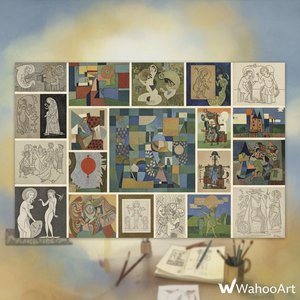
Paul Klee's Top 25 Meesterwerken: Kleur, Vorm & Emotie voor uw Interieur | OriginalUniqueArt
Ontdek de top 25 meesterwerken van Paul Klee! Duik in zijn kleurrijke wereld vol abstracte kunst, Bauhaus invloeden & expressieve composities. Vind museumkwaliteit reproducties en woondecoratie inspiratie op OriginalUniqueArt.com.

Evocations of Place: A Historical Journey Through Landscape Art
Explore the rich history of landscape art with OriginalUniqueArt. Discover renowned artists, movements like Impressionism & Romanticism, and expert guidance for collecting timeless pieces. Find your perfect serene escape today!

