
 Bekijk op ware grootte
 Verstuur
 Delen
Delen
 Details bekijken

 Download
 Vergelijkbare werken
 Röntgenonderzoek
 Diavoorstelling
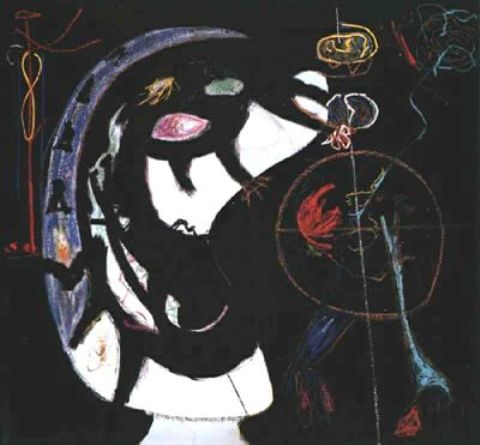
Night Sounds

 Lees meer
Koop een digitale afbeelding in hoge resolutie met verbeterde kwaliteit, die veel superieur is aan de online voorvertoning.
Elk bestand wordt met uiterste precisie voorbereid door onze interne specialisten, met behulp van geavanceerde tools en deskundige handmatige retouche. Wij garanderen dat elke afbeelding een uitzonderlijke helderheid, nauwkeurige kleurweergave en verfijnde details bezit.
Het uiteindelijke bestand wordt binnen 72 uur per e-mail geleverd, geoptimaliseerd voor direct gebruik in professionele, redactionele en printomgevingen. Dit is dezelfde kwaliteit waarop topontwerpstudio's, uitgevers en galerieën vertrouwen.
Digitale afbeeldingen
Download een bestand met hoge resolutie voor persoonlijke weergave, afdrukken en creatieve projecten. ( Bestel een print Bestel een handgeschilderde reproductie van dit verzamelobject)
Inbegrepen bij elke bestelling van een digitale afbeelding
Professionele digitale levering, gegarandeerd
Wanneer u kiest voor OriginalUniqueArt.com, ontvangt u niet alleen een afbeelding – u krijgt een professioneel verbeterd digitaal kunstwerk, met precisie vervaardigd en voorzien van een tevredenheidsgarantie. Dit is alles wat automatisch bij uw bestelling is inbegrepen:

Direct per e-mail ontvangen
Uw hoogwaardige digitale afbeeldingsbestand wordt binnen 72 uur na bestelling naar u gemaild – klaar voor direct gebruik.

Met AI verbeterd digitaal bestand
Uw kunstwerk wordt professioneel geoptimaliseerd met behulp van geavanceerde AI-tools en handmatige bewerkingen, waardoor maximale details, helderheid en kleurnauwkeurigheid worden gegarandeerd.

Gratis levenslange herlevering
Je bestand per ongeluk verwijderd of kwijtgeraakt? Geen zorgen – we sturen het u op elk gewenst moment gratis opnieuw toe.

Geen invoerkosten – nooit
Geniet direct van uw kunstwerk zonder invoerrechten, belastingen of verzendkosten – digitale downloads zijn altijd belastingvrij.

Garantie op kleurgetrouwheid
Met behulp van professionele hulpmiddelen en kleurbeheer zorgen wij ervoor dat uw digitale afbeelding de originele kleuren zo nauwkeurig mogelijk weergeeft.

60 dagen tevredenheidsgarantie
Als u niet tevreden bent met uw digitale afbeelding, passen wij deze aan of storten wij 100% terug binnen 60 dagen – zonder vragen gesteld.

100% Geld-terug-garantie
Niet tevreden? Ontvang binnen 60 dagen na ontvangst van uw digitale bestand uw volledige aankoopbedrag terug – zonder vragen te stellen.

Korting bij grote bestellingen
Koop 3 afbeeldingen, bespaar 10% - Koop 5, bespaar 15% - Koop 10+, bespaar 20%. Ideaal voor creatieve projecten, galerieën en bureaus.
Beschrijving verzamelobject
A Chaotic Symphony in Monochrome – Decoding Jackson Pollock's “Night Sounds”
Jackson Pollock’s “Night Sounds,” created in 1944, stands as a cornerstone of Abstract Expressionism and embodies the spirit of postwar American art. More than just pigment splashed onto canvas, it represents a radical departure from representational painting—a deliberate rejection of illusionistic technique in favor of conveying emotion and capturing the dynamism inherent within the creative process itself.
- Composition & Technique: The photograph reveals a mesmerizing expanse of black and white where Pollock’s signature drip painting method reigns supreme. Thick, viscous paint—likely enamel—is flung onto the canvas with rhythmic abandon, resulting in an intricate network of overlapping lines and amorphous shapes. This technique wasn't merely accidental; it was meticulously controlled to generate movement and texture.
- Formal Elements: Dominating the image are numerous circular forms, ranging from large discs to smaller circles dispersed throughout the composition. These aren’t idealized representations but rather organic shapes that contribute to the overall visual chaos. Lines crisscross the canvas in seemingly random patterns, creating depth and layering—a deliberate strategy to mimic the feeling of spontaneous action.
- Color Palette & Lighting: The monochrome palette—primarily grayscale—serves as a powerful tool for emphasizing form and texture. Subtle hints of reds, blues, greens, and yellows peek through within the lines and shapes, adding visual complexity without distracting from the core aesthetic. Diffused lighting reinforces the artwork’s contemplative mood, avoiding harsh shadows and highlighting the interplay between light and dark.
- Historical Context: Produced during a period of intense artistic experimentation following World War II, “Night Sounds” reflects the broader movement toward abstraction as artists sought to express inner psychological states rather than depicting external reality. Pollock’s work aligns with the larger ethos of Abstract Expressionism—a reaction against European Surrealism and Cubism—and championed spontaneity and intuition.
- Symbolic Interpretation: While “Night Sounds” eschews literal narrative, its visual language invites contemplation about themes of energy, movement, and subconscious expression. The circular forms could symbolize wholeness or cycles, mirroring the artist’s own exploration of inner turmoil and creative liberation. Ultimately, the artwork's impact lies in its ability to provoke emotional responses and stimulate viewers' imaginations.
The photograph itself captures a moment frozen in time—a testament to Pollock’s enduring legacy as one of the most influential artists of the 20th century. Reproductions offered by OriginalUniqueArt.com allow collectors and enthusiasts alike to experience this iconic piece firsthand, preserving its raw energy and captivating beauty for generations to come.
Biografie van de kunstenaar
Early Life and the Seeds of Innovation
Paul Jackson Pollock, born in Cody, Wyoming, in 1912, was a restless spirit from the outset. His early life was marked by frequent relocation as his father, LeRoy Pollock, pursued work as a land surveyor across the vast landscapes of the American West. This itinerant existence instilled in young Pollock a deep connection to the natural world and an exposure to diverse cultures, particularly through encounters with Native American art during those surveying trips – impressions that would subtly permeate his artistic vision later in life. Though he never explicitly imitated Indigenous styles, the raw energy and spiritual resonance of these early experiences undoubtedly left their mark. He was the fifth and youngest son in a struggling farming family, and his mother fostered artistic potential in each of her children. Pollock’s formal artistic training began at the Manual Arts High School in Los Angeles, followed by studies at the Art Students League of New York under the tutelage of Thomas Hart Benton. Benton, a prominent figure in the Regionalist movement, emphasized rhythmic composition and narrative themes rooted in American life. While Pollock initially absorbed these lessons, his inherent inclination leaned toward more abstract explorations. He was also profoundly impacted by Mexican muralists like José Clemente Orozco, whose powerful depictions of social struggle resonated deeply with him. These early influences laid a foundation, but it was the burgeoning world of Surrealism that truly unlocked Pollock’s artistic potential.The Birth of Action Painting and a Revolutionary Technique
The 1930s saw Pollock experimenting with various techniques, seeking alternatives to traditional brushwork. He began pouring paint, exploring its fluidity and unpredictable nature. However, it was around 1947 that his artistic trajectory underwent a radical transformation. Abandoning the easel altogether, Pollock laid canvases directly on the floor, initiating what would become known as his “drip technique.” He then proceeded to drip, splash, and fling paint onto the canvas from above, orchestrating a dynamic dance between artist, medium, and surface. This wasn’t merely about applying paint; it was about embodying the act of creation itself. Pollock's canvases became arenas for physical expression, capturing the immediacy of his gestures and emotions. The resulting paintings are characterized by their “all-over” composition – a lack of central focus that invites the viewer to explore the entire surface as a unified field of energy. Intricate networks of lines and colors intertwine, creating a visual complexity that is both captivating and challenging. He employed unconventional tools—sticks, knives, even syringes—to manipulate the paint in unpredictable ways, further emphasizing the spontaneous nature of his process. Pollock’s marriage to fellow artist Lee Krasner was also pivotal; she provided unwavering emotional support and actively encouraged his artistic development, recognizing the groundbreaking nature of his work. She became a crucial collaborator, not just as a wife but as an intellectual partner who understood and championed his vision.Iconic Works and Lasting Legacy
Pollock’s most celebrated works—such as Number 1, 1950 (Lavender Mist), One: Number 31, 1950, Blue Poles: Number 11, 1952, and *Convergence*—are testaments to his revolutionary technique. These paintings are not simply images; they are records of a performance, imbued with the artist’s physical presence and emotional intensity. The dynamic energy that emanates from these canvases is palpable, drawing viewers into a world of pure abstraction. The influence of Surrealism is evident in the dreamlike quality of many of his works, while simultaneously rejecting traditional representational forms. Pollock sought to capture not just what he *saw*, but what he *felt* – the underlying currents of emotion and subconscious experience that shaped his perception of the world. His work can be seen as a visual embodiment of the anxieties and uncertainties of the post-war era. His style transcends mere aesthetics; it's an exploration of process over product. Pollock sought to capture the immediacy of his actions and emotions on canvas, rejecting traditional notions of composition and representation. He delved into Jungian psychology, exploring archetypes and the subconscious in his art, seeking to tap into universal symbols and primal energies.Historical Significance
Pollock’s impact on the history of art is immeasurable. He fundamentally altered the way artists approached painting, breaking free from easel-based methods and embracing a more performative approach. His work helped solidify New York City's position as a global center for modern art, shifting the focus away from European dominance. He was initially met with skepticism and criticism, but his influence grew steadily after his untimely death in 1956 at the age of 44. Today, he is universally recognized as one of the most important and influential artists of the 20th century, a visionary who dared to challenge conventions and redefine the boundaries of artistic expression. His innovative techniques and expressive style continue to inspire and provoke, ensuring his enduring legacy for generations to come.
Jackson Pollock
1912 - 1956 , Verenigde Staten van Amerika
Kerngegevens
- Artistic Movement Or Style: Abstract Expressionisme
- Artists Or Movements Influenced By This Artist:
- Color Field painting
- Abstract Expressionisme
- Artists Who Influenced This Artist:
- Thomas Hart Benton
- José Clemente Orozco
- Date Of Birth: 28 januari 1912
- Date Of Death: 11 augustus 1956
- Full Name: Paul Jackson Pollock
- Nationality: Amerikaans
- Notable Artworks:
- Number 1, 1950
- Blue Poles
- Convergence
- Place Of Birth: Cody, Wyoming

