

 Bekijk op ware grootte
 Verstuur
 Delen
Delen
 Details bekijken
 Gids voor studentenkunstwerken

 Download
 Vergelijkbare items
 Röntgenonderzoek
 Diavoorstelling
 Statistieken
Bathsheba Bathing
 Oil
Oil- WallArt
- Mannerist Complexity
 1549
1549- Renaissance
 234.0 x 217.0 cm
 Wallraf-Richartz-Museum
 Lees meer
Handgemaakte olieverfreproductie
Met de hand geschilderd in olieverf op canvas in uw gewenste maat en lijst, op bestelling gemaakt door onze kunstenaars. ( Schakel over naar print Schakel over naar digitale afbeeldingen)




P118B €10

P118H €10

P118W €10

P438Z €10

P508JH €12

P508YH €12

P805H €10

P805Z €10

P919BZ €10

P919G €10

P919XJ €10

P959ZH €10

P968JZ €12

W106C €8

W218G €10

W218JH €8

W218Y €10

W307PJ €10

W316G €10

W316PJ €8

W316Y €10

W398PJ €8

W4111J €10

W500HY €15

W500JH €15

W692G €12

W849H €8

W940BG €15

W953PJ €8




Kies uit onze vooraf ingestelde maten die overeenkomen met de originele verhoudingen van het kunstwerk.

Voer de breedte en de hoogte in die u nodig heeft, passend bij uw lijst of uw muur. Dit is handgeschilderd, dus bij een afmeting met een andere vormverhouding kan de kunstenaar iets meer rondom het schilderij schilderen of juist iets meer weglaten — u kiest zelf. Wij sturen u een digitaal mockup ter goedkeuring voordat het schilderwerk begint. De afbeelding die op deze pagina wordt getoond, is niet het uiteindelijke resultaat — alleen de mockup geeft dit weer.
Na de bestelling zal het team van OriginalUniqueArt.com per e-mail contact opnemen met de klant voor instructies en een mockup-voorbeeld sturen.
Wereldwijde levering () binnen 3 tot 4 weken in plaats van de standaard 5 weken. (21 oktober). Zonder concessies aan de kwaliteit.

Gratis wereldwijde expressverzending

Hoogwaardig linnen canvas

Volledige verzendverzekering

Garantie op terugbetaling van invoerrechten

Garantie op exacte kleurweergave

Retourbeleid van 100 dagen (alleen bij defecten)

100% Geld-terug-garantie

Korting bij meerdere afnames
 De optie voor glas is alleen beschikbaar bij een formaat kleiner dan 110 cm.

Bathsheba Bathing
Reproductiemethode
Formaat reproductie
-


Totaalprijs
€ 262
A Venetian Masterpiece of Desire and Grace
In the sun-drenched annals of the Venetian Renaissance, few works capture the delicate tension between earthly sensuality and spiritual contemplation as exquisitely as Paris Bordone’s Bathsheba Bathing. Created around 1549, this masterpiece serves as a profound window into the soul of a painter who dared to diverge from the shadow of his legendary mentor, Titian. While many of his contemporaries sought the polished, monumental perfection of the High Renaissance, Bordone embraced a more restless, Mannerist energy—a style characterized by intricate compositions and a vibrant, almost provincial vitality that breathes life into every brushstroke. To behold this painting is to step into a world where the boundaries between myth and reality, and between the sacred and the profane, begin to blur.
The narrative heart of the work draws from the biblical Book of Samuel, recounting the fateful encounter between King David and Bathsheba. Bordone masterfully orchestrates this moment of vulnerability; Bathsheba is depicted luxuriating in her bath, a scene of profound domestic tranquility interrupted by the weight of an unseen gaze. The composition is layered with a sense of voyeuristic drama, as the diminutive figure of David peers through a palace window, his distant presence symbolizing the transformative power of desire. This framing device does more than merely tell a story; it invites the viewer to contemplate the complexities of human relationships, the fragility of innocence, and the inescapable pull of temptation.
The Artistry of Mannerist Elegance
Technically, Bathsheba Bathing is a triumph of Venetian color and Mannerist complexity. Bordone’s ability to manipulate light and texture creates a palpable sense of atmosphere, where the softness of skin meets the cool luster of water and the rich, tactile surfaces of surrounding objects. The artist populates the scene with several women who attend to Bathsheba, their varied poses adding a rhythmic, flowing quality to the composition. These figures are not merely decorative; they embody a spectrum of emotion, from quiet repose to a subtle, shared allure that heightens the painting's psychological depth.
The meticulous attention to detail provides an abundance of visual interest for the discerning eye. Scattered throughout the scene are symbolic elements—apples placed near the center, a delicate bowl, and a lush potted plant—each contributing to a sense of abundance and earthly pleasure. The interplay of these objects against the luminous figures creates a rich tapestry of textures that makes the work feel incredibly alive. For the collector or interior designer, this painting offers more than just aesthetic beauty; it provides a sophisticated focal point that commands attention through its narrative complexity and its ability to evoke a mood of timeless, classical elegance.
A Timeless Legacy for the Modern Collector
Beyond its historical significance, Bordone’s work resonates with a modern sensibility that appreciates the nuance of emotion and the beauty of imperfection. The painting does not merely present a static image; it captures a fleeting moment of transition, making it an evocative piece for any curated collection. Whether placed in a grand gallery or used to anchor a thoughtfully designed interior, a high-quality reproduction of Bathsheba Bathing brings with it the prestige of the Venetian Renaissance and the enduring allure of a master who found beauty in the complex dance between grace and passion.
Vragen & Antwoorden
Welke ruimte past bij de kleuren van "Bathsheba Bathing" door Paris Bordone?
Gezien de Earthy kleuren, wordt "Bathsheba Bathing" aanbevolen voor een Living Room.
Behoort "Bathsheba Bathing" van Paris Bordone tot het publiek domein, en zo ja, waarom?
"Bathsheba Bathing" door Paris Bordone is bevindt zich in het publiek domein - de auteursrechten zijn verlopen. De auteursrechten worden berekend vanaf het overlijden van de kunstenaar, en Paris Bordone is overleden in 1570.
Waar kan ik een gids vinden voor "Bathsheba Bathing"?
De gids voor "Bathsheba Bathing" is de Gids-pagina van het kunstwerk – een printbaar informatieblad waarop het kunstwerk wordt getoond met het bijschrift, de bronvermelding en de identificatietabel (kunstenaar, data, medium, originele afmetingen, collectie).
Biografie van de kunstenaar
De Venetiaanse Rebel: Het Leven en de Nalatenschap van Paris Bordone
In het levendige, zonovergoten landschap van de Venetiaanse Renaissance in de zestiende eeuw, bezitten weinig figuren een geest die zo vurig onafhankelijk is als Paris Bordone. Geboren in Treviso rond 1500, kwam Bordone uit de schaduw van de grote meesters tevoorschijn om een reputatie op te bouwen die werd gedefinieerd door een unieke spanning tussen klassieke gratie en een rusteloze, maniëristische energie. Terwijl zijn tijdgenoten vaak streefden naar de gepolijste perfectie van de Hoogrenaissance, omarmde Bordone een complexere, soms provocerende esthetiek die de monumentale schaal van zijn tijd combineerde met een uitgesproken provinciale vitaliteit. Zijn reis was er een van voortdurende onderhandeling tussen de gevestigde tradities van Venetië en een onverzettelijk verlangen om een persoonlijke visuele taal te smeden.
De basis van Bordones technische vaardigheid werd gelegd tijdens zijn vormende jaren in Venetië, met name door zijn leertijd onder de legendarische Titiaan. Deze periode was ongetwijfeld het smeltkroes van zijn talent, waardoor hij werd blootgesteld aan de rijke texturen, dramatische lichtinval en atmosferische diepte die de Venetiaanse school kenmerken. De relatie tussen meester en leerling was echter naar verluidt doordrenkt van creatieve frictie. Historische verslagen, waaronder die van Vasari, suggereren een zekere onenigheid tussen Bordones experimentele impulsen en de meer verfijnde esthetiek van Titiaan. In plaats van te verstikken door deze spanning, gebruikte Bordone deze als een katalysator voor groei, waarbij hij een stijl ontwikkelde die zich verwijderde van pure imitatie naar een meer complexe en soms onrustige compositorische aanpak.
Een Weefsel van Mythe, Devotie en Portretkunst
Bordones productieve carrière wordt gekenmerkt door een buitengewone breedte aan onderwerpen, variërend van het heilige tot het profane. Zijn vermogen om religieuze iconografie met dezelfde kracht als mythologische verhalen te navigeren, stelde hem in staat de diverse interesses van de Venetiaanse elite vast te leggen. In zijn religieuze werken, zoals de Pinksteren in het Hermitage Museum, ziet men een meesterlijk beheer van sfumato en warme, emotionele tinten die uitnodigen tot diepe spirituele contemplatie. Toch komt zelfs binnen deze devotionele settings vaak een gevoel van maniëristische complexiteit naar voren door wervelende draperieën en drukke, dynamische composities.
Wanneer hij zijn blik op het seculiere richtte, bereikte Bordone een niveau van narratief drama dat moderne kijkers nog steeds fascineert. Zijn mythologische schilderijen, zoals de Allegorie met Geliefden, tonen zijn talent voor het gebruik van levendige kleuren en symbolische diepgang om complexe verhalen over passie en het lot te weven. Deze meesterschap strekte zich uit tot het domein van de portretkunst, waar hij de waardigheid en sociale status van zijn onderwerpen met opmerkelijke precisie vastlegde. Een treffend voorbeeld is zijn Portret van Thomas Stachel uit 1540, momenteel te vinden in het Louvre; hier gebruikt de kunstenaar een ingewikkelde compositie om de status van de geportretteerde te benadrukken, waarbij hij de fijne details van gewaden en heraldische letters gebruikt om het onderwerp in een tastbare historische realiteit te verankeren.
Historisch Belang en Artistiek Uithoudingsvermogen
De blijvende betekenis van Paris Bordone ligt in zijn weigering om zich aan te passen. Hij vormt een vitale brug tussen de evenwichtige harmonie van de vroege Renaissance en de meer gestileerde, expressieve complexiteit van de maniëristische periode. Hoewel hij misschien niet de universele hoogten van Titiaan heeft bereikt, biedt zijn werk een noodzakelijk tegenwicht—een rijkere, experimentelere en vaak menselijker perspectief op de Venetiaanse wereld. Zijn schilderijen dienen als vensters naar een tijd van diepgaande transitie, waarin de stabiliteit van traditie werd uitgedaagd door een nieuw, rustelozer artistiek bewustzijn.
Vandaag de dag wordt de nalatenschap van Bordone bewaard in enkele van 's werelds meest prestigieuze instellingen, wat wetenschappers en kunstliefhebbers uitnodigt om zijn unieke visie opnieuw te ontdekken. Zijn bijdragen kunnen worden samengevat aan de hand van enkele belangrijke artistieke pijlers:
- Stilistische Innovatie: De succesvolle integratie van door Titiaan geïnspireerde grandeur met een complexere, maniëristische compositiestructuur.
- Veelzijdigheid van Thema: Een ongeëvenaard vermogen om naadloos te bewegen tussen de serene schoonheid van de Madonna met Slaapend Kind en de dramatische intensiteit van historische allegorieën.
- Technische Meesterschap: Een verfijnd gebruik van licht, kleur en textuur dat een tastbaar gevoel van leven en beweging aan het canvas gaf.
- Culturele Impact: Het vertegenwoordigen van de levendige, vaak turbulente geest van Treviso en Venetië tijdens een van de meest transformerende tijdperken in de westerse kunstgeschiedenis.

Paris Bordone
1500 - 1570 , Italië
Snelle feiten
- Artistic Movement Or Style: Maniërisme
- Artists Who Influenced This Artist: Titiaan
- Date Of Birth: 5 juli 1500
- Date Of Death: 19 januari 1571
- Full Name: Paris Bordone
- Nationality: Italiaans
- Notable Artworks:
- De ring van de visser
- Pinksteren
- Jupiter & Io
- Doop van Christus
- Place Of Birth: Treviso, Italië
Gerelateerde artikelen

Jacopo Tintoretto's Meesterwerken: 25 Schilderijen die de Renaissance Definieerden | OriginalUniqueArt
Ontdek de 25 meest indrukwekkende schilderijen van Jacopo Tintoretto, de meester van het Venetiaanse Renaissance. Duik in zijn dramatische stijl, religieuze thema's & techniek. Vind museumkwaliteit reproducties en decoratie-inspiratie op OriginalUniqueArt.com.

The Enduring Allure of the Nude: A Historical & Artistic Exploration of the Human Form
Explore the captivating history of nude art! Discover iconic paintings & artists from classical to modern eras. Uncover symbolism, techniques & find museum-quality reproductions at OriginalUniqueArt.

The Eloquent Form: A Historical & Aesthetic Exploration of the Nude in Art
Explore the captivating history of the nude in art! From ancient Greece to modern masters, discover its evolving symbolism, techniques & enduring beauty. Expert insights for collectors and enthusiasts.
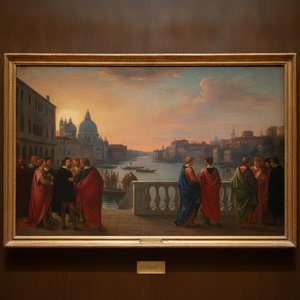
The Venetian Renaissance: A Masterclass in Colorito, Light, and the Birth of Atmospheric Brilliance
Explore the breathtaking mastery of the Venetian Renaissance. Discover how legends like Titian revolutionized art through Colorito, capturing the luminous light and vibrant pigments of the Venetian lagoon in a visual journey of unparalleled color and texture.

Venetian Renaissance: The Mastery of Color, Light, and the Art of Colorito
Explore the luminous mastery of the Venetian Renaissance. Discover how masters like Titian and Giorgione revolutionized art through colorito, light, and atmosphere. An expert guide to the golden age of Italian painting for collectors and enthusiasts.
