
 Voorvertoning
 Verstuur
 Delen
Delen
 Details bekijken
 Gids
Gids

 Download
 Vergelijkbare items
 Röntgenonderzoek
 Diavoorstelling
 Q&A
Q&A Statistieken
Bacchus and Ceres


 Lees meer
Giclée / Kunstafdrukken
Giclée- of canvasafdruk van museumkwaliteit met een snelle productie en flexibele afwerkingsmogelijkheden. ( Bestel handgeschilderde reproductie Schakel over naar digitale afbeeldingen)




P118B €10

P118H €10

P118W €10

P438Z €10

P508JH €12

P508YH €12

P805H €10

P805Z €10

P919BZ €10

P919G €10

P919XJ €10

P959ZH €10

P968JZ €12

W106C €8

W218G €10

W218JH €8

W218Y €10

W307PJ €10

W316G €10

W316PJ €8

W316Y €10

W398PJ €8

W4111J €10

W500HY €15

W500JH €15

W692G €12

W849H €8

W940BG €15

W953PJ €8




Kies uit onze vooraf ingestelde maten die overeenkomen met de originele verhoudingen van het kunstwerk.

Voer de gewenste breedte en hoogte in, passend bij uw lijst of muur. Een afdruk kan alleen worden ingekort en nooit groter worden gemaakt dan het origineel; een formaat met andere verhoudingen zal daarom een deel van de afbeelding verliezen. Wij sturen u een digitaal mockup ter goedkeuring voordat we tot drukwerk overgaan. De afbeelding op deze pagina toont niet de werkelijke uitsnede — dit is alleen te zien op het mockup.
Wereldwijde levering () binnen 2 weken in plaats van de standaard 4/5 weken. (1 november)

Gratis wereldwijde expressverzending

Hoogwaardig linnen canvas

Volledige verzendverzekering

Garantie op terugbetaling van invoerrechten

Garantie op exacte kleurweergave

Retourbeleid van 100 dagen (alleen bij defecten)

100% Geld-terug-garantie

Korting bij meerdere afnames
 De optie voor glas is alleen beschikbaar bij een formaat kleiner dan 110 cm.

Bacchus and Ceres
Giclée / Kunstafdrukken
Afmetingen reproductie
-


Eindtotaal
€ 72
Paolo Veronese: A Renaissance Master of Color, Composition, and Venetian Splendor
Paolo Caliari, known to the world as Paolo Veronese, emerged from the vibrant artistic landscape of 16th-century Venice as a master of color, composition, and opulent spectacle. Born in Verona in 1528, the son of a stonecutter, his early life was steeped in the visual richness of his surroundings – the classical architecture, sculpted forms, and burgeoning humanist ideals that characterized the region. His initial training under Antonio Badile and Giovanni Francesco Caroto laid a foundation in traditional techniques, but it was his move to Venice in the 1550s that truly ignited his artistic genius. The city itself became his muse, its bustling marketplaces, grand palazzi, and shimmering waterways informing the scale and drama of his work. He quickly absorbed the influences of established Venetian masters like Titian, whose mastery of color profoundly impacted Veronese’s palette, yet he forged a distinct style characterized by an unparalleled ambition to capture grandeur and emotion on canvas.- Subject Matter: Veronese's oeuvre is dominated by monumental mythological scenes—particularly depictions of feasts and celebrations—drawing heavily from classical narratives and Roman mythology. “Bacchus and Ceres,” commissioned for Villa Barbaro in Maser, exemplifies this fascination with epic storytelling and idealized beauty.
- Style: Veronese’s style belongs to Mannerism, a reaction against the harmonious balance of High Renaissance art. Unlike his predecessors who sought perfection, Veronese embraced dynamism and theatricality, prioritizing expressive gesture and dramatic lighting over anatomical accuracy. This stylistic choice lends an air of grandeur and sophistication to his paintings.
- Technique: He employed meticulous fresco painting techniques—a hallmark of Venetian artistic tradition—resulting in breathtaking surfaces adorned with shimmering pigments and intricate detailing. The layering of translucent glazes created a luminous effect, capturing the vibrancy of color and enhancing the illusionistic depth of the scene.
Villa Barbaro’s Frescoes: Context and Significance
The commission for “Bacchus and Ceres” at Villa Barbaro represents more than just an artistic endeavor; it embodies the aspirations of Daniele Barbaro, a humanist scholar and patron of the arts who envisioned his villa as a symbol of intellectual enlightenment and aristocratic refinement. Veronese's frescoes were intended to elevate the villa’s interior space into a realm of sublime beauty—a testament to the Renaissance ideal of integrating art and architecture to create harmonious environments. The painting reflects the broader cultural climate of Venice during Barbaro’s time, where artistic innovation flourished alongside humanist thought.Symbolism and Narrative Complexity
“Bacchus and Ceres” is replete with symbolic references that underscore its thematic concerns. Bacchus, representing wine and fertility, embodies Dionysiac ecstasy—a celebration of sensual pleasure and divine inspiration. Ceres, goddess of agriculture and harvest, symbolizes abundance and nourishment—essential elements for sustaining human life and fostering prosperity. The figures’ postures and expressions convey a palpable sense of joy and conviviality, inviting viewers to partake in the festivities depicted. Furthermore, Veronese skillfully employs perspective and spatial illusionism to create an immersive experience, transporting the viewer into the opulent setting of the villa's banquet hall.Emotional Impact: A Triumph of Venetian Art
Ultimately, “Bacchus and Ceres” achieves its remarkable emotional impact through Veronese’s masterful manipulation of color and light—elements that contribute significantly to the painting’s dramatic atmosphere. The rich hues—particularly reds, golds, and blues—evoke a feeling of warmth and splendor, mirroring the grandeur of Villa Barbaro itself. The luminous glazing technique enhances the illusionistic depth of the scene, drawing viewers into the midst of the celebration and capturing the essence of Renaissance artistic ambition. It remains an enduring masterpiece—a testament to Veronese’s genius and Venice's legacy as a center for artistic innovation.Further Exploration
You can find more information about Paolo Veronese and “Bacchus and Ceres” at: Around 1560-61, Veronese was commissioned by Daniele Barbaro to provide the interior frescoes for Barbaro's Palladian villa in Maser.Veelgestelde vragen
Welke afmeting van "Bacchus and Ceres" door Paolo Veronese past in de aanbevolen kamer?
De aanbevolen combinatie voor "Bacchus and Ceres" door Paolo Veronese: een afdruk van Large in een Living Room.
Op welke fase in de carrière van Paolo Veronese komt de datum uit 1560 van "Bacchus and Ceres" overeen?
De datum uit 1560 plaatst "Bacchus and Ceres" in de Mature Period van de ontwikkeling van Paolo Veronese.
Welke kleuren overheersen in "Bacchus and Ceres" door Paolo Veronese?
De kleuridentiteit van "Bacchus and Ceres" door Paolo Veronese: een Earthy palet, gedomineerd door Putty (#d2beb4).
Biografie kunstenaar
A Venetian Visionary: The Life and Art of Paolo Veronese
Paolo Caliari, known to the world as Paolo Veronese, emerged from the vibrant artistic landscape of 16th-century Venice as a master of color, composition, and opulent spectacle. Born in Verona in 1528, the son of a stonecutter, his early life was steeped in the visual richness of his surroundings – the classical architecture, sculpted forms, and burgeoning humanist ideals that characterized the region. His initial training under Antonio Badile and Giovanni Francesco Caroto laid a foundation in traditional techniques, but it was his move to Venice in the 1550s that truly ignited his artistic genius. The city itself became his muse, its bustling marketplaces, grand palazzi, and shimmering waterways informing the scale and drama of his work. He quickly absorbed the influences of established Venetian masters like Titian, whose mastery of color profoundly impacted Veronese’s palette, yet he forged a distinct style characterized by an unparalleled sense of theatricality and grandeur.The Painter of Feasts and Grand Narratives
Veronese's reputation rests upon his monumental paintings, particularly those depicting lavish feasts and biblical scenes transformed into dazzling displays of Venetian life. The Wedding at Cana, completed in 1563 for the Benedictine monastery of San Giorgio Maggiore, stands as a testament to his skill. This colossal canvas isn’t merely an illustration of the miracle; it's a vibrant panorama of 16th-century society, teeming with elegantly dressed figures, musicians, and architectural details rendered with breathtaking precision. The painting is not just about what happened at Cana but *how* it would have looked if it had occurred in Venice during Veronese’s time – a deliberate choice that challenged conventional religious depictions. Similarly, The Feast in the House of Levi, originally titled The Last Supper, caused controversy with the Inquisition due to its inclusion of contemporary figures and a seemingly irreverent atmosphere. Veronese defended his artistic license, asserting that painters were entitled to the same creative freedom as poets and jesters – a bold statement reflecting his belief in art’s power to interpret and reimagine sacred narratives. These works weren't simply religious depictions; they were celebrations of life, wealth, and the splendor of Venice itself. He wasn’t interested in austere spirituality but rather in capturing the joy and abundance of existence. His ability to seamlessly blend historical accuracy with imaginative embellishment set him apart from his contemporaries.Influences and Artistic Development
While Titian’s influence on Veronese’s colorism is undeniable, his artistic development was a complex interplay of various influences. The architectural precision he brought to his compositions owes much to the classical tradition prevalent in Verona during his formative years, particularly the work of architects like Michele Sanmicheli. He also absorbed elements from Central Italian masters such as Raphael and Parmigianino, evident in the graceful lines and harmonious arrangements within his paintings. However, Veronese didn’t simply imitate these influences; he synthesized them into a uniquely Venetian style characterized by its dramatic use of light, vibrant color palettes, and meticulous attention to detail. He excelled at creating illusions of space and depth, employing perspective techniques to draw viewers into the heart of his elaborate scenes. His mastery of oil painting allowed him to achieve an unparalleled luminosity and richness of texture. He also ran a large workshop, with contributions from his brother Benedetto and sons Gabriele and Carlo, ensuring that his style continued to flourish even after his death in 1588. The scale of his projects demanded a significant team of assistants, allowing him to focus on the overall design and execution while maintaining a consistent artistic vision.Major Achievements and Notable Works
Veronese’s career produced an astonishing array of masterpieces, each showcasing his distinctive style and technical prowess. Beyond The Wedding at Cana and The Feast in the House of Levi, several works stand out as particularly significant:- Villa Barbaro at Maser (1560-1573): This complex cycle of paintings for the Barbaro family villa is considered one of Veronese’s most ambitious projects. It includes a Sacrifice of Isaac and a Mystical Marriage of Bacchus and Ariadne, both renowned for their opulent settings and dynamic compositions.
- Decorations of San Sebastiano (1556-1570): Veronese’s extensive decorations for the church of San Sebastiano in Venice are a testament to his ability to transform an entire building into a work of art. The ceiling frescoes, in particular, are breathtaking in their scale and detail.
- Portrait of Daniele Barbaro (1556-1567): This portrait exemplifies Veronese’s skill in capturing the likeness and personality of his subjects. It is considered one of his finest works in the genre.
Legacy and Historical Significance
Paolo Veronese’s impact extends far beyond the realm of Renaissance art. His work has resonated through centuries, inspiring artists across various disciplines. His dramatic compositions and vibrant color schemes have been cited as influences on everything from Baroque painting to modern cinema – even finding echoes in the visual aesthetics of Spaghetti Westerns. He was part of the “great trio” of Venetian painters—alongside Titian and Tintoretto—each contributing uniquely to the city’s artistic legacy, yet Veronese often stands apart for his sheer exuberance and celebration of earthly pleasures. His paintings continue to captivate audiences with their grandeur and spectacle, offering a glimpse into the opulent world of 16th-century Venice. Veronese's legacy is a testament to his artistic genius, his ability to capture the essence of an era, and his enduring contribution to the history of art.
Paolo Veronese
1528 - 1588 , Italië
Belangrijkste feiten
- Artistic Movement Or Style: Renaissance, Mannerisme
- Artists Or Movements Influenced By This Artist: ['Raphael']
- Artists Who Influenced This Artist: ['Titian']
- Date Of Birth: 1528
- Date Of Death: 1588
- Full Name: Paolo Caliari Veronese
- Nationality: Italiaans
- Notable Artworks:
- Bruiloft Kana
- Feest Levi
- Place Of Birth: Verona, Italië
Gerelateerde artikelen

The Enduring Legacy of Fresco: Technique, History & Artistic Expression Across Cultures
Explore the rich history & enduring legacy of fresco painting! Discover ancient techniques, Giotto's masterpieces, and modern applications. Expert insights for art lovers & professionals.
De Fresco als Familielegatie: Schilder Je Erfgoed op de Muren
Ontdek de fascinerende wereld van fresco schilderkunst! Leer over technieken, geschiedenis en restauratie. Expertise & hoogwaardige reproducties bij .
The Enduring Legacy of Fresco Painting: Techniques, History & Contemporary Relevance
Explore the rich history & enduring artistry of fresco painting – from Giotto to Michelangelo! Discover techniques, conservation efforts, & modern applications. Learn how OriginalUniqueArt brings this timeless art form to your home.

Kunst die met je meeleeft: De emotionele kracht van een op maat gemaakte interieurfresco
Ontdek de emotionele kracht van een op maat gemaakt interieurfresco. Atelier Métamorphoze creëert unieke, duurzame kunstwerken voor uw woning of bedrijf. Laat u inspireren!
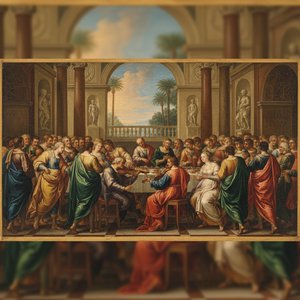
Paolo Veronese: A Renaissance Master of Color, Composition, and Venetian Splendor
Explore the vibrant world of Paolo Veronese, a Renaissance master renowned for his opulent compositions, masterful use of color, and dramatic Venetian scenes. Discover key artworks & legacy.


