

 Bekijk op ware grootte
 Verstuur
 Delen
Delen
 Details bekijken
 Gids voor studentenkunstwerken

 Download
 Vergelijkbare items
 Röntgenonderzoek
 Diavoorstelling
 Statistieken
The Annunciation
 Tempera On Panel
- WallArt
- Early Renaissance
Early Renaissance
 1420
1420- Renaissance
 65.0 x 48.0 cm
 Lees meer
Handgemaakte olieverfreproductie
Met de hand geschilderd in olieverf op canvas in uw gewenste maat en lijst, op bestelling gemaakt door onze kunstenaars. ( Schakel over naar print Schakel over naar digitale afbeeldingen)




P118B €10

P118H €10

P118W €10

P438Z €10

P508JH €12

P508YH €12

P805H €10

P805Z €10

P919BZ €10

P919G €10

P919XJ €10

P959ZH €10

P968JZ €12

W106C €8

W218G €10

W218JH €8

W218Y €10

W307PJ €10

W316G €10

W316PJ €8

W316Y €10

W398PJ €8

W4111J €10

W500HY €15

W500JH €15

W692G €12

W849H €8

W940BG €15

W953PJ €8




Kies uit onze vooraf ingestelde maten die overeenkomen met de originele verhoudingen van het kunstwerk.

Voer de breedte en de hoogte in die u nodig heeft, passend bij uw lijst of uw muur. Dit is handgeschilderd, dus bij een afmeting met een andere vormverhouding kan de kunstenaar iets meer rondom het schilderij schilderen of juist iets meer weglaten — u kiest zelf. Wij sturen u een digitaal mockup ter goedkeuring voordat het schilderwerk begint. De afbeelding die op deze pagina wordt getoond, is niet het uiteindelijke resultaat — alleen de mockup geeft dit weer.
Na de bestelling zal het team van OriginalUniqueArt.com per e-mail contact opnemen met de klant voor instructies en een mockup-voorbeeld sturen.
Wereldwijde levering () binnen 3 tot 4 weken in plaats van de standaard 5 weken. (23 oktober). Zonder concessies aan de kwaliteit.

Gratis wereldwijde expressverzending

Hoogwaardig linnen canvas

Volledige verzendverzekering

Garantie op terugbetaling van invoerrechten

Garantie op exacte kleurweergave

Retourbeleid van 100 dagen (alleen bij defecten)

100% Geld-terug-garantie

Korting bij meerdere afnames
 De optie voor glas is alleen beschikbaar bij een formaat kleiner dan 110 cm.

The Annunciation
Reproductiemethode
Formaat reproductie
-


Totaalprijs
€ 263
The Composition and Figures
In this tempera and gold panel from approximately 1420, the archangel Gabriel approaches the Virgin Mary within an architectural setting defined by precise geometric lines. The scene is structured around a blue building featuring an arched doorway and columns that recede into the background. On the left side of the panel, several figures are positioned near the edge of the frame, while other figures occupy the space toward the right. Gold accents appear on the clothing of the central figures and throughout the surrounding environment, contrasting with the deep blue tones of the architecture. The figure of Mary is depicted alongside Gabriel, with a book held in the scene. Above the primary interaction, God the Father appears to direct the event. The surfaces within the composition include patterned elements and gilded haloes that catch the light.
Technical Execution and Spatial Construction
The work demonstrates an early application of linear perspective through the use of incised and underdrawn construction lines. These marks reveal a systematic attempt to establish a foreshortened ceiling, pillars, cornices, and a grid-like structure within the portico. Such mathematical precision allows for the creation of an illusion of depth behind the figures. The medium consists of tempera and gold on a wood panel, with some areas featuring oil glazing. Gold and silver leaf, along with punchwork, contribute to a luminous surface. Infrared examination shows that adjustments were made directly onto the panel during the painting process rather than through a mechanical transfer of a finished design. This method highlights the artist's focus on calculating vanishing points and orthogonal lines to organize the spatial relationships between the architectural elements and the subjects.
Historical Context and Subject Matter
Created during the Early Renaissance, this painting depicts the biblical episode from the Gospel of Luke where Gabriel announces to Mary that she will conceive Jesus. The subject matter is grounded in Christian iconography, specifically focusing on the Annunciation. The architectural setting, characterized by its columns and receding planes, reflects the intellectual currents of 15th-century Florence, where the study of geometry and optics was becoming central to artistic practice. The use of gold and tempera follows traditions that emphasize narrative clarity and decorative detail. While the figures are arranged within a structured space, the composition maintains a sense of movement as the angel approaches the Virgin.
Vragen & Antwoorden
Wat zijn de afmetingen van het originele "The Annunciation" door Paolo Uccello?
Het originele werk "The Annunciation" door Paolo Uccello heeft de afmetingen 65 x 48 cm.
Voor welke afmeting wordt het afdrukken van "The Annunciation" aanbevolen?
Voor "The Annunciation" wordt een afdrukformaat van Small aanbevolen. Andere formaten zijn beschikbaar met dezelfde verhoudingen.
Hoe verzadigd is het kleurenpalet van "The Annunciation"?
De kleuren van "The Annunciation" door Paolo Uccello hebben een Subtle Color verzadiging. Verzadiging beschrijft hoe levendig of gedempt de kleuren zijn.
Biografie van de kunstenaar
A Florentine Visionary: The Life and Art of Paolo Uccello
Paolo Uccello, geboren Paolo di Dono in 1397, midden in de heuvels rond Florence, blijft een van de meest fascinerende en enigmatische figuren van het vroege Renaissance. Zijn bijnaam – “Uccello” – ‘vogel’ – hint naar een speelse natuur en een artistieke neiging tot het weergeven van de vogelwereld, maar verbergt een geest die diep betrokken is bij de opkomende intellectuele stromingen van zijn tijd. Hij was niet alleen een schilder; hij was een pionier, een wiskundige van het doek, strevend naar de geheimen van visuele ruimte en deze te vertalen in betoverende kunstwerken. Zijn vader, Dono di Paolo, oefende zowel de beroepen van barbier-chirurg als handelaar uit, terwijl zijn moeder, Antonia, afkomstig was uit een Florentijnse adellijke familie – een erfgoed dat hem mogelijk zowel een praktische gevoeligheid als een waardering voor verfijnde esthetiek meebracht. Van 1412 tot 1416 bracht Uccello zijn vormende jaren door onder de begeleiding van Lorenzo Ghiberti, wiens werkplaats een broeinest was van artistische innovatie, gericht op het creëren van de prachtigste bronzen deuren voor Florence’s Baptisterium. Deze vroege blootstelling introduceerde hem in de heersende Gotiek, met zijn nadruk op decoratieve elegantie en narratieve helderheid, maar ontketende tegelijkertijd een verlangen om daarbuiten te gaan.The Pursuit of Perspective: A Mathematical Mind at Play
Uccello’s artistieke ontwikkeling was niet alleen gericht op het beheersen van techniek; het werd gedreven door een onverzadigbare nieuwsgierigheid naar de onderliggende principes die perceptie regeren. Hij raakte verzonken in wiskunde, met name geometrie en perspectief, niet als abstracte disciplines maar als hulpmiddelen om een echtere weergave van de werkelijkheid te ontlokken. Hoewel Filippo Brunelleschi vaak wordt toegeschreven aan het ontdekken van lineair perspectief, was Uccello een van de eersten die dit systematisch toepaste op schilderkunst, nauwkeurig verdwijningspunten en orthogonale lijnen berekende om een illusie van diepte te creëren die eerder grotendeels afwezig was in kunst. Dit ging niet alleen om technische nauwkeurigheid; voor Uccello werd perspectief een middel tot het structureren van narratie, drama te verhogen en zijn composities een gevoel van orde en intellectuele ernst te geven. Zijn fascinatie was bijna obsessief, zoals beschreven door Giorgio Vasari, die Uccello omschreef als iemand die zich laat zien in de late uren van de nacht, verloren in contemplatie over verdwijningspunten en ruimtelijke relaties. Deze toewijding, hoewel soms als excentriek werd ervaren, heeft uiteindelijk de schilderkunst veranderd en het pad geëffend voor toekomstige generaties kunstenaars.Masterpieces of Illusion: Key Works and Stylistic Traits
Uccello’s oeuvre, hoewel relatief klein, is gekenmerkt door een kenmerkende stijl die Gotische elegantie combineert met Renaissance-innovatie. The Battle of San Romano, een reeks van drie panelen besteld ter ere van een Florentijnse overwinning, staat als zijn meest beroemde prestatie. Deze schilderijen zijn niet alleen weergaven van oorlog; ze zijn dynamische composities vol met rondzwervende figuren, fragmentarisch harnas en dramatisch verschoven lansen – allemaal weergegeven in levendige kleuren en gerangschikt volgens nauwkeurig berekende perspectief. The Birth of the Virgin toont Uccello’s beheersing van lineair perspectief, waardoor een overtuigende illusie van diepte ontstaat in een beperkte ruimte, terwijl zijn St George and the Dragon een opvallend beeld weergeeft van de legendarische heilige, gekenmerkt door felle kleuren en gestileerde vormen. Zelfs in werken zoals *The Flood and the Ark*, onderdeel van de fresco’s in de Santa Maria Novella, toont Uccello’s fascinatie met architectonisch detail en complexe composities zich duidelijk. Zijn stijl onthult consequent:- Een levendige palet en een felle kleurgebruik.
- Een nadruk op lineair perspectief, vaak tot het uiterste gedreven voor dramatische effecten.
- Gestileerde figuren en decoratieve patronen die herinnering roepen aan Gotische kunst.
- Een diepe fascinatie met geometrische vormen en ruimtelijke relaties.
Legacy and Influence: A Lasting Impact on Art History
Paolo Uccello’s bijdrage aan de Renaissance gaat verder dan zijn individuele schilderijen. Zijn baanbrekende verkenning van perspectief heeft het pad van kunstgeschiedenis fundamenteel veranderd, invloed uitsgierend op talloze kunstenaars die na hem kwamen. Albrecht Dürer, de beroemde Duitse printmaker en schilder, werd diep beïnvloed door Uccello’s werk, en verdiepte zich in het bestuderen van perspectief en integreerde deze principes in zijn eigen artistieke praktijk. Hoewel Uccello’s stijl gedurende zijn hele carrière enigszins excentriek bleef – een uniek mengsel van Gotische verfijning en Renaissance-innovatie – heeft zijn baanbrekende benadering van ruimte en vorm de kunstgeschiedenis voorgoed veranderd. Hij stierf in Florence in 1475, nalatend niet alleen prachtige schilderijen maar ook intellectuele nieuwsgierigheid en artistieke moed. Zijn werk inspireert nog steeds bewondering en waardering, herinnerend ons dat ware kunst niet alleen wordt gezien, maar ook begrepen wordt.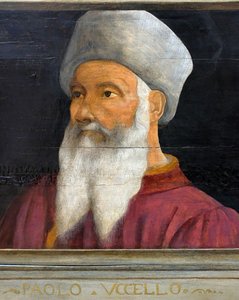
Paolo Uccello
1397 - 1475 , Italië
Snelle feiten
- Artistic Movement Or Style: Vroege Renaissance
- Artists Or Movements Influenced By This Artist:
- Dürer
- Renaissance
- Artists Who Influenced This Artist:
- Ghiberti
- Donatello
- Date Of Birth: 1397
- Date Of Death: 1475
- Full Name: Paolo Uccello
- Nationality: Italiaans
- Notable Artworks:
- San Romano
- Verloss van de Maagd
- Place Of Birth: Pratovecchio, Italië
Gerelateerde artikelen

OriginalUniqueArt.com F.A.Q.: Elevating Interiors with Bespoke Wall Murals & Masterpiece Frescoes
Discover the pinnacle of bespoke interior transformation with OriginalUniqueArt.com. Our master fresco artists create exquisite, hand-painted wall murals and ceiling masterpieces tailored to your estate. Elevate your architectural space with timeless, museum-quality artistry.


