

 Bekijk op ware grootte
 Verstuur
 Delen
Delen
 Details bekijken
 Gids voor studentenkunstwerken

 Download
 Vergelijkbare items
 Röntgenonderzoek
 Diavoorstelling
 Statistieken
Hope


 Lees meer
Giclée / Kunstafdrukken
Giclée- of canvasafdruk van museumkwaliteit met een snelle productie en flexibele afwerkingsmogelijkheden. ( Koop handgeschilderd kunstwerk Schakel over naar digitale afbeeldingen)




P118B €10

P118H €10

P118W €10

P438Z €10

P508JH €12

P508YH €12

P805H €10

P805Z €10

P919BZ €10

P919G €10

P919XJ €10

P959ZH €10

P968JZ €12

W106C €8

W218G €10

W218JH €8

W218Y €10

W307PJ €10

W316G €10

W316PJ €8

W316Y €10

W398PJ €8

W4111J €10

W500HY €15

W500JH €15

W692G €12

W849H €8

W940BG €15

W953PJ €8




Kies uit onze vooraf ingestelde maten die overeenkomen met de originele verhoudingen van het kunstwerk.

Voer de breedte en de hoogte in die u nodig heeft, passend bij uw lijst of uw muur. Een afdruk kan alleen worden ingekort, nooit groter worden gemaakt dan het origineel, waardoor een formaat met een andere verhouding een deel van de afbeelding verliest. Wij sturen u een digitaal mockup ter goedkeuring voordat we iets drukken. De afbeelding op deze pagina toont niet de werkelijke uitsnede — dit is alleen te zien op het mockup.
Wereldwijde levering () binnen 2 weken in plaats van de standaard 4/5 weken. (21 oktober)

Gratis wereldwijde expressverzending

Hoogwaardig linnen canvas

Volledige verzendverzekering

Garantie op terugbetaling van invoerrechten

Garantie op exacte kleurweergave

Retourbeleid van 100 dagen (alleen bij defecten)

100% Geld-terug-garantie

Korting bij meerdere afnames
 De optie voor glas is alleen beschikbaar bij een formaat kleiner dan 110 cm.

Hope
Giclée / Kunstafdrukken
Formaat reproductie
-


Totaalprijs
€ 71
Paolo Uccello’s ‘Hope’: A Renaissance Vision of Faith and Ascent
Paolo Uccello's “Hope,” painted around 1435, is not merely a depiction of a woman reaching towards the heavens; it’s a profound exploration of faith, perspective, and the burgeoning humanist ideals of the Early Renaissance. This captivating work, housed within the Duomo di Firenze (Florence Cathedral), offers a glimpse into Uccello's unique artistic vision – one characterized by an obsessive pursuit of mathematical precision blended with a vibrant, almost theatrical use of color and movement.
Uccello’s background as a barber-surgeon, coupled with his family’s noble lineage, instilled in him both a practical eye for detail and an appreciation for refined aesthetics. He wasn't simply a painter; he was a meticulous investigator, fascinated by the mechanics of sight and how to translate three-dimensional space onto a two-dimensional surface. This intellectual curiosity is strikingly evident in “Hope,” where he masterfully employs linear perspective – a technique still relatively new at this time – to create an illusion of depth that draws the viewer into the scene.
The Figure and Her Gesture
At the heart of the painting stands a woman, her posture radiating both serenity and fervent aspiration. She’s draped in a simple yet elegant green gown, its color echoing the lush foliage surrounding her – a subtle nod to nature's enduring symbolism of hope and renewal. Her hands are raised towards the sky, not in supplication, but with an expression of confident expectation. The gesture is crucial; it isn’t passive waiting, but active reaching, suggesting a belief in a future filled with promise.
The figure's face remains partially obscured, adding to her enigmatic quality and allowing viewers to project their own hopes and desires onto the image. She appears to be gazing at an unseen celestial event – perhaps a radiant angel or a divine manifestation – further emphasizing the painting’s spiritual core. The composition is carefully balanced; the woman occupies the central space, while the surrounding figures—a man on the left and two others on the right—create a dynamic backdrop that reinforces her upward trajectory.
Technique and Color
Uccello's mastery of color is immediately apparent. He utilizes a rich palette – yellows, blues, reds, and whites – to create a luminous effect, particularly in the depiction of the sky. The use of layered glazing techniques gives the colors depth and vibrancy, while strategically placed highlights draw attention to key elements within the composition. Notice how he employs atmospheric perspective, with distant objects appearing paler and less distinct, further enhancing the illusion of space.
The painting’s surface is characterized by a smooth, polished finish, indicative of Uccello's meticulous preparation and application of paint. His attention to detail extends beyond color; he carefully renders the folds of the woman’s gown, the textures of the surrounding foliage, and even the subtle expressions on the faces of the supporting figures. This dedication to realism, combined with his innovative use of perspective, distinguishes “Hope” as a landmark achievement in Renaissance art.
Symbolism and Context
"Hope" was likely commissioned for the Chapel of Our Lady of the Assumption within Florence’s Duomo. The chapel's design reflects the broader artistic trends of the period, incorporating elements of Gothic and Early Renaissance styles. The painting’s theme—hope—resonates deeply with the religious context of the commission, aligning with the church’s desire to inspire faith and devotion among its congregation.
Beyond its immediate religious significance, “Hope” embodies the humanist ideals that were gaining momentum during the Early Renaissance. The focus on human experience, particularly the aspiration for a better future, reflects a shift away from purely theological concerns towards a more worldly perspective. Uccello’s innovative use of perspective and his masterful rendering of space demonstrate a desire to understand and represent the world in a more accurate and compelling way – a hallmark of Renaissance art.
Bringing ‘Hope’ Home: A High-Quality Reproduction
OriginalUniqueArt offers meticulously crafted, hand-painted reproductions of Paolo Uccello's “Hope,” allowing you to bring this iconic masterpiece into your home or office. Our skilled artists replicate Uccello’s distinctive style and techniques with the utmost care, ensuring that each reproduction captures the painting’s original beauty and emotional impact. Choose from a range of sizes and canvas materials to perfectly complement your décor. Experience the timeless allure of “Hope” – a testament to Renaissance artistry and enduring human aspiration.
Vragen & Antwoorden
Welke emotionele toon gaat gepaard met de Early Renaissance-stijl van "Hope"?
De Hopeful emotie van "Hope" gaat samen met de Early Renaissance stijl.
Hoe harmonieus zijn de kleuren van "Hope" door Paolo Uccello?
"Hope" door Paolo Uccello vertoont een Strong Color Unity kleurharmonie.
Hoeveel mensen bekijken "Hope"?
De Statistieken-pagina van "Hope" door Paolo Uccello presenteert statistieken over publieksbezoeken: de maandelijkse bezoeken aan dit kunstwerk, een vergelijking met de meest bekeken werken van de kunstenaar en de herkomst van de bezoekers.
Biografie van de kunstenaar
A Florentine Visionary: The Life and Art of Paolo Uccello
Paolo Uccello, geboren Paolo di Dono in 1397, midden in de heuvels rond Florence, blijft een van de meest fascinerende en enigmatische figuren van het vroege Renaissance. Zijn bijnaam – “Uccello” – ‘vogel’ – hint naar een speelse natuur en een artistieke neiging tot het weergeven van de vogelwereld, maar verbergt een geest die diep betrokken is bij de opkomende intellectuele stromingen van zijn tijd. Hij was niet alleen een schilder; hij was een pionier, een wiskundige van het doek, strevend naar de geheimen van visuele ruimte en deze te vertalen in betoverende kunstwerken. Zijn vader, Dono di Paolo, oefende zowel de beroepen van barbier-chirurg als handelaar uit, terwijl zijn moeder, Antonia, afkomstig was uit een Florentijnse adellijke familie – een erfgoed dat hem mogelijk zowel een praktische gevoeligheid als een waardering voor verfijnde esthetiek meebracht. Van 1412 tot 1416 bracht Uccello zijn vormende jaren door onder de begeleiding van Lorenzo Ghiberti, wiens werkplaats een broeinest was van artistische innovatie, gericht op het creëren van de prachtigste bronzen deuren voor Florence’s Baptisterium. Deze vroege blootstelling introduceerde hem in de heersende Gotiek, met zijn nadruk op decoratieve elegantie en narratieve helderheid, maar ontketende tegelijkertijd een verlangen om daarbuiten te gaan.The Pursuit of Perspective: A Mathematical Mind at Play
Uccello’s artistieke ontwikkeling was niet alleen gericht op het beheersen van techniek; het werd gedreven door een onverzadigbare nieuwsgierigheid naar de onderliggende principes die perceptie regeren. Hij raakte verzonken in wiskunde, met name geometrie en perspectief, niet als abstracte disciplines maar als hulpmiddelen om een echtere weergave van de werkelijkheid te ontlokken. Hoewel Filippo Brunelleschi vaak wordt toegeschreven aan het ontdekken van lineair perspectief, was Uccello een van de eersten die dit systematisch toepaste op schilderkunst, nauwkeurig verdwijningspunten en orthogonale lijnen berekende om een illusie van diepte te creëren die eerder grotendeels afwezig was in kunst. Dit ging niet alleen om technische nauwkeurigheid; voor Uccello werd perspectief een middel tot het structureren van narratie, drama te verhogen en zijn composities een gevoel van orde en intellectuele ernst te geven. Zijn fascinatie was bijna obsessief, zoals beschreven door Giorgio Vasari, die Uccello omschreef als iemand die zich laat zien in de late uren van de nacht, verloren in contemplatie over verdwijningspunten en ruimtelijke relaties. Deze toewijding, hoewel soms als excentriek werd ervaren, heeft uiteindelijk de schilderkunst veranderd en het pad geëffend voor toekomstige generaties kunstenaars.Masterpieces of Illusion: Key Works and Stylistic Traits
Uccello’s oeuvre, hoewel relatief klein, is gekenmerkt door een kenmerkende stijl die Gotische elegantie combineert met Renaissance-innovatie. The Battle of San Romano, een reeks van drie panelen besteld ter ere van een Florentijnse overwinning, staat als zijn meest beroemde prestatie. Deze schilderijen zijn niet alleen weergaven van oorlog; ze zijn dynamische composities vol met rondzwervende figuren, fragmentarisch harnas en dramatisch verschoven lansen – allemaal weergegeven in levendige kleuren en gerangschikt volgens nauwkeurig berekende perspectief. The Birth of the Virgin toont Uccello’s beheersing van lineair perspectief, waardoor een overtuigende illusie van diepte ontstaat in een beperkte ruimte, terwijl zijn St George and the Dragon een opvallend beeld weergeeft van de legendarische heilige, gekenmerkt door felle kleuren en gestileerde vormen. Zelfs in werken zoals *The Flood and the Ark*, onderdeel van de fresco’s in de Santa Maria Novella, toont Uccello’s fascinatie met architectonisch detail en complexe composities zich duidelijk. Zijn stijl onthult consequent:- Een levendige palet en een felle kleurgebruik.
- Een nadruk op lineair perspectief, vaak tot het uiterste gedreven voor dramatische effecten.
- Gestileerde figuren en decoratieve patronen die herinnering roepen aan Gotische kunst.
- Een diepe fascinatie met geometrische vormen en ruimtelijke relaties.
Legacy and Influence: A Lasting Impact on Art History
Paolo Uccello’s bijdrage aan de Renaissance gaat verder dan zijn individuele schilderijen. Zijn baanbrekende verkenning van perspectief heeft het pad van kunstgeschiedenis fundamenteel veranderd, invloed uitsgierend op talloze kunstenaars die na hem kwamen. Albrecht Dürer, de beroemde Duitse printmaker en schilder, werd diep beïnvloed door Uccello’s werk, en verdiepte zich in het bestuderen van perspectief en integreerde deze principes in zijn eigen artistieke praktijk. Hoewel Uccello’s stijl gedurende zijn hele carrière enigszins excentriek bleef – een uniek mengsel van Gotische verfijning en Renaissance-innovatie – heeft zijn baanbrekende benadering van ruimte en vorm de kunstgeschiedenis voorgoed veranderd. Hij stierf in Florence in 1475, nalatend niet alleen prachtige schilderijen maar ook intellectuele nieuwsgierigheid en artistieke moed. Zijn werk inspireert nog steeds bewondering en waardering, herinnerend ons dat ware kunst niet alleen wordt gezien, maar ook begrepen wordt.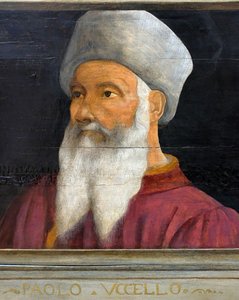
Paolo Uccello
1397 - 1475 , Italië
Snelle feiten
- Artistic Movement Or Style: Vroege Renaissance
- Artists Or Movements Influenced By This Artist:
- Dürer
- Renaissance
- Artists Who Influenced This Artist:
- Ghiberti
- Donatello
- Date Of Birth: 1397
- Date Of Death: 1475
- Full Name: Paolo Uccello
- Nationality: Italiaans
- Notable Artworks:
- San Romano
- Verloss van de Maagd
- Place Of Birth: Pratovecchio, Italië
Gerelateerde artikelen

OriginalUniqueArt.com F.A.Q.: Elevating Interiors with Bespoke Wall Murals & Masterpiece Frescoes
Discover the pinnacle of bespoke interior transformation with OriginalUniqueArt.com. Our master fresco artists create exquisite, hand-painted wall murals and ceiling masterpieces tailored to your estate. Elevate your architectural space with timeless, museum-quality artistry.


