Voorvertoning
 Verstuur
 Delen
Delen
 Details bekijken
 Gids
Gids

 Download
 Vergelijkbare items
 Röntgenonderzoek
 Diavoorstelling
 Statistieken
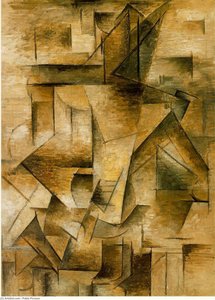
Self-portrait (profile)

 Lees meer
De kunstwerken die op deze pagina worden weergegeven, zijn beschermd door de auteursrechtwetgeving, wat betekent dat het ons wettelijk niet is toegestaan om identieke reproducties te maken of te verkopen. Deze bescherming wordt gehandhaafd onder internationale overeenkomsten zoals de Conventie van Bern en door nationale wetgeving, waaronder de bepalingen van de Amerikaanse auteurswet - Titel 17. Alle rechten voorbehouden. Reproduceren of distribueren van afbeeldingen is niet toegestaan zonder uitdrukkelijke schriftelijke toestemming van WahooArt.com en de rechthebbenden.
Deze methode voldoet volledig aan de auteursrechtwetgeving, omdat het niet gaat om het kopiëren of dupliceren van het beschermde kunstwerk. In plaats daarvan is er sprake van een creatieve herinterpretatie — een nieuw schilderij dat door het origineel wordt geïnspireerd, maar er niet identiek aan is.
Giclée / Kunstafdrukken
Giclée- of canvasafdruk van museumkwaliteit met een snelle productie en flexibele afwerkingsmogelijkheden. ( Bestel handgeschilderde reproductie Schakel over naar digitale afbeeldingen)




P118B €10

P118H €10

P118W €10

P438Z €10

P508JH €12

P508YH €12

P805H €10

P805Z €10

P919BZ €10

P919G €10

P919XJ €10

P959ZH €10

P968JZ €12

W106C €8

W218G €10

W218JH €8

W218Y €10

W307PJ €10

W316G €10

W316PJ €8

W316Y €10

W398PJ €8

W4111J €10

W500HY €15

W500JH €15

W692G €12

W849H €8

W940BG €15

W953PJ €8




Kies uit onze vooraf ingestelde maten die overeenkomen met de originele verhoudingen van het kunstwerk.

Voer de gewenste breedte en hoogte in, passend bij uw lijst of muur. Een afdruk kan alleen worden ingekort en nooit groter worden gemaakt dan het origineel; een formaat met andere verhoudingen zal daarom een deel van de afbeelding verliezen. Wij sturen u een digitaal mockup ter goedkeuring voordat we tot drukwerk overgaan. De afbeelding op deze pagina toont niet de werkelijke uitsnede — dit is alleen te zien op het mockup.
Wereldwijde levering () binnen 2 weken in plaats van de standaard 4/5 weken. (27 oktober)

Gratis wereldwijde expressverzending

Hoogwaardig linnen canvas

Volledige verzendverzekering

Garantie op terugbetaling van invoerrechten

Garantie op exacte kleurweergave

Retourbeleid van 100 dagen (alleen bij defecten)

100% Geld-terug-garantie

Korting bij meerdere afnames
 De optie voor glas is alleen beschikbaar bij een formaat kleiner dan 110 cm.

Self-portrait (profile)
Giclée / Kunstafdrukken
Afmetingen reproductie
-


Eindtotaal
€ 71
A Profile in Graphite: Picasso’s Early Exploration of Form
Pablo Ruiz y Picasso, born in Málaga, Spain, on October 25, 1881, wasn't merely an artist; he was a force reshaping the landscape of modern art. Legend recounts that his first utterance – “piz, piz” – signified his instinctive grasp for the medium: pencil. This formative fascination blossomed under the guidance of his father, José Ruiz y Blasco, a painter who instilled in young Pablo foundational artistic principles. Yet, Picasso swiftly surpassed his mentor’s achievements, demonstrating an unparalleled ability to depict naturalistic scenes that hinted at the brilliance destined to illuminate his future endeavors. The family's subsequent relocations – from A Coruña to Barcelona – were interwoven with poignant personal experiences, notably the devastating loss of his sister, which subtly imprinted upon his later works themes of sorrow and mortality. Even during formal studies at the School of Fine Arts in Barcelona and a brief foray into the Royal Academy of San Fernando in Madrid, Picasso resisted academic conventions, prioritizing experimentation and pushing boundaries—a characteristic that would define his artistic trajectory.Composition and Technique: Embracing Minimalism Through Texture
This striking self-portrait exemplifies Picasso’s mastery of early drawing techniques. Executed with meticulous pencil strokes, the artwork prioritizes form over color, utilizing a monochrome palette of shades ranging from near-white highlights to deep black shadows. The composition centers on the head and upper neck, cropped tightly to maximize visual impact—a deliberate choice reflecting Picasso's stylistic evolution away from Impressionism towards Cubist principles. Short, closely spaced hatching lines generate palpable texture, conveying depth and dynamism within the restrained tonal range. Longer strokes delineate contours with precision, capturing the subtle nuances of facial musculature and bone structure. The artist’s technique isn’t merely about representation; it's an active engagement with materiality—a testament to Picasso’s dedication to honing his craft before embracing the revolutionary geometric abstractions that would solidify his artistic legacy.Symbolism and Emotional Resonance: A Glimpse into Inner Reflection
The downward gaze of Picasso’s portrait is particularly noteworthy, conveying a sense of introspection or contemplative melancholy. This posture speaks volumes about the artist's psychological state—a preoccupation with themes of identity and self-awareness that would recur throughout his oeuvre. The simplicity of the background underscores the centrality of the figure itself, inviting viewers to contemplate its expressive qualities. Picasso’s early drawings often grapple with existential questions, mirroring the anxieties prevalent in Europe at the turn of the century. This portrait isn't simply a likeness; it’s an embodiment of artistic exploration—a visual manifestation of Picasso’s ongoing quest for understanding and conveying emotion through form and texture.Historical Context: Precursors to Cubism’s Bold Experimentation
Prior to his groundbreaking embrace of Cubist aesthetics, Picasso honed his skills in realistic depiction, demonstrating an exceptional command of observational drawing. This self-portrait stands as a crucial stepping stone on his artistic journey—a foundational exercise that established the groundwork for his subsequent stylistic innovations. It reflects the broader artistic currents of the period, characterized by a rejection of traditional conventions and a fascination with fragmented perspectives. Picasso’s meticulous attention to detail foreshadowed Cubism's radical departure from representational art, signaling a pivotal moment in the history of 20th-century painting.A Timeless Portrait: Inspiration for Reproduction
This poignant self-portrait remains an enduring symbol of artistic integrity and expressive power. Its understated elegance—achieved through masterful pencil technique and careful compositional choices—continues to inspire artists and collectors alike. A high-quality reproduction captures the essence of Picasso’s vision, allowing viewers to appreciate the subtle nuances of texture and tonal gradation that elevate this artwork beyond mere likeness into a profound meditation on selfhood and artistic exploration.Veelgestelde vragen
Hoe kan ik "Self-portrait (profile)" door Pablo Picasso bekijken als een diavoorstelling?
Er is een diavoorstelling beschikbaar op de Diavoorstelling-pagina van "Self-portrait (profile)" door Pablo Picasso.
Is "Self-portrait (profile)" vrij van auteursrecht?
Wat betreft het auteursrecht valt "Self-portrait (profile)" onder nog steeds auteursrechtelijk beschermd.
Is "Self-portrait (profile)" in zijn geheel eerder licht of donker?
De vastgestelde waarden voor "Self-portrait (profile)" door Pablo Picasso zijn: brilliant helderheid en Bright Balance luminantie.
Biografie kunstenaar
De Vroege Jaren en Fundamenten: Málaga tot Barcelona
Pablo Ruiz Picasso, een naam die onlosmakelijk verbonden is met de revolutie in de kunstwereld, zag het levenslicht op 25 oktober 1881 in het bruisende Málaga, Spanje. Vanaf zijn vroegste jeugd leek hij voorbestemd tot een creatief bestaan; er gaat zelfs de legende dat zijn eerste woorden “piz, piz” waren, een poging om ‘potlood’ te zeggen. Deze vroege aanleg werd met zorg gekoesterd door zijn vader, José Ruiz y Blasco, zelf een schilder en kunstleraar die Pablo de basisvaardigheden bijbracht. Al snel bleek echter dat de leerling zijn meester overtrof, met een opmerkelijke begaafdheid voor naturalistisch weergeven die de uitzonderlijke talenten van de jonge Picasso verraadde. De familie’s latere verhuizingen – eerst naar A Coruña en vervolgens Barcelona – werden gekenmerkt door persoonlijke tegenslagen, in het bijzonder het verlies van Picasso's zus, ervaringen die zijn latere werk subtiel zouden doordringen met thema’s als melancholie en sterfelijkheid. Zelfs tijdens zijn formele studies aan de School voor Schone Kunsten in Barcelona en een korte periode aan de Koninklijke Academie van San Fernando in Madrid botste Picasso op starre academische beperkingen, hij verkoos het zich onder te dompelen in het werk van meesters als Velázquez en Goya, waarmee hij zijn eigen pad naar artistieke vernieuwing insloeg.
De Blauwe en Roze Periodes: Emotie en Transformatie
Het begin van de 20e eeuw bracht twee duidelijke periodes voort in Picasso’s oeuvre: de Blauwe Periode (ongeveer 1901-1904) en de Roze Periode (1904-1906). De Blauwe Periode, geboren uit persoonlijke ontberingen en een scherp bewustzijn van sociaal lijden, wordt gekenmerkt door schilderijen die doordrenkt zijn van sombere tinten blauw en blauwgroen. Deze werken worden bevolkt door gemarginaliseerde figuren – bedelaars, blinden, prostituees – geschilderd met een aangrijpende empathie die spreekt over thema’s als isolatie en wanhoop. La Vie (1903) en The Old Guitarist (1903-1904) zijn treffende voorbeelden van deze emotioneel geladen fase. Een verschuiving in Picasso's persoonlijke leven, gecombineerd met een verhuizing naar Parijs, luidde het begin in van de Roze Periode. Het palet werd aanzienlijk warmer, met roze-, oranje- en rode tinten die een optimistischer perspectief weerspiegelden. Deze periode kenmerkte zich door fascinatie voor circusartiesten – harlekijnen, acrobaten en familiespelers – figuren die zowel kwetsbaarheid als veerkracht belichaamden. Family of Saltimbanques (1905) vat deze overgang prachtig samen, met een hint naar de stilistische ontdekkingen die nog zouden komen.
De Revolutie van het Cubisme: Een Nieuwe Visie op Realiteit
Het jaar 1907 markeerde een cruciaal moment in de kunstgeschiedenis met de creatie van Les Demoiselles d'Avignon. Geïnspireerd door Iberisch beeldhouwwerk en Afrikaanse maskers, brak dit baanbrekende schilderij met traditionele opvattingen over perspectief en representatie. Het was een radicale afwijking, een bewuste verwerping van eeuwenoude conventies die de weg vrijmaakte voor het Cubisme. In nauwe samenwerking met Georges Braque richtte Picasso deze revolutionaire beweging op, waarmee hij fundamenteel veranderde hoe kunstenaars de werkelijkheid waarnamen en weergafven. Analytisch Cubisme (1909-1912) omvatte de fragmentatie van objecten in geometrische vormen, geschilderd in gedempte kleuren, alsof de vorm zelf ontleed werd. Dit evolueerde naar Synthetisch Cubisme (1912-1919), dat collage-elementen – krantenknipsels, stoffresten – integreerde, waardoor textuur en nieuwe lagen van visuele complexiteit ontstonden. Picasso was niet tevreden met het simpelweg representeren van de wereld; hij zocht naar manieren om deze te deconstrueren en op eigen voorwaarden te reconstrueren.
Neoclassicisme, Surrealisme en de Echo’s van Oorlog
In de jaren twintig experimenteerde Picasso kort met neoklassieke stijlen, waarbij hij monumentale figuren creëerde die klassieke vormen echoën terwijl ze toch een onderscheidende moderne gevoeligheid behielden. Tegelijkertijd raakte hij betrokken bij de opkomende surrealistische beweging, hoewel hij zich er nooit volledig mee identificeerde. Zijn werk uit deze periode combineerde eerdere stilistische invloeden met surrealistische beelden en vervormde perspectieven, waarmee hij zijn onophoudelijke experimenteerdrift demonstreerde. De verschrikkingen van de Spaanse Burgeroorlog hadden een diepgaande impact op Picasso, wat culmineerde in de creatie van Guernica (1937), een intense en emotioneel verwoestende reactie op het bombardement van Guernica. Dit monumentale werk werd een blijvend symbool van de gruwelen van oorlog, waarmee Picasso's rol als niet alleen kunstenaar maar ook krachtige stem voor vrede en sociale rechtvaardigheid verstevigd werd. Gedurende de jaren vijftig en zestig bleef hij grenzen verleggen, met onvermoeibare nieuwsgierigheid en vaardigheid keramiek, beeldhouwwerk en grafische kunst verkennend. Zijn huwelijk met Jacqueline Roque in 1961 bracht een nieuwe dimensie aan zijn persoonlijke leven en artistieke expressie.
Een Onmeetbare Erfenis
Pablo Picasso overleed op 8 april 1973 in Mougins, Frankrijk, en liet een verbazingwekkend oeuvre achter – geschat op meer dan 50.000 stukken – dat nog steeds boeit en inspireert. Zijn artistieke ontwikkeling werd gevormd door een diverse reeks invloeden, van Spaanse meesters als Velázquez en Goya tot Iberisch beeldhouwwerk, Afrikaanse kunst en de levendige kleurenpaletten van Henri Matisse. Zijn impact op de kunst van de 20e eeuw is onmeetbaar. Hij richtte het Cubisme op, was een pionier in collage en geconstrueerd beeldhouwwerk, en daagde voortdurend artistieke conventies uit. Picasso’s meedogenloze experimenteerdrift herdefinieerde de moderne kunst, waarmee hij een onuitwisbare stempel drukte op generaties kunstenaars en zijn positie als een van de belangrijkste en invloedrijkste figuren in de geschiedenis verstevigde. Zijn nalatenschap reikt verder dan het canvas, resoneert in talloze aspecten van de hedendaagse cultuur en herinnert ons aan de transformerende kracht van artistieke visie.

Pablo Picasso
1881 - 1973 , Spanje
Belangrijkste feiten
- Artistic Movement Or Style:
- Cubisme
- Surrealisme
- Artists Or Movements Influenced By This Artist:
- Cubisme
- Moderne kunst
- Artists Who Influenced This Artist:
- Velázquez
- Goya
- Matisse
- Date Of Birth: 25 oktober 1881
- Date Of Death: 8 april 1973
- Full Name: Pablo Diego José Ruiz Picasso
- Nationality: Spaans
- Notable Artworks:
- Les Demoiselles d'Avignon
- Guernica
- The Old Guitarist
- La Vie
- Family of Saltimbanques
- Place Of Birth: Málaga, Spanje
Gerelateerde artikelen
The Nuances of Graphite: Exploring Emotional Depth & Technical Mastery in Pencil Drawing
Explore the captivating world of graphite drawing! Discover its rich history, master essential techniques like chiaroscuro, and learn how artists evoke emotion through this timeless medium. Expert insights for art enthusiasts.

Top 10 Witte Meesterwerken: Kunstgeschiedenis & Interieurinspiratie
Ontdek de top 10 witte meesterwerken uit de kunstgeschiedenis! Van Monet tot Mondriaan, bewonder abstracte vormen & serene kleuren. Vind museumkwaliteit reproducties en interieurinspiratie op OriginalUniqueArt.com.
Top 10 Kubistische Portretten: Meesterwerken & Inspiratie voor Woondecoratie
Ontdek de 10 meest invloedrijke kubistische portretten van Picasso, Braque & meer. Leer over kunstgeschiedenis en technieken achter deze moderne meesterwerken. Vind museumkwaliteit reproducties voor uw interieur op OriginalUniqueArt.com!
Top 10 Cubistische Meesterwerken: Kunstgeschiedenis voor aan de Muur | OriginalUniqueArt
Ontdek de 10 meest invloedrijke kubistische meesterwerken van Picasso, Braque & meer. Leer over kunstgeschiedenis en technieken achter deze iconische werken. Museumkwaliteit reproducties op OriginalUniqueArt.com!
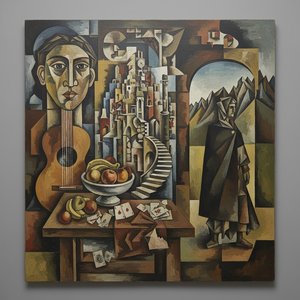
Top 10 Cubistische Meesterwerken: Kunst die de Ruimte Veranderde | OriginalUniqueArt.nl
Ontdek de 10 meest invloedrijke kubistische meesterwerken van Picasso, Braque & meer. Leer over hun baanbrekende technieken en betekenis. Vind museumkwaliteit kunst reproducties voor uw interieur op OriginalUniqueArt.com!