
 Voorvertoning
 Verstuur
 Delen
Delen
 Details bekijken

 Download
 Vergelijkbare items
 Röntgenonderzoek
 Diavoorstelling
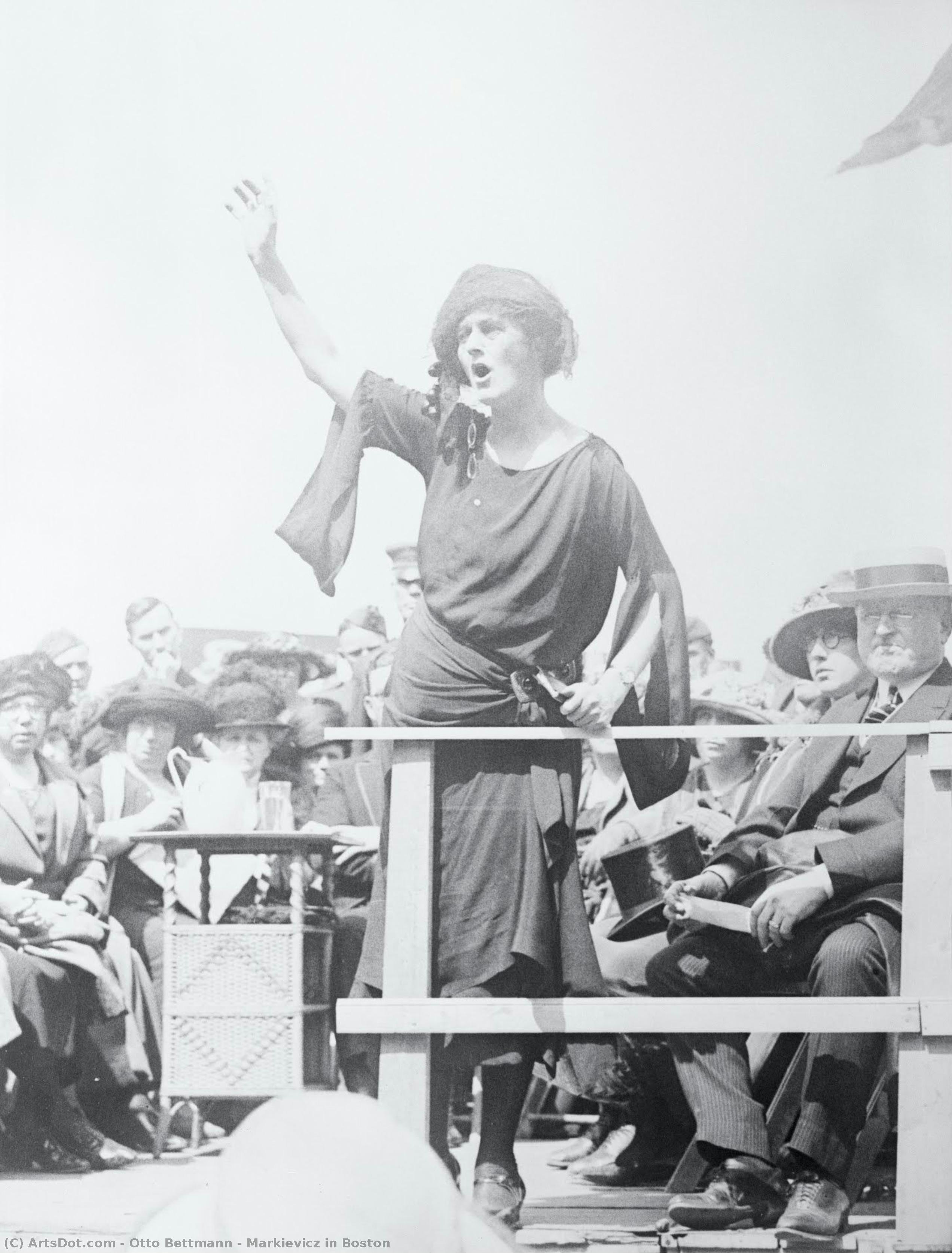
Markievicz in Boston


 Lees meer
Koop een digitale afbeelding in hoge resolutie met verbeterde kwaliteit, die veel superieur is aan de online voorvertoning.
Elk bestand wordt met uiterste precisie voorbereid door onze interne specialisten, met behulp van geavanceerde tools en deskundige handmatige retouche. Wij garanderen dat elke afbeelding een uitzonderlijke helderheid, nauwkeurige kleurweergave en verfijnde details bezit.
Het uiteindelijke bestand wordt binnen 72 uur per e-mail geleverd, geoptimaliseerd voor direct gebruik in professionele, redactionele en printomgevingen. Dit is dezelfde kwaliteit waarop vooraanstaande designstudio's, uitgevers en galerieën vertrouwen.
Digitale afbeeldingen
Download een bestand met hoge resolutie voor persoonlijke weergave, afdrukken en creatieve projecten. ( Bestel print Bestel handgeschilderde reproductie)
Inbegrepen bij elke bestelling van een digitale afbeelding
Professionele digitale levering, gegarandeerd
Wanneer u kiest voor OriginalUniqueArt.com, ontvangt u niet alleen een afbeelding – u krijgt een professioneel verbeterd digitaal kunstwerk, met precisie vervaardigd en voorzien van een tevredenheidsgarantie. Dit is alles wat automatisch bij uw bestelling is inbegrepen:

Snelle levering per e-mail
Uw hoogwaardige digitale afbeeldingsbestand wordt binnen 72 uur na bestelling naar u gemaild – klaar voor direct gebruik.

AI-verbeterd digitaal bestand
Uw kunstwerk wordt professioneel geoptimaliseerd met behulp van geavanceerde AI-tools en handmatige bewerkingen, waardoor maximale details, helderheid en kleurnauwkeurigheid worden gegarandeerd.

Gratis levenslange herlevering van digitale afbeeldingen
Je bestand per ongeluk verwijderd of kwijtgeraakt? Geen zorgen – we sturen het u op elk gewenst moment gratis opnieuw toe.

Geen invoerkosten – nooit
Geniet direct van uw kunstwerk zonder invoerrechten, belastingen of verzendkosten – digitale downloads zijn altijd belastingvrij.

Garantie op kleurgetrouwheid
Met behulp van professionele hulpmiddelen en kleurbeheer zorgen wij ervoor dat uw digitale afbeelding de originele kleuren zo nauwkeurig mogelijk weergeeft.

60 dagen tevredenheidsgarantie
Als u niet tevreden bent met uw digitale afbeelding, passen wij deze aan of storten wij 100% terug binnen 60 dagen – zonder vragen gesteld.

100% Geld-terug-garantie
Niet tevreden? Ontvang binnen 60 dagen na ontvangst van uw digitale bestand uw volledige aankoopbedrag terug – zonder vragen te stellen.

Korting bij grote bestellingen
Koop 3 afbeeldingen, bespaar 10% - Koop 5, bespaar 15% - Koop 10+, bespaar 20%. Ideaal voor creatieve projecten, galerieën en bureaus.
Kunstenaarsbiografie
Otto Bettmann: The Architect of Retro
Otto Ludwig Bettmann (1903–1998) wasn’t merely a photographer; he was an obsessive collector, a meticulous organizer, and arguably the progenitor of “retro,” a stylistic movement that profoundly shaped visual culture for decades. Born in Leipzig, Germany, his early life instilled within him a lifelong fascination with ephemera—fragments of history captured in print and image – a passion that would define his extraordinary career. His story is one of escape from Nazi oppression, entrepreneurial ingenuity, and an unwavering dedication to preserving the artistic heritage of the past.- Early Life & Education: Bettmann’s formative years were marked by intellectual curiosity and a love for literature fostered by his bibliophile father. He pursued postgraduate studies at Leipzig University, earning a doctorate in German Philology before embarking on a journey that would lead him to America.
- Immigration & The Founding of the Archive: Driven by fears of persecution under Hitler’s regime, Bettmann fled Germany in 1935 with two trunks brimming with photographs and clippings—a treasure trove he envisioned transforming into a monumental repository for visual history. This ambition materialized in 1936 with the establishment of the Bettmann Archive, initially housed in his Manhattan apartment.
The Genesis of Retro: A Visionary Approach
Bettmann’s revolutionary concept wasn't simply acquiring old images; it was reimagining how they could be utilized. Recognizing that magazine editors and designers craved visual inspiration without the arduous process of exhaustive research, he pioneered a method of licensing photographs based on size and usage—a shrewd business strategy that quickly garnered him a loyal clientele. CBS famously sought Bettmann’s expertise to inject vintage imagery into advertising campaigns, demonstrating his understanding of contemporary aesthetics and marketing trends. He famously stated: “Working out of my tiny office in Manhattan I rented printed images for one time use for a sliding fees.”- Cataloguing & Organization: Bettmann's meticulous cataloguing system—cross-referencing themes and subjects with unparalleled precision—became the benchmark for visual resource libraries. This innovative approach ensured rapid retrieval of materials, reflecting his belief that accessibility was paramount to preserving cultural memory.
- Influence on Graphic Design: Bettmann’s archive exerted an undeniable influence on graphic design trends throughout the 1960s and beyond. Designers routinely incorporated antique prints into their layouts, capitalizing on Bettmann's foresight in recognizing the power of historical imagery to evoke emotion and convey timeless narratives.
A Legacy of Preservation & Artistic Insight
Beyond his entrepreneurial success, Bettmann possessed a deep appreciation for art and literature—a passion that extended into his personal life. He authored or co-authored fourteen books exploring diverse subjects ranging from Bach’s music to the complexities of nostalgia, showcasing his erudition and intellectual breadth. His 1974 book “The Good Old Days: They Were Terrible” offered a critical perspective on sentimental longing—a testament to his willingness to engage with challenging ideas. He continued to cultivate interests in photography, publishing *Johann Sebastian Bach as His World Knew Him* in 1995 and documenting thousands of published images of women for a pictorial chronicle.- The Move to Iron Mountain: Recognizing the vulnerability of his collection to environmental degradation, Bettmann orchestrated its relocation to Iron Mountain National Underground Storage Facility in Pennsylvania—a daring undertaking that ensured the preservation of his archive for future generations.
- Final Years & Recognition: In his later years, Bettmann remained active in promoting his archive and fostering collaborations with artists and designers. His unwavering dedication to his craft and his profound understanding of visual culture cemented his place as a pivotal figure in 20th-century art history.
The Bettmann Archive Today
Today, Getty Images owns the Bettmann Archive—a testament to its enduring value and significance. The archive continues to inspire creativity and scholarship, serving as an invaluable resource for researchers and artists alike. Otto Ludwig Bettmann’s legacy extends far beyond his pioneering cataloguing system; it resides in his unwavering belief that images could illuminate the past and enrich our understanding of the present—a conviction that resonates powerfully with contemporary artistic sensibilities.
otto bettmann
1903 - 1998 , Germany
Belangrijkste feiten
- Artistic Movement Or Style: Neue Sachlichkeit
- Artists Or Movements Influenced By This Artist: ['Pictorialism']
- Artists Who Influenced This Artist: ['Alfred Stieglitz']
- Date Of Death: 1998
- Full Name: Otto Ludwig Bettmann
- Nationality: German
- Notable Artworks: ['Various photographic prints']
- Place Of Birth: Leipzig, Germany

