Voorvertoning
 Verstuur
 Delen
Delen
 Details bekijken
 Gids
Gids

 Download
 Vergelijkbare items
 Röntgenonderzoek
 Diavoorstelling
 Statistieken
Danaë
 Oil On Canvas
- WallArt
- Baroque Symbolism
 1621
1621- Early Modern
 163.0 x 228.0 cm
 Cleveland Museum of Art
 Lees meer
Giclée / Kunstafdrukken
Giclée- of canvasafdruk van museumkwaliteit met een snelle productie en flexibele afwerkingsmogelijkheden. ( Bestel handgeschilderde reproductie Schakel over naar digitale afbeeldingen)




P118B €10

P118H €10

P118W €10

P438Z €10

P508JH €12

P508YH €12

P805H €10

P805Z €10

P919BZ €10

P919G €10

P919XJ €10

P959ZH €10

P968JZ €12

W106C €8

W218G €10

W218JH €8

W218Y €10

W307PJ €10

W316G €10

W316PJ €8

W316Y €10

W398PJ €8

W4111J €10

W500HY €15

W500JH €15

W692G €12

W849H €8

W940BG €15

W953PJ €8




Kies uit onze vooraf ingestelde maten die overeenkomen met de originele verhoudingen van het kunstwerk.

Voer de gewenste breedte en hoogte in, passend bij uw lijst of muur. Een afdruk kan alleen worden ingekort en nooit groter worden gemaakt dan het origineel; een formaat met andere verhoudingen zal daarom een deel van de afbeelding verliezen. Wij sturen u een digitaal mockup ter goedkeuring voordat we tot drukwerk overgaan. De afbeelding op deze pagina toont niet de werkelijke uitsnede — dit is alleen te zien op het mockup.
Wereldwijde levering () binnen 2 weken in plaats van de standaard 4/5 weken. (26 oktober)

Gratis wereldwijde expressverzending

Hoogwaardig linnen canvas

Volledige verzendverzekering

Garantie op terugbetaling van invoerrechten

Garantie op exacte kleurweergave

Retourbeleid van 100 dagen (alleen bij defecten)

100% Geld-terug-garantie

Korting bij meerdere afnames
 De optie voor glas is alleen beschikbaar bij een formaat kleiner dan 110 cm.

Danaë
Giclée / Kunstafdrukken
Afmetingen reproductie
-


Eindtotaal
€ 71
A Golden Encounter: The Luminous Grace of Orazio Gentileschi
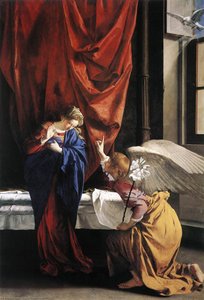
In the quiet, dramatic corridors of the Baroque era, few works capture the intersection of divine intervention and human vulnerability as poignantly as Orazio Gentileschi’s Danaë. Painted around 1621-1623, this masterpiece serves as a breathtaking window into a moment of mythological transformation. The scene centers on Danaë, the mortal princess destined to conceive a hero, captured in a state of profound anticipation. As she reclines upon a bed of opulent white linens and deep crimson pillows, the viewer is drawn into her private world—a space where the boundaries between the earthly and the celestial begin to dissolve. The composition is a masterclass in tension; her dynamic pose, with one hand reaching toward the unseen and the other raised in a gesture of startled wonder, invites us to feel the very heartbeat of the narrative.
The brilliance of this work lies in its sophisticated use of chiaroscuro, a technique heavily influenced by the revolutionary Caravaggio. Gentileschi employs a stark, dramatic contrast between the deep, velvety shadows of the background and the radiant, luminous skin of Danaë. This light does not merely illuminate; it sculptates, giving her form a palpable, three-dimensional presence that seems to breathe within the frame. The interplay of light across the heavy gold drapery and the soft textures of the bedding creates a sensory experience so rich that one can almost feel the weight of the silk and the warmth of the atmosphere. For the discerning collector or interior designer, this painting offers a profound sense of depth and drama, making it an unparalleled focal point for any space dedicated to classical elegance.
Symbolism and the Baroque Soul
Beyond its technical prowess, Danaë is a profound meditation on fate and the transformative power of grace. The painting captures the precise moment of divine visitation, where the mythic Zeus descends not as a king, but as a shower of gold to penetrate the princess's chamber. This element of "divine light" serves as a powerful symbol of inspiration and sudden, life-altering change. The richness of the palette—the deep reds, the shimmering golds, and the stark whites—works in harmony to evoke themes of wealth, fertility, and the sacred. There is an inherent tension between the physical opulence of her surroundings and the spiritual weight of the event unfolding.
For those looking to bring a piece of art history into a contemporary setting, this reproduction offers more than mere decoration; it provides an emotional anchor. The painting’s ability to evoke both intimacy and grandeur makes it a versatile choice for sophisticated interiors. Whether placed in a sunlit gallery or a moody, library-style study, the work commands attention through its narrative intrigue and its masterful execution of color and light. It remains a testament to Gentileschi's unique ability to marry the gritty naturalism of his Roman influences with a refined, lyrical grace that continues to captivate the modern eye.
Veelgestelde vragen
Zijn er werken die lijken op "Danaë"?
Op de Vergelijkbare werken-pagina van dit kunstwerk vindt u vergelijkbare werken als "Danaë" door Orazio Gentileschi.
Waar kan ik een handgeschilderde reproductie van "Danaë" door Orazio Gentileschi kopen?
Handgeschilderde reproducties van "Danaë" door Orazio Gentileschi zijn verkrijgbaar via deze website: een met de hand geschilderde olieverfreproductie op linnen canvas, te bestellen op de Handgeschilderde reproductie pagina.
Uit welke periode stamt "Danaë" door Orazio Gentileschi?
"Danaë" door Orazio Gentileschi dateert uit de Early Modern-periode. Deze periode biedt de historische context van het werk.
Biografie kunstenaar
A Tuscan Dawn: The Life and Art of Orazio Gentileschi
Born in 1563 amidst the rolling hills of Tuscany, Orazio Gentileschi embarked on a journey that would see him become a pivotal figure in the transition from Mannerism to Baroque painting. Initially known as Orazio Lomi, he gravitated towards Rome, then the epicenter of artistic innovation, where he honed his skills within the workshops of Cola dell’Amata and absorbed the architectural sensibilities of Francesco da Sangallo. These early influences instilled in him a meticulous attention to form and composition, characteristics that would remain hallmarks of his style even as it dramatically evolved. Gentileschi’s initial work often involved contributing figures to larger decorative schemes conceived by other artists – a formative experience that taught him collaboration and adaptability, yet also hinted at a burgeoning ambition for independent expression. He began his career assisting in the creation of elaborate frescoes and altarpieces, learning the fundamentals of perspective, color theory, and composition under the tutelage of established masters. This period served as a crucial apprenticeship, providing him with invaluable experience in executing complex scenes and understanding the demands of various patrons.Embracing the Shadow: Caravaggio's Influence and Artistic Development
The turn of the 17th century marked a turning point in Gentileschi’s artistic trajectory. The revolutionary naturalism of Caravaggio burst onto the Roman art scene, challenging established conventions with its dramatic use of light and shadow – *tenebrism* – and unflinching realism. Gentileschi was profoundly affected by this seismic shift, adopting elements of Caravaggio's style into his own work. However, he wasn’t merely an imitator; rather, he filtered Caravaggio’s innovations through his existing artistic sensibilities. While retaining the dramatic intensity, Gentileschi softened the harshness of Caravaggio’s *tenebrism*, introducing a lighter palette and a more refined approach to detail. This resulted in paintings that possessed both emotional power and elegant grace – a unique synthesis that distinguished him from his contemporaries. Biblical scenes and mythological narratives became frequent subjects, allowing Gentileschi to explore themes of faith, heroism, and human vulnerability with compelling visual storytelling. He skillfully employed Caravaggio’s techniques while maintaining a distinctly personal style, characterized by a sense of movement and dynamism rarely seen in the work of other artists influenced by the master.A Courtly Wanderer: From Paris to London
Gentileschi’s artistic reputation extended beyond Italy's borders. His talent attracted the patronage of powerful figures, leading him on a peripatetic journey through Europe. He spent time at the court of Marie de' Medici in Paris, where his refined style resonated with the Queen’s taste for elegance and sophistication. This period saw a further evolution in his work, characterized by increasingly elaborate compositions and a heightened sense of decorum. He became known for his ability to capture the nuances of aristocratic life, depicting portraits that were both flattering and revealing. However, it was his invitation to England in 1626 that would define the final chapter of his career. Appointed court painter to Charles I, Gentileschi became one of the first major exponents of Caravaggism in Britain, significantly influencing the development of English Baroque painting. He undertook ambitious projects, including a series of ceiling paintings for Greenwich Palace (now Marlborough House), showcasing his mastery of large-scale decorative schemes and solidifying his position as a leading artist of his time. His work in England reflected the prevailing tastes of the court, blending classical influences with dramatic realism.Key Works and Artistic Style
Gentileschi’s oeuvre encompasses a diverse range of subjects, reflecting both his artistic versatility and the varied demands of his patrons. Among his most celebrated works are “Danae,” a powerful depiction of mythological excess; "The Annunciation," showcasing his mastery of composition and color; and “The Virgin Mary,” demonstrating his ability to convey profound emotion through subtle gestures and expressions. His style is characterized by a masterful command of *chiaroscuro*, creating dramatic contrasts between light and shadow that heighten the emotional impact of his scenes. He employed a lighter palette than many of his contemporaries, favoring warm earth tones and vibrant reds and blues. Gentileschi’s figures are often depicted in dynamic poses, conveying a sense of movement and vitality. His compositions are meticulously balanced, reflecting a deep understanding of perspective and spatial relationships. Major Works: “Danae”, "The Annunciation", "The Virgin Mary". Key Influences: Mannerism, Caravaggio. Artistic Style: Baroque, Dramatic compositions, Bright colors.Legacy and Lasting Impact
Orazio Gentileschi’s contributions to the world of art are multifaceted. He bridged the gap between Mannerism and Baroque, absorbing the innovations of Caravaggio while forging his own distinctive style. His use of vibrant colors, dramatic compositions, and refined technique influenced a generation of artists across Europe. He was instrumental in introducing Caravaggism to England, leaving an indelible mark on the artistic landscape there. But perhaps his most enduring legacy lies in his daughter, Artemisia Gentileschi. Trained in her father’s studio, she emerged as one of the most celebrated female painters of the Baroque era, carrying forward the family's artistic tradition and achieving renown in her own right. Today, Gentileschi’s works are held in prestigious museums and galleries worldwide – from the Uffizi Gallery in Florence to the Accademia Gallery in Venice – testaments to his enduring brilliance and lasting impact on the history of art. His paintings continue to captivate viewers with their emotional depth, technical virtuosity, and timeless beauty.
Orazio Gentileschi
1563 - 1639 , Italië
Belangrijkste feiten
- Artistic Movement Or Style: Barok, Caravaggisme
- Artists Or Movements Influenced By This Artist:
- Artemisia Gentileschi
- Barok kunst
- Artists Who Influenced This Artist:
- Caravaggio
- Francesco da Sangallo
- Date Of Birth: 1563
- Date Of Death: 1639
- Full Name: Orazio Gentileschi
- Nationality: Italiaans
- Notable Artworks:
- Danae
- De Aankondiging
- Het Maria Altar
- Place Of Birth: Tuscany, Italië
Gerelateerde artikelen

Oil on Canvas: A Historical & Technical Exploration of a Timeless Artistic Medium
Explore the rich history & enduring techniques of oil painting on canvas. Discover the science behind its longevity, conservation practices, and contemporary relevance. Expert insights for art enthusiasts.

De Blijvende Erfenis van Olieverf op Doek: Techniek, Geschiedenis en Hedendaagse Praktijk
Ontdek de rijke geschiedenis en technieken van olieverfschilderen. Van Renaissance meesterwerken tot moderne toepassingen, leer over pigmenten, glazuur en conservering.

The Enduring Legacy of Oil on Canvas: Technique, History & Aesthetic Impact
Explore the rich history & techniques of oil painting – from Renaissance masters to Impressionism. Discover pigments, layering methods, and why this timeless medium endures. Expert insights for artists & art enthusiasts.
Top 10 Meesterwerken Olieverf die de Kunst voorgoed Veranderden | OriginalUniqueArt.nl
Ontdek de 10 meest legendarische olieverf meesterwerken die kunstgeschiedenis schreven! Van Van Gogh tot Rembrandt, leer over iconische technieken & emotionele impact. Vind museumkwaliteit reproducties en woondecoratie inspiratie op OriginalUniqueArt.com.

The Soul of Impressionism: Why Oil on Canvas Captures Eternal Light and Timeless Emotion
Discover the enchanting alchemy of Impressionism. Explore how the mastery of oil on canvas, through glazing and impasto, captures eternal light and emotion. Perfect for lovers of Monet and Van Gogh seeking the profound depth of hand-painted fine art.