

 Voorvertoning
 Verstuur
 Delen
Delen
 Details bekijken

 Download
 Vergelijkbare items
 Röntgenonderzoek
 Diavoorstelling
Partridge in a Niche
 Acrylic On Canvas
- WallArt
- Baroque
 1680
1680 72.0 x 59.0 cm
 Musée du Petit Palais
 Lees meer
Giclée / Kunstafdrukken
Giclée- of canvasafdruk van museumkwaliteit met een snelle productie en flexibele afwerkingsmogelijkheden. ( Bestel handgeschilderde reproductie Koop afbeelding)




P118B $10

P118H $10

P118W $10

P438Z $10

P508JH $12

P508YH $12

P805H $10

P805Z $10

P919BZ $10

P919G $10

P919XJ $10

P959ZH $10

P968JZ $12

W106C $8

W218G $10

W218JH $8

W218Y $10

W307PJ $10

W316G $10

W316PJ $8

W316Y $10

W398PJ $8

W4111J $10

W500HY $15

W500JH $15

W692G $12

W849H $8

W940BG $15

W953PJ $8




Kies uit onze vooraf ingestelde maten die overeenkomen met de originele verhoudingen van het kunstwerk.

U kunt uw eigen afmetingen opgeven om in een specifieke lijst of ruimte te passen. Als de door u gekozen maat niet overeenkomt met de proporties van het originele kunstwerk, zullen wij de afbeelding bijsnijden of uitbreiden met een gespiegelde of effen rand. Een digitaal mockup wordt ter goedkeuring naar u verzonden voordat de productie begint.
Houd er rekening mee dat de preview op het scherm de werkelijke bijsneding of uitbreiding niet weergeeft. Alleen de mockup toont de uiteindelijke compositie nauwkeurig.
Hoewel aangepaste maten beschikbaar zijn, raden wij aan een afmeting uit de vooraf bepaalde lijst te kiezen om de originele proporties te behouden.
Wereldwijde levering () binnen 2 weken in plaats van de standaard 4/5 weken. (22 augustus)

Gratis wereldwijde expressverzending

Hoogwaardig linnen canvas

Volledige verzendverzekering

Garantie op terugbetaling van invoerrechten

Garantie op exacte kleurweergave

Retourbeleid van 60 dagen (alleen bij defecten)

100% Geld-terug-garantie

Korting bij meerdere afnames
 De optie voor glas is alleen beschikbaar bij een formaat kleiner dan 110 cm.

Partridge in a Niche
Giclée / Kunstafdrukken
Afmetingen reproductie
-


Eindtotaal
$ 81
Beschrijving verzamelobject
A Moment of Refined Tranquility: Nicolas de Largillière’s “Partridge in a Niche”
Nicolas de Largillière's "Partridge in a Niche," painted in 1680, isn’t merely a depiction of a bird; it’s a carefully constructed tableau of Renaissance ideals and the burgeoning comforts of 17th-century French aristocratic life. The painting immediately draws the eye to its central subject – a plump partridge, rendered with an almost unsettling realism, perched within a meticulously crafted niche carved from wood. This isn't a wild creature thrust into an artificial setting; it’s presented as a symbol of domesticity and abundance, a miniature world reflecting the wealth and status of its owner.
Largillière, a master of the French Baroque portrait style, was deeply influenced by the Flemish tradition, particularly the meticulous detail and use of light characteristic of artists like Peter Paul Rubens. This influence is evident in the painting’s rich textures – the velvety plumage of the partridge, the smooth sheen of the fruit, and the subtly aged wood of the niche itself. He masterfully employs chiaroscuro, a technique of dramatic contrasts between light and shadow, to sculpt form and create a sense of depth, pulling the viewer into this intimate scene.
The Language of Still Life: Symbolism and Aristocratic Taste
Beyond its technical brilliance, “Partridge in a Niche” is laden with symbolic meaning. The niche itself represents a carefully curated space – a microcosm reflecting the owner’s refined taste and prosperity. Surrounding the partridge are an array of fruits and vegetables: apples, oranges, grapes, and a bowl overflowing with seasonal bounty. These aren't simply decorative elements; they represent fertility, abundance, and the pleasures of earthly life—themes central to Renaissance art and philosophy. The inclusion of specific items like grapes and pomegranates further suggests a connection to religious iconography, alluding to the Eucharist and the celebration of God’s gifts.
The partridge itself is a potent symbol. In this era, it represented not just sustenance but also grace, beauty, and even resurrection – qualities highly valued within aristocratic circles. Its placement within the niche elevates it beyond a mere subject; it becomes an emblem of refined taste and a testament to the owner’s ability to cultivate both material wealth and spiritual appreciation.
A Window into 17th-Century Parisian Life
The painting offers a fascinating glimpse into the world of 17th-century Paris. Largillière's subject matter—domestic scenes, portraits of nobility, and still lifes—reflects the growing importance of the middle class and their desire to emulate the lifestyle of the wealthy elite. “Partridge in a Niche” wasn’t intended for public display; it was likely commissioned as a private piece, meant to adorn the walls of a grand salon or study. The painting's meticulous detail and luxurious materials underscore the importance of appearances and social status within this era.
Currently residing at the Musée du Petit Palais in Paris, “Partridge in a Niche” stands as a testament to Largillière’s skill and his ability to capture not just likenesses but also the essence of human experience. It's a captivating work that invites contemplation on themes of beauty, abundance, and the enduring power of art to reflect and shape our understanding of the world.
Reproductions: Bringing Baroque Elegance Home
OriginalUniqueArt offers high-quality reproductions of “Partridge in a Niche,” meticulously crafted to capture the painting’s original detail and atmosphere. Whether you're an art collector, an interior designer seeking to infuse your space with timeless elegance, or simply someone who appreciates exquisite artistry, our reproductions provide a beautiful way to experience this remarkable masterpiece. Each reproduction is printed on archival-quality canvas using advanced printing techniques, ensuring that the colors remain vibrant and true for generations to come.
Biografie van de kunstenaar
A Parisian Life in Portraiture
Nicolas de Largillière, a name inextricably linked to the elegance and refinement of French Baroque portraiture, was born into a bustling commercial world in Paris in 1656. His father, a hatmaker, moved the family to Antwerp when Nicolas was just three years old, a pivotal relocation that would profoundly shape his artistic trajectory. This early immersion in the vibrant art scene of Antwerp—a center for Flemish painting—laid the groundwork for his future endeavors, exposing him to the rich traditions and techniques that would later inform his own distinctive style. Though initially destined for commerce, Largillière’s innate artistic inclination led him away from the family trade and toward a life dedicated to capturing the likenesses of those around him. A brief sojourn in London followed, where he absorbed the nuances of portraiture under prominent artists before returning to Antwerp and briefly studying with Anton Goubau. It was his four-year apprenticeship under Sir Peter Lely at Windsor, however, that truly solidified his artistic foundation, instilling a meticulous attention to detail and a skillful rendering of textures that would become hallmarks of his work. The political turmoil surrounding the Rye House Plot ultimately prompted Largillière’s return to Paris, a move that would define his career and establish him as one of the leading portraitists of his era.Early Life and Artistic Formation
Largillière was born into a family deeply rooted in Antwerp's mercantile landscape—a city renowned for its textile trade and artistic patronage. His father’s profession provided valuable insight into the economic realities of the time, fostering an understanding of social dynamics that would later permeate Largillière’s artistic vision. At just three years old, his family relocated to Antwerp, a decision driven by practical considerations but also fueled by a desire for exposure to the burgeoning Flemish art world. This formative experience instilled in him a fascination with painting and sculpture—influences that would prove decisive in shaping his artistic style. Recognizing his talent early on, Largillière pursued formal training under Anton Goubau, a respected Antwerp artist known for his landscapes and portraits. Goubau’s guidance honed Largillière's technical skills and introduced him to the stylistic conventions of Flemish Baroque painting—a tradition characterized by dramatic lighting, rich color palettes, and an emphasis on idealized beauty. This initial artistic grounding would prove invaluable as he embarked upon his subsequent studies in London.London Years and Artistic Influences
A brief journey to London during the reign of James II offered Largillière a crucial opportunity to broaden his artistic horizons. He immersed himself in the vibrant art scene of the capital, studying under Sir Peter Lely—a celebrated portraitist who championed classical ideals and employed meticulous techniques. Lely’s influence was particularly significant in shaping Largillière's understanding of composition and perspective—elements that would become integral to his distinctive style. Furthermore, Largillière engaged with the artistic currents circulating within London’s intellectual circles, absorbing inspiration from artists like Rubens and Van Dyck—masters who had established themselves as icons of Baroque portraiture. These encounters fostered a critical appreciation for artistic excellence and encouraged Largillière to strive for unparalleled realism and elegance in his own work. The encounter with these masters solidified his belief that art should aspire to capture not merely physical likeness but also the essence of human character and status—a principle that would guide his artistic endeavors throughout his career.Parisian Career and Artistic Achievements
Upon returning to Paris, Largillière swiftly ascended within the city’s artistic hierarchy, attracting the patronage of influential nobles and merchants alike. His ability to convey both physical resemblance and psychological depth captivated clients eager to commemorate their achievements and solidify their reputations for posterity. Largillière quickly gained recognition as a leading portraitist—a distinction that cemented his position among the most respected artists of his era. He was appointed director of the Académie Royale de peinture et de sculpture in 1736, marking a pivotal moment in his career and symbolizing acknowledgment from the artistic establishment. This role afforded him considerable influence over artistic training and scholarship—further bolstering his legacy as a champion of Baroque ideals. Among his most celebrated works are *The Royal Family Portrait* (1709)—a monumental depiction of Louis XIV and his family—and *Portrait of Jacques-Antoine Arlaud*, which exemplifies Largillière’s masterful command of technique and composition. These paintings stand as enduring symbols of French grandeur and artistic achievement, demonstrating Largillière's unwavering commitment to capturing the splendor of aristocratic life.Legacy and Enduring Influence
Nicolas de Largillière left behind a substantial body of work that continues to inspire artists and captivate audiences today. His portraits are not merely aesthetically pleasing; they serve as invaluable historical documents—providing insights into the social customs, fashions, and intellectual debates of 18th-century France. Largillière’s influence extends beyond his immediate pupils—who carried on his artistic legacy and contributed to the flourishing Rococo movement—and he remains a testament to the transformative power of art. His meticulous attention to detail—particularly in capturing textures and expressions—established him as one of the foremost practitioners of Baroque painting, securing his place among the most revered artists of his time. Today’s scholars recognize Largillière's contribution to the artistic canon—a legacy that transcends temporal boundaries and continues to resonate with viewers worldwide. His paintings are housed in prominent museums across Europe—including the Louvre and the National Gallery of Art—ensuring that his artistry remains accessible to future generations. Largillière’s enduring impact on portraiture is undeniable, cementing his place as a cornerstone of Baroque art history
Nicolas de Largillière
1656 - 1746 , Frankrijk
Belangrijkste feiten
- Artistic Movement Or Style: Barok, Rococo
- Artists Or Movements Influenced By This Artist: ['Jean-Baptiste Oudry']
- Artists Who Influenced This Artist:
- Peter Lely
- Anton Goubau
- Date Of Birth: 1656
- Date Of Death: 1746
- Full Name: Nicolas de Largillière
- Nationality: Frans
- Notable Artworks:
- Zelfportret (1707)
- Royal Family Portrait
- Montausier portrait
- Place Of Birth: Parijs, Frankrijk
Gerelateerde artikelen

Goya's Meesterwerken: 25 Iconische Schilderijen voor Kunstliefhebbers | OriginalUniqueArt
Ontdek de 25 meest iconische schilderijen van Francisco Goya! Duik in zijn Spaanse romantiek, donkere kleuren & emotionele kracht. Museumkwaliteit reproducties voor jouw interieur op OriginalUniqueArt.com.

Over ons
Ontdek ons verhaal! Wij brengen wereldklasse kunst in uw leven door een deskundige selectie, gepersonaliseerde creaties en gratis previews. Goedgekeurd door particulieren en bedrijven sinds 2000.

Top 10 Barok Meesterwerken: Kunstgeschiedenis voor uw Interieur | OriginalUniqueArt.nl
Ontdek de 10 meest iconische Barok meesterwerken van Caravaggio, Rembrandt & Rubens! Duik in de geschiedenis en passie achter deze klassieke schilderijen. Vind museumkwaliteit reproducties voor uw interieur op OriginalUniqueArt.com.
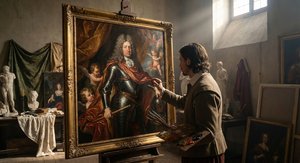
The Grandeur of Baroque Portraiture: Power, Emotion & Artistic Innovation
Explore the grandeur of Baroque portraiture! Discover Rubens, Van Dyck & the masters of 17th-century art. Uncover symbolism, techniques & lasting influence. Expert insights for collectors and enthusiasts.

Barokke Pracht: Kunst die Grootsheid in Huis Brengt
Ontdek de barokke pracht! Leer over de geschiedenis, kenmerken en toepassingen van deze weelderige kunststijl in uw interieur. Laat u inspireren door meesters en breng grootsheid in huis.

