
 Voorvertoning
 Verstuur
 Delen
Delen
 Details bekijken

 Download
 Vergelijkbare items
 Röntgenonderzoek
 Diavoorstelling
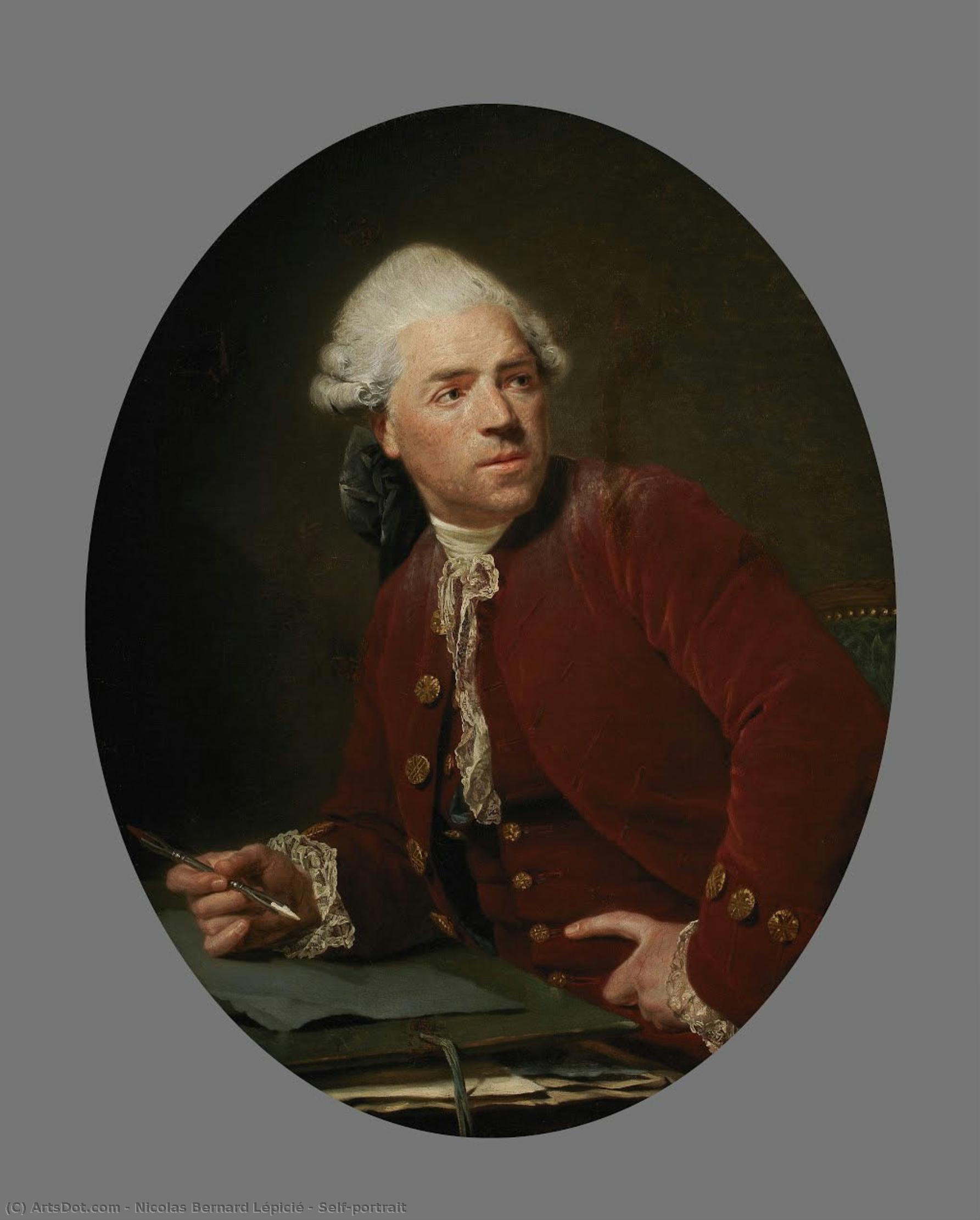
Self-portrait
 Acrylic On Canvas
- WallArt
- Rococo
 1777
1777 90.0 x 71.0 cm
 Calouste Gulbenkian Museum
 Lees meer
Koop een digitale afbeelding in hoge resolutie met verbeterde kwaliteit, die veel superieur is aan de online voorvertoning.
Elk bestand wordt met uiterste precisie voorbereid door onze interne specialisten, met behulp van geavanceerde tools en deskundige handmatige retouche. Wij garanderen dat elke afbeelding een uitzonderlijke helderheid, nauwkeurige kleurweergave en verfijnde details bezit.
Het uiteindelijke bestand wordt binnen 72 uur per e-mail geleverd, geoptimaliseerd voor direct gebruik in professionele, redactionele en printomgevingen. Dit is dezelfde kwaliteit waarop vooraanstaande designstudio's, uitgevers en galerieën vertrouwen.
Digitale afbeeldingen
Download een bestand met hoge resolutie voor persoonlijke weergave, afdrukken en creatieve projecten. ( Bestel print Bestel handgeschilderde reproductie)
Inbegrepen bij elke bestelling van een digitale afbeelding
Professionele digitale levering, gegarandeerd
Wanneer u kiest voor OriginalUniqueArt.com, ontvangt u niet alleen een afbeelding – u krijgt een professioneel verbeterd digitaal kunstwerk, met precisie vervaardigd en voorzien van een tevredenheidsgarantie. Dit is alles wat automatisch bij uw bestelling is inbegrepen:

Snelle levering per e-mail
Uw hoogwaardige digitale afbeeldingsbestand wordt binnen 72 uur na bestelling naar u gemaild – klaar voor direct gebruik.

AI-verbeterd digitaal bestand
Uw kunstwerk wordt professioneel geoptimaliseerd met behulp van geavanceerde AI-tools en handmatige bewerkingen, waardoor maximale details, helderheid en kleurnauwkeurigheid worden gegarandeerd.

Gratis levenslange herlevering van digitale afbeeldingen
Je bestand per ongeluk verwijderd of kwijtgeraakt? Geen zorgen – we sturen het u op elk gewenst moment gratis opnieuw toe.

Geen invoerkosten – nooit
Geniet direct van uw kunstwerk zonder invoerrechten, belastingen of verzendkosten – digitale downloads zijn altijd belastingvrij.

Garantie op kleurgetrouwheid
Met behulp van professionele hulpmiddelen en kleurbeheer zorgen wij ervoor dat uw digitale afbeelding de originele kleuren zo nauwkeurig mogelijk weergeeft.

60 dagen tevredenheidsgarantie
Als u niet tevreden bent met uw digitale afbeelding, passen wij deze aan of storten wij 100% terug binnen 60 dagen – zonder vragen gesteld.

100% Geld-terug-garantie
Niet tevreden? Ontvang binnen 60 dagen na ontvangst van uw digitale bestand uw volledige aankoopbedrag terug – zonder vragen te stellen.

Korting bij grote bestellingen
Koop 3 afbeeldingen, bespaar 10% - Koop 5, bespaar 15% - Koop 10+, bespaar 20%. Ideaal voor creatieve projecten, galerieën en bureaus.
Beschrijving verzamelobject
A Portrait of Refinement: Exploring Nicolas Bernard Lépicié’s Self-Portrait
The canvas holds a quiet dignity – a self-portrait by Nicolas Bernard Lépicié, completed in 1777 and exhibited at the prestigious Paris Salon. More than just a likeness, this painting embodies the spirit of Rococo elegance while subtly hinting at the stylistic shifts that would soon dominate European art history. Examining its details reveals not only artistic mastery but also a glimpse into the social milieu of Louis XV’s France – a world obsessed with beauty, ornamentation, and carefully cultivated appearances.Style and Technique: The Delicate Touch of Rococo
Lépicié's approach aligns perfectly with the prevailing aesthetic sensibilities of his time. Characteristic of the Rococo movement, the portrait eschews dramatic poses or forceful expressions in favor of an understated composure. The artist employs a soft brushstroke technique, layering translucent glazes to achieve a luminous quality that captures the subtle nuances of light and shadow. This meticulous attention to detail is evident in the rendering of fabrics – particularly the opulent crimson robe adorned with delicate lace – demonstrating Lépicié’s command of color and texture. The muted palette contributes to an overall atmosphere of serenity, reflecting the Rococo's preoccupation with idealized beauty and sensual pleasure.Historical Context: Versailles and Societal Expectations
The Salon of 1777 served as a cornerstone of artistic patronage and social prestige in France. Artists like Lépicié sought recognition from the royal court and influential members of Parisian society, striving to portray themselves – and often their families – within the framework of aristocratic ideals. The portrait speaks volumes about the values held dear during this era: intellectual pursuits were valued alongside refined manners and a cultivated taste for art. Furthermore, the inclusion of the quill pen symbolizes Lépicié’s engagement in scholarly endeavors—a deliberate gesture intended to elevate his status and convey an image of cultured sophistication.Symbolism Within the Composition
Beyond its technical brilliance, the self-portrait is laden with symbolic significance. The wig, a fashionable accessory for men during the period, represents social ambition and adherence to established conventions. Its placement atop Lépicié’s head underscores the importance of outward appearance in conveying status and respectability. Similarly, the crimson robe – a color associated with royalty and passion – symbolizes pride and confidence. However, it is perhaps the gaze directed at the viewer that holds particular interest. This directness conveys an air of self-assurance and invites contemplation about the artist’s inner life—a subtle challenge to traditional portraiture conventions that prioritized idealized representations over honest introspection.Emotional Impact: A Moment Frozen in Time
Despite its formal restraint, Lépicié's self-portrait possesses a palpable emotional resonance. The artist’s gaze conveys a quiet thoughtfulness, suggesting an awareness of his own identity and place within the broader context of his time. The painting captures not merely physical likeness but also something deeper – a sense of inner dignity and intellectual curiosity. It invites viewers to consider the complexities of human experience and appreciate the beauty found in understated elegance. Like many masterpieces of its era, Lépicié’s portrait transcends mere visual representation, offering a poignant glimpse into the soul of an artist striving for recognition within a society obsessed with appearances.Kunstenaarsbiografie
A Life in Paint: The World of Nicolas Bernard Lépicié
Nicolas Bernard Lépicié, born into a Parisian family steeped in the art of engraving in 1735, emerged as a significant voice within the evolving landscape of 18th-century French painting. His life coincided with a period of artistic transition, moving away from the grandeur of the Baroque and embracing the delicate intimacy of the Rococo while simultaneously foreshadowing the clarity and form that would define the coming Neoclassical era. Though perhaps not as celebrated today as some of his contemporaries like Chardin or Fragonard, Lépicié’s work offers a compelling window into the social customs and domestic life of pre-Revolutionary France, imbued with a sensitivity and technical skill that continues to resonate with viewers. His father, François-Bernard Lépicié, was a respected engraver and historiographer, and his mother, Renée-Élisabeth Marlié, also practiced engraving – providing young Nicolas with an early immersion in the visual arts. This familial foundation undoubtedly shaped his artistic trajectory, though he ultimately found his own distinct path as a painter.Artistic Development and Influences
Lépicié’s artistic journey began with training under Carle Van Loo, a prominent figure of the time, and quickly demonstrated an aptitude for both historical subjects and portraiture. However, it was in the realm of genre painting – scenes depicting everyday life – that he truly excelled. His style is characterized by a delicate touch, meticulous attention to detail, and a warm, naturalistic palette. He possessed a remarkable ability to capture the nuances of ordinary moments, imbuing his canvases with a sense of quiet intimacy and psychological depth. The influence of Jean-Baptiste-Siméon Chardin is readily apparent in Lépicié’s work; both artists shared an interest in depicting humble subjects with dignity and grace. Yet, Lépicié wasn't merely an imitator. He also demonstrated awareness of the more playful Rococo sensibilities found in the works of Fragonard, though he tempered these influences with a growing emphasis on clarity and form – hinting at the Neoclassical aesthetic that would soon dominate French art. Throughout his career, he frequently employed Carle Vernet as a model, highlighting the importance of studio practice and collaborative learning within 18th-century artistic circles.Major Works and Recognition
Lépicié’s oeuvre encompasses a diverse range of subjects, but certain works stand out as exemplars of his skill and vision. Portrait de la famille Leroy (1766), for instance, showcases his talent for portraiture, capturing not only the likenesses of the family members but also their individual personalities and relationships with remarkable sensitivity. His mythological scenes, such as Adonis changé en anémone (c. 1768) and Narcisse (1771), demonstrate his ability to handle complex compositions and allegorical themes with technical proficiency. However, it is perhaps his genre paintings that are most beloved today. Le lever de Fanchon (1773), depicting a young girl awakening, is particularly celebrated for its delicate rendering of light and texture, creating an atmosphere of gentle intimacy. L'intérieur d'une douane (1775) offers a fascinating glimpse into the workings of French society during this period, providing valuable insights into everyday life beyond the aristocratic circles typically depicted in art. A significant milestone in his career came in 1777 with his acceptance into the Royal Academy, solidifying his reputation as a respected artist within the Parisian art world.Legacy and Historical Significance
Nicolas Bernard Lépicié’s contribution to French art lies not only in the beauty and technical skill of his paintings but also in their ability to offer a nuanced portrayal of 18th-century life. His focus on domesticity and intimacy reflects a growing interest in bourgeois values during this period, providing a counterpoint to the grand historical and mythological narratives that often dominated the Salon exhibitions. He died in 1784, just before the tumultuous events of the French Revolution irrevocably altered the course of French art and society. While his name may not be as widely recognized today as those of some of his more famous contemporaries, Lépicié’s work continues to be appreciated for its sensitivity, technical mastery, and evocative depiction of a bygone era. His paintings serve as valuable historical documents, offering insights into the material culture, social customs, and emotional lives of ordinary people in pre-Revolutionary France.- His works are held in major museums such as the Musée du Louvre and the Museo Thyssen-Bornemisza.
- He taught several prominent artists who would go on to shape the Neoclassical movement.

Nicolas Bernard Lépicié
1735 - 1784 , Frankrijk
Belangrijkste feiten
- Artistic Movement Or Style: Rococo, Neoclassicisme
- Artists Or Movements Influenced By This Artist:
- Vernet
- Regnault
- Danloux
- Artists Who Influenced This Artist:
- Chardin
- Fragonard
- Carle Vanloo
- Date Of Birth: 1735
- Date Of Death: 1784
- Full Name: Nicolas Bernard Lépicié
- Nationality: Frans
- Notable Artworks:
- Portrait de la famille Leroy
- Adonis changé en anémone
- Narcisse
- Le lever de Fanchon
- L'intérieur d'une douane
- Place Of Birth: Parijs, Frankrijk

