Text size

() ·

A painting made for you, by hand

Way to Shambala

Handgemaakte olieverfreproductie

Met de hand geschilderd in olieverf op canvas in uw gewenste maat en lijst, op bestelling gemaakt door onze kunstenaars. ( Schakel over naar print Schakel over naar digitale afbeeldingen)

Beschrijving verzamelobject

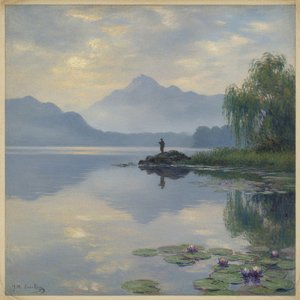
‘Way to Shambala’ is a 1933 Symbolism masterpiece by Nicholas Roerich depicting breathtaking Himalayan mountains under a vibrant purple sky. Featuring two prominent peaks and serene hills, this painting embodies Roerich's fascination with spirituality and nature.

Biografie kunstenaar

Ontdek de betoverende kunst van Nicholas Roerich: Symbolisme, Himalayabeschrijvingen & mystieke schilderijen. Ontwerpen voor de Ballets Russes & pleitbezorger van cultureel erfgoed.

from ·

Chapter 1

How large should it be?

Slide to change the size; the picture on the left shows the frame at its real width. The proportions of the original are kept.

Standaardformaat
op maat gemaakt
CM
INCH

Kies uit onze vooraf ingestelde maten die overeenkomen met de originele verhoudingen van het kunstwerk.

breedte
hoogte

Voer de breedte en hoogte in die u nodig heeft, passend bij uw lijst of uw muur. Omdat dit handgeschilderd is, kan de kunstenaar bij een afmeting met een andere beeldverhouding iets meer rondom het schilderij schilderen of juist iets meer weglaten — u kiest zelf. Wij sturen u een digitaal mockup ter goedkeuring voordat het schilderwerk begint. De afbeelding die op deze pagina wordt getoond, is niet het uiteindelijke resultaat — alleen de mockup geeft dit weer.


Chapter 2

How should it arrive?

Choose the edges of the stretched canvas

Choose your frame

Corner sample of the WhiteWrap canvas edge finish, stretched on massief hout bars
White €1
Corner sample of the BlurSideWrap canvas edge finish, stretched on massief hout bars
Blurside €1
Corner sample of the ExtendedWrap canvas edge finish, stretched on massief hout bars
Extended €1
Corner sample of the P118B picture frame: gegoten polystyreen, 5 cm wide and 3 cm thick
P118B €10
Corner sample of the P118H picture frame: gegoten polystyreen, 5 cm wide and 3 cm thick
P118H €10
Corner sample of the P118W picture frame: gegoten polystyreen, 5 cm wide and 3 cm thick
P118W €10
Corner sample of the P438Z picture frame: gegoten polystyreen, 5.5 cm wide and 3.5 cm thick
P438Z €10
Corner sample of the P508JH picture frame: gegoten polystyreen, 7 cm wide and 3.5 cm thick
P508JH €12
Corner sample of the P508YH picture frame: gegoten polystyreen, 7 cm wide and 3.5 cm thick
P508YH €12
Corner sample of the P805H picture frame: gegoten polystyreen, 5 cm wide and 3.5 cm thick
P805H €10
Corner sample of the P805Z picture frame: gegoten polystyreen, 5 cm wide and 3.5 cm thick
P805Z €10
Corner sample of the P919BZ picture frame: gegoten polystyreen, 7 cm wide and 3.5 cm thick
P919BZ €10
Corner sample of the P919G picture frame: gegoten polystyreen, 7 cm wide and 3.5 cm thick
P919G €10
Corner sample of the P919XJ picture frame: gegoten polystyreen, 7 cm wide and 3.5 cm thick
P919XJ €10
Corner sample of the P959ZH picture frame: gegoten polystyreen, 5 cm wide and 3 cm thick
P959ZH €10
Corner sample of the P968JZ picture frame: gegoten polystyreen, 6 cm wide and 4 cm thick
P968JZ €12
Corner sample of the W106C picture frame: massief hout, 5 cm wide and 3 cm thick
W106C €8
Corner sample of the W218G picture frame: massief hout, 5 cm wide and 3 cm thick
W218G €10
Corner sample of the W218JH picture frame: massief hout, 5 cm wide and 3 cm thick
W218JH €8
Corner sample of the W218Y picture frame: massief hout, 5 cm wide and 3 cm thick
W218Y €10
Corner sample of the W307PJ picture frame: massief hout, 6 cm wide and 3 cm thick
W307PJ €10
Corner sample of the W316G picture frame: massief hout, 6 cm wide and 3 cm thick
W316G €10
Corner sample of the W316PJ picture frame: massief hout, 6 cm wide and 3 cm thick
W316PJ €8
Corner sample of the W316Y picture frame: massief hout, 6 cm wide and 3 cm thick
W316Y €10
Corner sample of the W398PJ picture frame: massief hout, 5 cm wide and 3 cm thick
W398PJ €8
Corner sample of the W4111J picture frame: massief hout, 6.5 cm wide and 3.5 cm thick
W4111J €10
Corner sample of the W500HY picture frame: massief hout, 7 cm wide and 5 cm thick
W500HY €15
Corner sample of the W500JH picture frame: massief hout, 7 cm wide and 5 cm thick
W500JH €15
Corner sample of the W692G picture frame: massief hout, 8 cm wide and 4 cm thick
W692G €12
Corner sample of the W849H picture frame: massief hout, 5 cm wide and 3 cm thick
W849H €8
Corner sample of the W940BG picture frame: massief hout, 7.5 cm wide and 4.5 cm thick
W940BG €15
Corner sample of the W953PJ picture frame: massief hout, 6 cm wide and 3.5 cm thick
W953PJ €8
Corner sample of the H24-GOLD picture frame: gesneden hout met gesso, 10 cm wide and 6 cm thick
H24-GOLD €30
Corner sample of the H24-SILVER picture frame: gesneden hout met gesso, 10 cm wide and 6 cm thick
H24-SILVER €30
Corner sample of the H36-GOLD picture frame: gesneden hout met gesso, 15 cm wide and 6.5 cm thick
H36-GOLD €45
Corner sample of the H36-SILVER picture frame: gesneden hout met gesso, 15 cm wide and 6.5 cm thick
H36-SILVER €45
Lijstvoorbeeld
Ingelijst

Moulding: . Overall size with the frame: .

Chapter 3

Who paints it, and should anything change?

Examples of what can be changed: Replace face with customer photo; Add pet (e.g., replace cat with dog); Include hidden message in background; Change background landscape or elements.
After order, OriginalUniqueArt.com team will email client for instructions and provide a mockup preview

Wereldwijde levering () binnen 3 tot 4 weken in plaats van de standaard 5 weken. (2 november). Zonder concessies aan de kwaliteit.

Chapter 4

The finishing touches

A nameplate, as in a museum?

Details van de gegraveerde bronzen plaat

This elegant plaque features the artist's name and the title of the artwork, finely engraved for a timeless presentation.

It is made from bronze with a refined, elegant finish. The text is precisely laser-engraved for a sharp and permanent result. Measuring 9x2 cm, the plaque is compact yet easy to read. It's built to be durable and scratch-resistant, offering a professional, museum-quality look. Mounting is simple thanks to the included adhesive backing.

Details transparante acrylplaat

The plaque includes essential engraved details such as the artist's name, the title of the artwork, the date it was created, the type of media used-like oil on canvas or watercolor-a brief description of the piece, and a QR code that links to the complete artwork information.

It is crafted from clear acrylic, offering a sleek, modern appearance. The text is UV-engraved in black to ensure strong visual contrast. With a size of 10x15 cm, it ensures optimal readability. It comes equipped with two metal hooks for secure wall mounting. The plaque is designed to be weather-resistant, making it suitable for various environments, and it includes interactive features that work seamlessly with smartphone scanning.

Details zwarte acrylplaat

This elegant plaque includes engraved information such as the artist's name, the title of the artwork, the date it was created, the type of media used (like oil on canvas or watercolor), a short description of the artwork, and a QR code for quick access to more information.

The plaque itself is made from refined black acrylic with a premium finish. The text is laser-engraved in white for high contrast and readability. Its size is 10x15 cm, designed to be easy to read. It comes with two metal hooks for professional mounting. The design is sleek and fits any interior style. It is also weather-resistant and durable, with built-in digital integration for mobile compatibility.

A protective varnish?

When do you need it?

Chapter 5

Your painting, as you ordered it

Way to Shambala

Druktechniek

Afmetingen reproductie

-

Geselecteerde topkunstenaars

Meer detail, verfijning en extra productietijd

-

Lijst voor reproductie

-

-

Voor kunstwerken of reproducties die aan één zijde groter zijn dan 105 cm (ongeveer 41 inch), wordt de lijst als een losse set verzonden. Deze methode garandeert een veilige levering en voorkomt schade tijdens het transport.

Professionele montage vereist - dit is geen doe-het-zelfproduct.
De set moet worden gemonteerd en het canvas moet worden gespannen door een ervaren professionele lijstenmaker, met gebruik van houtlijm (niet inbegrepen), een doekspanter en klemmen om de sponningen recht te houden terwijl de lijm droogt. Onjuiste montage of een ongelijkmatige spanning op het canvas kan het kunstwerk permanent beschadigen en wordt niet gedekt door onze garantie.

  • Alle massief houten onderdelen zijn inbegrepen, nauwkeurig op maat gesneden voor montage.

  • Te monteren met de meegeleverde schroeven, plus houtlijm voor de hoekverbindingen, die niet wordt meegeleverd en door uw lijstenmaker moet worden aangeschaft.

  • Professioneel gereedschap is vereist en niet inbegrepen: een spanner voor canvas en klemmen om de latten recht te houden terwijl de lijm droogt.

Belangrijk:
De hoekverbindingen vereisen houtlijm, de latten moeten met lijmklemmen worden vastgehouden tot de lijm volledig is opgedroogd, en het spannen van het canvas op het samengestelde frame vereist een doekspanter. Geen van deze artikelen is inbegrepen in de set. Wij adviseren u om een ervaren professionele lijstenmaker te raadplegen voordat u deze maat bestelt.

Naamplaatje

-

-

Beschermende vernislaag

Glanzende vernis (versterkt de kleuren en biedt bescherming tegen licht en vocht)

-

Mijn kunstwerk aanpassen

Voorbeelden van aanpassingen: vervang het gezicht door een eigen foto; voeg een huisdier toe (bijv. vervang de kat door een hond); verwerk een verborgen boodschap in de achtergrond; wijzig het landschap of andere elementen op de achtergrond.

-

Spoedlevering

Wereldwijde levering () binnen 3 tot 4 weken in plaats van de standaard 5 weken. (2 november). Geen concessies aan de kwaliteit.

-

Spoedlevering

Wereldwijde levering naar binnen 5 weken. (9 november).

Inbegrepen

Eindtotaal

€ 267

Totaalprijs € 267

De optie voor glas is alleen beschikbaar bij een formaat kleiner dan 110 cm.

Included with every order

  • Gratis wereldwijde expressverzending
  • Hoogwaardig linnen canvas
  • Volledige verzendverzekering
  • Garantie op terugbetaling van invoerrechten
  • Garantie op exacte kleurweergave
  • Retourbeleid van 100 dagen (alleen bij defecten)
  • 100% Geld-terug-garantie
  • Korting bij meerdere afnames

Way to Shambala – A Journey Through Symbolism

Nicholas Roerich’s “Way to Shambhala” stands as a monumental testament to the artist's profound engagement with Eastern mysticism and his unwavering belief in the interconnectedness of humanity and nature. Painted in 1933, during a period marked by fervent exploration of shamanic traditions and spiritual quests, this tempera on canvas masterpiece embodies Roerich’s distinctive Symbolism style—a movement characterized by its deliberate use of color, form, and imagery to convey abstract ideas and emotions rather than literal representations. The painting transports the viewer into a breathtaking Himalayan landscape dominated by towering peaks bathed in an ethereal purple sky, instantly establishing a mood of serenity and grandeur.
  • Composition: Roerich meticulously crafted a panoramic vista emphasizing horizontal lines, mirroring the expansive horizons of the Himalayas and symbolizing continuity and transcendence. Two prominent mountains dominate the scene on either side, representing stability and resilience amidst the turbulent forces of change—a recurring motif in Roerich’s oeuvre.
  • Color Palette: The dominant hue is a deep violet – purple – which Roerich himself termed “Shambhala Violet,” reflecting his conviction that it embodies the essence of Shambhala, the mythical paradise at the center of Tibetan Buddhism and shamanic cosmology. Accompanying shades of ochre and crimson punctuate the canvas, symbolizing vitality and spiritual illumination.
  • Technique: Roerich employed a layered technique—applying thin washes of pigment followed by thicker impasto strokes—to achieve remarkable textural depth and luminosity. This meticulous approach allowed him to capture not only the visual splendor of the mountains but also their vibrational energy, aligning with Roerich’s belief in the power of art to influence consciousness.

Historical Context & Roerich's Visionary Beliefs

Roerich’s artistic endeavors were inextricably linked to his spiritual explorations and his fervent advocacy for Agni Yoga—a mystical system he developed based on Hindu and Buddhist principles. Inspired by Tibetan shamanic rituals and the legends surrounding Shambhala, Roerich envisioned this landscape as a gateway to enlightenment—a symbolic representation of humanity's journey toward inner peace and cosmic harmony. The painting reflects Roerich’s conviction that art could serve as a catalyst for spiritual transformation, mirroring his broader philosophical stance on the importance of uniting science and mysticism.
  • Influence of Tibetan Buddhism: Roerich drew inspiration from Tibetan Buddhist cosmology, particularly the concept of Shambhala—a hidden paradise believed to exist beyond conventional perception—and its symbolic representation as a mountain range shrouded in mist.
  • Symbolism Beyond Landscape: The mountains themselves are imbued with profound symbolism, representing stability, aspiration, and the ascent toward spiritual realization. Roerich’s meticulous attention to detail—the subtle gradations of color, the textured surface—aimed to evoke an emotional response that transcends mere visual representation.
  • Roerichism: The painting exemplifies Roerich's overarching artistic philosophy known as Roerichism—a synthesis of Eastern mysticism and Western science—which sought to unlock the hidden potential of human consciousness through art and ritual.

Emotional Impact & Artistic Legacy

“Way to Shambhala” transcends its formal qualities, captivating viewers with its palpable sense of awe and wonder. Roerich’s masterful depiction of Himalayan grandeur evokes feelings of tranquility, contemplation, and reverence—a testament to the artist's ability to translate spiritual experience into visual form. The painting continues to resonate with audiences today as a symbol of hope for humanity’s future—a reminder that beauty, harmony, and enlightenment can be found in embracing both inner reflection and engagement with the natural world. Its enduring appeal underscores Roerich’s legacy as one of the most influential artists of the 20th century, whose work remains profoundly relevant to contemporary concerns about environmental stewardship and spiritual renewal.

Reproductions & Further Exploration

High-quality reproductions of “Way to Shambhala” are available from reputable art dealers and online platforms like WikiArt.com, allowing enthusiasts worldwide to experience the painting’s breathtaking beauty and symbolic depth. For a deeper understanding of Roerich's artistic vision and his contribution to Symbolism, consider visiting the Nicholas Roerich Museum in New York City or delving into scholarly publications exploring his life and work.

Veelgestelde vragen

Welke afmeting van "Way to Shambala" door Nikolaas Roerich past in de aanbevolen kamer?

De aanbevolen combinatie voor "Way to Shambala" door Nikolaas Roerich: een afdruk van Large in een Living Room.

Met welke techniek is "Way to Shambala" door Nikolaas Roerich vervaardigd?

Nikolaas Roerich gebruikte de Acrylic On Canvas-techniek voor "Way to Shambala". De techniek bepaalt de materiële aard van het originele werk.

Hoe harmonieus is het kleurgebruik in "Way to Shambala" door Nikolaas Roerich?

"Way to Shambala" door Nikolaas Roerich vertoont een Strong Color Unity kleurharmonie.

More about this painting

Voorvertoning Bekijk in AR Schakel over naar print Schakel over naar digitale afbeeldingen Verstuur
Details bekijken Gids Toevoegen aan favorieten Download Vergelijkbare items Röntgenonderzoek Diavoorstelling Q&A Statistieken

In numbers

  • 1933the year it was painted
  • 29frames to choose from
  • standard sizes, in its own proportions
  • 5weeks to paint and deliver it
Nikolaas Roerich

Nikolaas Roerich

1874 - 1947, Rusland

Quick facts about Nikolaas Roerich

  • Artistic Movement Or Style: Symbolisme, Spirituele kunst
  • Artists Or Movements Influenced By This Artist: ['Russisch Symbolisme']
  • Artists Who Influenced This Artist: ['Diaghilev']
  • Date Of Birth: 9 oktober 1874
  • Date Of Death: 13 december 1947
  • Full Name: Nicholas Konstantinovich Roerich
  • Nationality: Russisch
  • Notable Artworks:
    • Saint Nicholas
    • City
    • Lake Nagas
  • Place Of Birth: Sint-Petersburg, Rusland

Biografie kunstenaar

A Life Immersed in Art and Spirit

Nicholas Roerich, geboren op 9 oktober 1874 in het levendige culturele hart van Sint Petersburg, Rusland, was een figuur wiens leven verder ging dan de grenzen van artistieke expressie. Hij was niet alleen een schilder; hij was een archeoloog, schrijver, filosoof en een vastberaden pleitbezorger voor vrede en cultureel behoud. Zijn opvoeding, doordrenkt van intellectuele ernst – zijn vader was notaris – en artistieke waardering dankzij zijn moeder, legde de basis voor een buitengewoon veelzijdige carrière. Roerich studeerde tegelijkertijd zowel rechten als kunst aan de Universiteit van Sint Petersburg en de Academie voor Kunstnijverheid beginnend in 1893, wat een vroege toewijding aan een brede begrip van de wereld weerspiegelde. Deze dubbele weg was niet contradictorisch voor hem; het spiegelde eerder een overtuiging dat artistieke visie een gronding nodig had in historische context en intellectuele discipline. Hij ontving zijn kunstdiploma in 1897 en voltooide zijn rechtenstudie het daaropvolgende jaar, waardoor de scène werd gezet voor een leven gewijd aan zowel creatieve exploratie als rationele actie.

De Verleiding van Symbolisme en Theatraal Innovatie

Roerich’s artistieke ontwikkeling werd diep beïnvloed door de stromingen van het Russische Symbolisme, een beweging die emotionele en spirituele diepten probeerde te roepen door evocatieve beelden en suggestieve vormen. Hij kwam snel in contact met de invloedrijke “Wereld van Kunst” (Mir Iskusstva) van Sergei Diaghilev, en trad uiteindelijk op als president vanaf 1910 tot 1916. Deze associatie bleek cruciaal te zijn, waardoor hij werd blootgesteld aan een netwerk van innovatieve kunstenaars, componisten en denkers die het landschap van de Russische kunst opnieuw vormgaven. Zijn vroege werk toonde een fascinatie met archeologie en toneelontwerp, wat leidde tot baanbrekende samenwerkingen met Diaghilev’s Ballets Russes. Roerich’s ontwerpen voor producties zoals Alexander Borodin's *Prins Igor* (1909) en vooral Igor Stravinsky’s revolutionaire *De Rite van de Lente* (1913), waren niet alleen achtergronden; ze waren integraal onderdeel van de theatrale ervaring. Hij combineerde zorgvuldige historische onderzoek met een gedurfd imaginaire visie, waardoor indrukwekkende visuele omgevingen werden gecreëerd die de emotionele kracht van de muziek en choreografie versterkten. Deze ontwerpen waren niet alleen decoratief; ze probeerden oerkrachten en oude rituelen te oproepen, wat de symbolistische interesse in mythe en spiritualiteit weerspiegelde. Zijn werk werd ook beïnvloed door apocrypha en middeleeuwse sektarische geschriften zoals het Boek van de Dove, waardoor lagen esoterische betekenis werden toegevoegd aan zijn artistieke creaties.

Een Reis Naar Spiritualiteit en Himalayaanse Visioenen

Naarmate Roerich’s carrière voortvorderde, ondergingen zijn schilderijen een significante transformatie, waarbij steeds meer spirituele en mystieke thema's werden benadrukt. Deze verschuiving werd gevoed door zijn groeiende interesse in Theosofie en Oosterse religies, filosofieën die de verbondenheid van alles benadrukten en het nastreven van innerlijke wijsheid. Zijn *Architecturale Studies* serie (1904–1905) toonde niet alleen zijn architectonische vaardigheid, maar ook een diepe toewijding aan het behoud van cultureel erfgoed, wat later zijn inspanningen om kunst te beschermen tijdens tijden van conflict voorspelde. Herkenbare motieven begonnen op te duiken in zijn werk: majestueuze landschappen, oude steden gehuld in mysterie en figuren doordrenkt van spirituele betekenis zoals St. Panteleimon en Kuan Yin. Hij maakte uitgebreide reizen door Centraal-Azië, waarbij hij archeologisch onderzoek verrichtte en oude culturen documenteerde, ervaringen die zijn artistische visie diepgaand vormden en zijn overtuiging versterkten dat cultureel begrip essentieel is.

Erfgoed van Behoud en Duurzaam Invloed

Nicholas Roerich’s toewijding strekte zich verder uit dan het doek; hij was een toegewijd pleitbezorger voor het beschermen van kunst en architectuur tijdens tijden van oorlog. Erkend de kwetsbaarheid van culturele schatten, heeft hij de oprichting van het Roerich Pact in 1935 voorgelegd – een internationaal verdrag ontworpen om culturele objecten te beschermen tegen vernietiging. Deze initiatief leverde hem meerdere nominaties op voor de Nobelprijs voor de Vrede, wat zijn humanitaire inspanningen onderstreept. Zijn onvermoeibare inspanningen toonden een overtuiging dat het behoud van cultureel erfgoed niet alleen essentieel is voor het begrijpen van het verleden, maar ook voor het bouwen aan een vreedzamere toekomst. Hij liet een oeuvre achter dat niet alleen visueel indrukwekkend is, maar ook diep betekenisvol, en een tijdloze boodschap van vrede, begrip en respect voor alle culturen biedt.

Belangrijke Werken & Duurzaam Invloed

  • Saint Nicholas: Een gedetailleerde monochrome muurschildering die middeleeuwse kunst en heraldische symboliek toont.
  • City: Evocative beelden van oude stedelijke landschappen, die zijn archeologische interesses weerspiegelen.
  • Lake of the Nagas: Een tempera schilderij dat symboliek en natuur combineert, een voorbeeld van zijn unieke artistieke visie.

Snelle feiten

  • Title: Way to Shambala
  • Medium: Tempera on Canvas
  • Influences: Russian Cosmism
  • Location: Nicholas Roerich Museum, New York City, NY
  • Notable elements or techniques: Detailed mountain landscape; Mystical symbolism

Kunstquiz

Er is slechts één goed antwoord op elke vraag.

Vraag 1:
What artistic style is ‘Way to Shambala’ primarily associated with?
Vraag 2:
The painting depicts a mountainous landscape. Where was Nicholas Roerich inspired to create this artwork?
Vraag 3:
What medium did Nicholas Roerich use to produce ‘Way to Shambala’?
Vraag 4:
Who collaborated with Roerich on the libretto and sets for the ballet “Rite of Spring”?
Vraag 5:
What is a key thematic element explored in Roerich’s artwork ‘Way to Shambala’?