

 Voorvertoning
 Verstuur
 Delen
Delen
 Details bekijken

 Download
 Vergelijkbare items
 Röntgenonderzoek
 Diavoorstelling
Autruche


 Lees meer
Giclée / Kunstafdrukken
Giclée- of canvasafdruk van museumkwaliteit met een snelle productie en flexibele afwerkingsmogelijkheden. ( Bestel handgeschilderde reproductie Koop afbeelding)




P118B $10

P118H $10

P118W $10

P438Z $10

P508JH $12

P508YH $12

P805H $10

P805Z $10

P919BZ $10

P919G $10

P919XJ $10

P959ZH $10

P968JZ $12

W106C $8

W218G $10

W218JH $8

W218Y $10

W307PJ $10

W316G $10

W316PJ $8

W316Y $10

W398PJ $8

W4111J $10

W500HY $15

W500JH $15

W692G $12

W849H $8

W940BG $15

W953PJ $8




Kies uit onze vooraf ingestelde maten die overeenkomen met de originele verhoudingen van het kunstwerk.

U kunt uw eigen afmetingen opgeven om in een specifieke lijst of ruimte te passen. Als de door u gekozen maat niet overeenkomt met de proporties van het originele kunstwerk, zullen wij de afbeelding bijsnijden of uitbreiden met een gespiegelde of effen rand. Een digitaal mockup wordt ter goedkeuring naar u verzonden voordat de productie begint.
Houd er rekening mee dat de preview op het scherm de werkelijke bijsneding of uitbreiding niet weergeeft. Alleen de mockup toont de uiteindelijke compositie nauwkeurig.
Hoewel aangepaste maten beschikbaar zijn, raden wij aan een afmeting uit de vooraf bepaalde lijst te kiezen om de originele proporties te behouden.
Wereldwijde levering () binnen 2 weken in plaats van de standaard 4/5 weken. (14 augustus)

Gratis wereldwijde expressverzending

Hoogwaardig linnen canvas

Volledige verzendverzekering

Garantie op terugbetaling van invoerrechten

Garantie op exacte kleurweergave

Retourbeleid van 60 dagen (alleen bij defecten)

100% Geld-terug-garantie

Korting bij meerdere afnames
 De optie voor glas is alleen beschikbaar bij een formaat kleiner dan 110 cm.

Autruche
Giclée / Kunstafdrukken
Afmetingen reproductie
-


Eindtotaal
$ 81
Beschrijving verzamelobject
A Study in Feathered Majesty: Bernaerts' Ostrich
To stand before Nicasius Bernaerts’s depiction of an ostrich is to encounter a moment suspended between the wild and the meticulously observed. This painting transcends a mere portrait of fauna; it is a profound meditation on naturalism rendered through the sophisticated lens of Northern Renaissance artistry. The central figure, the magnificent ostrich, dominates the composition with an undeniable presence. Bernaerts has captured not just the bird’s form, but its very essence—the proud carriage, the texture of its plumage, and the quiet dignity it exudes against a vast, receding landscape. It invites the viewer into a world where scientific accuracy meets artistic reverence.
Mastery in Technique and Detail
The technical brilliance evident in this work is breathtaking. Bernaerts employed oil paints with an almost obsessive attention to detail, allowing for subtle gradations of tone that give life to every feather. Observe the interplay between the deep blacks, creamy whites, and muted grays composing the bird’s body; these variations create a palpable sense of depth and texture. The background complements this foreground drama with its own subtlety. Soft ochres, gentle yellows, and receding greens utilize atmospheric perspective, drawing the eye deep into the painted distance toward hazy mountains. This masterful handling of light—soft, diffused, yet directional enough to catch a highlight on the bird’s chest—speaks to an artist deeply versed in the mechanics of vision.
Historical Echoes and Exotic Symbolism
In the context of 17th-century Flemish art, such animal studies were more than decorative; they were cultural statements. Bernaerts, trained under masters like Frans Snyders, specialized in capturing the exotic and the powerful. The ostrich itself carried weight in the artistic lexicon—it symbolized not only natural beauty but also associations with wealth, distant lands, and the grandeur of the East. Owning or displaying such a piece connects the modern admirer to the collecting tastes and intellectual curiosity of the Renaissance elite who valued both scientific documentation and opulent display.
Bringing the Wilderness Home
For the contemporary collector or designer, this reproduction offers an unparalleled opportunity to integrate historical grandeur into modern living spaces. The muted, earthy palette—the rich browns, soft grays, and warm ochres—ensures that the artwork possesses a timeless quality, complementing both opulent antique furnishings and sleek contemporary decor alike. It serves as a focal point of quiet drama, bringing the perceived majesty of an untamed landscape indoors. To reproduce Bernaerts’s skill is to acquire not just paint on canvas, but a carefully preserved narrative of observation, artistry, and enduring natural splendor.
Biografie van de kunstenaar
Nicasius Bernaerts: A Flemish Master of Animal Art
Nicasius Bernaerts, Monsù Nicasio or simply Nicasius (15 March 1620, Antwerp – 16 September 1678, Paris) was a Flemish painter of animals, hunting pieces and flowers who had an international career in Italy and Paris. He worked in his native Antwerp, Italy and France. In the final part of his career he worked for the French court and provided tapestry designs to the Gobelins Manufactory in Paris.- Early Life & Training: Bernaerts was born in Antwerp, a city renowned for its artistic heritage. He began his artistic journey under the tutelage of Frans Snyders, arguably the most celebrated animal painter of his time in Flanders. Snyders’s masterful depictions of wildlife and hunting scenes profoundly influenced Bernaerts's style and technique.
- Italian Period & Recognition: Following his training, Bernaerts embarked on a formative trip to Italy where he adopted the moniker ‘Monsù Nicasio’. His work quickly gained acclaim, attracting the patronage of Ferdinando II de’ Medici, Grand Duke of Tuscany, demonstrating the burgeoning interest in Flemish art within the Italian Renaissance.
- French Career & Royal Patronage: Bernaerts subsequently relocated to France around 1643 and established himself as a prolific artist in Paris for several years. He was admitted into the Royal Academy of Painting and Sculpture in 1663, securing royal commissions that cemented his reputation as a leading figure in French Baroque art. Notably, Louis XIV entrusted him with the task of painting animals from his newly formed menagerie at Versailles – a monumental undertaking reflecting the grandeur of the monarchy and Bernaerts’s skill in capturing animal anatomy and behavior.
- Tapestry Design & Artistic Legacy: Bernaerts's contribution extended beyond individual paintings; he served as a designer for the Gobelins Manufactory, producing stunning tapestry panels that showcased his artistic vision. Furthermore, he worked for the royal real estate office (garde-meuble de la couronne), supplying animal studies and artworks to adorn the palaces of Versailles and Fontainebleau.
- Later Life & Artistic Influence: Bernaerts’s later years were marked by hardship due to alcoholism, tragically diminishing his artistic output. He died in poverty in 1678, leaving behind a legacy as one of Flanders's most accomplished animal painters. Alexandre-François desportes, Bernaerts’s pupil, carried forward his stylistic innovations and contributed to the continuation of Flemish animal art traditions.

nicasius bernaerts
1620 - 1678
Belangrijkste feiten
- Artistic Movement Or Style: Baroque
- Artists Or Movements Influenced By This Artist: David de Koninck
- Artists Who Influenced This Artist: Frans Snyders
- Date Of Birth: 1620
- Date Of Death: 1678
- Full Name: Nicasius Bernaerts
- Nationality: Flemish
- Notable Artworks:
- DEUX PETITS CHIENS
- Oiseaux et faisans
- Autruche
- Place Of Birth: Antwerp
Gerelateerde artikelen

The Northern Renaissance: A Flourishing of Realism, Religious Reform & Artistic Innovation
Explore the Northern Renaissance! Discover Jan van Eyck's innovations, religious shifts, & key artists of this influential period. Expert analysis and insights into Early Netherlandish painting at OriginalUniqueArt.
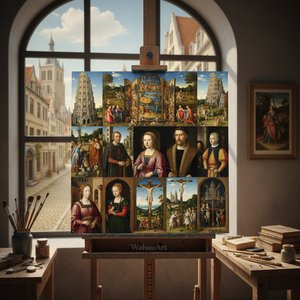
Top 10 Meesterwerken van de Noordelijke Renaissance | Kunst & Decoratie
Ontdek de 10 meest invloedrijke meesterwerken van de Noordelijke Renaissance! Van Jan van Eyck tot Pieter Bruegel, leer over hun technieken & betekenis. Vind museumkwaliteit reproducties en inspiratie voor uw interieur op OriginalUniqueArt.com.
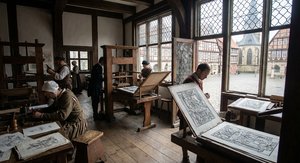
The Northern Awakening: Artistic Innovation & Cultural Transformation in the German Renaissance
Explore the artistic innovation of the German Renaissance! Discover Dürer, the Danube School & Reformation art. Learn about techniques, materials & lasting influence. Find museum-quality reproductions at OriginalUniqueArt.

The Enduring Legacy of Oil Paint: Technique, History & Emotional Resonance in Western Art
Explore the rich history & techniques of oil painting! Discover Renaissance masters, scientific principles behind color, and emotional resonance in art. Learn about glazing, layering, and atmospheric perspective – a guide for enthusiasts & collectors.
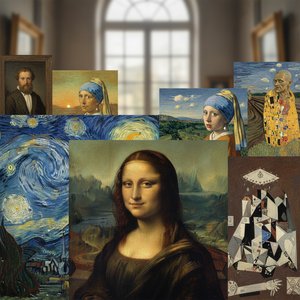
Top 10 Legendarische Olieverfschilderijen die de Kunst voor Altijd Veranderden | OriginalUniqueArt.nl
Ontdek de 10 legendarische olieverfschilderijen die kunstgeschiedenis schreven! Van Rembrandt tot Monet, leer over meesterwerken & technieken. Vind museumkwaliteit reproducties en woondecoratie inspiratie op OriginalUniqueArt.com.



