
 Voorvertoning
 Verstuur
 Delen
Delen
 Details bekijken
 Gids
Gids

 Download
 Vergelijkbare items
 Röntgenonderzoek
 Diavoorstelling
 Q&A
Q&A Statistieken
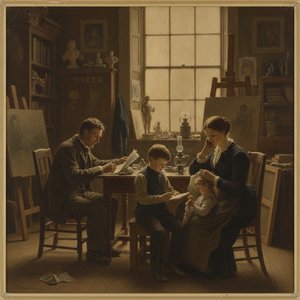
The Examination (Das Verhören)

- 66.0 x 54.0 cm


 Lees meer
Giclée / Kunstafdrukken
Giclée- of canvasafdruk van museumkwaliteit met een snelle productie en flexibele afwerkingsmogelijkheden. ( Bestel handgeschilderde reproductie Schakel over naar digitale afbeeldingen)




P118B €10

P118H €10

P118W €10

P438Z €10

P508JH €12

P508YH €12

P805H €10

P805Z €10

P919BZ €10

P919G €10

P919XJ €10

P959ZH €10

P968JZ €12

W106C €8

W218G €10

W218JH €8

W218Y €10

W307PJ €10

W316G €10

W316PJ €8

W316Y €10

W398PJ €8

W4111J €10

W500HY €15

W500JH €15

W692G €12

W849H €8

W940BG €15

W953PJ €8




Kies uit onze vooraf ingestelde maten die overeenkomen met de originele verhoudingen van het kunstwerk.

Voer de gewenste breedte en hoogte in, passend bij uw lijst of muur. Een afdruk kan alleen worden ingekort en nooit groter worden gemaakt dan het origineel; een formaat met andere verhoudingen zal daarom een deel van de afbeelding verliezen. Wij sturen u een digitaal mockup ter goedkeuring voordat we tot drukwerk overgaan. De afbeelding op deze pagina toont niet de werkelijke uitsnede — dit is alleen te zien op het mockup.
Wereldwijde levering () binnen 2 weken in plaats van de standaard 4/5 weken. (1 november)

Gratis wereldwijde expressverzending

Hoogwaardig linnen canvas

Volledige verzendverzekering

Garantie op terugbetaling van invoerrechten

Garantie op exacte kleurweergave

Retourbeleid van 100 dagen (alleen bij defecten)

100% Geld-terug-garantie

Korting bij meerdere afnames
 De optie voor glas is alleen beschikbaar bij een formaat kleiner dan 110 cm.

The Examination (Das Verhören)
Giclée / Kunstafdrukken
Afmetingen reproductie
-


Eindtotaal
€ 72
The Intimate Portrait of Family Life: Moritz Daniel Oppenheim’s “The Examination”
Moritz Daniel Oppenheim's "The Examination," painted in 1868, is more than just a domestic scene; it’s a poignant window into the heart of 19th-century Jewish family life. This intimate portrait, rendered with remarkable sensitivity and detail, captures a moment of quiet contemplation within a warmly lit living space – a space that speaks volumes about tradition, education, and familial bonds. The painting immediately draws the viewer in, not with grand gestures or dramatic action, but through the subtle interplay of glances, postures, and the palpable sense of connection between father and daughters.
Oppenheim’s style leans heavily towards Realism, yet it transcends mere representation. He masterfully employs a muted color palette – predominantly browns, creams, and ochres – to create an atmosphere of understated elegance and domestic tranquility. The lighting is particularly noteworthy; it's diffused and natural, casting gentle shadows that enhance the three-dimensionality of the figures and their surroundings. The artist’s brushwork is deliberate and controlled, meticulously building up layers of paint to achieve a rich texture and a sense of depth. Notice how he subtly captures the textures of the fabrics – the worn velvet chair, the simple wooden table, the folds in the women's dresses – adding an incredible level of realism and grounding the scene.
A Glimpse into Jewish Life and Education
The painting’s subject matter is deeply rooted in the social and cultural context of its time. “The Examination” depicts a father, presumably a scholar or religious leader, seated with his two daughters. He's absorbed in reading a book, while they attentively observe him, suggesting a scene of learning and guidance. This wasn’t simply a casual family gathering; it represented a crucial element of Jewish upbringing – the transmission of knowledge and tradition from one generation to the next. The presence of the books scattered around the room reinforces this theme, hinting at a home filled with intellectual pursuits and a commitment to education.
Oppenheim’s decision to portray a family scene within a Jewish context was groundbreaking for its time. While many artists were depicting Jewish subjects, Oppenheim's work focused on portraying everyday life, familial relationships, and religious practices – offering a more nuanced and intimate representation of the Jewish community than previously seen in Western art. This focus aligns with the burgeoning “Wissenschaft des Judentums” (Jewish knowledge) movement, which sought to study Judaism as an academic discipline, documenting its history, culture, and traditions.
Symbolism and Emotional Resonance
Beyond its straightforward depiction of a family moment, "The Examination" is rich in symbolic detail. The vase positioned centrally on the table – holding fresh fruit – can be interpreted as representing knowledge, wisdom, or even reward. The gesture of the father pointing to the book, combined with the daughters’ attentive expressions, suggests a process of learning and understanding. The overall mood is one of quiet dignity and affection, conveying a sense of warmth and familial harmony.
Furthermore, the painting subtly alludes to the importance of Jewish tradition and heritage. The setting itself – a comfortable home filled with books – speaks to a commitment to intellectual pursuits and the preservation of cultural values. The scene evokes a feeling of stability, continuity, and the enduring strength of family bonds. It’s a testament to Oppenheim's ability to capture not just a visual likeness but also the emotional essence of his subjects.
A Timeless Masterpiece – Reproduction Considerations
Reproductions of “The Examination” offer a remarkable opportunity to bring this evocative artwork into your home or office. When selecting a reproduction, consider the quality of the print and the canvas or paper used. A high-resolution digital print on archival-quality canvas will ensure that the colors and details are faithfully reproduced, capturing the painting’s subtle nuances and rich textures. The original's muted palette translates beautifully to a wide range of interior design styles – from traditional to contemporary – adding a touch of understated elegance and intellectual warmth.
As an investment piece, a high-quality reproduction of “The Examination” is more than just a decorative item; it’s a window into the past, a celebration of family life, and a testament to the artistic vision of Moritz Daniel Oppenheim. It's a reminder that even in quiet moments, profound beauty and enduring values can be found.
Veelgestelde vragen
Welk gevoel brengt "The Examination (Das Verhören)" met zich mee als cadeau?
Met zijn Reflective emotionele toon wordt "The Examination (Das Verhören)" door Moritz Daniel Oppenheim aanbevolen als cadeau voor Wedding.
Is "The Examination (Das Verhören)" door Moritz Daniel Oppenheim eerder licht of donker van kleur?
Wat betreft de waargenomen helderheid is "The Examination (Das Verhören)" door Moritz Daniel Oppenheim deep_shadow.
Waar kan ik handgeschilderde reproducties van "The Examination (Das Verhören)" door Moritz Daniel Oppenheim kopen?
"The Examination (Das Verhören)" is verkrijgbaar als een met de hand geschilderde olieverfreproductie op linnen canvas. U kunt uw bestelling plaatsen op de Handgeschilderde reproductie pagina, met een keuze uit verschillende formaten.
Biografie kunstenaar
Een Visionair van de Joodse Identiteit
Moritz Daniel Oppenheim (1800-1882) staat als een unieke figuur in de annalen van de Duitse kunstgeschiedenis, als een diepgaande pionier van de Joodse artistieke representatie. Geboren in Hanau, Duitsland, waren zijn leven en werk diep gewortende in een toewijding aan het documenteren en vieren van de nuances van het Joodse leven en de cultuur tijdens de transformerende negentiende eeuw. Hij werd vaak geprezen als de eerste Joodse schilder die brede erkenning genoot binnen het mainstream artistieke landschap, waarbij hij verder ging dan louter biografische details om een oeuvre te creëren dat een essentieel visueel verslag vormt van een gemeenschap die de complexiteit van modernisering navigeert terwijl zij streeft naar het behoud van haar heilige tradities.
Oppenheims artistieke reis begon met een fundamentele opleiding onder Conrad Westermayr in zijn geboorteplaats, waar hij voor het eerst de principes van de Duitse Romantische schilderkunst absorbeerde. Zijn ware professionele opkomst werd echter gekatalyseerd door zijn inschrijving aan de Münchense Academie voor Schone Kunsten op zeventienjarige leeftijd. Het was binnen deze prestigieuze hallen dat hij zijn technische meesterschap verfijnde naast tijdgenoten zoals Wilhelm Leibl en Johann Baptist Eberhard Krauss. In een zoektocht naar verbreding van zijn horizon begon Oppenheim een transformerende periode van studie in het buitenland, waarbij hij naar Parijs reisde om onder Jean-Baptiste Regnault te studeren en later naar Rome. In Italië, onder begeleiding van grootheden als Bertel Thorwaldsen en de Nazareense schilder Johann Friedrich Overbeck, evolueerde zijn stijl tot een verfijnde versmelting van minutieuze observatie en klassieke invloeden. Deze Romeinse periode was bijzonder cruciaal, omdat het zijn werk voorzag van een gevoel van historische zwaarte dat later zijn weergaven van Joodse rituelen en het dagelijks leven zou bepalen.
De Kunst van Intimiteit en Traditie
De kern van Oppenheims bijdrage aan de kunst ligt in zijn vermogen om de huiselijke sfeer te transformeren tot een podium voor een diepgaand cultureel narratief. Zijn schilderijen richten zich vaak op intieme scènes van het Joodse gezinsleven, waarbij hij de stille waardigheid van rituelen en de warmte van gemeenschappelijke banden vastlegt. Door zijn penseel wordt het alledaagtyse monumentaal. In werken zoals De Afsluiting van de Sabbat (Sabbath-Ausgang), hanteert hij meesterlijk realisme en subtiele symboliek om de aangrijpende overgang van de heilige rust van de Sabbat terug naar de tijdelijke wereld af te beelden, waarmee hij de kijker uitnodigt om getuige te zijn van de heiligheid van het gezinsritueel.
Zijn vermogen om historische context te verweven met persoonlijke emotie is misschien wel het meest evident in zijn genreschilderingen die specifieke culturele mijlpalen documenteren. Bijvoorbeeld:
- De Bruiloft (Die Trauung): Een adembenemend gedetailleerde weergave van een Joodse bruiloft in 1866 binnen de Frankfurtse ghetto, waar Oppenheim de pracht van traditionele klederdracht en de plechtigheid van de huwelijksbaldakijn vastlegt, wat een zeldzaam, bewaard venster biedt op een verdwijnende levenswijze.
- De Terugkeer van de Vrijwilliger: In dit prachtige olieverfschilderij uit 1834 verkent hij de kruising tussen het Joodse erfgoed en de bredere Europese geschiedenis, door een soldaat af te beelden die terugkeert van de Bevrijdingsoorlogen naar een familie die nog steeds leeft volgens oude gebruiken, waarmee hij effectief de spanning illustreert tussen de politieke verschuivingen uit het Napoleontische tijdperk en een blijvende religieuze identiteit.
Erfenis en Historisch Belang
Buiten zijn technische vaardigheid is het werk van Oppenheim onlosmakelijk verbonden met de Wissenschaft des Judentums-beweging—een wetenschappelijke inspanning om de Joodse geschiedenis en cultuur te vestigen als een gerespecteerd academisch veld. Zijn schilderijen fungeerden als visuele wetenschap, waarbij ze een waardige en authentieke representatie boden van een gemeenschap die vaak gemarginaliseerd werd in de bredere Europese kunstcanon. Door Joodse onderwerpen af te beelden met hetzelfde niveau van detail, waardigheid en Romantische grandeur dat gewoonlijk was voorbehouden aan aristocratische of mythologische thema's, daagde hij bestaande vooroordelen uit en bevestigde hij het belang van de Joodse identiteit binnen het Duitse culturele weefsel.
Uiteindelijk is de erfenis van Moritz Daniel Oppenheim er een van veerkracht en zichtbaarheid. Hij schilderde niet louter scènes; hij construeerde een visuele taal voor een tijdperk van transitie. Zijn vermogen om de delicate balans tussen de oude wereld en de nieuwe vast te leggen, zorgt ervoor dat zijn werk een essentieel ijkpunt blijft voor het begrijpen van de Joodse ervaring in de negentiende eeuw, wat hem tot een onmisbare figuur maakt in de geschiedenis van zowel de Duitse Romantiek als het mondiale narratief van de Joodse kunst.

Moritz Daniel Oppenheim
1800 - 1882 , Duitsland
Belangrijkste feiten
- Artistic Movement Or Style: Romantiek
- Artists Who Influenced This Artist:
- Jean-Baptiste Regnault
- Bertel Thorwaldsen
- Barthold Georg Niebuhr
- Johann Friedrich Overbeck
- Date Of Birth: 7 januari 1800
- Date Of Death: 1882
- Full Name: Moritz Daniel Oppenheim
- Nationality: Duits
- Notable Artworks:
- Terugkeer van de vrijwilliger
- Mignon en de harpist
- Italiaanse genrescène
- Vormseling
- Zondagszegening
- Place Of Birth: Hanau, Duitsland
Gerelateerde artikelen

Van Kinderkamer tot Familieverhalen: Gepersonaliseerde Portretten als Chroniek van Generaties
Laat een uniek familieportret schilderen door professionele kunstenaars. Bewaar uw dierbare herinneringen voor altijd met een gepersonaliseerd meesterwerk. Vraag nu een offerte aan!
Victorian Realism: Capturing the Soul and Intricate Detail of a Golden Era
Explore the exquisite world of Victorian Realism. Discover how 19th-century masters captured unparalleled detail and emotion through oil painting, and learn to curate these timeless masterpieces for your luxury interior collection.

Romantic Realism's Finest: 10 Masterpieces for Your Home | OriginalUniqueArt
Explore 10 defining masterpieces of Romantic Realism! Discover Courbet, Millet & Daumier's powerful paintings—capturing emotion and social realities. Find museum-quality reproductions for your home at OriginalUniqueArt.com.

Victorian Naturalism: The Raw, Hyper-Real Aesthetic That Defined an Era
Explore the raw power of Victorian Naturalism. Discover how 19th-century artists rejected romantic idealism to capture the gritty, hyper-real truth of the industrial era through masterful observation and unmatched technical precision.

The Gaze of a Changing World: Victorian Realism & Modern Life
Explore the captivating world of Victorian Realism! Discover genre painting's rise, social commentary in art, & masters like Fedotov and Wilkie. Expert analysis & high-quality reproductions at OriginalUniqueArt.