
 Voorvertoning
 Verstuur
 Delen
Delen
 Details bekijken
 Gids
Gids

 Download
 Vergelijkbare items
 Röntgenonderzoek
 Diavoorstelling
 Q&A
Q&A Statistieken
Untitled (254)

 Lees meer
De kunstwerken die op deze pagina worden weergegeven, zijn beschermd door de auteursrechtwetgeving, wat betekent dat het ons wettelijk niet is toegestaan om identieke reproducties te maken of te verkopen. Deze bescherming wordt gehandhaafd onder internationale overeenkomsten zoals de Conventie van Bern en door nationale wetgeving, waaronder de bepalingen van de Amerikaanse auteurswet - Titel 17. Alle rechten voorbehouden. Reproduceren of distribueren van afbeeldingen is niet toegestaan zonder uitdrukkelijke schriftelijke toestemming van WahooArt.com en de rechthebbenden.
Deze methode voldoet volledig aan de auteursrechtwetgeving, omdat het niet gaat om het kopiëren of dupliceren van het beschermde kunstwerk. In plaats daarvan is er sprake van een creatieve herinterpretatie — een nieuw schilderij dat door het origineel wordt geïnspireerd, maar er niet identiek aan is.
Giclée / Kunstafdrukken
Giclée- of canvasafdruk van museumkwaliteit met een snelle productie en flexibele afwerkingsmogelijkheden. ( Bestel handgeschilderde reproductie Schakel over naar digitale afbeeldingen)




































Kies uit onze vooraf ingestelde maten die overeenkomen met de originele verhoudingen van het kunstwerk.

Voer de gewenste breedte en hoogte in, passend bij uw lijst of muur. Een afdruk kan alleen worden ingekort en nooit groter worden gemaakt dan het origineel; een formaat met andere verhoudingen zal daarom een deel van de afbeelding verliezen. Wij sturen u een digitaal mockup ter goedkeuring voordat we tot drukwerk overgaan. De afbeelding op deze pagina toont niet de werkelijke uitsnede — dit is alleen te zien op het mockup.
Wereldwijde levering () binnen 2 weken in plaats van de standaard 4/5 weken. (2 november)

Gratis wereldwijde expressverzending

Hoogwaardig linnen canvas

Volledige verzendverzekering

Garantie op terugbetaling van invoerrechten

Garantie op exacte kleurweergave

Retourbeleid van 100 dagen (alleen bij defecten)

100% Geld-terug-garantie

Korting bij meerdere afnames
 De optie voor glas is alleen beschikbaar bij een formaat kleiner dan 110 cm.

Untitled (254)
Giclée / Kunstafdrukken
Afmetingen reproductie
-


Eindtotaal
€ 72
Biografie kunstenaar
Mordecai Ardon: Pioneer of Symbolic Landscape Painting
Mordecai Ardon (Hebrew: מרדכי ארדון; 13 July 1896 – 18 June 1992) was an Israeli painter, considered a pivotal figure in regional Israeli art and recognized for his distinctive approach to landscape painting infused with Kabbalah symbolism. Born Max Bronstein in Tuchów, Galicia (then Austria-Hungary, now Poland), Ardon’s artistic journey began amidst the burgeoning Bauhaus movement, where he honed his architectural skills alongside luminaries like Johannes Itten, Wassily Kandinsky, and Paul Klee. This formative period instilled a profound appreciation for geometric abstraction and influenced his later stylistic explorations.- Early Life & Education: Ardon’s upbringing in Tuchów exposed him to the Austro-Hungarian cultural landscape, shaping his worldview before he emigrated to Jerusalem in 1933 during the British Mandate of Palestine. He pursued architectural studies at Bauhaus University Weimar and Munich, absorbing the revolutionary ideas circulating within the artistic community.
- Bauhaus Influence & Artistic Development: Studying under influential masters like Kandinsky and Klee solidified Ardon’s commitment to abstraction while simultaneously fostering an interest in exploring spiritual themes. His Bauhaus training provided him with a foundational understanding of form and color theory that would permeate his subsequent works.
Kabbalah & Symbolic Imagery: The Roots of His Vision
Ardon’s artistic style evolved dramatically in the 1950s, adopting a complex system of symbolic images drawn from Jewish mysticism (Kabbalah) and biblical narratives. He rejected representational art altogether, prioritizing instead to convey cosmic dimensions within his landscapes—particularly those depicting Jerusalem—by layering textures and colors with meticulous precision. His paintings weren’t merely depictions of places; they were attempts to capture the essence of their spiritual significance. As he famously stated, “I seek to impart a cosmic dimension to the present, linking it to antiquity and mystery.” Recurring motifs like circles, squares, and stylized birds reflected Kabbalistic concepts of divine unity and creation.- Kabbalah’s Impact: Ardon's fascination with Kabbalah profoundly shaped his artistic vocabulary. He utilized geometric forms and color palettes reminiscent of Kabbalistic diagrams to express profound spiritual ideas.
Notable Works & Recognition
Ardon achieved considerable acclaim during his lifetime, notably participating in the Venice Biennale of 1968 where he showcased “Gates of Light,” a painting that powerfully captured "the inner mystery and timelessness of the landscape." His monumental stained-glass windows, known as ‘Ardon Windows,’ installed prominently in the National Library of Israel, exemplify his masterful technique and represent a lasting contribution to Israeli art. The sale of “The Awakening” for $821,000 at Sotheby’s in 2014 underscored the enduring value of his oeuvre. Furthermore, Ardon mentored numerous artists who went on to develop their own distinctive styles, cementing his legacy as a teacher and influential figure within the Israeli art scene.Legacy & Influence
Mordecai Ardon’s artistic vision—characterized by its symbolic depth, geometric precision, and unwavering commitment to conveying spiritual contemplation—continues to inspire artists today. He is regarded as the father of the regional approach in Israeli art, prioritizing local mythology and cultural heritage alongside universal themes of transcendence. His work stands apart for its ability to transform ordinary landscapes into canvases brimming with cosmic resonance, securing his place as one of Israel’s most significant artistic voices.
Mordecai Ardon
1896 - 1992 , Austria
Belangrijkste feiten
- Full Name: Mordecai Ardon
- Nationality: Israeli
- Date Of Birth: 1896
- Date Of Death: 1992
- Place Of Birth: Tuchów, Austria
- Notable Artworks:
- Untitled (216)
- Untitled (790)
- Untitled (254)
- Artistic Movement Or Style: Abstract Expressionism
- Artists Who Influenced This Artist: Johannes Itten, Wassily Kandinsky, Paul Klee
- Artists Or Movements Influenced By This Artist: Bauhaus
Gerelateerde artikelen

Top 10 Abstract Expressionisme Meesterwerken: Kunst voor uw Interieur | OriginalUniqueArt.com
Ontdek de 10 meest invloedrijke werken van Abstract Expressionisme! Leer over Jackson Pollock, Mark Rothko & meer. Museumkwaliteit kunst reproducties voor uw interieur. Bekijk de collectie op OriginalUniqueArt.com.

Top 10 Meesterwerken van de Geometrische Abstractie | OriginalUniqueArt.nl
Ontdek de 10 meest invloedrijke meesterwerken van de geometrische abstractie! Van Mondriaan tot Malevich, leer over kunstenaars, technieken & kleuren. Museumkwaliteit reproducties op OriginalUniqueArt.com – voor een unieke interieurstijl.

Kandinsky's Meesterwerken: 25 Abstracte Kunstparels voor uw Interieur | OriginalUniqueArt
Ontdek de 25 meest iconische werken van Wassily Kandinsky! Duik in zijn abstracte wereld vol kleur, expressionisme & spirituele diepgang. Vind museumkwaliteit reproducties en interieurinspiratie op OriginalUniqueArt.com.
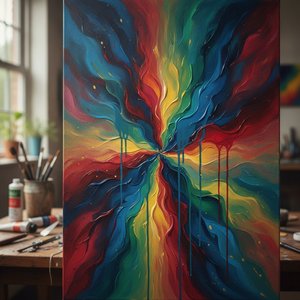
Lyrical Abstraction: The Emotional Power of Color and Form in Modern Art History
Explore the profound emotional depth of Lyrical Abstraction. Discover how masters like Raymond Parker used color and form to bridge Impressionism and Abstract Expressionism. Learn about this pivotal movement through our expert-led art history guide.
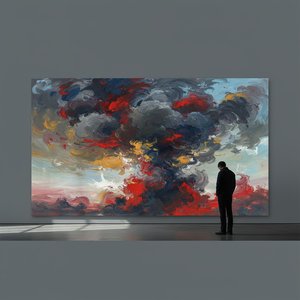
Beyond Representation: Exploring the Emotional Landscape of Abstract Expressionism
Explore the profound emotional world of Abstract Expressionism with OriginalUniqueArt. Discover key artists like Pollock & Rothko, learn about collecting, and find museum-quality reproductions to inspire your space.
