

 Voorvertoning
 Verstuur
 Delen
Delen
 Details bekijken
 Gids
Gids

 Download
 Vergelijkbare items
 Röntgenonderzoek
 Diavoorstelling
 Statistieken
Dollhouse
 Assemblage
- Feminist Expressionism
 1972
1972- Modern
 208.0 x 202.0 cm
 Smithsonian American Art Museum
 Lees meer
De kunstwerken die op deze pagina worden weergegeven, zijn beschermd door de auteursrechtwetgeving, wat betekent dat het ons wettelijk niet is toegestaan om identieke reproducties te maken of te verkopen. Deze bescherming wordt gehandhaafd onder internationale overeenkomsten zoals de Conventie van Bern en door nationale wetgeving, waaronder de bepalingen van de Amerikaanse auteurswet - Titel 17. Alle rechten voorbehouden. Reproduceren of distribueren van afbeeldingen is niet toegestaan zonder uitdrukkelijke schriftelijke toestemming van WahooArt.com en de rechthebbenden.
Deze methode voldoet volledig aan de auteursrechtwetgeving, omdat het niet gaat om het kopiëren of dupliceren van het beschermde kunstwerk. In plaats daarvan is er sprake van een creatieve herinterpretatie — een nieuw schilderij dat door het origineel wordt geïnspireerd, maar er niet identiek aan is.
Giclée / Kunstafdrukken
Giclée- of canvasafdruk van museumkwaliteit met een snelle productie en flexibele afwerkingsmogelijkheden. ( Bestel handgeschilderde reproductie Schakel over naar digitale afbeeldingen)




P118B €10

P118H €10

P118W €10

P438Z €10

P508JH €12

P508YH €12

P805H €10

P805Z €10

P919BZ €10

P919G €10

P919XJ €10

P959ZH €10

P968JZ €12

W106C €8

W218G €10

W218JH €8

W218Y €10

W307PJ €10

W316G €10

W316PJ €8

W316Y €10

W398PJ €8

W4111J €10

W500HY €15

W500JH €15

W692G €12

W849H €8

W940BG €15

W953PJ €8




Kies uit onze vooraf ingestelde maten die overeenkomen met de originele verhoudingen van het kunstwerk.

Voer de gewenste breedte en hoogte in, passend bij uw lijst of muur. Een afdruk kan alleen worden ingekort en nooit groter worden gemaakt dan het origineel; een formaat met andere verhoudingen zal daarom een deel van de afbeelding verliezen. Wij sturen u een digitaal mockup ter goedkeuring voordat we tot drukwerk overgaan. De afbeelding op deze pagina toont niet de werkelijke uitsnede — dit is alleen te zien op het mockup.
Wereldwijde levering () binnen 2 weken in plaats van de standaard 4/5 weken. (28 oktober)

Gratis wereldwijde expressverzending

Hoogwaardig linnen canvas

Volledige verzendverzekering

Garantie op terugbetaling van invoerrechten

Garantie op exacte kleurweergave

Retourbeleid van 100 dagen (alleen bij defecten)

100% Geld-terug-garantie

Korting bij meerdere afnames
 De optie voor glas is alleen beschikbaar bij een formaat kleiner dan 110 cm.

Dollhouse
Giclée / Kunstafdrukken
Afmetingen reproductie
-


Eindtotaal
€ 71
A Portal to the Feminine Imagination
In the landscape of twentieth-century art, few works capture the radical spirit of transformation quite like Miriam Schapiro’s “Dollhouse,” created in 1972. This is not merely a miniature architectural model; it is a profound window into the psyche of a movement. Emerging from the fertile ground of a collaborative workshop at CalArts—where Schapiro worked alongside the legendary Judy Chicago—this piece serves as a vibrant manifesto for feminist art. It invites the viewer to step beyond the threshold of traditional viewing and enter a space where domesticity is reclaimed, not as a site of confinement, but as a sanctuary of boundless creativity and resistance.
The work functions as an intricate assemblage, a technique Schapiro mastered to bridge the gap between fine art and the decorative crafts traditionally relegated to the feminine sphere. Rather than relying on the singular medium of paint, she meticulously layered wood, fabric scraps, papier-mâché, and various decorative embellishments. This tactile approach creates a richly textured surface that demands physical engagement. As one gazes upon the miniature rooms, the eye is led through a labyrinth of geometric patterns—squares and rectangles that anchor the composition—while vibrant hues of pink, yellow, and teal dance across the walls. These colors are far from accidental; they evoke an atmosphere of warmth, playfulness, and nurturing energy, deliberately celebrating the aesthetic qualities often dismissed by the male-dominated art canon.
The Art of Femmage and Domestic Rebellion
At the heart of “Dollhouse” lies Schapiro’s pioneering concept of “femmage,” a term she used to describe the integration of "feminine" decorative elements into high art. By utilizing materials like fabric and intricate patterns, she challenged the rigid hierarchies of the art world, asserting that the domestic and the decorative are worthy of profound intellectual inquiry. The interior of the house is a bustling microcosm of life; tiny chairs, tables, beds, and delicate knick-knacks are arranged with a precision that suggests both intimacy and order. Each small vignette within the structure tells a story of a lived experience, transforming the "dollhouse" from a childhood toy into a sophisticated stage for exploring identity.
For the collector or interior designer, this piece offers an unparalleled opportunity to introduce a conversation starter into a curated space. It possesses a unique ability to harmonize with modern minimalist settings through its bold geometric structure, while simultaneously providing a soulful, textured depth that softens more clinical environments. The emotional impact of “Dollhouse” is one of nostalgic wonder blended with intellectual vigor. It is a piece that does not just decorate a wall; it animates a room, offering a sense of joy, historical significance, and a continuous dialogue about the power of reclaiming one's space in the world.
Veelgestelde vragen
Hoe verbindt "Dollhouse" door Miriam Schapiro Feminist Expressionism met het geboorteland van de kunstenaar?
"Dollhouse" verbindt de Feminist Expressionism-stroming met Canada via de geboorteplaats van de maker.
Wat stelt "Dollhouse" voor?
De thema's die aanwezig zijn in "Dollhouse" door Miriam Schapiro omvatten dollhouse interior, domestic space, feminist art, colorful composition, furniture arrangement, decorative objects, midcentury modern, symbolic representation. Samen vatten zij de onderwerpen van het kunstwerk samen.
Welke sfeer brengt een reproductie van "Dollhouse" door Miriam Schapiro in een kamer?
De Serene sfeer van "Dollhouse" door Miriam Schapiro past perfect bij de aanbevolen ruimte: een Living Room.
Biografie kunstenaar
Een leven geweven in kleur en feminisme
Miriam Schapiro, geboren in Toronto, Canada, in 1923, was een kunstenaar wiens reis het evoluerende landschap van de twintigste en eenentwintigste-eeuwse kunst weerspiegelde. Haar leven, dat negen decennia besloeg tot haar overlijden in 2015, was niet simpelweg een progressie door artistieke stijlen, maar een doelbewuste afbraak van grenzen – tussen hoge en lage kunst, mannelijke en vrouwelijke expressie, en uiteindelijk, tussen persoonlijke ervaring en universele thema's. De vroege jaren van Schapiro waren doordrenkt van creativiteit; haar vader, Theodore Shapiro, zelf een kunstenaar en industrieel ontwerper, voedde haar aangeboren artistieke neigingen al vanaf de tedere leeftijd van zes jaar. Deze fundamentele aanmoediging, gecombineerd met vormende instructie bij het Museum of Modern Art, legde de basis voor een levenslange toewijding aan visuele expressie. Ze volgde een formele opleiding aan het Hunter College voordat ze haar studie voortzette aan de University of Iowa, waar ze een drievoudige reeks graden behaalde – BA, MA en MFA – waarmee ze haar toewijding aan schilderkunst, grafiek en een ontluikende artistieke visie verstevigde. Het was in Iowa dat ze de mede-kunstenaar Paul Brach ontmoette en met hem trouwde, wat het begin markeerde van een levenslange partnerschap, zowel persoonlijk als creatief. De invloed van Mauricio Lasansky in Iowa bleek cruciaal; hij bracht Schapiro niet alleen technische beheersing van diverse druktechnieken bij, maar leerde haar ook het belang van het bestuderen van de Oude Meesters om artistieke uitdagingen te overwinnen – een praktijk die door haar hele carrière zou resoneren.Van abstract expressionisme naar de geboorte van ‘femmage’
Schapiro kreeg aanvankelijk erkenning binnen het domein van het abstract expressionisme tijdens de jaren 50 en elijke 60, waarbij ze een kenmerkende gebarende stijl ontwikkelde die werd gekenmerkt door delicate gelaagdheid en subtiele uitwissing – “dun schilderen en wegvegen,” zoals zij het zelf beschreef. Deze abstracte composities waren echter zelden vrij van onderliggende verwijzingen; ze putten vaak inspiratie uit zwart-wit illustraties van schilderijen van de Oude Meesters, wat haar voortdurende dialoog met de kunstgeschiedenis onthulde. Het ware keerpunt in Schapiro’s artistieke traject kwam in de jaren 70, samenvallend met de opkomst van de feministische kunstbeweging. Erkennend dat er een kritiek gat bestond in de representatie van de ervaringen van vrouwen binnen de kunstwereld, mede-oprichtte zij het baanbrekende Feminist Art Program aan het California Institute of the Arts, samen met Judy Chicago. Deze samenwerking bleek transformatief en bood een platform om de vrouwelijke identiteit te verkennen en patriarchale structuren binnen de artistieke canon uit te dagen. Het was tijdens deze periode dat Schapiro de term “femmage” bedacht, een neologisme dat haar innovatieve collages samenvatte, opgebouwd uit stoffen, kant, linten en andere materialen die traditioneel geassocieerd worden met huiselijkheid en vrouwelijk handwerk. Deze werken waren niet louter esthetische experimenten; het waren doelbewuste daden van herovering, waarbij "vrouwenwerk", dat destijds ondergewaardeerd werd, werd verheven tot de status van schone kunst en conventionele opvattingen over artistieke waarde werden uitgedaagd.Thema's van identiteit, geschiedenis en decoratie
Schapiro’s artistieke verkenning draaide consequent om thema's als vrouwelijke identiteit, vrouwengeschiedenis en het herclaimen van gemarginaliseerde artistieke tradities. Haar doeken werden levendige bewaarplaatsen van symbolen die verbonden zijn met vrouwelijkheid – harten, florale motieven, geometrische patronen en een bewuste omarming van de kleur roze. Ze schroomde niet om beeldtaal te gebruiken die verwees naar andere belangrijke vrouwelijke kunstenaars, zoals Mary Cassatt en Frida Kahlo, waarmee ze eer bewees aan hun nalatenschap terwijl ze tegelijkertijd haar eigen unieke stem opeiste. Een bijzonder treffend voorbeeld van haar aanpak is haar monumentale weergave van waaier; door wat normaal gesproken een klein, intiem object is te transformeren tot grootschalige schilderijen – waarvan sommige wel vier bij zes meter groot waren – gaf ze de waaier heroïsche proporties en verhief ze dit tot een symbool van vrouwelijke kracht en gratie. Naast feministische zorgen toonde Schapiro’s werk ook een diepe betrokkenheid bij de kunstgeschiedenis. Ze putte inspiratie uit de Russische avant-garde beweging, waarbij ze de historische betekenis ervan erkende als een periode waarin vrouwelijke kunstenaars meer kansen kregen op erkenning en gelijkheid. Deze fascinatie voedde haar composities en verbreedde haar artistieke vocabulaire. Haar omarming van decoratelijke elementen was niet louter stilistisch; het was een bewuste afwijzing van minimalistische soberheid en een viering van ornamentiek – wat een significante bijdrage leverde aan de Pattern and Decoration beweging, die de heersende nadruk op reductieve vormen in de hedendaagse kunst uitdaagde.Nalatenschap en blijvende invloed
Het pionierswerk van Miriam Schapiro heeft het landschap van de hedendaagse kunst onherroepelijk veranderd. Ze baande de weg voor toekomstige generaties feministische kunstenaars, herdefinieerde de grenzen tussen schone kunst en ambacht en daagde diepgewortelde maatschappelijke vooroordelen uit. Haar innovatieve technieken, in het bijzonder haar ontwikkeling van “femmage”, breidden de mogelijkheden van collage en assemblage uit en inspireerden talloze kunstenaars om nieuwe materialen en benaderingen te verkennen. Schapiro’s nalatenschap reikt verder dan haar artistieke creaties; ze was een toegewijde pedagoog en een voorvechter van vrouwen in de kunsten, waarbij ze dialoog stimuleerde en kansen creëerde voor opkomende kunstenaars. Vandaag de dag bevinden haar werken zich in prestigieuze museumcollecties wereldwijd, waaronder het Jewish Museum in New York en de National Gallery of Art, wat ervoor zorgt dat haar visie nog jarenlang zal resoneren bij een breed publiek. De Eric Firestone Gallery vertegenwoordigt exclusief haar nalatenschap, beschermt haar artistieke erfgoed en bevordert voortdurend wetenschappelijk onderzoek naar haar leven en werk. Miriam Schapiro was meer dan een kunstenaar; ze was een culturele katalysator, een onbevreesde innovator en een kampioen van vrouwelijke expressie wiens impact tot op de dag van vandaag voelbaar is in de hele kunstwereld.
Miriam Schapiro
1923 - 2015 , Canada
Belangrijkste feiten
- Artistic Movement Or Style: Abstract Expressionisme; Femmage
- Artists Or Movements Influenced By This Artist: ['Judy Chicago']
- Artists Who Influenced This Artist:
- Stuart Edie
- James Lechay
- Date Of Birth: November 15, 1923
- Date Of Death: June 20, 2015
- Full Name: Miriam Schapiro
- Nationality: Amerikaanse kunstenares
- Notable Artworks:
- Wonderland
- OX
- Place Of Birth: Toronto, Canada
Gerelateerde artikelen
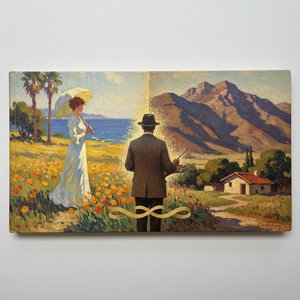
Joseph Kleitsch: Bridging Impressionism & California Regionalism – A Study of Light and Identity
Explore the life & work of Joseph Kleitsch, a pivotal California Impressionist painter. Discover his vibrant landscapes, portraits, and legacy within the Laguna Beach art colony. A comprehensive study for collectors & enthusiasts.
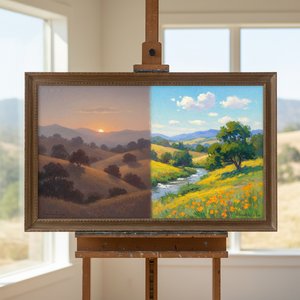
Franz Bischoff: Bridging Tonalism & Impressionism in California Landscape Painting
Explore the captivating art of Franz Bischoff, a pivotal figure bridging Tonalism & California Impressionism. Discover his stunning landscapes, floral works, and lasting legacy with OriginalUniqueArt.

OriginalUniqueArt.com F.A.Q.: Premium Art Partnerships for Museums & Educational Institutions
Discover OriginalUniqueArt.com's premium partnership programs for museums and educational institutions. We provide high-fidelity, hand-painted oil reproductions and bespoke curation services designed to preserve and expand the reach of historical legacies with academic precision.

OriginalUniqueArt.com F.A.Q.: Premium Art Partnerships for Museums & Educational Institutions
Discover OriginalUniqueArt.com's premium partnership programs for museums and educational institutions. We provide world-class, hand-painted oil reproductions and bespoke curation services designed to preserve and expand the reach of prestigious global art collections with unmatched precision.
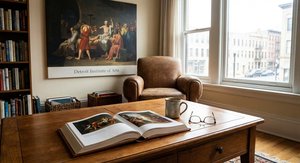
Top 25 Meesterwerken: Kunstcollectie Detroit Institute of Arts | OriginalUniqueArt.nl
Ontdek de top 25 meesterwerken van het Detroit Institute of Arts! Van Van Gogh tot Monet, bewonder iconische schilderijen en hun verhaal. Vind museumkwaliteit reproducties & woondecoratie inspiratie op OriginalUniqueArt.com.