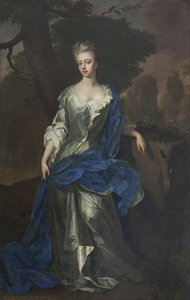
James Craggs (c.1657–1721), Brievenpostmeester-Algemeen
Baroque Portraiture
1720
115.0 x 92.0 cm
The British Postal Museum - Archive
Handgemaakte olieverfreproductie
Met de hand geschilderd in olieverf op canvas in uw gewenste maat en lijst, op bestelling gemaakt door onze kunstenaars. ( Bestel print
Koop afbeelding)
P118B $10
P118H $10
P118W $10
P438Z $10
P508JH $12
P508YH $12
P805H $10
P805Z $10
P919BZ $10
P919G $10
P919XJ $10
P959ZH $10
P968JZ $12
W106C $8
W218G $10
W218JH $8
W218Y $10
W307PJ $10
W316G $10
W316PJ $8
W316Y $10
W398PJ $8
W4111J $10
W500HY $15
W500JH $15
W692G $12
W849H $8
W940BG $15
W953PJ $8
Kies uit onze vooraf ingestelde maten die overeenkomen met de originele verhoudingen van het kunstwerk.
U kunt uw eigen afmetingen invoeren om in een specifieke lijst of ruimte te passen. Als de door u gekozen maat niet overeenkomt met de verhoudingen van het originele beeld, zullen we het kunstwerk bijsnijden of het schilderij uitbreiden met extra handgeschilderde elementen. Een digitale mockup wordt ter goedkeuring naar u verzonden voordat de productie begint.
Houd er rekening mee dat de preview op het scherm niet de werkelijke uitsnede of uitbreiding weergeeft. Alleen de mockup toont de uiteindelijke compositie nauwkeurig.
Hoewel aangepaste afmetingen mogelijk zijn, raden we aan een maat uit de vooraf gedefinieerde lijst te selecteren om de originele verhoudingen te behouden.
Na de bestelling zal het team van OriginalUniqueArt.com per e-mail contact opnemen met de klant voor instructies en een mockup-voorbeeld sturen.
Wereldwijde levering () binnen 3 tot 4 weken in plaats van de standaard 5 weken. (17 augustus). Zonder concessies aan de kwaliteit.
Gratis wereldwijde expressverzending
Hoogwaardig linnen canvas
Volledige verzendverzekering
Garantie op terugbetaling van invoerrechten
Garantie op exacte kleurweergave
Retourbeleid van 60 dagen (alleen bij defecten)
100% Geld-terug-garantie
Korting bij meerdere afnames
James Craggs (c.1657–1721), Brievenpostmeester-Algemeen
Druktechniek
Afmetingen reproductie
-
Eindtotaal
$ 300
Beschrijving kunstwerk
Een Portret van Elegantie en Macht: James Craggs door Michael Dahl
De afbeelding laat een schilderij zien van een man gekleed in een blauwe jas met witte haren en een baard. Hij draagt een wig en een zwarte hoed op zijn hoofd, terwijl hij een zwarte handschoen vasthoudt in één hand en een stok in de andere. De achtergrond wordt gevormd door een rode draperie, wat diepte aan het schilderij geeft. Het gekozen kostuum suggereert dat Craggs een prominente persoonlijkheid was of iemand van belang tijdens zijn tijd – een figuur die vaak voorkwam bij belangrijke ambtenaren en bestuurders. De aanwezigheid van de wig, baard en zwarte hoed weerspiegelen de stijlvolle mode van het begin van de 18e eeuw, een tijd waarin aandacht voor uiterlijk en status essentieel waren.De Kunstenaar en Zijn Inspiratie
Michael Dahl (1658-1743), geboren in Stockholm, was een Zweedse kunstenaar wiens leven een fascinerende reis door Europa betekende. Zijn opleiding vond plaats onder invloed van de Italiaanse kunsttraditie, waar hij kennis maakte met de principes van klassieke compositie en het gebruik van licht en schaduw om emotie en karakter te verkennen. Deze stijlvolle benadering zou zich terugvinden in zijn vele werken, waarbij hij een bijzondere aandacht besteedde aan het vastleggen van de natuurlijke schoonheid van zijn onderwerpen en het creëren van een gevoel voor dramatische expressie. Dahl’s moeder, Catarina Dahl, speelde een cruciale rol bij het stimuleren van zijn artistieke ontwikkeling; haar zelfopoffering zorgde ervoor dat hij toegang kreeg tot een uitgebreide opleiding die hem uiteindelijk zou leiden tot internationale erkenning.Techniek en Materiaal
Dahl stond bekend om zijn meesterlijke beheersing van de oliepasteltechniek, een methode waarbij kleurrijke pastelkleuren worden aangebracht op een ondergrond van oliepastel. Deze combinatie bood een ongeëvenaarde mogelijkheid voor het creëren van rijke kleuren en subtiele lichteffecten – een stijl die hij consequent gebruikte om zijn portretten tot leven te brengen. De gebruikte pigmenten waren zorgvuldig gekozen, vaak afkomstig uit Italië en andere Europese landen waar Dahl uitgebreid reisde om nieuwe kunstenaarschapstechnieken en inspiratie op te doen. Een bijzonder belangrijk element was het gebruik van een hoogwaardige kwaliteit lijm voor het aanbrengen van de pastelkleuren, wat ervoor zorgde dat de kleuren intensief bleven en hun prachtige nuance behielden over tijd.Historische Context en Symbolisme
Het schilderij komt uit een periode waarin het Britse koninkrijk onderging een belangrijke transformatie naar het licht huiselijke bestuur, waarbij aristocratische families een dominante rol speelden bij het vormgeven van de politiek en de kunstcultuur. James Craggs, als hooggeplaatste postmeester-algemeen, vertegenwoordigde een belangrijk onderdeel van deze sociale elite – een persoonlijkheid die vaak werd geprojecteerd op prachtige kunstwerken om zijn status en macht te onderstrepen. De rode draperie achter Craggs kan symbool staan voor zowel koninklijke glorie als bescherming, terwijl de zwarte handschoen en stok verwijzen naar autoriteit en controle – thema’s die terugkomen in veel kunstwerken uit deze tijd.Een Adembenemende Reproduktie
Een hoogwaardige reproductie van dit schilderij biedt een prachtige manier om de schoonheid en het karakter van Michael Dahl's kunstwerk te ervaren, zonder de financiële investering die een origineel werk vereist. Laat je inspireren door de elegante stijl en technische finesse van deze klassieke afbeelding en breng een vleugje aristocratische grandeur naar jouw huisdecoratie. Een zorgvuldig gekozen reproductie kan een prachtige aanvulling vormen op elke ruimte en een blijvende herinnering zijn aan het tijdloze kunstwerk van James Craggs door Michael Dahl.Biografie van de kunstenaar
A Life Bridging Worlds: The Artistic Journey of Michael Dahl
Michael Dahl, a name resonating with the elegance and refinement of 18th-century portraiture, was a Swedish artist who indelibly marked his presence on the English art scene. Born in Stockholm around 1659 – sources vary slightly between 1658 and 1659 – Dahl’s trajectory wasn't one confined by national borders but rather defined by an ambitious pursuit of artistic mastery that led him across Europe and ultimately established him as a leading portraitist in England. His story is one of familial sacrifice, rigorous training, religious conversion born of opportunity, and the skillful navigation of diverse cultural landscapes. The dedication of his mother, Catarina Dahl, to nurturing his talent laid the foundation for a career that would see him paint royalty, nobility, and leave behind a legacy of exquisite paintings celebrated for their aristocratic grace.From Swedish Foundations to Italian Influences

Dahl’s artistic education began in Sweden under Martin Hannibal in 1674, who had been brought from Italy by David Klöcker Ehrenstrahl to establish a portrait academy. This initial training provided him with foundational skills before he transitioned to study directly with Ehrenstrahl himself, indicating his promise as a student. However, Dahl’s ambition extended beyond the Swedish capital. In 1682, he embarked on an extensive educational journey across Europe, armed with a passport that allowed travel and a thirst for artistic knowledge. His arrival in London proved pivotal; he came under the tutelage of Robert White, a skilled engraver and painter, assisting him with engraving projects – including a portrait of King Charles XI of Sweden. This experience was crucial, providing practical skills and an introduction to the English art world. Yet, it was his encounter with Godfrey Kneller that truly shaped his understanding of the market. Kneller imparted not only technical expertise but also the pragmatism required to cater to public demand – a stark contrast to Ehrenstrahl’s more court-focused approach. Dahl's travels continued to Paris and then Rome, where he absorbed the Baroque aesthetic that would become characteristic of his mature work.Rome, Conversion, and Patronage
The exiled Queen Christina of Sweden played a transformative role in Dahl’s career during his time in Rome. Recognizing the importance of access to influential circles and papal patronage, Dahl converted to Roman Catholicism at her urging. This decision opened doors that would otherwise have remained closed, allowing him to paint portraits of the Queen herself and present his work to Pope Innocent XI, who bestowed upon him a gold medal – a testament to his burgeoning talent. The conversion, while perhaps strategically motivated, underscores Dahl’s willingness to adapt and navigate complex social and religious landscapes in pursuit of artistic advancement. It was in Rome that he honed his skills further, absorbing the Baroque aesthetic that would become characteristic of his mature work. He also developed a deep appreciation for classical art and architecture, which informed his compositions and use of light and shadow.A Master of English Portraiture
Upon returning to England, Michael Dahl swiftly established himself as a highly sought-after portraitist. He became renowned for his elegant and refined style, capturing not merely the likeness but also the status and personality of his aristocratic sitters. His portraits are distinguished by rich colors, meticulous attention to detail in textures, and an overall sense of grandeur. He painted numerous prominent figures, including Queen Anne, Prince George of Denmark, and a constellation of members from the English nobility. Notable works include striking portraits of Sir William Carew, John Churchill (1st Duke of Marlborough), and Sir Robert Walpole. Perhaps one of his most impressive achievements is the triple portrait of the 2nd Earl of Burlington, the 1st Duke of Kingston upon Hull, and the 3rd Baron Berkeley of Stratton – a masterful display of his skill in group portraiture, showcasing his ability to balance individual characterization with compositional harmony. The portraits were commissioned by the Earl himself and are considered masterpieces of English Baroque art.Legacy and Historical Significance
Dahl’s artistic style was a compelling synthesis of Swedish, Italian, and English influences. He absorbed the technical foundations from Hannibal and Ehrenstrahl, learned market savvy from Kneller, and benefited immensely from the patronage system he encountered in Rome. His work embodies the Baroque aesthetic prevalent during his time but infused with a uniquely refined sensibility. He influenced subsequent generations of portrait painters with his elegant style and technical proficiency, leaving an enduring mark on English portraiture. Beyond his artistic contributions, Michael Dahl’s success as a Swedish artist flourishing primarily in England highlights the international nature of artistic exchange during the Baroque period. He skillfully navigated different cultural contexts, establishing himself as a leading portraitist whose legacy continues to be admired today. His portraits offer invaluable insights into the lives and appearances of the English aristocracy during the early 18th century, serving as both historical documents and enduring works of art. His work stands as a testament to his adaptability, ambition, and extraordinary talent—a true bridge between cultures and artistic traditions.Michael Dahl
1658 - 1743 , Zweden
Belangrijkste feiten
- Artistic Movement Or Style: Barokke portretten
- Artists Or Movements Influenced By This Artist: ['18e-eeuwse portrettuur']
- Artists Who Influenced This Artist:
- Martin Hannibal
- David Ehrenstrahl
- Date Of Birth: 1659 (Stockholm)
- Date Of Death: 1743 (Londen)
- Full Name: Michael Dahl
- Nationality: Zweden
- Notable Artworks:
- Portret van Koningin Anne
- Sir William Carew
- Place Of Birth: Stockholm, Zweden

De optie voor glas is alleen beschikbaar bij een formaat kleiner dan 110 cm.