Menu
Text size

() ·

A painting made for you, by hand

Le Petite Tortue

Handgemaakte olieverfreproductie

Met de hand geschilderd in olieverf op canvas in uw gewenste maat en lijst, op bestelling gemaakt door onze kunstenaars. ( Schakel over naar print Schakel over naar digitale afbeeldingen)

Beschrijving verzamelobject

Discover "Le Petite Tortue" by Max Ernst – a striking abstract marble sculpture embodying minimalist design & surrealist themes. Explore this unique piece's geometric forms & polished sheen.

Biografie kunstenaar

Max Ernst (1891-1976): Een baanbrekende Duitse surrealist! Bekend om frottage, collages & droomachtige schilderijen met vogels, landschappen en psychologische thema's. #MaxErnst #Surrealisme

from ·

Chapter 1

How large should it be?

Slide to change the size; the picture on the left shows the frame at its real width. The proportions of the original are kept.

Standaardformaat
op maat gemaakt
CM
INCH

Kies uit onze vooraf ingestelde maten die overeenkomen met de originele verhoudingen van het kunstwerk.

breedte
hoogte

Voer de breedte en hoogte in die u nodig heeft, passend bij uw lijst of uw muur. Omdat dit handgeschilderd is, kan de kunstenaar bij een afmeting met een andere beeldverhouding iets meer rondom het schilderij schilderen of juist iets meer weglaten — u kiest zelf. Wij sturen u een digitaal mockup ter goedkeuring voordat het schilderwerk begint. De afbeelding die op deze pagina wordt getoond, is niet het uiteindelijke resultaat — alleen de mockup geeft dit weer.


Chapter 2

How should it arrive?

Choose the edges of the stretched canvas

Choose your frame

Corner sample of the WhiteWrap canvas edge finish, stretched on massief hout bars
White €1
Corner sample of the BlurSideWrap canvas edge finish, stretched on massief hout bars
Blurside €1
Corner sample of the ExtendedWrap canvas edge finish, stretched on massief hout bars
Extended €1
Corner sample of the P118B picture frame: gegoten polystyreen, 5 cm wide and 3 cm thick
P118B €10
Corner sample of the P118H picture frame: gegoten polystyreen, 5 cm wide and 3 cm thick
P118H €10
Corner sample of the P118W picture frame: gegoten polystyreen, 5 cm wide and 3 cm thick
P118W €10
Corner sample of the P438Z picture frame: gegoten polystyreen, 5.5 cm wide and 3.5 cm thick
P438Z €10
Corner sample of the P508JH picture frame: gegoten polystyreen, 7 cm wide and 3.5 cm thick
P508JH €12
Corner sample of the P508YH picture frame: gegoten polystyreen, 7 cm wide and 3.5 cm thick
P508YH €12
Corner sample of the P805H picture frame: gegoten polystyreen, 5 cm wide and 3.5 cm thick
P805H €10
Corner sample of the P805Z picture frame: gegoten polystyreen, 5 cm wide and 3.5 cm thick
P805Z €10
Corner sample of the P919BZ picture frame: gegoten polystyreen, 7 cm wide and 3.5 cm thick
P919BZ €10
Corner sample of the P919G picture frame: gegoten polystyreen, 7 cm wide and 3.5 cm thick
P919G €10
Corner sample of the P919XJ picture frame: gegoten polystyreen, 7 cm wide and 3.5 cm thick
P919XJ €10
Corner sample of the P959ZH picture frame: gegoten polystyreen, 5 cm wide and 3 cm thick
P959ZH €10
Corner sample of the P968JZ picture frame: gegoten polystyreen, 6 cm wide and 4 cm thick
P968JZ €12
Corner sample of the W106C picture frame: massief hout, 5 cm wide and 3 cm thick
W106C €8
Corner sample of the W218G picture frame: massief hout, 5 cm wide and 3 cm thick
W218G €10
Corner sample of the W218JH picture frame: massief hout, 5 cm wide and 3 cm thick
W218JH €8
Corner sample of the W218Y picture frame: massief hout, 5 cm wide and 3 cm thick
W218Y €10
Corner sample of the W307PJ picture frame: massief hout, 6 cm wide and 3 cm thick
W307PJ €10
Corner sample of the W316G picture frame: massief hout, 6 cm wide and 3 cm thick
W316G €10
Corner sample of the W316PJ picture frame: massief hout, 6 cm wide and 3 cm thick
W316PJ €8
Corner sample of the W316Y picture frame: massief hout, 6 cm wide and 3 cm thick
W316Y €10
Corner sample of the W398PJ picture frame: massief hout, 5 cm wide and 3 cm thick
W398PJ €8
Corner sample of the W4111J picture frame: massief hout, 6.5 cm wide and 3.5 cm thick
W4111J €10
Corner sample of the W500HY picture frame: massief hout, 7 cm wide and 5 cm thick
W500HY €15
Corner sample of the W500JH picture frame: massief hout, 7 cm wide and 5 cm thick
W500JH €15
Corner sample of the W692G picture frame: massief hout, 8 cm wide and 4 cm thick
W692G €12
Corner sample of the W849H picture frame: massief hout, 5 cm wide and 3 cm thick
W849H €8
Corner sample of the W940BG picture frame: massief hout, 7.5 cm wide and 4.5 cm thick
W940BG €15
Corner sample of the W953PJ picture frame: massief hout, 6 cm wide and 3.5 cm thick
W953PJ €8
Corner sample of the H24-GOLD picture frame: gesneden hout met gesso, 10 cm wide and 6 cm thick
H24-GOLD €30
Corner sample of the H24-SILVER picture frame: gesneden hout met gesso, 10 cm wide and 6 cm thick
H24-SILVER €30
Corner sample of the H36-GOLD picture frame: gesneden hout met gesso, 15 cm wide and 6.5 cm thick
H36-GOLD €45
Corner sample of the H36-SILVER picture frame: gesneden hout met gesso, 15 cm wide and 6.5 cm thick
H36-SILVER €45
Lijstvoorbeeld
Ingelijst

Moulding: . Overall size with the frame: .

Chapter 3

Who paints it, and should anything change?

Examples of what can be changed: Replace face with customer photo; Add pet (e.g., replace cat with dog); Include hidden message in background; Change background landscape or elements.
After order, OriginalUniqueArt.com team will email client for instructions and provide a mockup preview

Wereldwijde levering () binnen 3 tot 4 weken in plaats van de standaard 5 weken. (30 oktober). Zonder concessies aan de kwaliteit.

Chapter 4

The finishing touches

A nameplate, as in a museum?

Details van de gegraveerde bronzen plaat

This elegant plaque features the artist's name and the title of the artwork, finely engraved for a timeless presentation.

It is made from bronze with a refined, elegant finish. The text is precisely laser-engraved for a sharp and permanent result. Measuring 9x2 cm, the plaque is compact yet easy to read. It's built to be durable and scratch-resistant, offering a professional, museum-quality look. Mounting is simple thanks to the included adhesive backing.

Details transparante acrylplaat

The plaque includes essential engraved details such as the artist's name, the title of the artwork, the date it was created, the type of media used-like oil on canvas or watercolor-a brief description of the piece, and a QR code that links to the complete artwork information.

It is crafted from clear acrylic, offering a sleek, modern appearance. The text is UV-engraved in black to ensure strong visual contrast. With a size of 10x15 cm, it ensures optimal readability. It comes equipped with two metal hooks for secure wall mounting. The plaque is designed to be weather-resistant, making it suitable for various environments, and it includes interactive features that work seamlessly with smartphone scanning.

Details zwarte acrylplaat

This elegant plaque includes engraved information such as the artist's name, the title of the artwork, the date it was created, the type of media used (like oil on canvas or watercolor), a short description of the artwork, and a QR code for quick access to more information.

The plaque itself is made from refined black acrylic with a premium finish. The text is laser-engraved in white for high contrast and readability. Its size is 10x15 cm, designed to be easy to read. It comes with two metal hooks for professional mounting. The design is sleek and fits any interior style. It is also weather-resistant and durable, with built-in digital integration for mobile compatibility.

A protective varnish?

When do you need it?

Chapter 5

Your painting, as you ordered it

Le Petite Tortue

Druktechniek

Afmetingen reproductie

-

Geselecteerde topkunstenaars

Meer detail, verfijning en extra productietijd

-

Lijst voor reproductie

-

-

Voor kunstwerken of reproducties die aan één zijde groter zijn dan 105 cm (ongeveer 41 inch), wordt de lijst als een losse set verzonden. Deze methode garandeert een veilige levering en voorkomt schade tijdens het transport.

Professionele montage vereist - dit is geen doe-het-zelfproduct.
De set moet worden gemonteerd en het canvas moet worden gespannen door een ervaren professionele lijstenmaker, met gebruik van houtlijm (niet inbegrepen), een doekspanter en klemmen om de sponningen recht te houden terwijl de lijm droogt. Onjuiste montage of een ongelijkmatige spanning op het canvas kan het kunstwerk permanent beschadigen en wordt niet gedekt door onze garantie.

  • Alle massief houten onderdelen zijn inbegrepen, nauwkeurig op maat gesneden voor montage.

  • Te monteren met de meegeleverde schroeven, plus houtlijm voor de hoekverbindingen, die niet wordt meegeleverd en door uw lijstenmaker moet worden aangeschaft.

  • Professioneel gereedschap is vereist en niet inbegrepen: een spanner voor canvas en klemmen om de latten recht te houden terwijl de lijm droogt.

Belangrijk:
De hoekverbindingen vereisen houtlijm, de latten moeten met lijmklemmen worden vastgehouden tot de lijm volledig is opgedroogd, en het spannen van het canvas op het samengestelde frame vereist een doekspanter. Geen van deze artikelen is inbegrepen in de set. Wij adviseren u om een ervaren professionele lijstenmaker te raadplegen voordat u deze maat bestelt.

Naamplaatje

-

-

Beschermende vernislaag

Glanzende vernis (versterkt de kleuren en biedt bescherming tegen licht en vocht)

-

Mijn kunstwerk aanpassen

Voorbeelden van aanpassingen: vervang het gezicht door een eigen foto; voeg een huisdier toe (bijv. vervang de kat door een hond); verwerk een verborgen boodschap in de achtergrond; wijzig het landschap of andere elementen op de achtergrond.

-

Spoedlevering

Wereldwijde levering () binnen 3 tot 4 weken in plaats van de standaard 5 weken. (30 oktober). Geen concessies aan de kwaliteit.

-

Spoedlevering

Wereldwijde levering naar binnen 5 weken. (6 november).

Inbegrepen

Eindtotaal

€ 266

Totaalprijs € 266

De optie voor glas is alleen beschikbaar bij een formaat kleiner dan 110 cm.

Included with every order

  • Gratis wereldwijde expressverzending
  • Hoogwaardig linnen canvas
  • Volledige verzendverzekering
  • Garantie op terugbetaling van invoerrechten
  • Garantie op exacte kleurweergave
  • Retourbeleid van 100 dagen (alleen bij defecten)
  • 100% Geld-terug-garantie
  • Korting bij meerdere afnames

The Sculptural Essence of Le Petite Tortue

Max Ernst’s Le Petite Tortue, a deceptively simple yet profoundly evocative marble sculpture, stands as a testament to the artist's mastery of geometric abstraction and his deep engagement with surrealist principles. Completed in 1967, this work transcends mere form, inviting contemplation on balance, stability, and the subtle interplay between order and chaos. The piece isn’t about representation; it’s an exploration of spatial relationships, light, and shadow—a carefully constructed meditation rendered in the cool, enduring beauty of polished black marble.

The sculpture's core is a vertically oriented composition built upon three interconnected forms. A substantial base, meticulously carved, provides support for a smaller, inverted bowl-like structure. This, in turn, cradles an even more delicate, pointed element that culminates at the apex. The surfaces are treated to a high sheen, reflecting light with an almost disconcerting intensity – highlights dance across the planes of each component, emphasizing their sharp edges and creating a dynamic interplay between form and illumination. The deliberate use of negative space is as crucial as the solid mass; it’s within these voids that the sculpture truly breathes, suggesting an underlying tension and inviting the viewer to complete the image with their own perception.

A Legacy Forged in Experimentation

Max Ernst was a restless spirit, a pioneer who relentlessly challenged artistic conventions throughout his career. Born in Brühl, Germany, in 1891, he rejected formal training, instead forging his path through philosophical inquiry and a deep fascination with the subconscious. His early work, heavily influenced by Dadaism and Expressionism, quickly evolved into a distinctive style characterized by collage, frottage (a technique of rubbing pencil over textured surfaces), and a willingness to embrace the unexpected. Ernst’s intellectual pursuits—ranging from psychology and psychiatry to literature and art history—fueled his artistic experimentation, leading him to develop groundbreaking methods for manipulating materials and creating images that seemed to emerge from dreams.

The period surrounding Le Petite Tortue saw Ernst increasingly focused on minimalist forms and geometric abstraction. This shift reflects a broader trend in mid-century design, emphasizing clarity, simplicity, and the inherent beauty of form. However, Ernst’s work retains a distinctly surrealist sensibility—a subtle suggestion of the uncanny, a hint of hidden meaning beneath the surface. The sculpture's stark geometry and polished surfaces evoke a sense of detachment, while its carefully balanced composition hints at an underlying harmony.

Symbolism and Emotional Resonance

While Le Petite Tortue eschews overt representation, it’s rich in symbolic potential. The tortoise itself is a potent image—a symbol of longevity, wisdom, and perseverance. Its inclusion here suggests a contemplation on the passage of time, perhaps even an invitation to slow down and appreciate the present moment. The geometric forms – circles, cones, and planes – represent order and structure, while the negative space creates a sense of openness and possibility. The polished marble, with its reflective surface, could be interpreted as mirroring the viewer’s own perception—a reminder that art is not simply observed but actively engaged with.

Furthermore, the sculpture's minimalist aesthetic aligns with a broader cultural shift towards simplicity and restraint in the mid-20th century. It speaks to a desire for clarity and reduction, stripping away extraneous details to reveal the essential form. Yet, despite its apparent austerity, Le Petite Tortue possesses a remarkable emotional resonance—a quiet dignity and an enduring sense of beauty that transcends its purely formal qualities.

A Reproduction Worthy of Display

OriginalUniqueArt offers meticulously hand-painted reproductions of Max Ernst’s Le Petite Tortue, capturing the sculpture's essence with unparalleled detail and fidelity. Each reproduction is created by skilled artisans who understand the nuances of Ernst’s technique and his artistic vision. Whether you seek a striking centerpiece for your modern living room or a contemplative addition to your art collection, our reproductions provide an authentic and accessible way to experience this iconic work of art. Explore our selection today and bring the timeless beauty of Le Petite Tortue into your space.

Veelgestelde vragen

Uit welke fase van de carrière van Max Ernst is "Le Petite Tortue"?

"Le Petite Tortue" vertegenwoordigt de Mature Period van Max Ernst.

Is "Le Petite Tortue" door Max Ernst een licht of een donker kunstwerk?

De vastgestelde waarden voor "Le Petite Tortue" door Max Ernst zijn: balanced helderheid en Gentle Luminance luminantie.

Welke kleur domineert de compositie van "Le Petite Tortue" door Max Ernst?

Espresso (#525253) is de dominante kleur van "Le Petite Tortue" door Max Ernst.

More about this painting

Schakel over naar print Schakel over naar digitale afbeeldingen Verstuur
Details bekijken Gids Toevoegen aan favorieten Download Vergelijkbare items Diavoorstelling Q&A Statistieken

In numbers

  • 29frames to choose from
  • standard sizes, in its own proportions
  • 5weeks to paint and deliver it

About the original

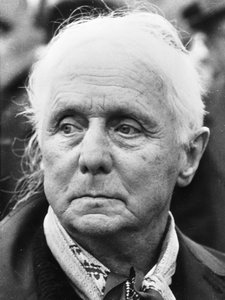
Max Ernst

Max Ernst

1891 - 1976, Duitsland

Quick facts about Max Ernst

  • Artistic Movement Or Style: Dada, Surrealisme
  • Artists Or Movements Influenced By This Artist:
    • Surrealisme
    • Dada
  • Artists Who Influenced This Artist:
    • Picasso
    • Van Gogh
    • Gauguin
  • Date Of Birth: 1 apr 1891
  • Date Of Death: 1 apr 1976
  • Full Name: Max Ernst
  • Nationality: Duits/Amerikaans, Frans
  • Notable Artworks:
    • The Entire City
    • Euclides
  • Place Of Birth: Brühl, Duitsland

Biografie kunstenaar

A Life Immersed in the Surreal

Max Ernst, geboren Maximilian Maria Ernst op 1 april 1891 in Brühl, Duitsland, was een onrustige geest die tot een van de meest invloedrijke figuren van de 20e-eeuwse kunst werd. Zijn reis was geen van conventionele artistieke opleiding; eerder een zelfgeleide verkenning aangedreven door filosofische reflectie, psychologische fascinatie en een diepe teleurstelling met maatschappelijke normen. Ernst’s vader, leraar van de doven en amateur schilder, instilledde hem zowel gevoeligheid voor de wereld als een rebellie tegen gevestigde autoriteit. Deze vroege dualiteit zou een kenmerkende eigenschap worden van zijn artistieke visie.

Ernst’s academische inspanningen aan de Universiteit van Bonn – omvatten filosofie, kunstgeschiedenis, literatuur, psychologie en psychiatrie – waren niet alleen afleidingen maar fundamentele elementen die zijn latere werk diepgaand beïnvloedden. Hij was niet simpelweg geïnteresseerd in *hoe* te schilderen; hij worstelde met *waarom*. Deze intellectuele nieuwsgierigheid leidde hem tot het ontmoeten van baanbrekende werken van Picasso, Van Gogh en Gauguin op de Sonderbund tentoonstelling in Keulen in 1912, een moment dat zijn artistieke traject onherstelbaar veranderde. De zaden van modernisme waren gezaaid.

Dada’s Disruptie en de Geboorte van Surrealistische Visies

De catastrofe van de Eerste Wereldoorlog bleek een keerpunt te zijn voor Ernst. Zijn ervaringen als soldaat aan zowel het Oost- als Westfront lieten hem diepgaand gekwetst achter, wat leidde tot een diepe scepsis ten opzichte van gevestigde orde en een verlangen naar nieuwe vormen van expressie. Deze teleurstelling vond vruchtbare grond in de opkomende Dada beweging, waar hij vol overtuiging aanleunde na zijn terugkeer naar Keulen in 1918. Samen met Hans Arp – een levenslange vriend en collaborateur – werd Ernst een centrale figuur in de Keulse Dada groep, die traditionele artistieke conventies verwerkte en absurditeit, kans en anti-rationaliteit omarmde.

Dada was echter slechts een tussenstap. In het begin van de jaren 1920 migreerde Ernst naar Parijs en voegde hij zich bij de Surrealistische kring, geleid door André Breton. Dit markeerde een verschuiving richting het verkennen van het rijk van dromen, het onbewuste en de irrationele. Invloedrijk waren de psychoanalytische theorieën van Sigmund Freud, waarnaar Ernst op zoek ging om de verborgen dieptes van de menselijke ervaring te ontgrendelen door zijn kunst. Hij was niet geïnteresseerd in het weergeven van de werkelijkheid zoals deze voorkwam, maar eerder in het onthullen van de onderliggende psychologische krachten die deze vormden.

Pioniers Technieken: Frottage, Grattage en Collage

Ernst’s artistieke innovatie strekte zich uit voor de onderwerpkeuze; hij was een meesterlijke experimentator met techniek. Hij nam niet simpelweg bestaande methoden aan—hij verzinsde nieuwe. Misschien zijn meest bekende bijdragen is frottage, een proces van wrijven met potlood of houtskoor over getextureerde oppervlakken om onverwachte en evocatieve beelden te creëren. Deze techniek, geboren uit een moment van verveling terwijl hij naar houtnerf keek, stelde Ernst in staat om in de diepten van het onderbewustzijn te duiken en vormen te genereren die zich verzetten tegen bewuste controle. Dicht gerelateerd was grattage, waarbij verf over een doek wordt geschraapt om onderliggende lagen te onthullen.

Hij gebruikte ook meesterlijk collage, het samenstellen van uiteenlopende elementen – beelden uit tijdschriften, wetenschappelijke illustraties, foto’s – in surrealistische composities die conventionele ideeën over representatie uitdaagden. Deze technieken waren niet simpelweg stijlicheden—ze waren integraal aan zijn verkenning van het onbewuste en zijn wens om traditionele artistieke grenzen te verstoren. Zijn schilderijen bevatten vaak terugkerende symbolische beelden: vogels (vooral zijn alter ego Loplop), desolate landschappen, verontrustende juxtaposities en een doordringende mystiek.

Een Erfgoed van Innovatie en Invloed

De uitbraak van de Tweede Wereldoorlog dwong Ernst tot vlucht uit Europa, waar hij onderdak vond in de Verenigde Staten. Hij bleef schilderen en experimenteren met nieuwe technieken gedurende zijn ballingschap, uiteindelijk terugkeerend naar Frankrijk na de oorlog, waar hij actief bleef tot zijn dood op 1 april 1976, een dag voor zijn 85e verjaardag.

Ernst’s bijdragen aan Dada en Surrealisme waren niets minder dan baanbrekend. Hij daagde artistieke normen uit, duikelde in de diepten van het onbewuste en verzinsde innovatieve technieken die nog steeds kunstenaars inspireren. Hij was niet simpelweg een schilder—hij was een ontdekkingsreiziger, een provocateur en een visionair die de grenzen van de kunst zelf uitbreidde.

  • Belangrijke Werken: The Entire City, Euclides, Ofrenda funeraria, The Equivocal Woman, L’Ange du foyer
  • Invloeden: Pablo Picasso, Vincent van Gogh, Paul Gauguin, Sigmund Freud, Giorgio de Chirico
  • Bewegingen: Dada, Surrealisme

Snelle feiten

  • Location: Private Collection
  • Notable elements: Geometric forms, Polished sheen
  • Movement: Surrealism, Dada
  • Artistic style: Minimalist, Abstract
  • Artist: Max Ernst

Kunstquiz

Er is slechts één goed antwoord op elke vraag.

Vraag 1:
What is the primary material used in Max Ernst’s ‘Le Petite Tortue’?
Vraag 2:
Which artistic movement is most closely associated with Max Ernst's ‘Le Petite Tortue’?
Vraag 3:
The sculpture utilizes a subtractive carving technique. What does this primarily refer to?
Vraag 4:
What is the dominant lighting effect in the image, contributing to the sculpture's three-dimensional appearance?
Vraag 5:
Considering Max Ernst’s broader artistic practice, what is a recurring motif often found in his work?