- Home

- Afdruk op canvas
- Max Ernst
- La chanson du décervelage 9

 Verstuur
 Delen
Delen
 Details bekijken

 Download
 Vergelijkbare werken
 Diavoorstelling
La chanson du décervelage 9

 Lees meer
Giclée / Kunstafdrukken
Giclée- of canvasafdruk van museumkwaliteit met een snelle productie en flexibele afwerkingsmogelijkheden. ( Bestel een handgeschilderde reproductie van dit verzamelobject Naar afbeelding wisselen)




































Kies uit onze vooraf ingestelde maten die overeenkomen met de originele verhoudingen van het kunstwerk.

U kunt uw eigen afmetingen opgeven om in een specifieke lijst of ruimte te passen. Als de door u gekozen maat niet overeenkomt met de proporties van het originele kunstwerk, zullen wij de afbeelding bijsnijden of uitbreiden met een gespiegelde of effen rand. Een digitaal mockup wordt ter goedkeuring naar u verzonden voordat de productie begint.
Houd er rekening mee dat de preview op het scherm de werkelijke bijsneding of uitbreiding niet weergeeft. Alleen de mockup toont de uiteindelijke compositie nauwkeurig.
Hoewel aangepaste maten beschikbaar zijn, raden wij aan een afmeting uit de vooraf bepaalde lijst te kiezen om de originele proporties te behouden.
Wereldwijde levering () binnen 2 weken in plaats van de standaard 4/5 weken. (4 augustus)

Gratis wereldwijde expressverzending

Hoogwaardig linnen canvas

Volledige verzendverzekering

Garantie op terugbetaling van invoerrechten

Garantie op exacte kleurweergave

60 dagen retourbeleid (alleen bij defecten)

100% Geld-terug-garantie

Korting bij meerdere afnames
 De optie voor glas is alleen beschikbaar bij een formaat kleiner dan 110 cm.

La chanson du décervelage 9
Giclée / Kunstafdrukken
Formaat reproductie
-


Totaalprijs
$ 80
Beschrijving verzamelobject
A Fragmented Dreamscape: Deconstructing ‘La Chanson du Décervelage 9’ by Max Ernst
Max Ernst's “La Chanson du Décervelage 9” is not merely a print; it’s an invitation into the labyrinthine depths of the subconscious. This arresting black and white composition, punctuated by a vibrant red circle, immediately commands attention with its unsettling juxtaposition of familiar forms rendered in a distinctly surrealist style. The image feels both intensely personal to Ernst – a reflection of his lifelong fascination with psychology and the irrational – and universally resonant, tapping into our shared experience of disorientation and the elusive nature of memory.
The artwork’s foundation lies within Ernst's unique approach to artistic creation, one that deliberately eschewed traditional training. He wasn’t simply replicating reality; he was actively seeking to dismantle it, reconstructing it from fragments of dreams, memories, and philosophical inquiry. This pursuit is powerfully evident in “La Chanson du Décervelage 9,” where the seemingly disparate elements – the top hat, the goblet, the dense text – coalesce into a single, enigmatic statement. The deliberate imbalance of the composition, drawing the eye relentlessly to that central red circle, suggests a focus on disruption and revelation.
Decoding the Symbolism: Red, Text, and the Unraveling
The dominant red circle is undoubtedly the focal point, radiating outwards like an explosion or perhaps a wound. Its textured appearance – achieved through a technique likely involving collage and scratching – hints at layers of meaning, suggesting both violence and transformation. It’s a potent symbol of excision, of something being deliberately removed, echoing the title's reference to “de-cervelage” (untying). The surrounding text, rendered in a small, almost illegible font, adds another layer of complexity. While its precise content remains elusive due to the limitations of our research, it likely functions as a key – a cryptic clue to unlocking the artwork’s deeper secrets, perhaps titles, descriptions or even personal notes from Ernst himself.
The top hat and goblet, presented with stark simplicity, are not intended as realistic depictions. Instead, they operate on a symbolic level, representing archetypal figures and concepts. The hat, often associated with formality and societal expectations, is subtly undermined by its placement; it feels displaced, almost vulnerable. The goblet, traditionally linked to celebration and indulgence, takes on a more melancholic tone within this context, suggesting perhaps the fleeting nature of pleasure or the emptiness beneath superficial appearances.
Ernst’s Technique: Collage and the Alchemy of Disruption
“La Chanson du Décervelage 9” exemplifies Ernst's masterful manipulation of technique. He was a pioneer in collage, employing found materials – newspaper clippings, woodcuts, and other ephemera – to create layered compositions that challenged traditional notions of painting. This process of assemblage is crucial to understanding the artwork’s texture and its sense of fragmented reality. The scratching and layering visible within the print suggest a deliberate attempt to disrupt the surface, mirroring the psychological disruption represented by the red circle.
- Materials: Primarily black and white printing techniques with strategic use of red accents, likely incorporating collage elements.
- Technique: Ernst’s signature collage method, combined with scratching and layering to create a textured surface and a sense of depth.
- Printing Style: A graphic, almost schematic style emphasizing symbolic representation over realistic detail.
A Legacy of the Unconscious: Ernst's Surrealist Vision
“La Chanson du Décervelage 9” is a quintessential example of Max Ernst’s surrealist vision – a world where logic dissolves and the subconscious reigns supreme. Born in Brühl, Germany, in 1891, Ernst spent his life exploring the hidden landscapes of the mind, influenced by Freudian psychology and a deep-seated skepticism towards rational thought. His work isn't about providing answers; it’s about posing questions, inviting viewers to confront their own anxieties, desires, and the inherent ambiguity of existence. This piece, with its unsettling beauty and profound symbolism, continues to resonate today as a testament to Ernst’s enduring legacy as one of the 20th century’s most innovative and influential artists.
OriginalUniqueArt offers meticulously crafted hand-painted reproductions of “La Chanson du Décervelage 9,” allowing you to experience the full impact of this captivating artwork in a timeless, high-quality format. Bring this fragment of a dreamscape into your home or office – a conversation starter and a window into the mind of a true visionary.
Biografie van de kunstenaar
A Life Immersed in the Surreal
Max Ernst, geboren Maximilian Maria Ernst op 1 april 1891 in Brühl, Duitsland, was een onrustige geest die tot een van de meest invloedrijke figuren van de 20e-eeuwse kunst werd. Zijn reis was geen van conventionele artistieke opleiding; eerder een zelfgeleide verkenning aangedreven door filosofische reflectie, psychologische fascinatie en een diepe teleurstelling met maatschappelijke normen. Ernst’s vader, leraar van de doven en amateur schilder, instilledde hem zowel gevoeligheid voor de wereld als een rebellie tegen gevestigde autoriteit. Deze vroege dualiteit zou een kenmerkende eigenschap worden van zijn artistieke visie.
Ernst’s academische inspanningen aan de Universiteit van Bonn – omvatten filosofie, kunstgeschiedenis, literatuur, psychologie en psychiatrie – waren niet alleen afleidingen maar fundamentele elementen die zijn latere werk diepgaand beïnvloedden. Hij was niet simpelweg geïnteresseerd in *hoe* te schilderen; hij worstelde met *waarom*. Deze intellectuele nieuwsgierigheid leidde hem tot het ontmoeten van baanbrekende werken van Picasso, Van Gogh en Gauguin op de Sonderbund tentoonstelling in Keulen in 1912, een moment dat zijn artistieke traject onherstelbaar veranderde. De zaden van modernisme waren gezaaid.
Dada’s Disruptie en de Geboorte van Surrealistische Visies
De catastrofe van de Eerste Wereldoorlog bleek een keerpunt te zijn voor Ernst. Zijn ervaringen als soldaat aan zowel het Oost- als Westfront lieten hem diepgaand gekwetst achter, wat leidde tot een diepe scepsis ten opzichte van gevestigde orde en een verlangen naar nieuwe vormen van expressie. Deze teleurstelling vond vruchtbare grond in de opkomende Dada beweging, waar hij vol overtuiging aanleunde na zijn terugkeer naar Keulen in 1918. Samen met Hans Arp – een levenslange vriend en collaborateur – werd Ernst een centrale figuur in de Keulse Dada groep, die traditionele artistieke conventies verwerkte en absurditeit, kans en anti-rationaliteit omarmde.
Dada was echter slechts een tussenstap. In het begin van de jaren 1920 migreerde Ernst naar Parijs en voegde hij zich bij de Surrealistische kring, geleid door André Breton. Dit markeerde een verschuiving richting het verkennen van het rijk van dromen, het onbewuste en de irrationele. Invloedrijk waren de psychoanalytische theorieën van Sigmund Freud, waarnaar Ernst op zoek ging om de verborgen dieptes van de menselijke ervaring te ontgrendelen door zijn kunst. Hij was niet geïnteresseerd in het weergeven van de werkelijkheid zoals deze voorkwam, maar eerder in het onthullen van de onderliggende psychologische krachten die deze vormden.
Pioniers Technieken: Frottage, Grattage en Collage
Ernst’s artistieke innovatie strekte zich uit voor de onderwerpkeuze; hij was een meesterlijke experimentator met techniek. Hij nam niet simpelweg bestaande methoden aan—hij verzinsde nieuwe. Misschien zijn meest bekende bijdragen is frottage, een proces van wrijven met potlood of houtskoor over getextureerde oppervlakken om onverwachte en evocatieve beelden te creëren. Deze techniek, geboren uit een moment van verveling terwijl hij naar houtnerf keek, stelde Ernst in staat om in de diepten van het onderbewustzijn te duiken en vormen te genereren die zich verzetten tegen bewuste controle. Dicht gerelateerd was grattage, waarbij verf over een doek wordt geschraapt om onderliggende lagen te onthullen.
Hij gebruikte ook meesterlijk collage, het samenstellen van uiteenlopende elementen – beelden uit tijdschriften, wetenschappelijke illustraties, foto’s – in surrealistische composities die conventionele ideeën over representatie uitdaagden. Deze technieken waren niet simpelweg stijlicheden—ze waren integraal aan zijn verkenning van het onbewuste en zijn wens om traditionele artistieke grenzen te verstoren. Zijn schilderijen bevatten vaak terugkerende symbolische beelden: vogels (vooral zijn alter ego Loplop), desolate landschappen, verontrustende juxtaposities en een doordringende mystiek.
Een Erfgoed van Innovatie en Invloed
De uitbraak van de Tweede Wereldoorlog dwong Ernst tot vlucht uit Europa, waar hij onderdak vond in de Verenigde Staten. Hij bleef schilderen en experimenteren met nieuwe technieken gedurende zijn ballingschap, uiteindelijk terugkeerend naar Frankrijk na de oorlog, waar hij actief bleef tot zijn dood op 1 april 1976, een dag voor zijn 85e verjaardag.
Ernst’s bijdragen aan Dada en Surrealisme waren niets minder dan baanbrekend. Hij daagde artistieke normen uit, duikelde in de diepten van het onbewuste en verzinsde innovatieve technieken die nog steeds kunstenaars inspireren. Hij was niet simpelweg een schilder—hij was een ontdekkingsreiziger, een provocateur en een visionair die de grenzen van de kunst zelf uitbreidde.
- Belangrijke Werken: The Entire City, Euclides, Ofrenda funeraria, The Equivocal Woman, L’Ange du foyer
- Invloeden: Pablo Picasso, Vincent van Gogh, Paul Gauguin, Sigmund Freud, Giorgio de Chirico
- Bewegingen: Dada, Surrealisme
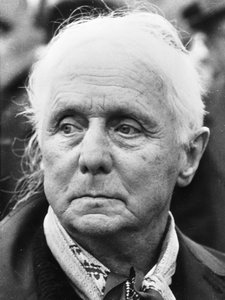
Max Ernst
1891 - 1976 , Duitsland
Snelle feiten
- Artistic Movement Or Style: Dada, Surrealisme
- Artists Or Movements Influenced By This Artist:
- Surrealisme
- Dada
- Artists Who Influenced This Artist:
- Picasso
- Van Gogh
- Gauguin
- Date Of Birth: 1 apr 1891
- Date Of Death: 1 apr 1976
- Full Name: Max Ernst
- Nationality: Duits/Amerikaans, Frans
- Notable Artworks:
- The Entire City
- Euclides
- Place Of Birth: Brühl, Duitsland
Gerelateerde artikelen
Max Ernst's Top 25 Meesterwerken: Surrealisme voor uw Interieur | OriginalUniqueArt
Ontdek de top 25 meesterwerken van Max Ernst, pionier van het surrealisme & dadaïsme. Duik in zijn droombeelden en unieke technieken. Museumkwaliteit kunst reproducties voor uw interieur op OriginalUniqueArt.com. Exploreer de collectie online!
De Subtiele Kracht van Neutraal: Zwart, Wit en Grijs als Katalysatoren voor Licht, Textuur en Moderne Architectuur
Ontdek de subtiele kracht van zwart, wit en grijs in hoteldesign. Expert tips voor licht, textuur & moderne architectuur. Creëer rustgevende, luxe ruimtes met OriginalUniqueArt.
Kazimir Malevich's Top 25 Meesterwerken: Abstracte Kunst voor Uw Interieur | OriginalUniqueArt
Ontdek de 25 meest iconische werken van Kazimir Malevich, pionier van het suprematisme en abstracte kunst. Van 'Zwarte Vierkant' tot 'Witte op Wit', leer over zijn invloedrijke stijl & koop museumkwaliteit reproducties voor uw interieur. Explore the full collection online!
Top 10 Surrealistische Meesterwerken: Kunst voor uw Interieur | OriginalUniqueArt.nl
Ontdek de 10 meest iconische surrealistische meesterwerken van Dalí, Magritte & Miró. Duik in hun droomwereld en symboliek! Museumkwaliteit kunst reproducties voor uw interieur op OriginalUniqueArt.com.
Meesterwerken in Zwart: Top 10 Schilderijen Gedreven door Ivoorkleurig Zwart - OriginalUniqueArt.com
Ontdek de kracht van ivoorkleurig zwart in 10 iconische schilderijen. Van Rembrandt tot Manet, duik in de verhalen achter deze meesterwerken en vind perfecte kunst voor uw interieur. Museumkwaliteit reproducties op OriginalUniqueArt.com