
 Voorvertoning
 Verstuur
 Delen
Delen
 Details bekijken

 Download
 Vergelijkbare items
 Röntgenonderzoek
 Diavoorstelling
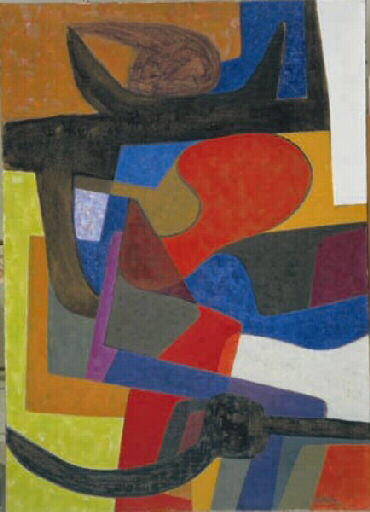
Manolete
 Lees meer
Koop een digitale afbeelding in hoge resolutie met verbeterde kwaliteit, die veel superieur is aan de online voorvertoning.
Elk bestand wordt met uiterste precisie voorbereid door onze interne specialisten, met behulp van geavanceerde tools en deskundige handmatige retouche. Wij garanderen dat elke afbeelding een uitzonderlijke helderheid, nauwkeurige kleurweergave en verfijnde details bezit.
Het uiteindelijke bestand wordt binnen 72 uur per e-mail geleverd, geoptimaliseerd voor direct gebruik in professionele, redactionele en printomgevingen. Dit is dezelfde kwaliteit waarop vooraanstaande designstudio's, uitgevers en galerieën vertrouwen.
Digitale afbeeldingen
Download een bestand met hoge resolutie voor persoonlijke weergave, afdrukken en creatieve projecten. ( Bestel print Bestel handgeschilderde reproductie)
Inbegrepen bij elke bestelling van een digitale afbeelding
Professionele digitale levering, gegarandeerd
Wanneer u kiest voor OriginalUniqueArt.com, ontvangt u niet alleen een afbeelding – u krijgt een professioneel verbeterd digitaal kunstwerk, met precisie vervaardigd en voorzien van een tevredenheidsgarantie. Dit is alles wat automatisch bij uw bestelling is inbegrepen:

Snelle levering per e-mail
Uw hoogwaardige digitale afbeeldingsbestand wordt binnen 72 uur na bestelling naar u gemaild – klaar voor direct gebruik.

AI-verbeterd digitaal bestand
Uw kunstwerk wordt professioneel geoptimaliseerd met behulp van geavanceerde AI-tools en handmatige bewerkingen, waardoor maximale details, helderheid en kleurnauwkeurigheid worden gegarandeerd.

Gratis levenslange herlevering van digitale afbeeldingen
Je bestand per ongeluk verwijderd of kwijtgeraakt? Geen zorgen – we sturen het u op elk gewenst moment gratis opnieuw toe.

Geen invoerkosten – nooit
Geniet direct van uw kunstwerk zonder invoerrechten, belastingen of verzendkosten – digitale downloads zijn altijd belastingvrij.

Garantie op kleurgetrouwheid
Met behulp van professionele hulpmiddelen en kleurbeheer zorgen wij ervoor dat uw digitale afbeelding de originele kleuren zo nauwkeurig mogelijk weergeeft.

60 dagen tevredenheidsgarantie
Als u niet tevreden bent met uw digitale afbeelding, passen wij deze aan of storten wij 100% terug binnen 60 dagen – zonder vragen gesteld.

100% Geld-terug-garantie
Niet tevreden? Ontvang binnen 60 dagen na ontvangst van uw digitale bestand uw volledige aankoopbedrag terug – zonder vragen te stellen.

Korting bij grote bestellingen
Koop 3 afbeeldingen, bespaar 10% - Koop 5, bespaar 15% - Koop 10+, bespaar 20%. Ideaal voor creatieve projecten, galerieën en bureaus.
Kunstenaarsbiografie
Maurice Estève: A Pioneer of Lyrical Abstraction
Maurice Estève (1904-2001), a pivotal figure in the École de Paris, stands as a testament to the evolution of French abstract art. Born in Culan, a small town in the Cher department of France, on May 2nd, 1904, his artistic journey was largely self-directed, shaped by an innate curiosity and a deep appreciation for the masters who preceded him. Initially drawn to the classical traditions embodied by Cézanne – whom he considered a “saint of painting” – Estève’s early work reflected this influence, particularly in his depictions of still lifes and interiors. However, a pivotal visit to the Louvre in 1913 ignited a passion for the works of Jean Fouquet and Paolo Uccello, artists whose dynamic compositions and masterful use of color would profoundly impact his future artistic direction.Early Influences and Artistic Training
Estève’s formal training was limited; he attended the free studio of the Académie Colarossi in 1924, a brief foray into structured learning that nonetheless exposed him to the burgeoning Cubist movement and its key proponents like Georges Braque and Fernand Léger. This exposure proved crucial, prompting a shift away from strict realism and towards a more fragmented, geometric approach. His early career saw him working as a textile designer in Barcelona in 1923, an experience that likely broadened his visual vocabulary and introduced him to new color palettes. Despite this lack of formal instruction, Estève’s artistic development was remarkably swift, fueled by independent study and a relentless pursuit of his own unique vision.The Transition to Abstraction: From Fauvism to Bold Color
A significant turning point in Estève's career occurred around 1928, marking a deliberate departure from representational art. Influenced by Léger’s dynamism, Matisse’s vibrant hues, and Bonnard’s atmospheric effects, he began experimenting with increasingly abstract forms. His early abstractions were characterized by a subtle interplay of color and shape, reminiscent of Fauvist tendencies. However, this period quickly evolved into something far more distinctive – a lyrical abstraction rooted in the exploration of form and color as independent entities. By the 1940s, his work had become almost entirely abstract, featuring tightly interlocking shapes rendered in rich, bold colors. This stylistic shift was further solidified by his collaboration with Robert Delaunay on monumental decorative panels for the 1937 Paris International Exhibition, a project that exposed him to the principles of Orphism and its emphasis on color as the primary expressive element.Key Developments and Major Achievements
Estève’s artistic output spanned a remarkable range of media, including painting, watercolor, collage, stained glass, and mural design. His 1957 commission to create stained glass for a church in Berlincourt, Bernese Jura, showcased his mastery of color and composition within a traditional medium. He actively participated in the Venice Biennale in 1954, an event that brought him international recognition and solidified his position as a leading figure in post-war European art. His work during this period—characterized by its lyrical quality and almost poetic approach to form and color—established a new pictorial language alongside the contributions of artists like Riopelle and Bazaine. The Musée Estève, inaugurated in Bourges in 1987, stands as a testament to his enduring legacy and provides a comprehensive overview of his extensive oeuvre.Legacy and Historical Significance
Maurice Estève’s contribution to the development of abstract art is undeniable. He moved beyond mere formalism, imbuing his abstractions with a sense of lyricism and emotional depth. His work, alongside that of other École de Paris artists, played a crucial role in breaking down traditional artistic boundaries and paving the way for subsequent generations of abstract painters. Estève’s avoidance of avant-garde circles while remaining deeply connected to the core of the movement ensured his place as a vital voice within French art history—a painter who not only embraced abstraction but also imbued it with a uniquely personal and expressive vision. His paintings are now held in prestigious collections worldwide, including the Centre Pompidou, the Tate Gallery, and the Art Institute of Chicago, ensuring that his legacy continues to inspire and captivate audiences today.
Maurice Estève
1904 - 2001 , France
Belangrijkste feiten
- Artistic Movement Or Style: École de Paris, Abstract
- Artists Or Movements Influenced By This Artist:
- Riopelle
- Bazaine
- Delaunay
- Artists Who Influenced This Artist:
- Paul Cézanne
- Matisse
- Léger
- Cézanne
- Date Of Birth: May 2, 1904
- Date Of Death: June 29, 2001
- Full Name: Maurice Estève
- Nationality: French
- Notable Artworks:
- La Partie de cartes
- Canapé Bleu
- Cantente de Bach
- Place Of Birth: Culan, France

