Schakel over naar print
 Lees meer







































 Voor kunstwerken of reproducties die aan één zijde groter zijn dan 105 cm (ongeveer 41 inch), wordt de lijst als een losse set verzonden. Deze methode garandeert een veilige levering en voorkomt schade tijdens het transport.


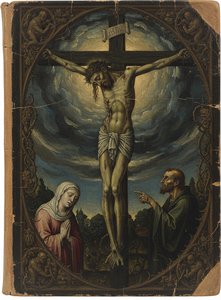
The Triple Face: A Portrait of Complexity by Matthias Grünewald
Matthias Grünewald’s “The Triple Face,” completed around 1525, stands as a remarkable achievement within the Northern Renaissance movement—a testament to his unparalleled ability to convey profound emotion and intellectual depth through meticulous artistic execution. Measuring 272 x 199 cm and rendered on paper with chalk, this painting transcends mere representation; it delves into the multifaceted nature of human experience, inviting viewers to contemplate themes of duality and spiritual contemplation.
- Artist’s Style & Influences: Grünewald's artistic vision was firmly rooted in the German Renaissance Art Movement, yet he possessed a distinctive style that diverged from its more polished Italian counterparts. Embracing realism and emotional intensity—traits championed by artists like Albrecht Dürer—he nonetheless infused his work with an expressive fervor characteristic of late medieval traditions. This blend resulted in a powerfully evocative portrayal of human psychology.
- Medium & Technique: The choice of chalk on paper speaks volumes about Grünewald’s artistic process and demonstrates his mastery of technique. Chalk, known for its delicate tonal gradations and ability to achieve subtle textures, allowed Grünewald to capture the nuances of light and shadow with exceptional precision—a hallmark of Northern Renaissance painting. It is believed that this piece served as a preparatory sketch for a larger altarpiece, highlighting Grünewald’s commitment to exploring artistic ideas before committing them to monumental canvases.
- Symbolism & Interpretation: The central face dominates the composition, presenting a mature male figure with a solemn gaze—a deliberate gesture intended to engage the viewer directly. Surrounding him are two smaller faces superimposed on his forehead, subtly hinting at inner conflict and representing opposing forces within the human psyche. This tripartite depiction aligns seamlessly with Grünewald’s broader artistic concerns regarding spiritual contemplation and psychological exploration, echoing motifs found in his celebrated Isenheim Altarpiece.
- Historical Context: Created during a period of significant religious upheaval—the Reformation—“The Triple Face” reflects the anxieties and uncertainties prevalent within European society. Grünewald's work embodies the spirit of the time, capturing not only visual beauty but also profound philosophical questions about identity and faith.
- Legacy & Recognition: Grünewald’s masterpiece resides in prominent museums across Germany, including the Staatliche Museen Berlin, where it continues to captivate audiences with its arresting imagery and intellectual richness. Its enduring appeal underscores Grünewald's position as one of the most influential artists of his era—a visionary who reshaped artistic conventions and elevated the expressive potential of portraiture.
A stunning reproduction of “The Triple Face” is available at OriginalUniqueArt.com, offering art enthusiasts the opportunity to experience Grünewald’s artistic genius firsthand. For deeper insights into Grünewald's life and oeuvre, consult Wikipedia.
Veelgestelde vragen
Met welke techniek is "Het Driedubbele Gedeelte" door Matthias Grünewald vervaardigd?
"Het Driedubbele Gedeelte" is uitgevoerd in Acryl op canvas.
Tot welke stijl behoort "Het Driedubbele Gedeelte"?
De kunststroming die verbonden is aan "Het Driedubbele Gedeelte" door Matthias Grünewald is Northern Renaissance. Deze classificatie plaatst het werk binnen een context van verwante kunstenaars en kunstwerken.
Hoe bekend is "Het Driedubbele Gedeelte" van Matthias Grünewald?
Het populariteitsniveau van "Het Driedubbele Gedeelte" door Matthias Grünewald is Gerenommeerd.
 Voorvertoning
 Verstuur
 Delen
Delen
 Details bekijken
 Gids
Gids

 Download
 Vergelijkbare items
 Röntgenonderzoek
 Diavoorstelling
 Q&A
Q&A Statistieken