- Home

- Op canvas afdrukken
- mathieu jacquet
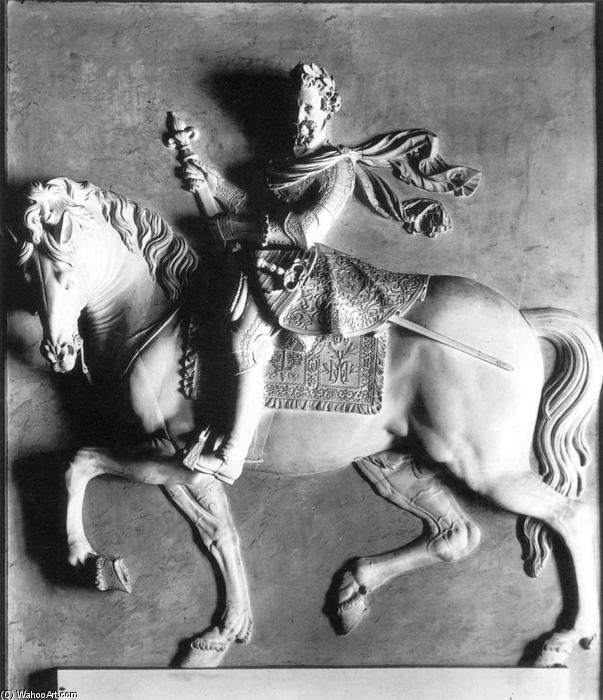
- Henry IV
 Bestel schilderij Koop afbeelding in hoge resolutie
 Verstuur
 Delen
Delen
 Details bekijken
 Toevoegen aan favorieten

 Download
 Vergelijkbare werken
 Röntgenonderzoek
 Diavoorstelling
Henry IV

 Lees meer
Giclée / Kunstafdruk
Giclée- of canvasafdruk van museumkwaliteit met snelle productie en flexibele afwerkingsopties.




































Kies uit onze vooraf ingestelde maten die overeenkomen met de originele verhoudingen van het kunstwerk.

U kunt uw eigen afmetingen opgeven om in een specifieke lijst of ruimte te passen. Als de door u gekozen maat niet overeenkomt met de proporties van het originele kunstwerk, zullen wij de afbeelding bijsnijden of uitbreiden met een gespiegelde of effen rand. Een digitaal mockup wordt ter goedkeuring naar u verzonden voordat de productie begint.
Houd er rekening mee dat de preview op het scherm de werkelijke bijsneding of uitbreiding niet weergeeft. Alleen de mockup toont de uiteindelijke compositie nauwkeurig.
Hoewel aangepaste maten beschikbaar zijn, raden wij aan een afmeting uit de vooraf bepaalde lijst te kiezen om de originele proporties te behouden.
Wereldwijde levering () binnen 2 weken in plaats van de standaard 4/5 weken. (23 juli)

Gratis wereldwijde expressverzending

Hoogwaardig linnen canvas

Volledige verzendverzekering

Garantie op terugbetaling van invoerrechten

Garantie op exacte kleurweergave

60 dagen retourbeleid (alleen bij defecten)

100% Geld-terug-garantie

Korting bij meerdere afnames
 De optie voor glas is alleen beschikbaar bij een formaat kleiner dan 110 cm.

Henry IV
Giclée / Kunstafdruk
Afmetingen reproductie
-


Eindtotaal
-
Biografie van de kunstenaar
Mathieu Jacquet: A Renaissance Sculptor Bridging Tradition and Majesty
Mathieu Jacquet, born in Avon, France around 1545, stands as a pivotal figure within the French Renaissance artistic landscape—a sculptor whose meticulous craftsmanship and humanist sensibilities captured the spirit of his era while simultaneously honoring established sculptural conventions. Though biographical details remain somewhat sparse, surviving documentation confirms his prolific output during Henry IV’s reign (1589-1611), cementing his reputation as one of the most celebrated artists of his time. Jacquet's formative years were steeped in the artistic fervor of Dijon, Burgundy—a region renowned for its patronage and burgeoning intellectual curiosity. His father, Jean Jacquet, was a stonemason and sculptor himself, instilling in Mathieu a foundational understanding of material manipulation and sculptural technique. This familial legacy undoubtedly shaped his early artistic inclinations, fostering an appreciation for both classical ideals and the expressive potential inherent within Burgundian sculpture traditions. Evidence suggests he studied under Nicolas Froment, a prominent Dijon sculptor known for his monumental funerary monuments—a crucial exposure to the grandeur and solemnity demanded by aristocratic commissions. Jacquet’s oeuvre is characterized by a remarkable blend of stylistic influences. While firmly rooted in Roman sculptural models—particularly those derived from antiquity—he skillfully incorporated elements of Mannerism, reflecting the anxieties and complexities of the period. This duality manifests itself most notably in his monumental sculptures commissioned for royal palaces and churches, where he achieved breathtaking realism alongside stylized poses and dramatic drapery folds. The sculptor’s meticulous attention to detail—evident in the exquisitely carved musculature of figures and the subtle nuances of facial expressions—demonstrates a mastery of anatomical observation unparalleled by many contemporaries. Among Jacquet's most enduring achievements is undoubtedly his portrait of Henry IV, commissioned for Sainte-Chapelle in Paris. This masterpiece exemplifies Jacquet’s ability to convey psychological depth within a formal sculptural framework. The regal posture and serene countenance of the king are rendered with astonishing accuracy, capturing not merely physical likeness but also an aura of authority and piety—a reflection of Henry IV's ambition to reconcile Protestantism and Catholicism after decades of religious strife. The sculpture’s pyramidal composition reinforces its solemn grandeur, emphasizing the monarch’s divine legitimacy and securing his place in Parisian artistic memory. Furthermore, Jacquet’s influence extended beyond individual commissions; he actively mentored younger sculptors, fostering a tradition of excellence that continued throughout the seventeenth century. His teachings emphasized anatomical precision alongside expressive dynamism—principles that would become hallmarks of French Baroque sculpture. Mathieu Jacquet's legacy resides not only in his stunning artworks but also in his contribution to shaping the artistic sensibilities of an entire generation—a testament to his enduring significance as a sculptor and humanist artist who eloquently embodied the ideals of the Renaissance.
mathieu jacquet
1545 - 1611 , France
Belangrijkste feiten
- Artistic Movement Or Style: Renaissance Art
- Artists Or Movements Influenced By This Artist: ['Raphael']
- Artists Who Influenced This Artist: ['Michelangelo']
- Date Of Death: 1611
- Full Name: Mathieu Jacquet
- Nationality: French
- Notable Artworks: ['Henry IV Portrait']
- Place Of Birth: Avon, France

