

 Bekijk op ware grootte
 Verstuur
 Delen
Delen
 Details bekijken
 Gids voor studentenkunstwerken

 Download
 Vergelijkbare items
 Röntgenonderzoek
 Diavoorstelling
 Statistieken
The Annunciation
 Oil On Panel
- Early Renaissance
 1424
1424- Renaissance
 182.0 x 151.0 cm
 Lees meer
Handgemaakte olieverfreproductie
Met de hand geschilderd in olieverf op canvas in uw gewenste maat en lijst, op bestelling gemaakt door onze kunstenaars. ( Schakel over naar print Schakel over naar digitale afbeeldingen)




P118B €10

P118H €10

P118W €10

P438Z €10

P508JH €12

P508YH €12

P805H €10

P805Z €10

P919BZ €10

P919G €10

P919XJ €10

P959ZH €10

P968JZ €12

W106C €8

W218G €10

W218JH €8

W218Y €10

W307PJ €10

W316G €10

W316PJ €8

W316Y €10

W398PJ €8

W4111J €10

W500HY €15

W500JH €15

W692G €12

W849H €8

W940BG €15

W953PJ €8




Kies uit onze vooraf ingestelde maten die overeenkomen met de originele verhoudingen van het kunstwerk.

Voer de breedte en de hoogte in die u nodig heeft, passend bij uw lijst of uw muur. Dit is handgeschilderd, dus bij een afmeting met een andere vormverhouding kan de kunstenaar iets meer rondom het schilderij schilderen of juist iets meer weglaten — u kiest zelf. Wij sturen u een digitaal mockup ter goedkeuring voordat het schilderwerk begint. De afbeelding die op deze pagina wordt getoond, is niet het uiteindelijke resultaat — alleen de mockup geeft dit weer.
Na de bestelling zal het team van OriginalUniqueArt.com per e-mail contact opnemen met de klant voor instructies en een mockup-voorbeeld sturen.
Wereldwijde levering () binnen 3 tot 4 weken in plaats van de standaard 5 weken. (25 oktober). Zonder concessies aan de kwaliteit.

Gratis wereldwijde expressverzending

Hoogwaardig linnen canvas

Volledige verzendverzekering

Garantie op terugbetaling van invoerrechten

Garantie op exacte kleurweergave

Retourbeleid van 100 dagen (alleen bij defecten)

100% Geld-terug-garantie

Korting bij meerdere afnames
 De optie voor glas is alleen beschikbaar bij een formaat kleiner dan 110 cm.

The Annunciation
Reproductiemethode
Formaat reproductie
-


Totaalprijs
€ 285
A Divine Encounter in Gold and Azure
In the quiet, hallowed space of Masolino da Panicale’s 1424 masterpiece, The Annunciation, time seems to suspend itself. The viewer is invited into a meticulously rendered architectural sanctuary where the celestial meets the terrestrial. A winged angel, draped in a rich burgundy robe adorned with golden floral patterns, kneels in profound reverence before a young woman. This is not merely a meeting of two figures, but a monumental moment of cosmic significance captured with the delicate precision of the Early Renaissance. The composition is anchored by a slender, bone-white column that acts as a threshold between the divine messenger and the receptive Virgin Mary, creating a sense of sacred intimacy within a structured, classical setting.
The visual splendor of the piece lies in its breathtaking use of color and light. Mary sits enthroned, her presence defined by a lapis-blue cloak that cascades over a crimson-red dress, both trimmed with shimmering gold. A subtle starburst rests upon her shoulder, a silent herald of the miracle to come. As her gaze tilts downward with humble grace, her fingers rest lightly upon the pages of a Latin scripture, bridging the gap between ancient prophecy and present reality. The palette is a harmonious symphony of warm reds, deep golds, and earthy greens, all illuminated by a directional light that descends from a patterned, checkerboard ceiling, casting soft shadows that lend a sculptural three-dimensionality to the figures.
The Mastery of Early Renaissance Technique
Masolino da Panicale, often celebrated as a pioneer of both fresco and early oil experimentation, demonstrates his unparalleled command over texture and depth in this work. The painting serves as a testament to the transition from the decorative elegance of the Gothic style to the burgeoning humanism of the Florentine Renaissance. Through the masterful application of glazing techniques, Masolino achieves a luminous quality that makes the gold halos appear to glow from within and the heavy fabrics possess a palpable weight. Every element, from the intricate mosaic patterns in the wall panels to the fiery streaks of orange and yellow visible through the distant archway, is rendered with an obsessive attention to detail that rewards prolonged contemplation.
For the discerning collector or interior designer, this artwork offers more than mere decoration; it provides a focal point of profound serenity and intellectual depth. The geometric precision of the arches and columns creates a sense of stability and order, making it an ideal centerpiece for spaces that demand elegance and a touch of historical grandeur. Whether placed in a sunlit gallery or a sophisticated study, the painting’s rich textures and symbolic weight evoke an atmosphere of reverence and timeless beauty. It is a piece that does not simply occupy a room but transforms it, inviting all who behold it to pause and reflect on the exquisite intersection of human skill and divine narrative.
Vragen & Antwoorden
Hoe bekend is "The Annunciation" van Masolino Da Panicale?
Het populariteitsniveau dat is vastgelegd voor "The Annunciation" door Masolino Da Panicale is Recognized.
Is "The Annunciation" door Masolino Da Panicale een schilderij, een tekening of een prent?
In de catalogus is "The Annunciation" door Masolino Da Panicale geclassificeerd als wall art. De categorie helpt bij het vinden van vergelijkbare werken.
Is "The Annunciation" een beroemd kunstwerk uit de Early Renaissance-stroming?
"The Annunciation" staat geregistreerd als Recognized onder de werken uit de Early Renaissance in de catalogus.
Biografie van de kunstenaar
De Lyrische Gratie van Masolino da Panicale
In de levendige, transformerende sfeer van de vroege Florentijnse Renaissance, vingden weinig kunstenaars de delicate overgang van Gotische elegantie naar humanistisch realisme zo aangrijpend als Masolino da Panicale. Beroemd onder sommigen als “Little Tom”, was deze meester veel meer dan een loutere brug tussen tijdperken; hij was een schilder van diepe lyriek en licht. Geboren in het verstilde Italiaanse stadje Panicale rond 1383, werd zijn artistieke ziel gevormende in de ateliers van Florence, waar de schaduwen van de Middeleeuwen begonnen te wijken voor de dageraad van een nieuw, wetenschappelijk ingesteld tijdperk. Zijn vroege opleiding, waarschijnlijk onder de legendarische Ghiberti, bracht hem een eerbied voor fijn detail en sculpturale vorm bij die een kenmerk zou blijven van zijn expressieve hand gedurende zijn hele carrière.
De essentie van Masolino's genie ligt in zijn vermogen om de spirituele zoetheid van de Internationale Gotische stijl te verenigen met de opkomende structurele innovaties van de Renaissance. Terwijl zijn tijdgenoten zich begonnen te obsesseren met de rigide wiskunde van het perspectief, behield Masolino een verbinding met het emotionele en het etherische. Dit komt wellicht het mooist tot uiting in werken zoals zijn Madonna met het Kind, waar een gevoel van serene nederigheid en tedere devotie van het canvas uitstraalt. In deze composities bezitten de figuren een zachte, ritmische gratie die de kijker uitnodigt tot een staat van stille contemplatie, waardoor hij een meester werd van de devotionele atmosfeer.
Een Revolutionaire Samenwerking
De geschiedenis van de westerse kunst werd onherroepelijk veranderd in de periode tussen 1424 en 1428, toen Masolino de monumentale taak kreeg om de Brancacci-kapel in Florence te decoreren samen met de indrukwekingwekkende Masaccio. Deze samenwerking wordt vaak gezien door de lens van een stilistische strijd, maar het was in feite een diepgaande synthese van twee verschillende werelden. Terwijl Masaccio de grenzen verlegde van zwaar, volumetrisch realisme en dramatisch licht, bood Masolino de noodzakelijke lyrische balans. Zijn bijdragen aan de kapel, zoals zijn delicate weergave van Maria Magdalena, bieden een adembenemend contrast met de robuustere composities van zijn medewerker, waarbij hij een gevoel van beweging en gratie toevoegde die voorkwam dat de fresco's te sober werden.
Buiten de muren van de Brancacci-kapel leidde Masolino's technische nieuwsgierigheid hem naar de grenzen van medium en methode. Hij wordt vaak aangehaald als een van de vroegste pioniers die experimenteerden met olieverftechnieken, een ontwikkeling die zorgde voor een nieuwe diepte van kleur en een meer genuanceerde weergave van licht en textuur. Dit experiment is duidelijk zichtbaar in meesterwerken zoals De Annunciatie, waar het gebruik van olie een ongekende luminositeit verleent aan het bijbelse verhaal, waardoor het goddelijke moment met een helderheid wordt vastgelegd die zowel miraculeus als tastbaar echt aanvoelt.
Erfenis en Artistieke Betekenis
De blijvende betekenis van Masolino da Panicale rust op zijn rol als bewaker van schoonheid tijdens een tijd van radicale verandering. Hij volgde niet simpelweg het pad naar het realisme; hij verrijkte het met een gevoel van poëtische charme dat anders verloren zou kunnen zijn gegaan in de koude precisie van de geometrie. Zijn vermogen om de complexiteit van zowel fresco als vroege olieverfschilderkunst te navigeren, stelde hem in staat een oeuvre achter te laten dat spreekt tot de veelzijdige aard van de menselijke ervaring—zowel de fysieke zwaarte als de spirituele lichtheid ervan.
Wanneer we terugkijken op zijn leven en prestaties, bepalen enkele kernaspecten zijn plaats in het pantheon van de grote meesters:
- De Synthese van Stijlen: Zijn unieke vermogen om Gotische decoratieve schoonheid te versmelten met Renaissance-structurele innovatie.
- Technisch Pionierswerk: Zijn vroege en invloedrijke experimenten met olieverfmedia om een grotere lichtkracht te bereiken.
- Collaboratieve Briljantie: De creatie van een transformerende artistieke dialoog door zijn werk naast Masaccio in de Brancacci-kapel.
- Emotionele Diepgang: Een meesterschap in het afbeelden van religieuze onderwerpen met een diepe, toegankelijke tederheid die resoneerde met de humanistische idealen van zijn tijd.
Hoewel zijn naam soms wordt overschaduwd door de meer radicale figuren van de Florentijnse revolutie, blijft Masolino een onmisbare figuur. Hij leverde de ziel en de gratie die de Renaissance lieten bloeien, en zorgde ervoor dat terwijl de kunst zich naar het reële bewoog, zij nooit haar verbinding met het goddelijke verloor.

Masolino Da Panicale
1383 - 1447 , Italië
Snelle feiten
- Artistic Movement Or Style: Vroege Renaissance
- Artists Who Influenced This Artist:
- Ghiberti
- Masaccio
- Date Of Birth: ca. 1383
- Date Of Death: ca. 1447
- Full Name: Masolino da Panicale
- Nationality: Italiaans
- Notable Artworks:
- Madonna met Kind
- Sint-Anna
- Fresko's van de Brancacci-kapel
- Place Of Birth: Panicale, Italië
Gerelateerde artikelen
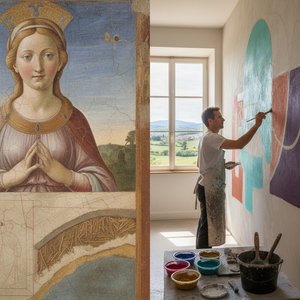
The Enduring Legacy of Fresco Painting: Techniques, History & Contemporary Relevance
Explore the rich history & enduring artistry of fresco painting – from Giotto to Michelangelo! Discover techniques, conservation efforts, & modern applications. Learn how OriginalUniqueArt brings this timeless art form to your home.

The Enduring Legacy of Fresco: Technique, History & Artistic Expression Across Cultures
Explore the rich history & enduring legacy of fresco painting! Discover ancient techniques, Giotto's masterpieces, and modern applications. Expert insights for art lovers & professionals.
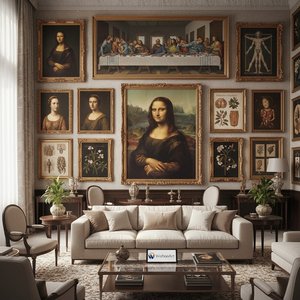
Leonardo da Vinci's Top 25 Meesterwerken: Kunst voor uw Interieur | OriginalUniqueArt
Ontdek de 25 meest iconische meesterwerken van Leonardo da Vinci! Van de Mona Lisa tot De Laatste Avondmaal, leer over zijn techniek & geschiedenis. Museumkwaliteit kunstprints voor uw interieur op OriginalUniqueArt.com

The Enduring Legacy of Fresco: Technique, History & Artistic Expression
Explore the rich history & enduring artistry of fresco painting. Discover techniques from Giotto to Michelangelo, conservation efforts, & modern applications. Learn how OriginalUniqueArt brings this timeless art form to your home.
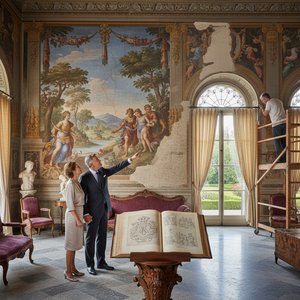
De Fresco als Familielegatie: Schilder Je Erfgoed op de Muren
Ontdek de fascinerende wereld van fresco schilderkunst! Leer over technieken, geschiedenis en restauratie. Expertise & hoogwaardige reproducties bij .

