

 Bekijk op ware grootte
 Verstuur
 Delen
Delen
 Details bekijken
 Gids voor studentenkunstwerken

 Download
 Vergelijkbare items
 Röntgenonderzoek
 Diavoorstelling
 Statistieken
Standing Leaf


 Lees meer
Giclée / Kunstafdrukken
Giclée- of canvasafdruk van museumkwaliteit met een snelle productie en flexibele afwerkingsmogelijkheden. ( Koop handgeschilderd kunstwerk Schakel over naar digitale afbeeldingen)




































Kies uit onze vooraf ingestelde maten die overeenkomen met de originele verhoudingen van het kunstwerk.

Voer de breedte en de hoogte in die u nodig heeft, passend bij uw lijst of uw muur. Een afdruk kan alleen worden ingekort, nooit groter worden gemaakt dan het origineel, waardoor een formaat met een andere verhouding een deel van de afbeelding verliest. Wij sturen u een digitaal mockup ter goedkeuring voordat we iets drukken. De afbeelding op deze pagina toont niet de werkelijke uitsnede — dit is alleen te zien op het mockup.
Wereldwijde levering () binnen 2 weken in plaats van de standaard 4/5 weken. (22 oktober)

Gratis wereldwijde expressverzending

Hoogwaardig linnen canvas

Volledige verzendverzekering

Garantie op terugbetaling van invoerrechten

Garantie op exacte kleurweergave

Retourbeleid van 100 dagen (alleen bij defecten)

100% Geld-terug-garantie

Korting bij meerdere afnames
 De optie voor glas is alleen beschikbaar bij een formaat kleiner dan 110 cm.

Standing Leaf
Giclée / Kunstafdrukken
Formaat reproductie
-


Totaalprijs
€ 71
Biografie van de kunstenaar
The Enigmatic Muse: The Life and Legacy of Mary Cecilia Rogers
In the annals of nineteenth-century American history, few names evoke as much profound mystery and romantic tragedy as Mary Cecilia Rogers. Born around 1820 in Lyme, Connecticut, her life was a tapestry woven from threads of extraordinary beauty, sudden loss, and an enduring shadow that would eventually inspire the foundations of detective fiction. To many, she was simply the "Beautiful Cigar Girl," a radiant presence in John Anderson’s New York tobacco shop, whose heaven-like smile and star-like eyes drew the gaze of the city's most distinguished men. Yet, beneath this veneer of commercial charm lay a life marked by the sudden death of her father in a steamboat explosion, an event that thrust her into the responsibilities of adulthood and set the stage for her eventual, haunting disappearance.
The artistry of Rogers, though often overshadowed by the sensationalism of her death, reveals a soul deeply attuned to the delicate nuances of her era. Her creative development was shaped by a unique intersection of American grit and European refinement. While her public persona was rooted in the bustling streets of New York, her artistic sensibilities were nurtured through connections with influential figures such as Robert Henri. This mentorship encouraged her to look beyond the immediate and pursue a more serious engagement with the visual arts. Her work, characterized by an exploration of texture and light, often sought to capture the fleeting essence of nature and the quiet intimacy of portraiture.
Artistic Evolution and Parisian Echoes
As Rogers matured, her artistic journey took on a more profound, contemplative dimension. The influence of the Impressionist movement became a cornerstone of her stylistic evolution. Immersing herself in the burgeoning art scenes of Europe, she drew inspiration from masters such as Émile Bernard and studied the techniques of Lucien Simon and Emile-René Ménard in Paris. This exposure to French sensibilities allowed her to experiment with a more muted palette and a sophisticated use of watercolor and oil. Her canvases began to reflect a desire for emotional resonance, moving away from mere representation toward an abstracted beauty that captured the ephemeral qualities of the natural world.
Her technical prowess is perhaps most evocatively seen in works like Standing Leaf, where she demonstrated a remarkable ability to blend realism with abstraction. In such pieces, one can observe:
- An intricate focus on the internal textures of organic forms.
- A masterful use of muted greens and earthy tones to evoke a sense of quietude.
- A hauntingly beautiful approach to light that suggests both presence and absence.
A Legacy Written in Mystery
The tragedy of Mary Cecilia Rogers is inseparable from her historical significance. Her sudden disappearance in 1838 and the subsequent discovery of her body in the Hudson River in 1841 ignited a national sensation that transcended the boundaries of mere news. The ambiguity surrounding her death—ranging from theories of gang violence to more personal, scandalous rumors—created a cultural vacuum that was filled by the imagination of the era's greatest literary minds. Most notably, Edgar Allan Poe found in her story the perfect catalyst for his pioneering detective fiction, specifically in his work The Mystery of Marie Rogêt.
Ultimately, Rogers remains a figure caught between two worlds: the tangible reality of a young woman striving to find her place in a changing America, and the mythic status of a lost icon. Her life serves as a poignant reminder of how beauty and tragedy can intertwine to create a legacy that outlives the individual, leaving behind an indelible mark on both the art world and the collective American consciousness. She remains not just a victim of an unsolved crime, but a symbol of the enduring power of mystery and the haunting allure of the unknown.

Mary Cecilia Rogers
1841 , United States of America
Snelle feiten
- Full Name: Mary Cecilia Rogers
- Nationality: American
- Date Of Birth: May 7, 1820
- Date Of Death: 1841
- Place Of Birth: New York City, United States of America
- Notable Artworks: ['Standing Leaf']
- Artistic Movement Or Style: Romanticism
- Artists Who Influenced This Artist: ['Robert Henri']
- Artists Or Movements Influenced By This Artist: ['Edgar Allan Poe']
Gerelateerde artikelen

The Alchemy of Clay: A Collector's Guide to the Mastery, Texture, and Timeless Form of Ceramic Art
Discover the profound beauty of ceramic art. Our expert guide explores the alchemy of clay, texture, and glaze, offering collectors deep insights into mastering earth and fire to create timeless, sculptural masterpieces for any curated collection.

The Enduring Form: Exploring Themes & Techniques in Sculpture Across Historical Periods
Explore the rich history of sculpture from ancient masterpieces to contemporary innovations. Discover key techniques, influential artists & investment potential for discerning art collectors.

Top 10 Legendarische Bronzen Meesterwerken die de Kunst Veranderden | OriginalUniqueArt
Ontdek de 10 meest legendarische bronzen meesterwerken die de kunstgeschiedenis veranderden! Van Rodin tot Michelangelo, leer over techniek & betekenis. Museumkwaliteit reproducties voor uw interieur op OriginalUniqueArt.com. Exploreer de collectie online!
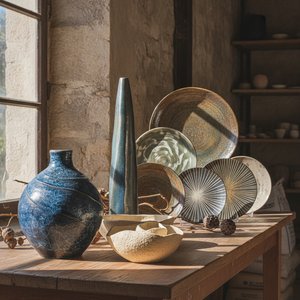
The Art of Ceramics: A Guide to Mastery, Texture, and Timeless Form for the Discerning Collector
Explore the profound elegance of ceramic art. From master glazes to sculptural forms, our expert guide offers discerning collectors deep insights into the mastery, texture, and timeless value of fine ceramics for sophisticated collections and luxury interiors.

Top 10 Bronzen Beeldhouwwerken die de Kunst Voorgoed Veranderden | OriginalUniqueArt
Ontdek de 10 meest legendarische bronzen beeldhouwwerken die kunstgeschiedenis schreven! Van Rodin tot Michelangelo, leer over hun meesterwerken & technieken. Vind museumkwaliteit reproducties en inspiratie voor uw interieur op OriginalUniqueArt.com.