

 Bekijk op ware grootte
 Verstuur
 Delen
Delen
 Details bekijken
 Gids voor studentenkunstwerken

 Download
 Vergelijkbare items
 Röntgenonderzoek
 Diavoorstelling
 Statistieken
Print sample
 Acrylic On Canvas
- WallArt
- Fortuny Aesthetic
 1907
1907- 19th Century
 49.0 x 34.0 cm
 Palazzo Fortuny
 Lees meer
Handgemaakte olieverfreproductie
Met de hand geschilderd in olieverf op canvas in uw gewenste maat en lijst, op bestelling gemaakt door onze kunstenaars. ( Schakel over naar print Schakel over naar digitale afbeeldingen)




P118B €10

P118H €10

P118W €10

P438Z €10

P508JH €12

P508YH €12

P805H €10

P805Z €10

P919BZ €10

P919G €10

P919XJ €10

P959ZH €10

P968JZ €12

W106C €8

W218G €10

W218JH €8

W218Y €10

W307PJ €10

W316G €10

W316PJ €8

W316Y €10

W398PJ €8

W4111J €10

W500HY €15

W500JH €15

W692G €12

W849H €8

W940BG €15

W953PJ €8




Kies uit onze vooraf ingestelde maten die overeenkomen met de originele verhoudingen van het kunstwerk.

Voer de breedte en de hoogte in die u nodig heeft, passend bij uw lijst of uw muur. Dit is handgeschilderd, dus bij een afmeting met een andere vormverhouding kan de kunstenaar iets meer rondom het schilderij schilderen of juist iets meer weglaten — u kiest zelf. Wij sturen u een digitaal mockup ter goedkeuring voordat het schilderwerk begint. De afbeelding die op deze pagina wordt getoond, is niet het uiteindelijke resultaat — alleen de mockup geeft dit weer.
Na de bestelling zal het team van OriginalUniqueArt.com per e-mail contact opnemen met de klant voor instructies en een mockup-voorbeeld sturen.
Wereldwijde levering () binnen 3 tot 4 weken in plaats van de standaard 5 weken. (22 oktober). Zonder concessies aan de kwaliteit.

Gratis wereldwijde expressverzending

Hoogwaardig linnen canvas

Volledige verzendverzekering

Garantie op terugbetaling van invoerrechten

Garantie op exacte kleurweergave

Retourbeleid van 100 dagen (alleen bij defecten)

100% Geld-terug-garantie

Korting bij meerdere afnames
 De optie voor glas is alleen beschikbaar bij een formaat kleiner dan 110 cm.

Print sample
Reproductiemethode
Formaat reproductie
-


Totaalprijs
€ 262
A Study in Color and Illusion: Mariano Fortuny’s “Print Sample”
This captivating artwork, titled "Print sample," offers an intimate glimpse into the revolutionary world of Mariano Fortuny – a figure as adept at theatrical innovation as he was at painting. Measuring 49 x 34 cm, this 1907 print embodies Fortuny’s meticulous approach to light and color, a cornerstone of his artistic legacy. The composition itself is deceptively simple: a square canvas dominated by a rich red background, punctuated by four overlapping circles of varying blues. Yet, within this apparent restraint lies a profound exploration of visual perception and the techniques that would define Fortuny's enduring fame.
The Genius of the Fortuny Cyclorama
Mariano Fortuny’s genius wasn’t confined to easel painting; it extended into the realm of theatrical design. Born in Reus, Spain, in 1871, he inherited a passion for art from his father, a genre painter who tragically died when Mariano was just three years old. This early loss propelled the family to Paris, where Mariano’s mother exposed him to the luxurious world of textiles and fabrics – an influence that would profoundly shape his artistic vocabulary. Fortuny's most significant contribution came with the development of the “cyclorama dome,” a semi-hemispherical structure designed to bathe theatrical scenes in indirect light, creating an illusion of vastness and seamlessly blending painted backdrops with the actual stage. This technique, detailed in his treatise "Eclairage Scenique," was born from his meticulous study of reflected light – a concept that he applied equally to his still-life paintings.
Technique and Materiality
Created using print media in 1907, “Print sample” demonstrates Fortuny’s mastery of color mixing and layering. The varying shades of blue within the circles aren't simply painted; they are achieved through a sophisticated understanding of how light interacts with different surfaces – a principle he meticulously documented. The use of multiple layers, characteristic of his technique, creates a shimmering depth that draws the viewer into the artwork. The slight overlap of the circles isn’t merely an aesthetic choice; it's a deliberate manipulation of perspective, echoing Fortuny’s broader interest in creating illusions and challenging traditional notions of representation. The piece speaks to his innovative approach to materials, utilizing print media to achieve effects previously only attainable through oil paint.
Symbolism and Emotional Resonance
"Print sample" can be interpreted as a meditation on the nature of perception itself. Fortuny’s relentless pursuit of creating believable illusions – whether in theatrical settings or paintings – suggests a fascination with the power of the mind to construct reality. The circles, seemingly simple forms, become imbued with a sense of mystery and contemplation. Displayed at the Palazzo Fortuny in Venice, this artwork serves as a tangible link to a visionary artist who fundamentally altered the landscape of both art and theatre. It’s a testament to his dedication to innovation and his profound understanding of how light, color, and form can evoke powerful emotions.
Vragen & Antwoorden
Hoe brengt "Print sample" licht en donker in evenwicht?
"Print sample" heeft een algehele helderheid van brilliant, en de luminantie is Luminous.
Wat is het formaat van "Print sample"?
Het formaat van "Print sample" is Portrait. Dit is handig bij het plannen van de plek waar een reproductie zal worden geplaatst.
In welke stroming en in welk tijdperk is "Print sample" door Mariano Fortuny geplaatst?
In "Print sample" door Mariano Fortuny ontmoet de Fortuny Aesthetic-stroming de Moderne tijd-periode.
Biografie van de kunstenaar
Early Life and Inspiration
Mariano Fortuny, a name synonymous with theatrical innovation and opulent textiles, was born in Reus, Catalonia, Spain, on May 11, 1871. His early life was marked by profound loss – his father, Mariano Fortuny y Marsal, a respected genre painter, tragically passed away when the young boy was just three years old. This event spurred the family’s relocation to Paris, France, where his mother, a woman of considerable artistic sensibility, introduced him to the world of textiles and fabrics, an influence that would profoundly shape his future creative endeavors. From a remarkably young age, Fortuny demonstrated a prodigious talent for various art forms: he excelled in painting, photography, sculpting, architecture, etching, and even theatrical stage lighting design. His early years were steeped in artistic exploration, laying the foundation for his later revolutionary contributions.Artistic Talents and Revolutionary Inventions
Fortuny’s artistic journey was characterized by a relentless pursuit of innovation. He quickly established himself as a skilled painter, demonstrating an ability to capture both realistic detail and evocative atmosphere. However, it was his inventive spirit that truly set him apart. Between 1901 and 1934, Fortuny patented over twenty groundbreaking inventions, fundamentally altering the landscape of theatrical design. Perhaps his most celebrated creation is the “fortuny cyclorama dome,” a quarter-dome structure constructed from plaster or cloth, ingeniously designed to diffuse light in a way that eliminated harsh shadows and created seamless transitions between scenes – a technique previously unattainable on stage. His treatise, "Eclairage Scenique" (1904), meticulously documented his revolutionary approach to lighting, detailing how reflecting light off various surfaces could dramatically alter its color, intensity, and overall effect. This wasn’t merely about illumination; it was about manipulating perception itself.Collaborations and Recognition
Fortuny's work gained significant recognition in the 1920s, catapulting him to international fame. He forged remarkable collaborations with some of the most influential figures of his time. Richard Wagner, the German composer whose operas deeply resonated with Fortuny’s artistic sensibilities, commissioned sets for the premiere of Tristan und Isolde at La Scala opera house in Milan, adapting his dome system to accommodate the theater's vast scale and even inventing a sophisticated suction fan mechanism to maintain the dome’s taut structure. His work was also celebrated by Gabriele D’Annunzio, who greatly admired Fortuny’s innovative approach to stage design. Fortuny’s influence extended beyond opera; he designed sets for numerous theatrical productions across Europe, establishing himself as a leading figure in the burgeoning field of Gesamtkunstwerk – a holistic artistic vision that sought to unify music, drama, and visual spectacle.Legacy and Lasting Influence
Mariano Fortuny passed away on May 3, 1949, in Venice, Italy, leaving behind a legacy that continues to inspire artists and designers today. His work profoundly influenced the French novelist Marcel Proust, who drew inspiration from Fortuny’s unique aesthetic vision. His life story was also depicted in Pere Gimferrer's novel "Fortuny," further cementing his place in cultural history. Beyond his theatrical innovations, Fortuny revolutionized the world of textiles, creating the iconic “Delphos gown,” a shimmering pleated silk creation that became a symbol of elegance and sophistication during the Art Deco era. His contributions to lighting design remain foundational, demonstrating a profound understanding of color theory, reflection, and the power of light to shape perception. Explore more about Mariano Fortuny’s inventions and designs at OriginalUniqueArt's collection – a testament to his enduring legacy as a true visionary artist.
Mariano Fortuny
1871 - 1949 , Spanje
Snelle feiten
- Artistic Movement Or Style: Orientalisme kunst
- Artists Or Movements Influenced By This Artist: ['Marcel Proust']
- Artists Who Influenced This Artist: ['Richard Wagner']
- Date Of Birth: 11 juni 1871
- Date Of Death: 3 mei 1949
- Full Name: Mariano Fortuny y Marsal
- Nationality: Spaans
- Notable Artworks:
- Teagown
- Portret van Henriette Fortuny
- Place Of Birth: Granada, Spanje
Gerelateerde artikelen
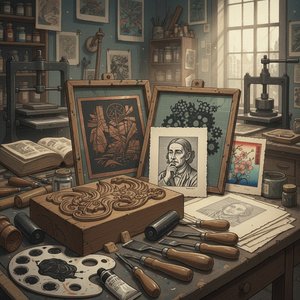
The Enduring Legacy of Printmaking: Techniques, Themes & Artistic Innovation Across Centuries
Explore the rich history of printmaking with OriginalUniqueArt. Discover techniques from intaglio to lithography, learn about collecting valuable prints & find museum-quality reproductions. Expert insights for art enthusiasts and collectors.

Giclée Prints: Archival Quality & Aesthetic Nuances for the Discerning Collector
Explore the world of giclée prints with OriginalUniqueArt. Learn about archival quality, aesthetic nuances & investment potential. Expert guidance for discerning art collectors seeking museum-quality reproductions and lasting value.

The Enduring Legacy of Fine Art Prints: Technique, History & Aesthetic Impact
Explore the rich history & techniques of fine art prints. Discover investment potential, assess authenticity, and learn how to preserve your collection with expert guidance. Trusted insights for discerning collectors.

Mariano Fortuny: A Fusion of Art, Fashion & Design – Exploring a Venetian Innovator's Legacy
Explore the captivating world of Mariano Fortuny – artist, designer & innovator. Discover his revolutionary textiles, iconic Delphos gown, and lasting influence on art, fashion & interiors. A collector's guide to a Venetian master.

Echoes of Time: Exploring the Enduring Appeal & Historical Context of Vintage Art Prints
Explore the captivating world of vintage art prints! Discover their history, collecting tips & enduring appeal. Expert insights on chromolithography and building a legacy collection with OriginalUniqueArt.
