Voorvertoning
 Verstuur
 Delen
Delen
 Details bekijken
 Gids
Gids

 Download
 Vergelijkbare items
 Röntgenonderzoek
 Diavoorstelling
 Q&A
Q&A Statistieken
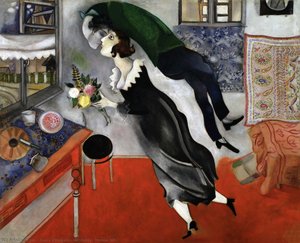
Birth
 Oil On Canvas
- WallArt
- Expressionism
 1910
1910 65.0 x 89.0 cm
 Lees meer
De kunstwerken die op deze pagina worden weergegeven, zijn beschermd door de auteursrechtwetgeving, wat betekent dat het ons wettelijk niet is toegestaan om identieke reproducties te maken of te verkopen. Deze bescherming wordt gehandhaafd onder internationale overeenkomsten zoals de Conventie van Bern en door nationale wetgeving, waaronder de bepalingen van de Amerikaanse auteurswet - Titel 17. Alle rechten voorbehouden. Reproduceren of distribueren van afbeeldingen is niet toegestaan zonder uitdrukkelijke schriftelijke toestemming van WahooArt.com en de rechthebbenden.
Als een respectvol en legaal alternatief bieden wij op maat gemaakte, handgeschilderde kunstwerken aan die geïnspireerd zijn op het origineel. Onze bekwame en professionele kunstenaars bestuderen zorgvuldig de stijl, sfeer en artistieke essentie van het origineel om een nieuw, uniek werk te creëren dat dezelfde emotie oproept – terwijl het een op zichzelf staande, originele creatie blijft.
Deze methode voldoet volledig aan de auteursrechtwetgeving, omdat het niet gaat om het kopiëren of dupliceren van het beschermde kunstwerk. In plaats daarvan is er sprake van een creatieve herinterpretatie — een nieuw schilderij dat door het origineel wordt geïnspireerd, maar er niet identiek aan is.
Handgemaakte olieverfreproductie
Met de hand geschilderd in olieverf op canvas in uw gewenste maat en lijst, op bestelling gemaakt door onze kunstenaars. ( Schakel over naar print Schakel over naar digitale afbeeldingen)




































Kies uit onze vooraf ingestelde maten die overeenkomen met de originele verhoudingen van het kunstwerk.

Voer de breedte en hoogte in die u nodig heeft, passend bij uw lijst of uw muur. Omdat dit handgeschilderd is, kan de kunstenaar bij een afmeting met een andere beeldverhouding iets meer rondom het schilderij schilderen of juist iets meer weglaten — u kiest zelf. Wij sturen u een digitaal mockup ter goedkeuring voordat het schilderwerk begint. De afbeelding die op deze pagina wordt getoond, is niet het uiteindelijke resultaat — alleen de mockup geeft dit weer.
Na de bestelling zal het team van OriginalUniqueArt.com per e-mail contact opnemen met de klant voor instructies en een mockup-voorbeeld sturen.
Wereldwijde levering () binnen 3 tot 4 weken in plaats van de standaard 5 weken. (29 oktober). Zonder concessies aan de kwaliteit.

Gratis wereldwijde expressverzending

Hoogwaardig linnen canvas

Volledige verzendverzekering

Garantie op terugbetaling van invoerrechten

Garantie op exacte kleurweergave

Retourbeleid van 100 dagen (alleen bij defecten)

100% Geld-terug-garantie

Korting bij meerdere afnames
 De optie voor glas is alleen beschikbaar bij een formaat kleiner dan 110 cm.

Birth
Druktechniek
Afmetingen reproductie
-


Eindtotaal
€ 264
A Dreamscape of Maternal Joy
Marc Chagall's “Birth,” painted in 1910, stands as a cornerstone of Expressionism and an enduring testament to the artist’s unparalleled ability to translate emotion into visual form. Measuring 65 x 89 cm, this oil on canvas masterpiece transcends mere representation; it plunges viewers into a realm of subconscious imagery and profound feeling—a characteristic hallmark of Chagall's distinctive artistic vision.
The Expressionist Spirit: Beyond Reality
Born Moishe Shagal in Vitebsk, Belarus, in 1887, Chagall’s formative years were steeped in the vibrant cultural tapestry of his Jewish heritage and profoundly shaped by the seismic shifts brought about by the Russian Revolution. Unlike Impressionists or Cubists who sought to capture objective reality, Expressionist artists prioritized conveying inner experience—a principle vividly embodied in “Birth.” Chagall, alongside luminaries like Wassily Kandinsky and Franz Marc, spearheaded this movement, establishing a radical departure from academic conventions.
Composition and Symbolism: Layers of Meaning
The painting depicts a woman giving birth within a bedroom setting—a scene laden with symbolic resonance. Dominating the canvas is the central figure, representing motherhood and universal femininity. Surrounding her are several individuals, including a midwife and men engaged in conversation, adding to the narrative complexity. Notably, two dogs flank the composition, symbolizing fertility and guarding the sanctity of domestic life – motifs frequently recurring throughout Chagall’s oeuvre.
Influences Beyond Style: Folk Art Roots
Chagall's artistic trajectory was influenced by diverse currents, including Fauvism and Cubism. However, his stylistic signature distinguishes itself through a masterful fusion of folk art traditions—particularly Belarusian folklore—with elements of Surrealism. This is palpable in “Birth,” where vibrant hues—primarily reds, yellows, and blues—are juxtaposed with distorted forms that create an ethereal atmosphere reminiscent of dreams.
Legacy: Shaping Modern Art
"Birth" cemented Chagall’s reputation as a visionary artist whose innovations reverberated throughout subsequent art movements. Surrealists like Salvador Dalí embraced his dreamlike aesthetic, recognizing its capacity to bypass rational thought and tap into primal emotions. Chagall's pioneering use of color and form continues to inspire artists today, securing his place as one of the most influential figures in 20th-century art.
Experience the captivating beauty of Marc Chagall’s “Birth” through a meticulously crafted oil painting reproduction available at OriginalUniqueArt.com. For those seeking to adorn their homes with art that speaks to the soul, explore similar masterpieces at Charles Ebert’s evocative landscapes and portraits!
Veelgestelde vragen
Wat zijn de afmetingen van het originele "Birth" door Marc Chagall?
Het originele werk "Birth" door Marc Chagall heeft de afmetingen 65 x 89 cm.
Wat zijn de techniek en de datum van "Birth" door Marc Chagall?
"Birth" werd in 1910 vervaardigd met de Oil On Canvas-techniek. Materiaal en datum beschrijven hoe en wanneer het origineel is gemaakt.
Waar wordt het Landscape-formaat van "Birth" aanbevolen te tonen?
Formaat (Landscape) en aanbevolen ruimte (Living Room) zijn de twee plaatsingskenmerken vastgelegd voor "Birth" door Marc Chagall.
Biografie kunstenaar
A Life Painted in Dreams: The World of Marc Chagall
Marc Chagall, born Moishe Shagal in 1887 in the small Belarussian town of Liozna near Vitebsk, wasn’t merely a painter; he was a poet of color, a weaver of dreams, and a chronicler of memory. His life, spanning nearly a century, mirrored the tumultuous currents of the twentieth century, yet his art remained steadfastly rooted in a deeply personal vision—one infused with the folklore of his Hasidic Jewish upbringing and an unwavering belief in the power of imagination. Vitebsk itself was more than just a birthplace; it became the emotional core of his artistic universe, a recurring motif populated by flying figures, whimsical animals, and the vibrant hues of remembered landscapes. The town’s unique blend of cultures—Russian Orthodox churches alongside bustling Jewish marketplaces—forged an aesthetic sensibility that would defy easy categorization throughout his long career. Though he sought formal training first with a local sign painter and later in St. Petersburg under Léon Bakst, and then in Paris at the Académie de la Grande Chaumière, Chagall never fully embraced any single artistic movement. He absorbed elements of Cubism, Symbolism, and Fauvism, but always filtered them through his own intensely personal lens, creating a style that was uniquely, unmistakably Chagall.Early Influences and Artistic Beginnings
Chagall’s formative years were marked by the traditions of Vitebsk’s Jewish community—a vibrant tapestry woven with religious rituals, folk tales, and ancestral memories. These influences would permeate his artistic vision throughout his life, informing his use of symbolism and his fascination with biblical narratives. His initial training was modest, focusing on practical skills as a sign painter – a craft that instilled in him an appreciation for visual communication and meticulous attention to detail. However, he quickly recognized the limitations of realism and sought inspiration in the expressive techniques championed by Impressionists like Léon Bakst, whose theatrical productions captivated him with their bold colors and dynamic compositions. This exposure to avant-garde aesthetics broadened his artistic horizons and propelled him toward experimentation with new forms of expression. His early canvases—such as I and the Village (1911)—already demonstrated his ability to distill complex emotions into simplified visual language, prioritizing feeling over precise representation. The village isn’t rendered realistically but as a fragmented collection of recollections, imbued with symbolic meaning – a technique that would become central to his distinctive style.The Symbolism of Flight and Memory
Chagall's artistic breakthrough arrived in the wake of World War I, during which he served briefly in the Russian army. This experience instilled in him a profound awareness of human suffering and loss—themes that would recur throughout his oeuvre. His paintings from this period are characterized by an ethereal quality, achieved through masterful use of color and perspective. Figures float effortlessly against backgrounds of luminous hues, defying gravity and logic – a deliberate departure from traditional artistic conventions. This fascination with flight symbolizes liberation from earthly constraints and represents Chagall’s yearning for transcendence—a recurring motif that appears in numerous works throughout his career. Equally important is his preoccupation with memory—the way in which past experiences shape our perceptions of the present. Landscapes are often depicted as dreamlike visions, blending elements of reality with fantastical imagery – reflecting Chagall's belief that art can capture the elusive essence of human experience.Exploring Formal Movements and Personal Vision
Despite rejecting rigid artistic doctrines, Chagall remained attuned to developments in European modernism. He experimented with Cubist techniques—particularly in his early portraits—to dissect forms and explore multiple viewpoints simultaneously. However, he quickly abandoned this approach in favor of a more expressive style that prioritized emotional impact over intellectual rigor. His embrace of Fauvist color palettes – bold splashes of pigment divorced from naturalistic representation – further solidified his artistic identity. Yet, Chagall’s true genius lay in his ability to synthesize these influences into a wholly original vision—one rooted in his Jewish heritage and informed by the spiritual traditions of Vitebsk. He sought to convey not just what he saw but what he felt—a quest for beauty and truth that permeated every aspect of his artistic practice.Later Years and Legacy
The Russian Revolution profoundly impacted Chagall’s life, returning him to Vitebsk where he established an art school dedicated to fostering creativity and cultural exchange. This period was marked by both artistic productivity and political disillusionment—a tension that would continue to shape his creative output. Following the outbreak of World War II, Chagall fled occupied France for New York City, where he found refuge amidst a thriving artistic community. During his time in America, he produced some of his most ambitious canvases – monumental works that explored themes of exile and displacement. He received numerous prestigious commissions, including the ceiling of the Paris Opera (1964), which showcased his unparalleled mastery of color and form—a testament to his enduring influence on subsequent generations of artists. Chagall’s stained glass windows for Jerusalem's Hadassah Hebrew University Medical Center synagogue stand as a poignant reminder of his commitment to Jewish faith and culture. His art continues to inspire awe and wonder, inviting viewers to contemplate the mysteries of existence and celebrating the transformative power of imagination. Marc Chagall died in 1985 at the age of 97, leaving behind an unparalleled legacy—a body of work that transcends stylistic boundaries and speaks directly to the human spirit.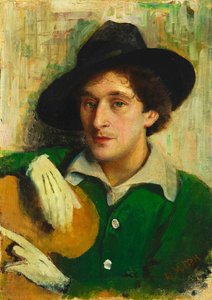
Marc Chagall
1887 - 1985 , Belarus
Belangrijkste feiten
- Artistic Movement Or Style: Modernisme, Cubisme
- Artists Or Movements Influenced By This Artist:
- Surrealisme
- Kunstenaars
- Artists Who Influenced This Artist:
- Bakst
- Delaunay
- Borovikovsky
- Date Of Birth: 6 juli 1887
- Date Of Death: 28 maart 1985
- Full Name: Marc Chagall
- Nationality: Russisch, later Frans
- Notable Artworks:
- I en het dorp
- Over Vitebsk
- Het witte kruis
- Place Of Birth: Liozna, Belarus
Gerelateerde artikelen
De Subtiele Nuances van Digitale Kunst: Waarom Op Maat Gemaakte Prints de Authenticiteit van een Foto Vangen en Overstijgen
Transformeer uw herinneringen tot unieke kunstwerken met OriginalUniqueArt. Handgeschilderde reproducties & gepersonaliseerde designs van museumkwaliteit. Expertise, betrouwbaarheid & 100 dagen garantie.
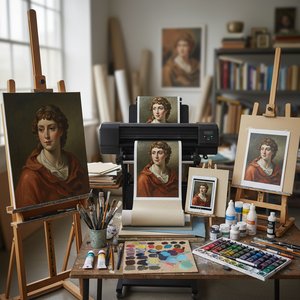
Kunst reproducties: Een gids voor olie-, canvas- en papierreproductiemedia
Ontdek hoogwaardige kunst reproducties bij . Kies uit olie op canvas, prints en meer. Maatwerk mogelijk! Vertrouw op onze expertise voor museumkwaliteit replica's.
From Initial Sketch to Enduring Legacy: A Comprehensive Exploration of the Oil Painting Reproduction Process
Discover the art of museum-quality oil painting reproduction. Explore our expert process, skilled artists & authentic replicas. Elevate your home with timeless beauty – handcrafted and customized to your vision.

Top 10 Expressionistische Meesterwerken: Kunst die de Ziel Raakt | OriginalUniqueArt
Ontdek de 10 meest iconische Expressionistische meesterwerken! Duik in de emotionele wereld van Kirchner, Kandinsky & Nolde. Museumkwaliteit kunst reproducties voor uw interieur. Exploreer de collectie op OriginalUniqueArt.com.
Verkoop je digitale NFT‑kunst als handgeschilderde olieverf: museumkwaliteit, snelle productie en winstgevende marges
Transformeer je digitale NFT in een museumwaardige olieverf met OriginalUniqueArt. Onze vakmensen combineren eeuwenoud handwerk met moderne technologie voor snelle productie, transparantie en maximale winst. Vertrouw op onze expertise.