
 Voorvertoning
 Verstuur
 Delen
Delen
 Details bekijken
 Gids
Gids

 Download
 Vergelijkbare items
 Röntgenonderzoek
 Diavoorstelling
 Vraag & antwoord
 Statistieken
Apparition bij het Circus

- 32.0 x 24.0 cm


 Lees meer
Ontvang een bestand dat klaar is voor drukwerk en de kwaliteit van het online voorbeeld ver overstijgt. Elke digitale afbeelding die wij verkopen, is afkomstig van een high-resolution master uit onze database — meestal tussen de 5.000 en 15.000 pixels breed — zodat u met vertrouwen groot kunt afdrukken, nauwkeurig kunt bijsnijden of fijne details kunt reproduceren.
Geen enkel bestand verlaat ons atelier onbewerkt. Een digitaal expert controleert de kleuren aan de hand van het originele schilderij en corrigeert deze indien nodig, om vervolgens de helderheid en details te verbeteren met professionele retoucheertechnieken — waarbij de penseelstreek en stijl van de kunstenaar altijd strikt worden gerespecteerd. Het resultaat is een afbeelding die oogt als het schilderij zelf, en niet als een gescande foto met een filter.
U keurt de afbeelding goed voordat de bestelling wordt afgerond: onze expert stuurt u binnen 72 uur een e-mail ter beoordeling. Niet tevreden? Vraag om aanpassingen of correcties, of vraag een terugbetaling aan als de kwaliteit niet aan de verwachtingen voldoet.
Dit is de kwaliteit waarop uitgevers, designstudio's, galeries en drukkerijen vertrouwen.
Digitale afbeeldingen
Download een bestand met hoge resolutie voor persoonlijke weergave, afdrukken en creatieve projecten. ( Schakel over naar print Bestel handgeschilderde reproductie)
Inbegrepen bij elke bestelling van een digitale afbeelding
Professionele digitale levering, gegarandeerd
Wanneer u kiest voor OriginalUniqueArt.com, ontvangt u niet alleen een afbeelding – u krijgt een professioneel verbeterd digitaal kunstwerk, met precisie vervaardigd en voorzien van een tevredenheidsgarantie. Dit is alles wat automatisch bij uw bestelling is inbegrepen:

Snelle levering per e-mail
Uw hoogwaardige digitale afbeeldingsbestand wordt binnen 72 uur na bestelling naar u gemaild – klaar voor direct gebruik.

AI-verbeterd digitaal bestand
Uw kunstwerk wordt professioneel geoptimaliseerd met behulp van geavanceerde AI-tools en handmatige bewerkingen, waardoor maximale details, helderheid en kleurnauwkeurigheid worden gegarandeerd.

Gratis levenslange herlevering van digitale bestanden
Je bestand per ongeluk verwijderd of kwijtgeraakt? Geen zorgen – we sturen het u op elk gewenst moment gratis opnieuw toe.

Geen invoerkosten – nooit
Geniet direct van uw kunstwerk zonder invoerrechten, belastingen of verzendkosten – digitale downloads zijn altijd belastingvrij.

Garantie op kleurgetrouwheid
Met behulp van professionele hulpmiddelen en kleurbeheer zorgen wij ervoor dat uw digitale afbeelding de originele kleuren zo nauwkeurig mogelijk weergeeft.

100 dagen tevredenheidsgarantie
Mocht u niet tevreden zijn met uw digitale afbeelding, dan passen wij deze aan of storten wij 100% terug binnen 100 dagen – zonder vragen te stellen.

100% Geld-terug-garantie
Niet tevreden? Ontvang een volledige terugbetaling binnen 100 dagen na ontvangst van uw digitale bestand – zonder vragen te stellen.

Korting bij grote bestellingen
Koop 3 afbeeldingen, bespaar 10% - Koop 5, bespaar 15% - Koop 10+, bespaar 20%. Ideaal voor creatieve projecten, galerieën en bureaus.
Een Droom in Kleur: ‘Apparition at the Circus’ van Marc Chagall
Marc Chagalls “Apparition at the Circus,” geschapen in 1963, is meer dan een eenvoudige weergave van een feestelijk spektakel; het is een duik in de diepgang van de artistieke ziel, een persoonlijke en vaak surrealistische reis. Deze lithografie, uitgevoerd met de precisie van de grafiektechniek maar doordrenkt van de rauwe emotie die kenmerkend is voor Chagalls stijl, biedt een blik op zijn unieke visie – een samensmelting van Naïeve Kunst, Cubistische invloeden en diepgaande symboliek geworteld in Joodse folklore en jeugdherinneringen. Het werk gaat verder dan de subjectieve betekenis om te transformeren tot een meditatie over verandering, vrijheid en de ongrijpbare aard van de werkelijkheid zelf.
Geboren Moishe Shagal in 1887 in Vitebsk, Belarus – een regio die zowel rijkdom aan culturele tradities als diepe tegenspoed kende – werd Chagalls artistieke ontwikkeling diepgaand gevormd door zijn opvoeding. Zijn vroege jaren bracht hij door binnen een hechte Hasidische Joodse gemeenschap, een ervaring die later zijn kunst doordrenkt zou worden met terugkerende motieven van familie, geloof en de tijdloze ritmes van het platteland. Deze basis, gecombineerd met blootstelling aan Europese avant-garde bewegingen tijdens zijn tijd in Parijs en Berlijn, voedde zijn kenmerkende stijl – een boeiende synthese van op het eerste gezicht uiteenlopende invloeden.
De Taal van Naïeve Kunst: Eenvoud en Symboliek
"Apparition at the Circus" vestigt zich stevig in de wereld van Naïeve Kunst (of Primitivisme), een beweging die in de late 19e eeuw opkwam en traditionele academische kunst uitdaagde. Kenmerkend voor deze stijl is haar directheid, het ontbreken van formele training en vaak dromerige beelden. Naïeve Kunst streefde ernaar de essentie van ervaring vast te leggen in plaats van realiteit nauwkeurig na te bootsen. Chagalls werk illustreert dit perfect; zijn figuren worden weergegeven met een bewuste eenvoud, hun gezichten overdreven en vervormd, emoties uitdrukken door krachtige kleuren en dynamische compositie. Het ontbreken van gedetailleerde weergave nodigt kijkers uit om actief met het schilderij te betrekken, zijn betekenis te interpreteren via intuïtie en persoonlijke associatie.
De lithografie zelf is een bewijs van Chagalls meesterschap in de grafiektechniek. Lithografie, waarbij getekend wordt op steen of metalen platen, maakt complexe details mogelijk terwijl het toch een gevoel van spontaniteit en textuur behoudt. In “Apparition at the Circus” wordt deze techniek briljant ingezet om een rijke tapijst van kleur en vorm te creëren – de levendige rode en blauwe tinten van de tent staan in schril contrast met de gedempte tonen van de achtergrond, waardoor de aandacht naar de centrale figuur wordt getrokken.
Een Scène van Transformatie: Figuren en Hun Betekenis
Het hart van de compositie is een vrouw wiens gezicht lijkt te vervagen of te smelten – een terugkerend motief in Chagalls werk. Dit is niet simpelweg een weergave van fysiek verval; het symboliseert transformatie, vloeibaarheid en misschien zelfs verlies. Haar uitgerekte haar stort zich rond haar als een waterval, waardoor dit gevoel van beweging en verandering verder wordt benadrukt. Naast haar staat een paard, dat lijkt te ontstaan uit de achtergrond alsof het deel uitmaakt van een kunstwerk – een krachtig symbool van vrijheid, creativiteit en de wildernis van de natuur.
Verschillende kleinere figuren bevolken de randen van het schilderij, waardoor de diepte en complexiteit van het verhaal worden verhoogd. Deze individuen, weergegeven in verschillende gradaties van detail, kunnen fragmenten van Chagalls herinneringen zijn, echo’s van zijn verleden of misschien zelfs symbolische representaties van verschillende aspecten van menselijke ervaring. De hele scène is doordrenkt van een dromerige kwaliteit, die kijkers uitnodigt om na te denken over de verborgen betekenissen en persoonlijke associaties ervan.
Chagalls Erfgoed: Een Venster naar de Ziel
Marc Chagalls artistieke reis strekte zich uit over decennia en omvatte een indrukwekkende reeks stijlen en media. Van zijn vroege schilderijen in Vitebsk tot zijn latere werken die tijdens zijn tijd in Parijs en Amerika werden gemaakt, verkende Chagall voortdurend thema's van geloof, familie, liefde en verlies – vaak door deze te combineren met elementen uit Joodse folklore en persoonlijke mythologie. “Apparition at the Circus” staat als een krachtig voorbeeld van zijn unieke artistieke visie, die zijn vermogen demonstreert om zowel de schoonheid als de melancholie van de menselijke conditie vast te leggen. Vandaag de dag bieden reproducties zoals deze een buitengewoon kans om Chagalls evocatieve wereld in uw eigen ruimte te brengen, waardoor u de magie en mysterie van zijn kunst op eerste hand kunt ervaren.
Voor degenen die op zoek zijn naar een hoogwaardige reproductie van “Apparition at the Circus”, of om andere werken door Marc Chagall te verkennen, bezoekt u OriginalUniqueArt.com. U kunt ook meer informatie vinden over Chagalls leven en werk op Wikipedia.org.
Over Marc Chagall
Marc Chagall (1887-1985) was een van de meest invloedrijke kunstenaars van de 20e eeuw, bekend om zijn dromerige schilderijen, die vaak Joodse thema's en folklore bevatten. Zijn werk combineert elementen uit Naïeve Kunst, Cubisme en Surrealisme, waardoor hij een unieke visuele taal creëerde die nog steeds inspireert.
Veelgestelde vragen
Waar kan ik kunstwerken vinden die lijken op "Apparition bij het Circus" door Marc Chagall?
Op de pagina Vergelijkbare werken van "Apparition bij het Circus" door Marc Chagall vindt u gerelateerde kunstwerken.
Waarvoor wordt een reproductie van "Apparition bij het Circus" door Marc Chagall aanbevolen?
De aanbevolen toepassing voor "Apparition bij het Circus" door Marc Chagall is Statementstuk. Het kan echter ook voor andere doeleinden worden gebruikt.
Welke emotie straalt het Naïve Art (Primitivism)-werk "Apparition bij het Circus" uit?
Binnen de Naïve Art (Primitivism)-stroming is "Apparition bij het Circus" vastgelegd met een Melancholisch toon.
Kunstenaarsbiografie
A Life Painted in Dreams: The World of Marc Chagall
Marc Chagall, born Moishe Shagal in 1887 in the small Belarussian town of Liozna near Vitebsk, wasn’t merely a painter; he was a poet of color, a weaver of dreams, and a chronicler of memory. His life, spanning nearly a century, mirrored the tumultuous currents of the twentieth century, yet his art remained steadfastly rooted in a deeply personal vision—one infused with the folklore of his Hasidic Jewish upbringing and an unwavering belief in the power of imagination. Vitebsk itself was more than just a birthplace; it became the emotional core of his artistic universe, a recurring motif populated by flying figures, whimsical animals, and the vibrant hues of remembered landscapes. The town’s unique blend of cultures—Russian Orthodox churches alongside bustling Jewish marketplaces—forged an aesthetic sensibility that would defy easy categorization throughout his long career. Though he sought formal training first with a local sign painter and later in St. Petersburg under Léon Bakst, and then in Paris at the Académie de la Grande Chaumière, Chagall never fully embraced any single artistic movement. He absorbed elements of Cubism, Symbolism, and Fauvism, but always filtered them through his own intensely personal lens, creating a style that was uniquely, unmistakably Chagall.Early Influences and Artistic Beginnings
Chagall’s formative years were marked by the traditions of Vitebsk’s Jewish community—a vibrant tapestry woven with religious rituals, folk tales, and ancestral memories. These influences would permeate his artistic vision throughout his life, informing his use of symbolism and his fascination with biblical narratives. His initial training was modest, focusing on practical skills as a sign painter – a craft that instilled in him an appreciation for visual communication and meticulous attention to detail. However, he quickly recognized the limitations of realism and sought inspiration in the expressive techniques championed by Impressionists like Léon Bakst, whose theatrical productions captivated him with their bold colors and dynamic compositions. This exposure to avant-garde aesthetics broadened his artistic horizons and propelled him toward experimentation with new forms of expression. His early canvases—such as I and the Village (1911)—already demonstrated his ability to distill complex emotions into simplified visual language, prioritizing feeling over precise representation. The village isn’t rendered realistically but as a fragmented collection of recollections, imbued with symbolic meaning – a technique that would become central to his distinctive style.The Symbolism of Flight and Memory
Chagall's artistic breakthrough arrived in the wake of World War I, during which he served briefly in the Russian army. This experience instilled in him a profound awareness of human suffering and loss—themes that would recur throughout his oeuvre. His paintings from this period are characterized by an ethereal quality, achieved through masterful use of color and perspective. Figures float effortlessly against backgrounds of luminous hues, defying gravity and logic – a deliberate departure from traditional artistic conventions. This fascination with flight symbolizes liberation from earthly constraints and represents Chagall’s yearning for transcendence—a recurring motif that appears in numerous works throughout his career. Equally important is his preoccupation with memory—the way in which past experiences shape our perceptions of the present. Landscapes are often depicted as dreamlike visions, blending elements of reality with fantastical imagery – reflecting Chagall's belief that art can capture the elusive essence of human experience.Exploring Formal Movements and Personal Vision
Despite rejecting rigid artistic doctrines, Chagall remained attuned to developments in European modernism. He experimented with Cubist techniques—particularly in his early portraits—to dissect forms and explore multiple viewpoints simultaneously. However, he quickly abandoned this approach in favor of a more expressive style that prioritized emotional impact over intellectual rigor. His embrace of Fauvist color palettes – bold splashes of pigment divorced from naturalistic representation – further solidified his artistic identity. Yet, Chagall’s true genius lay in his ability to synthesize these influences into a wholly original vision—one rooted in his Jewish heritage and informed by the spiritual traditions of Vitebsk. He sought to convey not just what he saw but what he felt—a quest for beauty and truth that permeated every aspect of his artistic practice.Later Years and Legacy
The Russian Revolution profoundly impacted Chagall’s life, returning him to Vitebsk where he established an art school dedicated to fostering creativity and cultural exchange. This period was marked by both artistic productivity and political disillusionment—a tension that would continue to shape his creative output. Following the outbreak of World War II, Chagall fled occupied France for New York City, where he found refuge amidst a thriving artistic community. During his time in America, he produced some of his most ambitious canvases – monumental works that explored themes of exile and displacement. He received numerous prestigious commissions, including the ceiling of the Paris Opera (1964), which showcased his unparalleled mastery of color and form—a testament to his enduring influence on subsequent generations of artists. Chagall’s stained glass windows for Jerusalem's Hadassah Hebrew University Medical Center synagogue stand as a poignant reminder of his commitment to Jewish faith and culture. His art continues to inspire awe and wonder, inviting viewers to contemplate the mysteries of existence and celebrating the transformative power of imagination. Marc Chagall died in 1985 at the age of 97, leaving behind an unparalleled legacy—a body of work that transcends stylistic boundaries and speaks directly to the human spirit.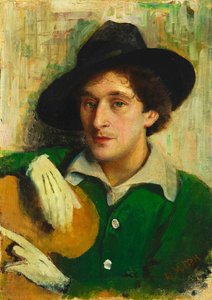
Marc Chagall
1887 - 1985 , Belarus
Belangrijkste feiten
- Artistic Movement Or Style: Modernisme, Cubisme
- Artists Or Movements Influenced By This Artist:
- Surrealisme
- Kunstenaars
- Artists Who Influenced This Artist:
- Bakst
- Delaunay
- Borovikovsky
- Date Of Birth: 6 juli 1887
- Date Of Death: 28 maart 1985
- Full Name: Marc Chagall
- Nationality: Russisch, later Frans
- Notable Artworks:
- I en het dorp
- Over Vitebsk
- Het witte kruis
- Place Of Birth: Liozna, Belarus