

 Bekijk op ware grootte
 Verstuur
 Delen
Delen
 Details bekijken
 Gids voor studentenkunstwerken

 Download
 Vergelijkbare items
 Röntgenonderzoek
 Diavoorstelling
 Statistieken
Reflection (Self-Portrait)
 Oil On Canvas
- WallArt
- Neo-Figurative Art
 1985
1985- Contemporary
 51.0 x 56.0 cm
 Lees meer
De kunstwerken die op deze pagina worden weergegeven, zijn beschermd door de auteursrechtwetgeving, wat betekent dat het ons wettelijk niet is toegestaan om identieke reproducties te maken of te verkopen. Deze bescherming wordt gehandhaafd onder internationale overeenkomsten zoals de Conventie van Bern en door nationale wetgeving, waaronder de bepalingen van de Amerikaanse auteurswet - Titel 17. Alle rechten voorbehouden. Reproduceren of distribueren van afbeeldingen is niet toegestaan zonder uitdrukkelijke schriftelijke toestemming van WahooArt.com en de rechthebbenden.
Deze methode voldoet volledig aan de auteursrechtwetgeving, omdat het niet gaat om het kopiëren of dupliceren van het beschermde kunstwerk. In plaats daarvan is er sprake van een creatieve herinterpretatie — een nieuw schilderij dat door het origineel wordt geïnspireerd, maar er niet identiek aan is.
Giclée / Kunstafdrukken
Giclée- of canvasafdruk van museumkwaliteit met een snelle productie en flexibele afwerkingsmogelijkheden. ( Koop handgeschilderd kunstwerk Schakel over naar digitale afbeeldingen)




P118B €10

P118H €10

P118W €10

P438Z €10

P508JH €12

P508YH €12

P805H €10

P805Z €10

P919BZ €10

P919G €10

P919XJ €10

P959ZH €10

P968JZ €12

W106C €8

W218G €10

W218JH €8

W218Y €10

W307PJ €10

W316G €10

W316PJ €8

W316Y €10

W398PJ €8

W4111J €10

W500HY €15

W500JH €15

W692G €12

W849H €8

W940BG €15

W953PJ €8




Kies uit onze vooraf ingestelde maten die overeenkomen met de originele verhoudingen van het kunstwerk.

Voer de breedte en de hoogte in die u nodig heeft, passend bij uw lijst of uw muur. Een afdruk kan alleen worden ingekort, nooit groter worden gemaakt dan het origineel, waardoor een formaat met een andere verhouding een deel van de afbeelding verliest. Wij sturen u een digitaal mockup ter goedkeuring voordat we iets drukken. De afbeelding op deze pagina toont niet de werkelijke uitsnede — dit is alleen te zien op het mockup.
Wereldwijde levering () binnen 2 weken in plaats van de standaard 4/5 weken. (21 oktober)

Gratis wereldwijde expressverzending

Hoogwaardig linnen canvas

Volledige verzendverzekering

Garantie op terugbetaling van invoerrechten

Garantie op exacte kleurweergave

Retourbeleid van 100 dagen (alleen bij defecten)

100% Geld-terug-garantie

Korting bij meerdere afnames
 De optie voor glas is alleen beschikbaar bij een formaat kleiner dan 110 cm.

Reflection (Self-Portrait)
Giclée / Kunstafdrukken
Formaat reproductie
-


Totaalprijs
€ 71
The Raw Essence of Being: Unveiling Lucian Freud's Reflection
In the intimate theater of Reflection (Self-Portrait), created in 1985, we encounter one of the most profound encounters with the human psyche ever captured on canvas. Lucian Freud, a titan of 20th-century realism, does not merely present a likeness; he presents an excavation of the self. The painting serves as a window into a moment of deep introspection, where the artist’s gaze drifts toward a distant, unseen horizon, inviting the viewer to participate in his silent contemplation. There is no artifice here, only the heavy, palpable presence of a man confronting his own existence. This work stands as a testament to Freud's ability to bridge the gap between the physical reality of the flesh and the invisible weight of the human spirit.
The technical mastery displayed in this self-portrait is nothing short of visceral. Utilizing a thick impasto technique, Freud applies oil paint with a sculptural intensity that gives the skin a rugged, almost topographical quality. Every brushstroke contributes to a textured landscape of features, where the heavy application of pigment mimics the very density of life itself. This method allows the light to catch the ridges of the paint, creating a dynamic interplay of shadow and highlight that breathes movement into the static image. For collectors and lovers of fine art, this tactile quality offers a sensory experience that transcends traditional portraiture, making the canvas feel less like a flat surface and more like a living, breathing entity.
A Legacy of Vulnerability and Neo-Figurative Truth
To understand the emotional gravity of Reflection, one must consider Freud's unique position within the Neo-Figurative movement. Emerging as a powerful reaction against the sweeping abstractions of his era, Freud sought a return to the figure, yet he did so with a modern, unsettling edge. He famously distinguished between the "nude" and the "naked"—where the former suggests an idealized elegance, the latter conveys a raw, unshielded vulnerability. In this self-portrait, we see the artist in his most naked state, stripped of social masks and presented with an unflinching honesty that can be both haunting and deeply moving.
The historical context of Freud’s life—marked by his displacement from Berlin to London and his lineage as the grandson of Sigmund Freud—adds a layer of psychological complexity to the work. While he distanced himself from his grandfather's psychoanalytic theories, the biological and psychological tension remains ever-present in his brushwork. For interior designers and curators, this piece offers more than just aesthetic beauty; it provides a focal point of intellectual and emotional depth. A high-quality reproduction of this masterpiece brings a sense of gravity and sophisticated introspection to any space, serving as a conversation piece that celebrates the enduring power of human truth and the transformative beauty of the realist tradition.
Vragen & Antwoorden
In welk jaar werd "Reflection (Self-Portrait)" gemaakt?
"Reflection (Self-Portrait)" dateert uit 1985. Deze datum plaatst het werk binnen de carrière van Lucian Freud en de betreffende tijdperk.
Hoe populair is "Reflection (Self-Portrait)" binnen Neo-Figurative Art?
Binnen de Neo-Figurative Art-stroming heeft "Reflection (Self-Portrait)" een Iconic populariteitsniveau.
Wat stelt "Reflection (Self-Portrait)" door Lucian Freud voor, en welke stemming straalt het uit?
"Reflection (Self-Portrait)" door Lucian Freud combineert self-portrait, realism, human form, introspection, impasto, expressionism, male portrait met een Dramatic atmosfeer.
Biografie van de kunstenaar
Een leven gesmeed in realisme: De wereld van Lucian Freud
Lucian Michael Freud, geboren in Berlijn in 1922, droeg een afkomst met zich mee die doordrenkt was van intellectueel gewicht—de kleinzoon van de pionierende psychoanalyticus Sigmund Freud. Toch week het pad van de jonge Lucian af van het verkennen van het onderbewuste via de theorie; in plaats daarvan vond hij zijn expressie in de intens fysieke handeling van het schilderen. De dreigende schaduw van het nazisme dwong zijn familie om in 1933 Duitsland te ontvluchten en zich in Londen te vestigen, een verhuizing die zowel zijn leven als de vaak sombere, onrustige toon van zijn artistieke visie diepgaand zou vormen. Zijn vroege opleiding was gefragmenteerd, gekenmerkt door zijn verwijdering van de Bryanston School, maar de vormende lessen aan de East Anglian School of Painting and Drawing van Cedric Morris bleken cruciaal. Daar sloeg de nadruk op directe observatie wortel en werd het een hoeksteen van zijn evoluerende stijl—een bewuste breuk met de groeiende abstractie die door veel tijdgenoten werd omarmd. Deze verankering in een minutieuze studie van de zichtbare wereld onderscheidde hem en vestigde een unieke artistieke identiteit.Van surrealistische echo's naar onverbloemde portretkunst
Freuds artistieke reis begon niet met het rauwe realisme waarvoor hij beroemd werd. Zijn vroege werk flirtte met het surrealisme en het Duits expressionisme, waarbij droomachtige beelden werden vermengd met emotionele intensiteit. Deze invloeden werden echter geleidelijk gedestilleerd tot iets dat uniek van hem was. Tegen het begin van de jaren 50 was er een eigenzinnige stijl ontstaan—gekenmerkt door dikke impasto-verf, gedempte achtergronden die de huidtinten versterkten, en een bijna brute eerlijkheid in de weergave van het menselijk lichaam. Hij vermeed idealisering of vleiende portretten; hij zocht er juist naar om de rauwe fysicaliteit, kwetsbaarheid en psychologische zwaarte vast te leggen. Deze intense focus op de portretkunst vestigde Freud al snel als een vooraanstaand figuur in de Britse kunst, een chroniqueur van zijn tijd wiens werk resoneerde met een naoorlogse gevoeligheid die worstelde met existentiële vragen. Hij werkte vaak naar het leven en eiste uitputtende zittingsuren—soms uren of zelfs dagen lang—om het niveau van detail en psychologische diepgang te bereiken dat hij nastreefde. Het schilderen werd een beproeving voor zowel de kunstenaar als het model, wat een unieke intimiteit creëerde die door zijn doeken heen sijpelde.Techniek als openbaring: De tastbaarheid van het bestaan
De technische benadering van Freud was integraal aan de emotionele impact van zijn schilderijen. Hij gaf de voorkeur aan grote varkensharen penselen en bracht de verf aan met een fysieke kracht die de thematiek van zijn werk weerspiegelde. Dit creëerde een getextureerd oppervlak, bijna sculpturaal van aard, waarbij elke penseelstreek het gewicht en de substantie van het vlees onthulde. Het contrast tussen levendige, vaak vlezige tinten en gedempte paletten voor interieurs of landschappen versterkte het gevoel van isolatie en introspectie. Omdat hij vaak staand schilderde—en later een hoge stoel adopteerde naarmate hij ouder werd—behield hij een dynamische relatie met zowel het canvas als het model. Deze fysieke betrokkenheid was niet louter techniek; het was een onderdompeling in de handeling van het zien—het werkelijk observeren van onderwerpen en het vertalen van die observatie naar verf. Werken zoals Girl with a kitten (1947) tonen deze vroege ontwikkeling, terwijl latere stukken zoals Benefits Supervisor Sleeping (1995) zijn volwassen stijl belichamen—een onverbloemde blik op de menselijke conditie. De pure materialiteit van de verf zelf werd een voertuig om niet alleen het uiterlijk, maar ook de sensatie en het gevoel over te brengen.Nalatenschap en invloed: Een blijvende indruk
De zestigjarige carrière van Lucian Freud liet een onuitwisbare stempel achter op de Britse portretkunst door conventionele opvattingen over schoonheid en representatie uit te dagen. Hij was niet geïnteresseerd in het vastleggen van sociale status of uiterlijke schijn; hij zocht naar iets diepers, iets primitievers—de essentie van het mens-zijn in al zijn complexiteit en imperfectie. Zijn invloed reikt verder dan de schilderkunst en inspireert kunstenaars uit verschillende disciplines met zijn compromisloze visie en technische meesterschap. De intensiteit en psychologische diepgang van zijn werk blijven wereldwijd een publiek boeien, wat zijn plaats verzekert als een van de belangrijkste en meest invloedrijke kunstenaars van de 20e eeuw. Hij was een sleutelfiguur binnen de “School of London”, een groep figuratieve schilders die in Londen werkten tijdens een periode die werd gedomineerd door het abstract expressionisme, verenigd door hun toewijding aan directe observatie en emotionele eerlijkheid. Zijn schilderijen worden bewaard in belangrijke musea wereldwijd—de Tate in Londen, het Freud Museum London en het Goldsmiths’ College van de Universiteit van Londen—als blijvende getuigenissen van zijn artistieke genie. Zijn werk blijft een krachtige herinnering aan de blijvende kracht van de figuratieve kunst om ons met onszelf te confronteren.
Lucian Freud
1922 - 2011 , Duitsland
Snelle feiten
- Artistic Movement Or Style: Neorealisme
- Artists Or Movements Influenced By This Artist: ['Otto Dix']
- Artists Who Influenced This Artist:
- Sigmund Freud
- George Grosz
- Date Of Birth: 8 december 1922
- Date Of Death: 20 juli 2011
- Full Name: Lucian Michael Freud
- Nationality: Britse kunstenaar
- Notable Artworks:
- Girl with a Kitten
- Benefits Supervisor Sleeping
- Place Of Birth: Berlijn, Duitsland
Gerelateerde artikelen

The Tactile Soul of Impressionism: Elevating Interiors with the Depth of Impasto and Plaster Art
Discover the sensory beauty of Impressionist texture. Learn how impasto brushstrokes and plaster art bring depth and light to your home with museum-quality, hand-painted reproductions from OriginalUniqueArt.com.
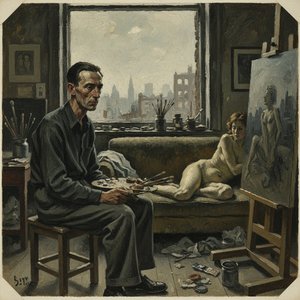
Lucian Freud: A Psychological Portraiture of Post-War Existence
Explore the profound psychological depth of Lucian Freud's portraits. Discover his unique realism, artistic evolution, and lasting influence on modern art. A collector’s guide to a master.
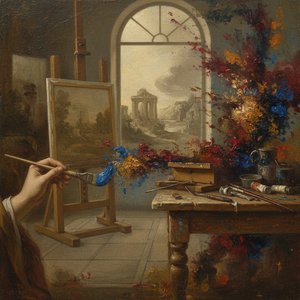
The Eloquent Brushstroke: A Historical & Technical Exploration of Texture, Intent & Expression in Painting
Explore the rich history & techniques of impasto painting – from Renaissance masters to Van Gogh's expressive strokes. Discover how artists use texture to convey emotion and create lasting impact. Learn more!
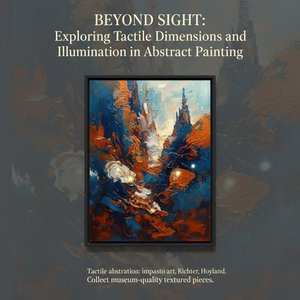
Voorbij het Zicht: De Tactiele Dimensies en Illusie van Diepte in Abstracte Schilderkunst
Ontdek de tactiele dimensies en illusie van diepte in abstracte schilderkunst. Expert analyse van technieken, materialen & invloeden. Vind uw perfecte kunstwerk bij OriginalUniqueArt!

Decoding Impasto: The Emotional Power and Texture of Van Gogh's Brushstrokes
Explore the profound emotional depth of Van Gogh's impasto technique. Discover how his sculptural brushstrokes and textured oil layers define Post-Impressionism through an expert art-historical lens, perfect for discerning collectors and fine art enthusiasts.

