

 Voorvertoning
 Verstuur
 Delen
Delen
 Details bekijken
 Gids
Gids

 Download
 Vergelijkbare items
 Röntgenonderzoek
 Diavoorstelling
 Statistieken
Card Players
 Oil On Panel
- Renaissance Humanism
 1525
1525 40.0 x 50.0 cm
 Thyssen-Bornemisza Museum
 Lees meer
Handgemaakte olieverfreproductie
Met de hand geschilderd in olieverf op canvas in uw gewenste maat en lijst, op bestelling gemaakt door onze kunstenaars. ( Schakel over naar print Schakel over naar digitale afbeeldingen)




P118B €10

P118H €10

P118W €10

P438Z €10

P508JH €12

P508YH €12

P805H €10

P805Z €10

P919BZ €10

P919G €10

P919XJ €10

P959ZH €10

P968JZ €12

W106C €8

W218G €10

W218JH €8

W218Y €10

W307PJ €10

W316G €10

W316PJ €8

W316Y €10

W398PJ €8

W4111J €10

W500HY €15

W500JH €15

W692G €12

W849H €8

W940BG €15

W953PJ €8




Kies uit onze vooraf ingestelde maten die overeenkomen met de originele verhoudingen van het kunstwerk.

Voer de breedte en hoogte in die u nodig heeft, passend bij uw lijst of uw muur. Omdat dit handgeschilderd is, kan de kunstenaar bij een afmeting met een andere beeldverhouding iets meer rondom het schilderij schilderen of juist iets meer weglaten — u kiest zelf. Wij sturen u een digitaal mockup ter goedkeuring voordat het schilderwerk begint. De afbeelding die op deze pagina wordt getoond, is niet het uiteindelijke resultaat — alleen de mockup geeft dit weer.
Na de bestelling zal het team van OriginalUniqueArt.com per e-mail contact opnemen met de klant voor instructies en een mockup-voorbeeld sturen.
Wereldwijde levering () binnen 3 tot 4 weken in plaats van de standaard 5 weken. (25 oktober). Zonder concessies aan de kwaliteit.

Gratis wereldwijde expressverzending

Hoogwaardig linnen canvas

Volledige verzendverzekering

Garantie op terugbetaling van invoerrechten

Garantie op exacte kleurweergave

Retourbeleid van 100 dagen (alleen bij defecten)

100% Geld-terug-garantie

Korting bij meerdere afnames
 De optie voor glas is alleen beschikbaar bij een formaat kleiner dan 110 cm.

Card Players
Druktechniek
Afmetingen reproductie
-


Eindtotaal
€ 263
The Quiet Intensity of “Card Players” by Lucas van Leyden
Lucas van Leyden’s “Card Players,” painted in 1525, is more than just a depiction of a game; it's a meticulously crafted snapshot of a burgeoning social world. Often referred to as the "Genesis of a Game," this oil-on-panel work offers a rare glimpse into the lives and leisure activities of the early 16th century Netherlands – a period marked by both artistic innovation and profound societal shifts. Van Leyden, a master painter and engraver deeply influenced by both Italian Renaissance ideals and his native Flemish traditions, has created an image that resonates with quiet intensity and unspoken narratives, inviting viewers to contemplate the complexities of human interaction.
The painting’s origins are rooted in the evolving social landscape of Europe. As urban centers flourished, new forms of social engagement emerged, and card games – previously largely confined to aristocratic circles – began to gain popularity among merchants, artisans, and a rising middle class. Van Leyden brilliantly captures this transformation by presenting not a grand tournament or formal competition, but a private gathering—a moment of shared camaraderie amidst the everyday realities of life. The composition itself is carefully orchestrated; the three figures are arranged in a dynamic triangular formation, drawing the eye to each individual while simultaneously suggesting an interplay between them – a silent conversation unfolding beneath the surface.
A Study in Detail: Technique and Composition
Van Leyden’s technical mastery is immediately evident. Every detail, from the folds of the clothing to the glint of light on the cards, is rendered with painstaking precision. The artist employs a masterful use of chiaroscuro – the dramatic contrast between light and shadow – to sculpt the figures, creating a sense of depth and volume that draws the viewer into the scene. Notice how the dark background serves to isolate the players, intensifying their presence and emphasizing their engagement with the game. The meticulous rendering of textures—the rough weave of the robes, the smooth surface of the cards—adds a remarkable level of realism, while the subtle variations in color contribute to the overall sense of atmosphere.
Furthermore, Van Leyden’s compositional choices are deliberate and sophisticated. The triangular arrangement of figures creates visual stability and directs the viewer's eye across the canvas. The placement of the women, particularly the central figure with her elaborate headdress, subtly asserts a position of authority within the group—a reflection of the changing roles of women in society during this period. The use of perspective, though not entirely linear, contributes to the illusion of depth and space, further immersing the viewer in the scene.
Symbolism and Context: A Window into Renaissance Life
Beyond its technical brilliance, “Card Players” is rich in symbolic meaning. The game itself represents more than just a pastime; it symbolizes social status, wealth, and intellectual engagement. The piles of gold coins scattered on the table are a clear indication of prosperity and success—a key aspiration for many merchants and artisans during this era. The cards themselves can be interpreted as metaphors for chance, fortune, and the unpredictable nature of life. The quiet expressions on the faces of the players suggest a blend of concentration, anticipation, and perhaps even a touch of rivalry.
Moreover, the painting reflects the humanist ideals that were gaining prominence during the Renaissance. Van Leyden’s focus on human interaction and everyday life—rather than grand historical events or religious narratives—aligns with this broader cultural shift. The scene is not idealized; it's grounded in reality, offering a nuanced portrayal of social dynamics and the complexities of human relationships. The painting serves as a testament to the Renaissance fascination with observing and representing the world around us.
Emotional Resonance: A Moment Frozen in Time
“Card Players” possesses a remarkable emotional resonance that transcends its historical context. Despite the lack of overt drama, the painting evokes a sense of quiet intensity—a feeling of being privy to a private moment of connection and shared experience. The subtle expressions on the faces of the players invite viewers to speculate about their thoughts and feelings, creating a powerful sense of empathy. The scene is both familiar and enigmatic, capturing the timeless appeal of human interaction and the enduring fascination with games of chance.
Whether viewed as a historical document, an artistic masterpiece, or simply a captivating image, “Card Players” continues to resonate with audiences today—a testament to Lucas van Leyden’s skill as a painter and his profound understanding of the human condition.
Veelgestelde vragen
Wat is de techniek en de afmeting van "Card Players"?
"Card Players" door Lucas Van Leyden is uitgevoerd in Oil On Panel en heeft de afmetingen 40 x 50 cm.
Wat zijn de afmetingen van het originele "Card Players" door Lucas Van Leyden?
Het originele werk "Card Players" door Lucas Van Leyden heeft de afmetingen 40 x 50 cm.
Is Lucas Van Leyden, maker van "Card Players", bekend onder andere namen?
Andere namen waaronder Lucas Van Leyden, maker van "Card Players", bekend is, zijn onder andere Lucas Hugensz Van Leyden, Lucas Jacobsz..
Biografie kunstenaar
Een Vroege Meester van het Nederlandse Genre: Lucas van Leyden
Lucas van Leyden, geboren in Leiden rond 1494, vertegenwoordigt een fascinerende overgangsfase in de Nederlandse kunstgeschiedenis. Hij was niet alleen een begaafd schilder maar ook een uitzonderlijk getalenteerd graveur, en behoort tot de eersten die zich wendde tot het genre van alledaagse taferelen – een vernieuwing ten opzichte van de dominante religieuze en portretkunst van zijn tijd. Zijn leven, hoewel relatief kort (hij stierf in 1533), was doorslaggevend voor de ontwikkeling van de Nederlandse schilderkunst. Lucas’ artistieke reis begon onder de vleugels van zijn vader, Huygh Jacobsz, een lokale schilder die hem de basisprincipes van het vak bijbracht. Deze vroege training legde de fundamenten voor zijn latere virtuositeit. In 1508 trad hij in dienst bij Cornelis Engelbrechtsz, waar hij zijn vaardigheden verder verfijnde en zich begon te specialiseren in de complexe technieken van het graveren.De Opkomst van een Innovator
Wat Lucas van Leyden onderscheidt van zijn tijdgenoten is zijn opmerkelijke originaliteit, die al vroeg tot uiting kwam in zijn werk. Zijn eerste schilderijen, daterend uit ongeveer 1506-1512, tonen halfnaakte figuren met een zeldzame directheid en psychologische intensiteit. Deze vroege werken getuigen van een uitzonderlijk talent voor anatomie en compositie. Tegelijkertijd begon hij zich te bekwamen in de gravurekunst, een medium dat hem toeliet om zijn ideeën snel te verspreiden en een breder publiek te bereiken. Zijn vroegste bekende prent, *Mohammed en de vermoorde monnik* (1508), is een krachtig bewijs van zijn technische beheersing en narratieve kracht. Het werk toont niet alleen zijn vaardigheid in het detailleren maar ook zijn durf om controversiële thema’s aan te snijden. Naarmate hij volwassener werd, ontwikkelde Lucas ook een bijzondere gevoeligheid voor landschappen, die steeds prominenter aanwezig werden in zijn schilderijen.Belangrijke Werken en Artistieke Kenmerken
Zeventien schilderijen worden met zekerheid aan Lucas van Leyden toegeschreven, waaronder meesterwerken als *De genezing van de blinde man van Jericho*, een compositie die gekenmerkt wordt door een complexe verdeling van figuren tegen een weelderig boslandschap. Ook *Sint Paulus* is een getuigenis van zijn uitzonderlijke graveerkunst. Een ander opvallend werk is *De melkmeid* (gravure, 1510), dat zijn vroege beheersing van het medium illustreert en tevens een vroeg voorbeeld is van genre schilderkunst in Nederland. Zijn stijl kenmerkt zich door frisse kleuren, een subtiel gebruik van licht en schaduw, en een gevoel van *aérien perspectief* – een techniek die hij leerde kennen via de werken van Albrecht Dürer. Lucas’ vermogen om realisme te combineren met emotionele expressie maakte zijn werk uniek en aantrekkelijk voor tijdgenoten.Invloeden, Museumcollecties en Nalatenschap
Lucas van Leyden was niet immuun voor de invloed van andere kunstenaars. Vooral Albrecht Dürer oefende een belangrijke aantrekkingskracht uit op hem, met name in zijn beheersing van de gravurekunst en zijn aandacht voor detail. Echter, Lucas slaagde erin om deze invloeden te integreren in zijn eigen unieke stijl, waardoor hij een pionier werd in de Nederlandse kunstwereld. Zijn werk is tegenwoordig te bewonderen in verschillende musea over de hele wereld, waaronder het Van Gogh Museum in Nederland, dat een uitgebreide collectie van zijn prenten en schilderijen herbergt. Online platforms zoals OriginalUniqueArt.com bieden kunstliefhebbers de mogelijkheid om zijn oeuvre in detail te verkennen en reproducties van zijn meesterwerken aan te schaffen. Lucas van Leyden’s bijdrage aan het Nederlandse genre schilderkunst en de gravurekunst is onmiskenbaar. Zijn innovatieve stijl, technische vaardigheid en durf om nieuwe thema's aan te snijden hebben hem tot een gevierde figuur in de kunstgeschiedenis gemaakt. Als een ware pionier van de Nederlandse kunst blijft zijn nalatenschap kunstenaars en kunstliefhebbers inspireren.- Bekijk de werken van Lucas van Leyden op OriginalUniqueArt.com
- Verken de collectie van het Van Gogh Museum (Nederland) online
- Ontdek meer over Nederlandse kunst en haar pioniers op de blog van OriginalUniqueArt.com

Lucas Van Leyden
1494 - 1533 , Nederland
Belangrijkste feiten
- Artistieke Stroming: Vroege Nederlandse Renaissance
- Bekende Werken:
- De genezing van de blinde man
- Sint Paulus
- De melkmeid
- Beïnvloed Door Kunstenaars: ['Albrecht Dürer']
- Geboortedatum: Leiden, Nederland (1494)
- Geboorteplaats: Leiden, Nederland
- Kunstenaars Beïnvloed: ['Duitse Renaissance']
- Nationaliteit: Nederlands
- Sterfdatum: 1533
- Volledige Naam: Lucas Hugensz van Leyden
Gerelateerde artikelen

Jan van Goyen: Master of Dutch Landscape & Atmospheric Perspective
Discover Jan van Goyen, the master of Dutch landscape painting. Explore his subtle technique, atmospheric realism & lasting influence on art history. Learn about this 17th-century pioneer at OriginalUniqueArt.

Golden Light & Dutch Skies: The Timeless Magic of Dutch Golden Age Landscapes
Discover the breathtaking beauty of Dutch Golden Age landscapes. Explore the mastery of light, chiaroscuro, and 17th-century realism through an expert art history lens, celebrating the enduring legacy of the Dutch Masters for discerning collectors and art lovers.

Rembrandt's Meesterwerken: De Top 25 – Kunst voor uw Interieur | OriginalUniqueArt
Ontdek de 25 meest iconische schilderijen van Rembrandt van Rijn! Duik in de Gouden Eeuw, bewonder zijn portretten & zelfportretten. Museumkwaliteit reproducties voor uw interieur op OriginalUniqueArt.com. Bekijk de collectie!

Lucas van Leyden: Innovation & Intimacy in Early Netherlandish Printmaking
Explore the groundbreaking prints of Lucas van Leyden, a Dutch master bridging Gothic detail & Renaissance innovation. Discover his rare works, investment potential, and legacy for discerning collectors.
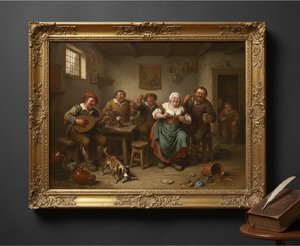
Adriaen van Ostade: A Master of Dutch Genre Painting & Social Commentary
Explore the life & work of Adriaen van Ostade, a leading Dutch Golden Age painter. Discover his realistic genre scenes, social commentary, and lasting influence on art history. Learn more at OriginalUniqueArt.
