

 Voorvertoning
 Verstuur
 Delen
Delen
 Details bekijken
 Gids
Gids

 Download
 Vergelijkbare items
 Röntgenonderzoek
 Diavoorstelling
 Q&A
Q&A Statistieken
Resurrection
 Acrylic On Canvas
- WallArt
- Baroque
 114.0 x 116.0 cm
 Residenzgalerie
 Lees meer
Giclée / Kunstafdrukken
Giclée- of canvasafdruk van museumkwaliteit met een snelle productie en flexibele afwerkingsmogelijkheden. ( Bestel handgeschilderde reproductie Schakel over naar digitale afbeeldingen)




P118B €10

P118H €10

P118W €10

P438Z €10

P508JH €12

P508YH €12

P805H €10

P805Z €10

P919BZ €10

P919G €10

P919XJ €10

P959ZH €10

P968JZ €12

W106C €8

W218G €10

W218JH €8

W218Y €10

W307PJ €10

W316G €10

W316PJ €8

W316Y €10

W398PJ €8

W4111J €10

W500HY €15

W500JH €15

W692G €12

W849H €8

W940BG €15

W953PJ €8




Kies uit onze vooraf ingestelde maten die overeenkomen met de originele verhoudingen van het kunstwerk.

Voer de gewenste breedte en hoogte in, passend bij uw lijst of muur. Een afdruk kan alleen worden ingekort en nooit groter worden gemaakt dan het origineel; een formaat met andere verhoudingen zal daarom een deel van de afbeelding verliezen. Wij sturen u een digitaal mockup ter goedkeuring voordat we tot drukwerk overgaan. De afbeelding op deze pagina toont niet de werkelijke uitsnede — dit is alleen te zien op het mockup.
Wereldwijde levering () binnen 2 weken in plaats van de standaard 4/5 weken. (31 oktober)

Gratis wereldwijde expressverzending

Hoogwaardig linnen canvas

Volledige verzendverzekering

Garantie op terugbetaling van invoerrechten

Garantie op exacte kleurweergave

Retourbeleid van 100 dagen (alleen bij defecten)

100% Geld-terug-garantie

Korting bij meerdere afnames
 De optie voor glas is alleen beschikbaar bij een formaat kleiner dan 110 cm.

Resurrection
Giclée / Kunstafdrukken
Afmetingen reproductie
-


Eindtotaal
€ 72
Luca Giordano’s “Resurrection”: A Symphony of Light and Divine Awakening
Luca Giordano's "Resurrection," painted circa 1665 in the heart of Naples, isn’t merely a depiction of a biblical event; it’s an immersive experience—a vibrant testament to the artist’s revolutionary approach to Baroque painting. More than just a religious scene, it embodies a profound sense of movement, luminosity, and emotional intensity that immediately captivates the viewer. Giordano, nicknamed “Luca fa presto” for his prodigious speed and versatility, had already established himself as a master of capturing dramatic action and realistic figures, but this work represents a pivotal shift in his style—a conscious embrace of light and color that would define his legacy.
The painting immediately draws the eye to Christ’s resurrected form. He is not depicted as a static, ethereal figure, but rather as a dynamic force being lifted heavenward by a multitude of angels. The composition is carefully orchestrated: the dark foreground, dominated by startled Roman soldiers, serves as a dramatic counterpoint to the radiant light emanating from Christ and his ascent. Giordano masterfully employs chiaroscuro—the interplay of light and shadow—to heighten the sense of drama and create an almost theatrical effect. Notice how the shadows cling to the figures in the foreground, emphasizing their astonishment and vulnerability, while the light washes over Christ’s body, highlighting its physicality and conveying a powerful message of rebirth.
The Neapolitan Baroque: Giordano's Innovative Palette
Giordano’s style was deeply rooted in the artistic traditions of Naples, yet he boldly pushed beyond the somber palette favored by his predecessor, Jusepe de Ribera. While influenced by Ribera’s dramatic realism and anatomical precision—evident in the muscularity of Christ’s body and the detailed rendering of the soldiers—Giordano infused his work with a newfound vibrancy and luminosity. He drew inspiration from Venetian masters like Titian and Veronese, incorporating their techniques for creating rich color harmonies and dynamic compositions. The use of ochre, crimson, and gold creates an opulent atmosphere, suggesting not just resurrection but also divine grace and power.
The artist’s technique is particularly noteworthy. Giordano employed a rapid, almost frenetic brushstroke—a characteristic that earned him his nickname “Luca fa presto.” This technique allowed him to capture the fleeting expressions of emotion on the faces of the soldiers and create a sense of movement within the composition. He also utilized a layering technique, applying thin glazes of color over previous layers to build up depth and luminosity. The result is a surface that seems to shimmer with light—a testament to Giordano’s mastery of color and his innovative approach to painting.
Symbolism and Spiritual Resonance
Beyond its technical brilliance, “Resurrection” is rich in symbolic meaning. The soldiers, initially frozen in terror, represent the human condition—our vulnerability and our need for salvation. Their awakening signifies a shift from darkness to light, fear to faith. Christ’s outstretched arms symbolize his sacrifice and his triumph over death. The angels, depicted with dynamic gestures, embody divine intervention and the promise of eternal life. The sword at the bottom left corner, often interpreted as representing the power of judgment, subtly underscores the gravity of the event while simultaneously hinting at the possibility of redemption.
Furthermore, the scene’s setting—a humble Roman house—adds another layer of meaning. It suggests that salvation is not confined to a grand cathedral or a sacred temple but can be found in everyday life. Giordano's choice to depict this pivotal moment within a domestic space elevates it from a purely religious narrative to a universal story of hope and renewal. The painting invites contemplation on themes of faith, sacrifice, and the enduring power of the human spirit.
A Legacy of Light: Reproductions and Artistic Inspiration
“Resurrection” remains one of Luca Giordano’s most celebrated works, admired for its dramatic intensity, vibrant color palette, and innovative technique. Today, high-quality reproductions offer a remarkable opportunity to experience this masterpiece firsthand. Whether adorning a grand salon or a smaller interior space, a reproduction of “Resurrection” can infuse any room with a sense of drama, spirituality, and timeless beauty. It’s a powerful reminder of Giordano's revolutionary contribution to the Baroque era—a testament to his ability to capture not just the likeness of his subjects but also their very souls.
Veelgestelde vragen
Hoe harmonieus is het kleurgebruik in "Resurrection" door Luca Giordano?
De kleurharmonie van "Resurrection" wordt beschreven als Balanced Harmony.
Wat stelt "Resurrection" door Luca Giordano voor, en welke stemming straalt het uit?
"Resurrection" toont resurrection, christ, mary, angels, biblical, figures, dramatic, light en de vastgelegde stemming is Dramatic.
Wat zijn de afmetingen van het originele "Resurrection"?
Het originele werk "Resurrection" door Luca Giordano heeft de afmetingen 114 x 116 cm.
Biografie kunstenaar
Een Neapolitaanse Virtuoos: Het Leven en Werk van Luca Giordano
Luca Giordano, geboren in Napels in 1634, was meer dan slechts een schilder; hij was een fenomeen, een energieke kracht die de late Barok periode kleurde met zijn ongeëvenaarde productiviteit. Zijn talent werd reeds vroeg herkend en ontwikkeld door zijn vader, Antonio Giordano, maar het was onder de strenge leiding van Jusepe de Ribera dat Luca’s artistieke pad echt vorm begon te krijgen. Deze vroege invloed is duidelijk zichtbaar in de dramatische intensiteit en realistische weergave van figuren die kenmerkend zijn voor Giordano's eerste werken. Echter, in tegenstelling tot Ribera’s vaak sombere palet, bezat Luca een natuurlijke aanleg voor lichtheid en beweging – kwaliteiten die uiteindelijk zijn unieke stijl zouden definiëren. Al snel kreeg hij de bijnaam “Luca fa presto” – Luca de snelle – een bewijs van zijn opmerkelijke snelheid en grenzeloze energie. Hij was niet alleen vaardig, maar in staat om diepe emotie en verbluffende spektakel met een gemak te vangen dat tijdgenoten verwonderde.Van Napels naar Spanje: Een Carrière in Beweging
Giordano’s artistieke reis was allesbehalve statisch. Het was een dynamische progressie, gevoed door opdrachten en reizen die hem over het Italiaanse schiereiland en daarbuiten brachten. Na zich te hebben gevestigd als een rijzende ster in Napels, zocht hij kansen in Rome, Florence en Venetië, waarbij hij de diverse invloeden van elke stad opslokte als een spons. In Venetië bestudeerde hij het werk van Titiaan en Veronese, omarmde hun levendige kleurenpaletten en dynamische composities – een schril contrast met het tenebrisme van zijn vroege training. Florence zag hem belangrijke fresco’s creëren, meest opvallend in de koepel van de Corsini Kapel in de Chiesa del Carmine, waar hij zijn groeiende beheersing van illusionistische ruimte en narratief vertellen demonstreerde. Maar het was zijn tienjarige verblijf in Spanje (1682-1692) dat zijn internationale reputatie bezegelde. Aangesteld als hofschilder van Karel II, transformeerde Giordano Spaanse interieurs met weelderige fresco’s, en injecteerde hij een broodnodige dosis Italiaanse exuberantie in de meer ingetogen Spaanse artistieke traditie. De Biblioteca Riccardiana in Florence, versierd met allegorische fresco's die goddelijke wijsheid vieren, staat als een getuigenis van deze periode, en toont zijn vermogen om intellectuele diepgang te combineren met visuele pracht.Een Synthese van Stijlen: Giordano’s Artistieke Handtekening
Giordano's genialiteit lag niet in het uitvinden van geheel nieuwe technieken, maar in het synthetiseren van bestaande stijlen tot een opmerkelijk vloeiende en decoratieve stijl. Hij combineerde meesterlijk de dramatische realisme geërfd van Ribera, het lumineuze colorisme geïnspireerd door Venetiaanse schilders, en de dynamische composities die doen denken aan Pietro da Cortona. Zijn penseelvoering werd gekenmerkt door zijn vrijheid en spontaniteit, waardoor een indruk van moeiteloze gratie ontstond. Hij was niet bang om ornamentatie te omarmen, vulde zijn doeken met ingewikkelde details en wervelende draperieën – een kenmerk van zijn volwassen stijl. Deze aanpak stelde hem in staat om een breed scala aan onderwerpen aan te pakken – van religieuze scènes en mythologische verhalen tot portretten en decoratieve schema's – met gelijke bekwaamheid. Het Oordeel van Parijs, bewaard in het Berlijnse Museum, is een uitstekend voorbeeld van deze synthese; het is een levendige weergave van klassieke mythologie, gerenderd met een opvallende Barok flair. Zijn fresco's, vooral die in de kathedraal van Napels en verschillende Napolitaanse paleizen, zijn monumentale prestaties, die architecturale ruimtes transformeren tot meeslepende visuele ervaringen die kijkers omhullen in een wereld van kleur en drama.Nalatenschap en Invloed: De Blijvende Impact van een Meester
Luca Giordano’s invloed reikte verder dan zijn eigen levenstijd. Hij leidde talloze leerlingen op, waaronder Paolo de Matteis, die zelf succesvolle kunstenaars werden en zijn stilistische innovaties door heel Italië en daarbuiten verspreidden. Zijn werk diende als een brug tussen de Hoge Barok en de Rococo periode, en baande zo de weg voor de lichtere, speelsere esthetiek die de 18e-eeuwse kunst zou kenmerken. Zijn enorme productie – geschat op meer dan zeshonderd schilderijen en talloze fresco’s – blijft tot op de dag van vandaag publiek boeien. Het Paleis van Capodimonte in Napels is een schatkamer van zijn werk, die een uitgebreid overzicht biedt van zijn artistieke evolutie. Giordano's vermogen om technische virtuositeit naadloos te combineren met emotionele diepgang verzekert hem een plaats als een van de belangrijkste en meest geliefde figuren van de Italiaanse Barok. Hij stierf in 1705 in zijn geboortestad Napels, en liet een nalatenschap achter die kunstenaars en kunstliefhebbers blijft inspireren.Belangrijke Werken & Artistieke Verbindingen
Hieronder enkele opmerkelijke werken en artistieke verbindingen:- Het Oordeel van Parijs (Berlijns Museum): Een uitstekend voorbeeld van Giordano’s mythologische schilderijen, met zijn levendige kleurenpalet en dynamische compositie.
- Christus in de Tempel met de Schriftgeleerden (Corsini Galerij, Rome): Demonstreert zijn vaardigheid in religieus verhaal en beheersing van licht en schaduw.
- Fresco’s in Florence & Napels: Monumentale werken die architecturale ruimtes transformeerden tot meeslepende visuele ervaringen.
- Invloeden: Jusepe de Ribera, Titiaan, Veronese, Pietro da Cortona
- Beïnvloedde Kunstenaars: Paolo de Matteis en een generatie Napolitaanse schilders.
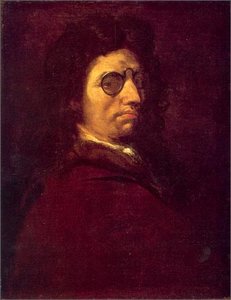
Luca Giordano
1634 - 1705 , Italië
Belangrijkste feiten
- Artistic Movement Or Style: Late Barok
- Artists Or Movements Influenced By This Artist: ['Paolo de Matteis']
- Artists Who Influenced This Artist:
- Ribera
- Titian
- Veronese
- Date Of Birth: 18 oktober 1634
- Date Of Death: 12 januari 1705
- Full Name: Luca Giordano
- Nationality: Italiaans
- Notable Artworks:
- Het Oordeel van Parijs
- Christus in de tempel
- Place Of Birth: Napels, Italië
Gerelateerde artikelen

The Dramatic Flourish: Exploring the Baroque Movement's Enduring Legacy in Art History
Explore the dramatic world of Baroque art! Discover iconic artists like Caravaggio & Rubens, defining techniques, and its lasting impact on art history. Expert insights for collectors & enthusiasts at OriginalUniqueArt.

The Visceral Stage: Exploring Dramatic Narratives & Emotional Intensity in Baroque Art
Explore the dramatic world of Baroque art! Discover iconic masters like Caravaggio & Rembrandt, their techniques, and the movement's lasting impact. Expert insights for collectors & enthusiasts at OriginalUniqueArt.

Top 10 Barok Meesterwerken: Kunstgeschiedenis voor uw Interieur | OriginalUniqueArt.nl
Ontdek de 10 meest iconische Barok meesterwerken van Caravaggio, Rembrandt & Rubens! Duik in de geschiedenis en passie achter deze klassieke schilderijen. Vind museumkwaliteit reproducties voor uw interieur op OriginalUniqueArt.com.
Luca Giordano: Neapolitan Baroque Master & His European Influence
Explore the life & works of Luca Giordano, the celebrated Neapolitan Baroque master. Discover his prolific fresco cycles, Roman commissions, and lasting influence on European art history. Learn more at OriginalUniqueArt.

Drama and Light: A Definitive Guide to the Italian Baroque Masterpieces and the Revolution of Chiaroscuro
Explore the dramatic world of Italian Baroque art. Discover how masters like Caravaggio used chiaroscuro and tenebrism to revolutionize painting through light, shadow, and profound realism. A definitive guide for history lovers and art collectors.


