
 Voorvertoning
 Verstuur
 Delen
Delen
 Details bekijken
 Gids
Gids

 Download
 Vergelijkbare items
 Röntgenonderzoek
 Diavoorstelling
 Vraag & antwoord
 Statistieken
Scènes de la vie de Saint Thomas

- 32.0 x 34.0 cm


 Lees meer
Giclée / Kunstafdrukken
Giclée- of canvasafdruk van museumkwaliteit met een snelle productie en flexibele afwerkingsmogelijkheden. ( Bestel handgeschilderde reproductie Schakel over naar digitale afbeeldingen)




P118B €10

P118H €10

P118W €10

P438Z €10

P508JH €12

P508YH €12

P805H €10

P805Z €10

P919BZ €10

P919G €10

P919XJ €10

P959ZH €10

P968JZ €12

W106C €8

W218G €10

W218JH €8

W218Y €10

W307PJ €10

W316G €10

W316PJ €8

W316Y €10

W398PJ €8

W4111J €10

W500HY €15

W500JH €15

W692G €12

W849H €8

W940BG €15

W953PJ €8




Kies uit onze vooraf ingestelde maten die overeenkomen met de originele verhoudingen van het kunstwerk.

Voer de gewenste breedte en hoogte in, passend bij uw lijst of muur. Een afdruk kan alleen worden ingekort en nooit groter worden gemaakt dan het origineel; een formaat met andere verhoudingen zal daarom een deel van de afbeelding verliezen. Wij sturen u een digitaal mockup ter goedkeuring voordat we tot drukwerk overgaan. De afbeelding op deze pagina toont niet de werkelijke uitsnede — dit is alleen te zien op het mockup.
Wereldwijde levering () binnen 2 weken in plaats van de standaard 4/5 weken. (8 november)

Gratis wereldwijde expressverzending

Hoogwaardig linnen canvas

Volledige verzendverzekering

Garantie op terugbetaling van invoerrechten

Garantie op exacte kleurweergave

Retourbeleid van 100 dagen (alleen bij defecten)

100% Geld-terug-garantie

Korting bij meerdere afnames
 De optie voor glas is alleen beschikbaar bij een formaat kleiner dan 110 cm.

Scènes de la vie de Saint Thomas
Giclée / Kunstafdrukken
Afmetingen reproductie
-


Eindtotaal
€ 72
Luca di Tommè: Een Gouden Stem uit Siena’s Laatmiddeleeuwse Kunst
Luca di Tommè, een naam misschien minder bekende dan die van zijn tijdgenoten Duccio en Simone Martini, staat echter wel als een cruciale schakel in het bruisende kunstenaarschap van Siena tijdens de tweede helft van de 14e eeuw. Hij vertegenwoordigt een essentiële brug tussen de grandeur van het vroegere werk en de groeiende aandacht voor natuurlijke vormen en licht – een stijl die hij zelf verder ontwikkelde binnen de reeds bestaande decoratieve traditie van zijn stad. Zijn uitzonderlijk productief oeuvre – meer dan vijftig werken zijn met vertrouwen toegeschreven aan hem – zorgde ervoor dat het elegante, warme gevoel van Siena’s kunstenaarsgemeenschap voortduurde tot in de 15e eeuw, een bewijs van zijn talent en de blijvende aantrekkingskracht van zijn kunst. Geboren rond 1330 in Italië, blijft Luca di Tommè’s vroegste leven enigszins mysterieus gehuld in het stof der tijd. Hij kwam opdoemen als kunstenaar tijdens een periode van aanzienlijke artistieke dynamiek in Siena, wanneer de internationale handel en wetenschap begonnen nieuwe ideeën en vormen naar binnen te drijven. Zijn stijl werd sterk beïnvloed door Duccio di Buoninsegna en Simone Martini, maar hij ontwikkelde zijn eigen karakteristieke manier om licht en kleur te gebruiken – een techniek die hij perfectioneerde met behulp van tempera op paneel, een materiaal dat bekend staat om zijn prachtige oppervlakte en het mogelijk maakt om zeer gedetailleerde afbeeldingen weer te geven. Deze combinatie van stijl en techniek zou hem onderscheiden van vele andere kunstenaars van zijn tijd. Het werk "Scenes from the Life of St Thomas" is een prachtige illustratie van deze stijlperiode. Het paneel, geschilderd rond 1362, behoort tot een reeks afbeeldingen die het leven van Sint Thomas laten zien – een belangrijk figuur binnen de katholieke kerk en een fervent voorstander van het theologisch onderzoek. De scène wordt afgestemd op een belangrijke gebeurtenis uit het leven van Sint Thomas: het moment waarop Jezus hem zijn stigmata schenkt, de verwondingen die lijken op die van Christus’ kruisiging. Een man staat naast Sint Thomas en een andere persoon knielt neer naast hem, terwijl een eenvoudige stoel zich aan de linkerzijde van het beeld bevindt. Een kleine schaal wordt op de grond geplaatst aan de rechterkant van het paneel. Deze zorgvuldige compositie is niet alleen technisch hoogstaand maar ook doordrenkt van symboliek. De afbeelding dient als een prachtige manier om de leerstellingen van het Christendom weer te geven en biedt een aangename kijkje in een periode waarin kunstenaars een belangrijke rol speelden bij het vormen van religieuze ervaringen. De kleuren zijn bijzonder helder en warm, gebruikmakend van een combinatie van gebonden pigmenten die een prachtige lichtintensiteit opleveren. De aandacht voor detail is opvallend – elk aspect van de scène wordt zorgvuldig weergegeven, waardoor het publiek wordt uitgenodigd om zich onderdompelen in het verhaal. Een kunstenaar als Luca di Tommè wist niet alleen hoe hij een stijlvolle afbeelding kon maken maar ook hoe hij emotie kon oproepen bij zijn kijkers. De serene compositie en de warme kleuren dragen bij aan een gevoel van innerlijke rust en contemplatie, wat het werk bijzonder geschikt maakt voor zowel thuisdecoratie als kunstcollecties. Een reproductie biedt een prachtige manier om deze klassieke schoonheid te delen met een nieuw publiek en om een stukje geschiedenis mee naar huis te nemen.Veelgestelde vragen
Wat is de luminantie van "Scènes de la vie de Saint Thomas" door Luca Di Tommè?
De vastgestelde luminantie voor "Scènes de la vie de Saint Thomas" door Luca Di Tommè is Donker.
Met welke techniek en welke afmetingen is het originele "Scènes de la vie de Saint Thomas" door Luca Di Tommè uitgevoerd?
"Scènes de la vie de Saint Thomas" door Luca Di Tommè is uitgevoerd in Acryl op canvas en heeft de afmetingen 32 x 34 cm.
Waarvoor wordt het gebruik van "Scènes de la vie de Saint Thomas" door Luca Di Tommè aanbevolen?
Een afdruk van "Scènes de la vie de Saint Thomas" wordt aanbevolen voor Accentuerend.
Biografie kunstenaar
Luca di Tommè: A Sienese Master of the Late Medieval Period
Luca di Tommè, a name perhaps less familiar than those of his contemporaries Duccio or Simone Martini, nevertheless stands as a pivotal figure in the vibrant artistic landscape of Siena during the latter half of the 14th century. Active primarily between 1356 and 1389, he represents a crucial link in the chain of Sienese painting, inheriting the stylistic traditions of its most celebrated predecessors while simultaneously forging his own distinctive voice within the established decorative style. His prolific output – over fifty works have been confidently attributed to him – ensured that the elegant, luminous aesthetic of Siena’s artistic community continued to flourish well into the 15th century, a testament to his skill and the enduring appeal of his art.
Born around 1330 in Italy, Luca di Tommè's early life remains somewhat shrouded in mystery. He emerged as an artist during a period of considerable artistic dynamism in Siena, a city renowned for its independent spirit and thriving patronage system. The Sienese school, deeply influenced by the innovations of Duccio and Simone Martini at Florence, was characterized by a rich palette, delicate modeling, and a profound understanding of iconography – particularly within religious narratives. Luca’s work reflects this heritage, demonstrating a masterful command of tempera on wood panels, a technique common to the period and perfectly suited to capturing the subtle nuances of color and texture.
The Influence of Sienese Tradition
Luca di Tommè's artistic development is inextricably linked to the established traditions of Siena. He was undoubtedly influenced by the pioneering work of Duccio, Simone Martini, Pietro Lorenzetti, and Ambrogio Lorenzetti – artists who had revolutionized painting with their innovative use of color, perspective, and emotional expression. However, Luca didn’t simply imitate his predecessors; he skillfully absorbed their techniques and stylistic elements, integrating them into a distinctly personal approach.
Early in his career, Luca's paintings exhibit a clear debt to the Sienese masters, particularly in their meticulous attention to detail and their adherence to established iconographic conventions. His compositions are often balanced and harmonious, reflecting the prevailing aesthetic ideals of the time. However, as he matured as an artist, Luca began to introduce subtle shifts in his style, moving towards a more expressive use of line and a greater emphasis on decorative elements. This evolution is particularly evident in his later works, where he demonstrates a growing independence from purely imitative approaches.
Key Works and Artistic Style
Luca di Tommè’s oeuvre comprises a diverse range of subjects, primarily religious scenes depicting the Virgin Mary with the Christ Child, saints, and biblical figures. His most celebrated works include “Virgin and Child with Saints,” a poignant depiction of the Madonna surrounded by a haloed assembly of holy men, and “Virgin and Child with Sts. Louis of Toulouse and Michael,” which showcases his skill in rendering delicate drapery and conveying a sense of serene spirituality. The "Madonna and Child" is another notable example of his style.
A defining characteristic of Luca’s art is his masterful use of tempera on wood panels, a medium that allowed him to achieve remarkable luminosity and depth of color. His paintings are characterized by their rich palette, shimmering surfaces, and intricate detailing. He employed a technique known as *sfumato*, creating soft transitions between colors and tones, which contributes to the ethereal quality of his works. Furthermore, Luca’s compositions often feature a dynamic interplay of light and shadow, adding drama and visual interest.
Collaboration and Legacy
Luca di Tommè's career was marked by significant collaborations, most notably with Bartolo di Fredi and Andrea di Bartolo on a large altarpiece commissioned for the cathedral of Siena in 1389. These partnerships demonstrate his ability to work effectively within a team and contribute to complex artistic projects. His association with these prominent artists further solidified his position as a leading figure in the Sienese art world.
Despite his relatively short career – he died around 1389 – Luca di Tommè left an enduring legacy. His prolific output ensured that the decorative Sienese style continued to thrive well into the 15th century, influencing subsequent generations of artists. His work serves as a valuable bridge between the late medieval and early Renaissance periods, embodying the artistic spirit of Siena during a time of profound cultural change. The meticulous documentation by Sherwood A. Fehm Jr., in his book “Luca di Tommè: A Sienese Fourteenth-Century Painter,” provides invaluable insight into this artist’s life and work.
Further Exploration
For those seeking to delve deeper into the world of Luca di Tommè, several resources offer valuable information. The Web Gallery of Art (https://www.wga.hu/bio/l/luca/biograph.html) provides a comprehensive biography and images of his works, while the Wikipedia article (https://en.wikipedia.org/wiki/Luca_di_Tomm%C3%A8) offers a detailed historical overview of his life and artistic contributions. The Museo Thyssen-Bornemisza in Madrid also houses several examples of his work, offering visitors the opportunity to admire these masterpieces firsthand.

Luca Di Tommè
1330 - 1389 , Italy
Belangrijkste feiten
- Full Name: Luca di Tommè
- Nationality: Italian
- Date Of Birth: 1330
- Date Of Death: 1389
- Place Of Birth: Italy
- Notable Artworks:
- Virgin and Child with Saints
- Madonna and Child
- Virgin and Child with Sts. Louis & Michael
- Artistic Movement Or Style: Sienese Proto Renaissance
- Artists Who Influenced This Artist:
- Duccio
- Simone Martini
- Pietro Lorenzetti
- Ambrogio Lorenzetti
- Artists Or Movements Influenced By This Artist:
- Bartolo di Fredi
- Andrea di Bartolo
Gerelateerde artikelen

Divine Light & Golden Splendor: A Journey Through the Sacred Grandeur of High Medieval Art
Embark on a soulful journey through High Medieval art. Explore the divine light of Gothic cathedrals, Byzantine splendor, and sacred masterpieces that shaped Western history with our expert-led cultural reflections.

Divine Details: A Masterclass in the Spiritual Grandeur of Late Medieval Art
Embark on a scholarly journey through the spiritual grandeur of Late Medieval art. Discover the intricate symbolism, technical mastery, and profound religious narratives that define the Gothic era in this expert-led guide for art enthusiasts and collectors.

Giotto di Bondone's 25 Meesterwerken: Renaissance Kunst voor uw Interieur | OriginalUniqueArt
Ontdek de 25 meesterwerken van Giotto di Bondone, pionier van de Renaissance. Verlies u in zijn fresco's & religieuze kunst. Museumkwaliteit reproducties voor uw interieur op OriginalUniqueArt.com.

High Medieval Art: 10 Masterpieces That Shaped an Era | OriginalUniqueArt
Journey through High Medieval Art! Explore 10 iconic masterpieces – from Giotto's frescoes to stunning Gothic cathedrals. Discover the stories behind these timeless paintings, sculptures & illuminated manuscripts. Find museum-quality art reproductions at OriginalUniqueArt.com.
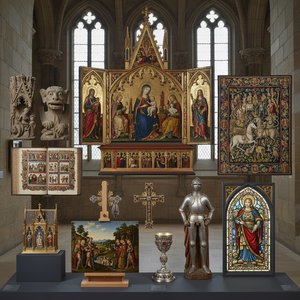
Late Medieval Masterpieces: 10 Artworks That Defined an Era | OriginalUniqueArt
Journey through 10 defining Late Medieval masterpieces – from Giotto's frescoes to Jan van Eyck’s realism. Explore the stories, techniques & vibrant colors of Gothic art. Find museum-quality reproductions and elevate your home decor with OriginalUniqueArt.com! Discover all masterpieces on OriginalUniqueArt.com
