

 Bekijk op ware grootte
 Verstuur
 Delen
Delen
 Details bekijken
 Gids voor studentenkunstwerken

 Download
 Vergelijkbare items
 Röntgenonderzoek
 Diavoorstelling
 Statistieken
Self Portrait with Palette
 Acrylic On Canvas
- WallArt
- Expressionist Painting
 1924
1924 100.0 x 79.0 cm
 Museum of Modern Art
 Lees meer
Giclée / Kunstafdrukken
Giclée- of canvasafdruk van museumkwaliteit met een snelle productie en flexibele afwerkingsmogelijkheden. ( Koop handgeschilderd kunstwerk Schakel over naar digitale afbeeldingen)




P118B €10

P118H €10

P118W €10

P438Z €10

P508JH €12

P508YH €12

P805H €10

P805Z €10

P919BZ €10

P919G €10

P919XJ €10

P959ZH €10

P968JZ €12

W106C €8

W218G €10

W218JH €8

W218Y €10

W307PJ €10

W316G €10

W316PJ €8

W316Y €10

W398PJ €8

W4111J €10

W500HY €15

W500JH €15

W692G €12

W849H €8

W940BG €15

W953PJ €8




Kies uit onze vooraf ingestelde maten die overeenkomen met de originele verhoudingen van het kunstwerk.

U kunt uw eigen afmetingen opgeven om in een specifieke lijst of ruimte te passen. Als de door u gekozen maat niet overeenkomt met de proporties van het originele kunstwerk, zullen wij de afbeelding bijsnijden of uitbreiden met een gespiegelde of effen rand. Een digitaal mockup wordt ter goedkeuring naar u verzonden voordat de productie begint.
Houd er rekening mee dat de preview op het scherm de werkelijke bijsneding of uitbreiding niet weergeeft. Alleen de mockup toont de uiteindelijke compositie nauwkeurig.
Hoewel aangepaste maten beschikbaar zijn, raden wij aan een afmeting uit de vooraf bepaalde lijst te kiezen om de originele proporties te behouden.
Wereldwijde levering () binnen 2 weken in plaats van de standaard 4/5 weken. (11 oktober)

Gratis wereldwijde expressverzending

Hoogwaardig linnen canvas

Volledige verzendverzekering

Garantie op terugbetaling van invoerrechten

Garantie op exacte kleurweergave

Retourbeleid van 100 dagen (alleen bij defecten)

100% Geld-terug-garantie

Korting bij meerdere afnames
 De optie voor glas is alleen beschikbaar bij een formaat kleiner dan 110 cm.

Self Portrait with Palette
Giclée / Kunstafdrukken
Formaat reproductie
-


Totaalprijs
€ 70
Lovis Corinth’s Self Portrait with Palette: A Window into Expressionist Soul
Lovis Corinth's "Self Portrait with Palette," completed in April 1924, stands as a cornerstone of Expressionism and a poignant reflection on the artist’s own inner landscape. Executed in oil on canvas measuring 39 3/8 x 31 5/8 inches (100 x 80.3 cm), this artwork resides within MoMA's impressive collection, offering visitors a captivating glimpse into Corinth’s artistic vision and personal struggles. The painting’s acquisition by Curt Valentin underscores its significance as a pivotal piece of the early 20th century canon.- Subject Matter & Composition: At first glance, the portrait depicts Corinth himself seated before a large canvas bearing an unfinished landscape scene – a deliberate juxtaposition that immediately establishes a dialogue between inner contemplation and artistic creation.
- Style & Technique: Corinth’s signature Expressionist style is evident in every brushstroke. Bold, impasto textures dominate the surface of both the self-portrait and the backdrop painting, conveying a palpable sense of urgency and emotional intensity. The muted color palette—primarily browns, ochres, and greens—further enhances the mood, prioritizing tonal variation over precise representation.
- Symbolism: The unfinished landscape serves as a visual metaphor for Corinth’s own creative endeavors – perpetually striving but never achieving complete fulfillment. The palette rests prominently in his lap, representing not only the tools of his craft but also the artist's intellectual and emotional engagement with his work.
- Emotional Impact: “Self Portrait with Palette” transcends mere visual depiction; it communicates a profound sense of melancholy and introspection. Corinth’s gaze conveys both sorrow and resolve, inviting viewers to contemplate the complexities of human experience and the enduring power of artistic expression.
Vragen & Antwoorden
Welke stemming straalt "Self Portrait with Palette" door Lovers Corinth uit binnen Expressionist Painting?
Binnen de Expressionist Painting-stroming is "Self Portrait with Palette" vastgelegd met een Reflective toon.
Wat stelt "Self Portrait with Palette" door Lovers Corinth voor?
"Self Portrait with Palette" door Lovers Corinth toont: self-portrait, palette, painting, dutch art, expressionism, artist reflection, symbolic imagery.
Op welke leeftijd maakte Lovers Corinth "Self Portrait with Palette"?
Toen "Self Portrait with Palette" werd gemaakt in 1924, was Lovers Corinth - geboren in 1858 - 66 jaar oud.
Welke kleur domineert de compositie van "Self Portrait with Palette" door Lovers Corinth?
De dominante kleur van "Self Portrait with Palette" door Lovers Corinth is Driftwood (#aa8f55).
Wie heeft "Self Portrait with Palette" gemaakt?
"Self Portrait with Palette" wordt toegeschreven aan Lovers Corinth.
Is "Self Portrait with Palette" een van de meest populaire werken van Lovers Corinth?
Het populariteitsniveau dat is vastgelegd voor "Self Portrait with Palette" door Lovers Corinth is Recognized.
In welk jaar werd "Self Portrait with Palette" door Lovers Corinth gemaakt?
"Self Portrait with Palette" dateert uit 1924. Deze datum plaatst het werk binnen de carrière van Lovers Corinth en de betreffende tijdperk.
Biografie van de kunstenaar
A Life Forged in Paint: The World of Lovis Corinth
Lovis Corinth, geboren Franz Heinrich Louis op 21 juli 1858 in de Pruisische provincie Oost-Pruisen, was een figuur die de tumultueuze overgang van de 19e naar het begin van de 20e eeuwse kunstwereld belichaamde. Zijn reis was geen van onmiddellijke erkenning, maar eerder een geleidelijke evolutie, gevoed door onvermoeid studie, diverse invloeden en uiteindelijk persoonlijke tragedie. Corinth’s vroegste jaren waren geworteld in de landelijke landschappen van zijn geboorteplaats, Tapiau, waar zijn vader als leerlooier werkte. Deze vroege blootstelling aan de fysieke arbeid en de ruwe schoonheid van de natuur zou subtiel doorschemeren in zijn latere werk, zelfs midden in meer verfijnde stijlinvloeden. Hij begon aanvankelijk zijn studie aan de Academie van Königsberg in 1876, maar realiseerde zich snel dat academische traditie alleen niet aan zijn artistieke ambities zou voldoen. Een periode van reizen volgde, die hem naar München, Antwerpen en uiteindelijk Parijs leidde – elk stadje als een cruciale tussenstap in zijn ontwikkeling. In München absorbeerde hij de nauwkeurige realisme gepromoot door Ludwig von Löfftz, waardoor zijn waarnemingsvaardigheden werden verfijnd en zijn techniek werd beheerst. Antwerpen introduceerde hem aan de dramatische Barok intensiteit van Rubens, terwijl Parijs hem blootstelde aan de opkomende Impressionistische beweging, hoewel zijn eerste reactie aanvankelijk een terughoudende observatie was in plaats van onmiddellijke omarming.From Naturalism to a Synthesis of Styles
Corinth’s artistieke ontwikkeling werd niet gekenmerkt door snelle revoluties, maar door een geleidelijke assimilatie en synthese van diverse invloeden. Zijn vroege werk leunde zwaar op naturalisme, weerspiegelend de heersende academische normen van die tijd. Schilderingen zoals “In the Slaughterhouse” (1878), met zijn onverbogen weergave van dierlijke kadavers, tonen dit toewijding aan representatie, toch verschijnen zelfs hier al een opkomende emotionele intensiteit. Het onderwerp zelf – gruwelijk en visceraal – hint naar een bereidheid om ongemakkelijke waarheden te confronteren, een kenmerk dat later in zijn werk steeds prominenter zou worden. Zijn tijd doorgebracht met het bestuderen van de oude meesters, met name Rubens, instilleddeed hem een liefde voor dynamische composities en expressieve penseelstreken. Echter, zijn blootstelling aan Impressionisme – aanvankelijk bekeken met scepsis – bleek uiteindelijk transformatief te zijn. Hij nam de gebroken kleur en vluchtige lichteffecten van Monet of Renoir niet simpelweg over; in plaats daarvan integreerde hij deze elementen in zijn eigen unieke visie, waardoor een stijl ontstond die impressionistische levendigheid met een Duits karakter combineerde. Deze synthese zou uiteindelijk hem positioneren als een brug tussen Impressionisme en Expressionisme, twee bewegingen die het artistieke landschap van het begin van de 20e eeuw bepaalden.A Master of Portraiture and Landscape
Hoewel Corinth verschillende genres door zijn carrière verkende – waaronder biblieke scènes en mythologische onderwerpen – is hij vooral herinnerd als een meester in portretten en landschappen. Zijn portretten waren niet alleen bedoeld om fysieke gelijkenis vast te leggen; het was een poging om de psychologische dieptes van zijn onderwerpen te doorbreken, hun innerlijke levens te onthullen door subtiele gebaren, expressieve ogen en zorgvuldig overwogen composities. Hij bezat een opmerkelijke vaardigheid om karakter en emotie met verbazingwekkende beknoptheid over te brengen. Vergelijkbaar hierbij waren zijn landschappen niet simpelweg weergaven van landschapsschilderingen, maar emotionele reacties op de natuur. De Walchensee-regio in het Beierse Alpengebergte werd een bijzonder bron van inspiratie, die hem een schat aan motieven opleverde die hij herhaaldelijk verkende in zijn latere jaren. Deze schilderijen worden gekenmerkt door hun levendige kleuren, dynamische penseelstreken en een gevoel van ruwe energie dat Corinth’s eigen passie voor de natuur weerspiegelt. Hij was niet geïnteresseerd in idyllische representaties; in plaats daarvan zocht hij om de ongeregelde kracht en inherente drama van het landschap vast te leggen.Tragedy, Resilience and Lasting Legacy
Een cruciale gebeurtenis in Corinth’s leven – en waarschijnlijk ook in zijn artistieke ontwikkeling – was een beroerte die hij in december 1911 leed. De verlamming die dit veroorzaakte aan de linkerzijde van zijn lichaam bedreigde zijn carrière in feite te beëindigen. Toezichmend met onwrikbare vastberadenheid en het steunende handje van zijn vrouw, Charlotte Berend-Corinth, leerde hij opnieuw schilderen, zich aanpassend aan zijn fysieke beperkingen en een nog expressievere stijl ontwikkelend. Deze periode markeerde een keerpunt in zijn werk, omdat zijn schilderijen steeds krachtiger, gestileerder en emotioneel geladen werden. Hij omarmde een losser penseel en intensere kleuren, anticiperend op de stijlinnovaties die de Expressionistische beweging zouden definiëren. Corinth’s invloed strekte zich uit verder dan zijn eigen schilderkunst; hij was ook een gerespecteerde leraar en schrijver over kunst, waarbij hij essays publiceerde zoals “On Learning to Paint” in 1908, die inzichten bood in zijn artistieke filosofie en techniek. Hij diende als president van de Berlijnse Secessie van 1915 tot aan zijn dood in 1925, progressieve kunstideeën promootend en een levendige creatieve gemeenschap bevorderend. Lovis Corinth’s nalatenschap ligt niet alleen in zijn opmerkelijke oeuvre, maar ook in zijn onwrikbare toewijding aan artistieke integriteit en zijn vermogen om persoonlijke tragedie te transformeren in diepgaande artistieke expressie. Hij blijft een sleutelfiguur in de geschiedenis van Duitse kunst, een meester die twee tijdperken verbond en een onuitwisbare stempel op generaties kunstenaars achterliet.
Lovers Corinth
1858 - 1925 , Nederland
Snelle feiten
- Artistic Movement Or Style: Impressionisme & Expressionisme
- Artists Or Movements Influenced By This Artist: ['Barbizon school']
- Artists Who Influenced This Artist:
- Courbet
- Rubens
- Date Of Birth: 21 juli 1858
- Full Name: Franz Heinrich Louis Corinth
- Nationality: Duits
- Notable Artworks:
- In de slagerij
- Zelfportret
- Place Of Birth: Tauwade, Nederland
Gerelateerde artikelen

Golden Light & Dutch Skies: The Timeless Magic of Dutch Golden Age Landscapes
Discover the breathtaking beauty of Dutch Golden Age landscapes. Explore the mastery of light, chiaroscuro, and 17th-century realism through an expert art history lens, celebrating the enduring legacy of the Dutch Masters for discerning collectors and art lovers.

The Enduring Legacy of Oil on Canvas: Technique, History & Aesthetic Impact
Explore the rich history & techniques of oil painting – from Renaissance masters to Impressionism. Discover pigments, layering methods, and why this timeless medium endures. Expert insights for artists & art enthusiasts.

Oil on Canvas: A Historical & Technical Exploration of a Timeless Artistic Medium
Explore the rich history & enduring techniques of oil painting on canvas. Discover the science behind its longevity, conservation practices, and contemporary relevance. Expert insights for art enthusiasts.

Lovis Corinth: Bridging Impressionism & Expressionism – A Study of Artistic Evolution
Explore the fascinating artistic journey of Lovis Corinth, a pivotal figure bridging Impressionism & Expressionism. Discover his evolution, key works, and lasting impact on modern art with OriginalUniqueArt.
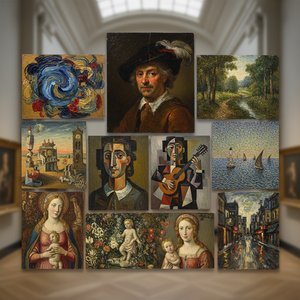
Top 10 Legendarische 'Olieverf op Paneel' Meesterwerken die de Kunst Veranderden | OriginalUniqueArt
Ontdek de 10 legendarische 'olieverf op paneel' meesterwerken die kunstgeschiedenis schreven! Van impressionisme tot abstractie, leer over beroemde kunstenaars en hun iconische werken. Vind museumkwaliteit reproducties & decoratie-inspiratie op OriginalUniqueArt.com.


