
 Voorvertoning
 Verstuur
 Delen
Delen
 Details bekijken
 Gids
Gids

 Download
 Vergelijkbare items
 Röntgenonderzoek
 Diavoorstelling
 Vraag & antwoord
 Statistieken
St Sebastian

- 55.0 x 49.0 cm


 Lees meer
Giclée / Kunstafdrukken
Giclée- of canvasafdruk van museumkwaliteit met een snelle productie en flexibele afwerkingsmogelijkheden. ( Bestel handgeschilderde reproductie Schakel over naar digitale afbeeldingen)




P118B €10

P118H €10

P118W €10

P438Z €10

P508JH €12

P508YH €12

P805H €10

P805Z €10

P919BZ €10

P919G €10

P919XJ €10

P959ZH €10

P968JZ €12

W106C €8

W218G €10

W218JH €8

W218Y €10

W307PJ €10

W316G €10

W316PJ €8

W316Y €10

W398PJ €8

W4111J €10

W500HY €15

W500JH €15

W692G €12

W849H €8

W940BG €15

W953PJ €8




Kies uit onze vooraf ingestelde maten die overeenkomen met de originele verhoudingen van het kunstwerk.

Voer de gewenste breedte en hoogte in, passend bij uw lijst of muur. Een afdruk kan alleen worden ingekort en nooit groter worden gemaakt dan het origineel; een formaat met andere verhoudingen zal daarom een deel van de afbeelding verliezen. Wij sturen u een digitaal mockup ter goedkeuring voordat we tot drukwerk overgaan. De afbeelding op deze pagina toont niet de werkelijke uitsnede — dit is alleen te zien op het mockup.
Wereldwijde levering () binnen 2 weken in plaats van de standaard 4/5 weken. (4 november)

Gratis wereldwijde expressverzending

Hoogwaardig linnen canvas

Volledige verzendverzekering

Garantie op terugbetaling van invoerrechten

Garantie op exacte kleurweergave

Retourbeleid van 100 dagen (alleen bij defecten)

100% Geld-terug-garantie

Korting bij meerdere afnames
 De optie voor glas is alleen beschikbaar bij een formaat kleiner dan 110 cm.

St Sebastian
Giclée / Kunstafdrukken
Afmetingen reproductie
-


Eindtotaal
€ 72
A Study in Suffering and Serenity: Lorenzo Costa’s St. Sebastian
Lorenzo Costa (the Elder)’s 1490 depiction of Saint Sebastian is not merely a religious painting; it's a profound meditation on martyrdom, endurance, and the quiet strength found within suffering. Housed within the hallowed halls of the Galleria degli Uffizi in Florence, this tempera-on-panel masterpiece transcends its historical context to resonate with viewers centuries later, offering a glimpse into the artistic sensibilities and spiritual concerns of the Northern Renaissance.
The painting immediately draws the eye to the central figure – Sebastian himself. He’s rendered not as a screaming victim, but with an almost serene acceptance of his fate. The arrows piercing his torso are not depicted in a violent or dramatic manner; instead, they are subtly integrated into his form, suggesting a slow, inevitable surrender rather than a sudden attack. This deliberate restraint is key to the painting's power – it transforms a scene of brutal death into one of dignified endurance. Notice the pale skin tone, meticulously rendered with layers of tempera, and the carefully observed bruises and marks; these aren’t signs of immediate agony but rather the lingering echoes of pain, testament to Costa’s commitment to realism.
The Northern Renaissance Aesthetic
Costa's style firmly places this work within the burgeoning Northern Renaissance tradition. Unlike the more flamboyant and idealized figures often found in Italian art of the period, Costa favors a grounded approach, prioritizing anatomical accuracy and naturalistic detail. The use of light and shadow is masterful – a chiaroscuro technique that creates a palpable sense of depth and volume, pulling the viewer into the scene. The dark background serves to isolate Sebastian, emphasizing his vulnerability yet simultaneously highlighting his inner fortitude. The minimalist clothing—a suggestion of draped fabric at the bottom—further directs attention to the figure’s physical state and emotional bearing.
Symbolism and Spiritual Resonance
Saint Sebastian's story is deeply rooted in Christian lore, a tale of youthful beauty, divine intervention, and ultimately, martyrdom. Originally a Roman soldier, he was commissioned by Diocletian to hunt down Christians but himself converted to the faith. He was then subjected to torture and ultimately shot with arrows before miraculously recovering from his wounds. The painting’s symbolism is layered: Sebastian represents Christ's suffering and sacrifice, offering a potent visual reminder of Christian ideals. The arrows themselves can be interpreted as symbols of temptation and persecution, while Sebastian’s acceptance embodies the triumph of faith over adversity.
A Legacy in Florence
Beyond its immediate aesthetic qualities, Costa’s St. Sebastian stands as a significant contribution to the artistic landscape of 15th-century Florence. It shares stylistic affinities with other prominent artists of the era, including Hans Memling and Benozzo Gozzoli, both masters of depicting religious subjects with remarkable realism and emotional depth. The painting's presence within the Uffizi Gallery underscores its enduring importance—a testament to Costa’s skill as a painter and his profound understanding of human experience. Further enriching our appreciation is the connection to other notable works from the same period, such as Giotto Di Bondone’s frescoes in the Collegiate Church of San Gimignano, offering a broader context for appreciating the artistic currents of the time.
Veelgestelde vragen
Wie is de kunstenaar achter "St Sebastian"?
"St Sebastian" is gemaakt door Lorenzo Costa (De Oudere). De informatie op deze pagina beschrijft het originele werk van Lorenzo Costa (De Oudere).
Hoe kan ik kunstwerken ontdekken die lijken op "St Sebastian" door Lorenzo Costa (De Oudere)?
Ontdek vergelijkbare werken voor "St Sebastian" op de Vergelijkbare werken-pagina van dit kunstwerk.
Hoe kan ik een print van "St Sebastian" door Lorenzo Costa (De Oudere) verkrijgen?
Om een print van "St Sebastian" door Lorenzo Costa (De Oudere) te bestellen, kunt u terecht op de Fine Art Print pagina: een fine art print op katoenen canvas of archiefwaardig canvaspapier.
Biografie kunstenaar
De Schilder van Mythe en Geloof: Het Leven van Lorenzo Costa
Lorenzo Costa (1460–1535) staat te boek als een hoeksteen binnen het bloeiende artistieke landschap van de Italiaanse Renaissance, waarbij hij de intellectuele dynamiek van de Ferrara- en Bolognese scholen belichaamt. Geboren in de levendige stad Ferrara, kwam Costa naar voren tijdens een periode waarin de grenzen tussen spirituele devotie en humanistische nieuwsgierigheid prachtig vervaagden. Zijn oeuvre wordt gekenmerkt door een bijzondere versmelting van stilistische elegantie en diepgaande contemplatie, een kwaliteit die hem in staat stelde om te navigeren tussen de complexe eisen van zowel religieuze instellingen als de meest verfijnde seculiere hoven van zijn tijd. Door zijn penseel ontmoette het etherische licht van het goddelijke de gestructureerde gratie van de klassieke mythologie, waardoor een visuele taal ontstond die diep resoneerde met de geest van de Renaissance.Vormende Jaren en de Meesterschap over het Licht
Hoewel de archieven over de vroegste jaren van Costa enigszins ongrijpbaar blijven, werd zijn artistieke DNA duidelijk gesmeed in de ateliers van Noord-Italië. Het is algemeen bekend dat hij een rigoureuze opleiding onderging onder de meester Francesco Francia in Bologna. Deze leertijd was transformatief en bracht hem een minutieuze aandacht voor detail en een vroege fascinatie voor de techniek van sfumato bij—de subtiele, rokerige overgang van tinten die door Leonardo da Vinci werd gepopulariseerd. Van Francia erfde Costa een diepgaand begrip van perspectief en het dramatische gebruik van chiaroscuro, wat hem in staat stelde om figuren uit de schaduw te boetseren en zijn composities te voorzien van een ongekende diepte en emotionele zwaarte. Deze technische basis stelde hem in staat om verder te gaan dan loutere representatie, om in plaats daarvan de eigenlijke atmosfeer rond zijn onderwerpen te vangen.De Pracht van het Mantaanse Hof
Het hoogtepunt van Costa’s carrière was onlosmakelijk verbonden met zijn prestigieuze benoeming tot hofschilder van Isabella d'Este, de markiezaat van Mantua. Als een van de meest formidabele en kritische mecenaat in de Europese geschiedenis, eiste Isabella d'Este kunst die fungeerde als zowel een esthetische triomf als een intellectuele puzzel. Onder haar waakzame oog evolueerde het werk van Costa om complexe mythologische allegorieën en humanistische idealen te omarmen. Zijn schilderijen werden veel meer dan religieuze iconen; het waren verfijnde narratieven, ontworpen voor een publiek van geleerden en aristocraten. Deze periode in zijn leven werd gekenmerkt door:- De integratie van klassieke Griekse en Romeinse mythen in de eigentijdse Italiaanse schilderkunst.
- Een verhoogde focus op symbolische betekenis, waarbij elke handeling en botanisch detail gewicht droeg.
- De verfijning van een zachte, atmosferische stijl die de delicate gratie kon overbrengen die vereist werd door de hofsmaak.
Nalatenschap en Historisch Belang
Naarmate de Renaissance vorderde, rimpelde de invloed van Costa door de artistieke gemeenschappen van Ferrara en Bologna, waarbij hij een onuitwisbare stempel drukte op de ontwikkeling van de Italiaanse school. Zijn vermogen om de robuuste, emotieve tradities van de Ferrarese meesters te harmoniseren met de meer lyrische, gepolijste stijl van de Bolognese schilders creëerde een unieke stilistische brug. Zelfs toen nieuwe stromingen opkwamen, bleef Costa’s toewijding aan de balans tussen schoonheid en vertelling een standaard voor zijn opvolgers. Vandaag de dag wordt hij niet louter herinnerd als een bekwame ambachtsman, maar als een visionair die de ziel van een tijdperk vastlegde—een kunstenaar die in staat was om de oude mythen even actueel en levendig te laten voelen als de heilige figuren van het christelijke geloof.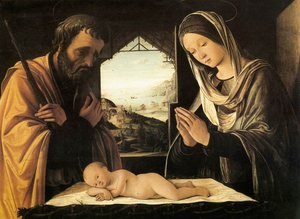
Lorenzo Costa (De Oudere)
1460 - 1535 , Italië
Belangrijkste feiten
- Artistic Movement Or Style: Ferrara & Bologna scholen
- Artists Who Influenced This Artist:
- Cosimo Tura
- Francesco Francia
- Date Of Birth: ca. 1460 Ferrara, Italië
- Date Of Death: 5 maart 1535
- Full Name: Lorenzo Costa il Vecchio
- Nationality: Italiaanse Renaissance
- Notable Artworks:
- Venus (detail)
- Hoog altaarstuk, Oratorium van S. Pietro in Vincoli
- Madonna en heiligen
- Place Of Birth: Ferrara
Gerelateerde artikelen

The Northern Renaissance: A Flourishing of Realism, Religious Reform & Artistic Innovation
Explore the Northern Renaissance! Discover Jan van Eyck's innovations, religious shifts, & key artists of this influential period. Expert analysis and insights into Early Netherlandish painting at OriginalUniqueArt.

El Greco's Top 25 Meesterwerken: Kunst, Geschiedenis & Decoratie voor Uw Huis
Ontdek de top 25 meesterwerken van El Greco! Duik in het leven en werk van deze renaissance schilder, zijn spirituele kunst & dramatische stijl. Vind museumkwaliteit reproducties voor uw interieur op OriginalUniqueArt.com.
Top 10 Meesterwerken van de Noordelijke Renaissance | Kunst & Decoratie
Ontdek de 10 meest invloedrijke meesterwerken van de Noordelijke Renaissance! Van Jan van Eyck tot Pieter Bruegel, leer over hun technieken & betekenis. Vind museumkwaliteit reproducties en inspiratie voor uw interieur op OriginalUniqueArt.com.
Mario Sironi: A Poetic of Modern Italian Identity Through Symbolism & Social Commentary
Explore the profound works of Mario Sironi, a key figure in Italian Modernism. Discover his evolution from Futurism to Metaphysical painting and his powerful social commentary. Learn about his legacy at OriginalUniqueArt.

Drama and Light: A Definitive Guide to the Italian Baroque Masterpieces and the Revolution of Chiaroscuro
Explore the dramatic world of Italian Baroque art. Discover how masters like Caravaggio used chiaroscuro and tenebrism to revolutionize painting through light, shadow, and profound realism. A definitive guide for history lovers and art collectors.
