Voorvertoning
 Verstuur
 Delen
Delen
 Details bekijken
 Gids
Gids

 Download
 Vergelijkbare items
 Röntgenonderzoek
 Diavoorstelling
 Q&A
Q&A Statistieken
Studies of crabs


 Lees meer
Giclée / Kunstafdrukken
Giclée- of canvasafdruk van museumkwaliteit met een snelle productie en flexibele afwerkingsmogelijkheden. ( Bestel handgeschilderde reproductie Schakel over naar digitale afbeeldingen)




P118B €10

P118H €10

P118W €10

P438Z €10

P508JH €12

P508YH €12

P805H €10

P805Z €10

P919BZ €10

P919G €10

P919XJ €10

P959ZH €10

P968JZ €12

W106C €8

W218G €10

W218JH €8

W218Y €10

W307PJ €10

W316G €10

W316PJ €8

W316Y €10

W398PJ €8

W4111J €10

W500HY €15

W500JH €15

W692G €12

W849H €8

W940BG €15

W953PJ €8




Kies uit onze vooraf ingestelde maten die overeenkomen met de originele verhoudingen van het kunstwerk.

Voer de gewenste breedte en hoogte in, passend bij uw lijst of muur. Een afdruk kan alleen worden ingekort en nooit groter worden gemaakt dan het origineel; een formaat met andere verhoudingen zal daarom een deel van de afbeelding verliezen. Wij sturen u een digitaal mockup ter goedkeuring voordat we tot drukwerk overgaan. De afbeelding op deze pagina toont niet de werkelijke uitsnede — dit is alleen te zien op het mockup.
Wereldwijde levering () binnen 2 weken in plaats van de standaard 4/5 weken. (3 november)

Gratis wereldwijde expressverzending

Hoogwaardig linnen canvas

Volledige verzendverzekering

Garantie op terugbetaling van invoerrechten

Garantie op exacte kleurweergave

Retourbeleid van 100 dagen (alleen bij defecten)

100% Geld-terug-garantie

Korting bij meerdere afnames
 De optie voor glas is alleen beschikbaar bij een formaat kleiner dan 110 cm.

Studies of crabs
Giclée / Kunstafdrukken
Afmetingen reproductie
-


Eindtotaal
€ 72
A Window into the Renaissance Mind
To gaze upon Leonardo da Vinci’s “Studies of Crabs” is to step directly into the workshop of a genius, witnessing the raw, unadulterated curiosity that defined the High Renaissance. Created around 1518 during his later years in Florence, this delicate graphite sketch transcends the boundaries of mere biological illustration. It serves as a profound testament to the humanist spirit—a period where the lines between art and science were not just blurred, but entirely inseparable. In these quiet strokes, we find the heartbeat of an era obsessed with decoding the hidden mechanics of the natural world.
The subject matter, while seemingly humble, reveals Da Vinci’s unparalleled commitment to anatomical precision. The drawing focuses intently on crustaceans, capturing two crabs in various stages of movement. One can almost sense the skittering energy of the creatures as they traverse the paper; one appears to be mid-stride, while another suggests a sudden, reflexive jump. Through his masterful use of sfumato—the subtle, smoky blending of tones—Leonardo breathes life into the hard carapaces and articulated limbs, creating an illusion of depth and organic vitality that remains breathtaking centuries later.
The Alchemy of Graphite and Observation
Technically, this work is a masterclass in the economy of line. Using graphite on paper, Da Vinci employs a delicate touch to render the intricate textures of the crabs' bodies. There is no grand narrative or sweeping landscape here; instead, the artist prioritizes the minute details of musculature and exoskeleton. This focus reflects the broader Renaissance fascination with scientific inquiry and dissection. For Leonardo, the study of a small sea creature was as vital to understanding the universe as the study of human anatomy or the flow of water.
The paper itself, bearing the soft patina of age, adds a layer of historical weight to the piece. The subtle shadows and light play across the textured surface, inviting the viewer to contemplate the passage of time. For the discerning collector or interior designer, this artwork offers a unique opportunity to introduce a sense of intellectual depth and quiet sophistication into a space. It is not merely a decoration; it is an invitation to slow down and appreciate the intricate beauty found in the smallest corners of existence.
Symbolism and Lasting Inspiration
Beyond its scientific merit, “Studies of Crabs” carries a subtle symbolic resonance. The crab, with its resilient shell and ability to navigate both land and sea, has long been associated with adaptability and strength—traits that mirror Leonardo’s own indomitable spirit. His ability to pivot between the roles of painter, engineer, and anatomist is reflected in the very way he approaches this subject: with the eye of a scientist and the soul of a poet.
Integrating a high-quality reproduction of this masterpiece into a curated collection or a modern interior can transform a room. It provides a focal point that sparks conversation, offering a sense of timelessness and scholarly elegance. Whether placed in a sunlit study or a contemporary gallery-style living space, Da Vinci’s sketches serve as a constant reminder of the beauty found in meticulous observation and the eternal power of human curiosity.
Veelgestelde vragen
Zijn de kleuren van "Studies of crabs" door Leonardo Da Vinci levendig of juist gedempt?
De kleuren van "Studies of crabs" door Leonardo Da Vinci vertonen een Balanced Soft verzadiging met een Vivid intensiteit.
Waar bevindt "Studies of crabs" door Leonardo Da Vinci zich binnen de kunstgeschiedenis?
De kunsthistorische classificatie van "Studies of crabs" door Leonardo Da Vinci is High Renaissance, uit de Renaissance-periode.
Kan ik "Studies of crabs" door Leonardo Da Vinci onder ander licht bekijken?
De Röntgenanalyse-pagina van "Studies of crabs" door Leonardo Da Vinci is een interactieve viewer waarmee u door elf optische lagen van het kunstwerk kunt glijden, inclusief een weergave in röntgenstijl.
Biografie kunstenaar
Het leven en de nalatenschap van Leonardo da Vinci.
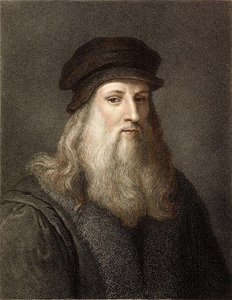
Leonardo di ser Piero da Vinci, geboren in 1452 nabij het Toscaanse dorpje Vinci, blijft ongetwijfeld de meest universeel erkende figuur uit de Renaissance—een ware polymath wiens onverzadigbare nieuwsgierigheid hem over vele disciplines dreef en een onuitwisbare stempel drukte op kunst, wetenschap en techniek. Zijn naam is synoniem geworden met genialiteit, een bewijs van zijn buitengewone breedte aan talent en visionair denkvermogen. Geboren buiten het huwelijk uit Piero da Vinci, een notaris, en Caterina, een boerin, was Leonardo’s vroege leven onconventioneel, maar bood hem tegelijkertijd toegang tot zowel de praktische wereld als een waardering voor de natuur die zijn artistieke visie diepgaand zou vormen. Hij ontving een basisopleiding in lezen, schrijven en rekenen, maar het was zijn leerperiode onder Andrea del Verrocchio in Florence die zijn creatieve vonk echt aanwakkerde. Binnen de werkplaats van Verrocchio leerde Leonardo niet enkel schilderen of beeldhouwen; hij werd ondergedompeld in een wereld van technische vaardigheid, waarbij hij meesterschap verwierf in metaalbewerking, houtbewerking, tekenkunst en de complexiteit van artistieke creatie—een fundament waarop hij zijn veelzijdige genie zou bouwen. Zelfs tijdens deze vormende periode gingen er geruchten rond over zijn uitzonderlijke talent, met verhalen die suggereerden dat Verrocchio zelf het schilderen neerlegde nadat hij getuige was geweest van Leonardo’s superieure bekwaamheid.
Milanese innovaties en artistieke bloei
In 1482 begon Leonardo aan een nieuw hoofdstuk toen hij in dienst trad bij Ludovico Sforza, de hertog van Milaan. Dit was niet louter een artistieke aanstelling; Leonardo fungeerde als militair ingenieur, architect, beeldhouwer en ontwerper voor het hof—een getuigenis van zijn diverse vaardigheden. Hij bedacht innovatieve fortificaties, ontwierp uitgebreide toneeldecors en schetste zelfs plannen voor fantastische machines. Het was echter tijdens deze periode dat hij begon aan een van zijn meest iconische meesterwerken: Het Laatste Avondmaal. Geschilderd als fresco in het refectorium van het klooster Santa Maria delle Grazie, overstijgt dit werk loutere representatie; het is een diepgaande verkenning van menselijke emotie en psychologisch drama, waarbij het exacte moment waarop Christus zijn verraad aankondigt, wordt vastgelegd. De compositie, innovatief voor zijn tijd, en het meesterlijke gebruik van perspectief zouden de westerse kunst eeuwenlang diepgaand beïnvloeden. Hoewel veel beeldhouwprojecten tijdens zijn Milanese periode onvoltooid bleven, bleef Leonardo's inventieve geest floreren, wat de basis legde voor toekomstige wetenschappelijke ontdekkingen.
De terugkeer naar Florence en het streven naar perfectie
Na de Franse invasie van Milaan in 1499 keerde Leonardo terug naar Florence, een stad die een hoogtepunt in artistieke ontwikkeling beleefde. Hoewel hij in deze tijd minder voltooide werken produceerde, was hun impact immens. Het was hier dat hij begon aan wat ongetwijfeld het beroemdste schilderij ter wereld zou worden: de Mona Lisa (La Gioconda). De raadselachtige glimlach en de hypnotiserende blik van het onderwerp hebben toeschouwers generaties lang gefascineerd, terwijl Leonardo’s revolutionaire sfumato-techniek—het subtiele verloop van licht en schaduw om vage contouren en atmosferisch perspectief te creëren—aanzienlijk bijdroeg aan de etherische kwaliteit van het schilderij. Deze periode zag ook de voortdurende verfijning van zijn anatomische studies, gedreven door een onwankelbaar verlangen om het menselijk lichaam met wetenschappelijke precisie te begrijrei. Hij ontleedde lijken en documenteerde nauwgezet spieren, botten en organen in een reeks ongelooflijk gedetailleerde tekeningen die eeuwen voor hun tijd waren.
Een nalatenschap voorbij de kunst: wetenschap, uitvinding en blijvende invloed
De latere jaren van Leonardo werden gekenmerkt door reizen tussen Florence, Milaan en Rome, waarbij hij altijd werd gezocht vanwege zijn expertise, maar vaak projecten onvoltooid achterliet—misschien een weerspiegeling van zijn rusteloze intellect en de enorme omvang van zijn interesses. In 1516 aanvaardde hij een uitnodiging van koning Frans I om te leven en werken in het Château du Clos Lucé nabij Amboise in Frankrijk, waar hij zijn laatste jaren doorbracht. Hij stierf daar in 1519 en liet een enorme nalatenschap na die veel verder reikt dan de wereld van de kunst. Zijn notitieboeken onthullen baanbrekend werk op het gebied van anatomie, optica, hydraulica, geologie en cartografie—en bevatten concepten voor uitvindingen die eeuwen voor hun tijd lagen, waaronder vliegmachines, tanks en geavanceerde wapens. De impact van Leonardo da Vinci op de kunstgeschiedenis is onmeetbaar. Hij verhief de status van kunstenaars van bekwame ambachtslieden naar intellectuele figuren, door aan te tonen dat artistieke creatie gevoed kon worden door wetenschappelijk onderzoek en een diep begrip van de natuurlijke wereld. Zijn schilderijen worden gevierd om hun realisme, psychologische diepgang en innovatieve technieken. Hij blijft een symbool van menselijke nieuwsgierigheid, creativiteit en het onvermoeibare streven naar kennis—een ware belichaming van de geest van de Renaissance, wiens nalatenschap eeuwen na zijn dood nog steeds ontzag en fascinatie oproept.
Belangrijkste prestaties & blijvende impact
- Schilderkunst: Mona Lisa, Het Laatste Avondmaal, Madonna van de Rotsen, Annunciatie
- Tekenen & Schetsen: Uitgebreide anatomische studies, Ingenieursontwerpen (vliegmachines, wapens), Botanische illustraties
- Wetenschap & Techniek: Baanbrekend werk in anatomie, optica, hydraulica, geologie en cartografie. Concepten voor uitvindingen die eeuwen voor hun tijd lagen.
Leonardo Da Vinci
1452 - 1519 , Italië
Belangrijkste feiten
- Artistic Movement Or Style: Hoge Renaissance
- Artists Or Movements Influenced By This Artist: ['Renaissance kunst']
- Artists Who Influenced This Artist: ['Andrea del Verrocchio']
- Date Of Birth: 15 april 1452
- Date Of Death: 2 mei 1519
- Full Name: Leonardo da Vinci
- Nationality: Italiaans
- Notable Artworks (List Of Titles):
- Mona Lisa
- Het Laatste Avondmaal
- Place Of Birth (City And Country): Vinci, Italië
Gerelateerde artikelen

10 Iconic Graphite Pencil Masterpieces That Redefined Art History
Journey through history with 10 legendary graphite pencil masterpieces. Explore the profound techniques and stories behind these iconic monochrome works. Find museum-quality art reproductions and curated decor inspiration at OriginalUniqueArt.com. Discover all masterpieces on OriginalUniqueArt.com.

Mastering Graphite: The Expert Guide to Achieving High-Impact Depth and Texture in Pencil Art
Elevate your sketches with our expert guide to mastering graphite. Learn professional techniques for creating high-impact depth, intricate textures, and bold contrast through the alchemy of carbon and light. Perfect for art students seeking technical mastery.
The Eloquent Line: Exploring the Artistic Significance of Sketches Across Movements and Media
Explore the profound artistic significance of sketches throughout history. From Renaissance masters to modern innovators like Van Gogh & Guston, discover how these foundational works reveal technique, emotion, and vision. Learn more at OriginalUniqueArt.

10 Iconic Graphite Pencil Masterpieces That Redefined Art History
Journey through history with 10 legendary graphite pencil masterpieces. Explore the profound techniques and stories behind these iconic monochrome works. Find museum-quality art reproductions and curated decor inspiration. Discover all masterpieces on OriginalUniqueArt.com.

The Alchemy of Graphite: An Expert Guide to Mastering Depth, Texture, and Detail in Pencil Sketching
Unlock the secrets of professional sketching with our expert guide to graphite pencil. Learn to master depth, texture, and light through advanced techniques like subtractive drawing and tonal layering. Perfect for art students seeking technical mastery and creative expression.