Bekijk op ware grootte
 Verstuur
 Delen
Delen
 Details bekijken
 Gids voor studentenkunstwerken

 Download
 Vergelijkbare items
 Röntgenonderzoek
 Diavoorstelling
 Statistieken
De Maagd van de Rotsen
 Olieverf op paneel
- Wanddecoratie
- Vroege Renaissance
 1486
1486- Vroege Middeleeuwen
 122.0 x 199.0 cm
 Louvre
 Lees meer
Giclée / Kunstafdrukken
Giclée- of canvasafdruk van museumkwaliteit met een snelle productie en flexibele afwerkingsmogelijkheden. ( Koop handgeschilderd kunstwerk Schakel over naar digitale afbeeldingen)




P118B €10

P118H €10

P118W €10

P438Z €10

P508JH €12

P508YH €12

P805H €10

P805Z €10

P919BZ €10

P919G €10

P919XJ €10

P959ZH €10

P968JZ €12

W106C €8

W218G €10

W218JH €8

W218Y €10

W307PJ €10

W316G €10

W316PJ €8

W316Y €10

W398PJ €8

W4111J €10

W500HY €15

W500JH €15

W692G €12

W849H €8

W940BG €15

W953PJ €8




Kies uit onze vooraf ingestelde maten die overeenkomen met de originele verhoudingen van het kunstwerk.

U kunt uw eigen afmetingen opgeven om in een specifieke lijst of ruimte te passen. Als de door u gekozen maat niet overeenkomt met de proporties van het originele kunstwerk, zullen wij de afbeelding bijsnijden of uitbreiden met een gespiegelde of effen rand. Een digitaal mockup wordt ter goedkeuring naar u verzonden voordat de productie begint.
Houd er rekening mee dat de preview op het scherm de werkelijke bijsneding of uitbreiding niet weergeeft. Alleen de mockup toont de uiteindelijke compositie nauwkeurig.
Hoewel aangepaste maten beschikbaar zijn, raden wij aan een afmeting uit de vooraf bepaalde lijst te kiezen om de originele proporties te behouden.
Wereldwijde levering () binnen 2 weken in plaats van de standaard 4/5 weken. (5 oktober)

Gratis wereldwijde expressverzending

Hoogwaardig linnen canvas

Volledige verzendverzekering

Garantie op terugbetaling van invoerrechten

Garantie op exacte kleurweergave

Retourbeleid van 100 dagen (alleen bij defecten)

100% Geld-terug-garantie

Korting bij meerdere afnames
 De optie voor glas is alleen beschikbaar bij een formaat kleiner dan 110 cm.

De Maagd van de Rotsen
Giclée / Kunstafdrukken
Formaat reproductie
-


Totaalprijs
€ 70
De Enigmatische Majesteit van Leonardo’s “Maagd van de Rotsen”
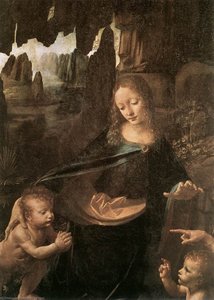
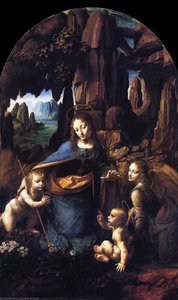
Leonardo da Vinci's "Maagd van de Rotsen," geschilderd in 1486, is niet louter een afbeelding van de Maagd Maria, Johannes de Doper en een engel; het is een diepgaande meditatie over geloof, onschuld en de essentie van goddelijke aanwezigheid. Dit ovale meesterwerk, dat momenteel de heilige zalen van het Louvre in Parijs siert, weet direct te betoveren met zijn etherische kwaliteit – een getuigenis van Leonardo's revolutionaire sfumato-techniek, die lijnen en randen subtiel doet vervagen, waardoor een atmosfeer van nevelige schoonheid en buitenaardse sereniteit ontstaat. Het ontstaan van het schilderij is gehuld in intrigerende speculatie; besteld voor de Kapel van de Onbevlekte Ontvangenis in Milaan, bestaat het als een van twee vrijwel identieke versies, die elk subtiele maar significante verschillen vertonen die tot op de dag van vandaag wetenschappelijk debat aanwakkeren. De vroegere versie, die in het Louvre wordt bewaard, behoudt een ongerestaureerde kwaliteit, wat een rauwe en directe verbinding biedt met Leonardo’s creatieve proces – een bewuste keuze die de kijker uitnodigt om de evolutie van het schilderij samen met de kunstenaar zelf te overdenken.
In het hart van de compositie bevindt zich Maria, die gracieus op de grond zit, haar hoofd naar de toeschouwer gekanteld in een gebaar van zachte contemplatie. Haar houding straalt een aura van stille waardigheid en moederlijke genade uit, terwijl het boek dat zij vasthoudt – vaak geïnterpreteerd als de Evangeliën – haar rol als belichaming van goddelijke wijsheid symboliseert. Aan haar rechterzijde staat Johannes de Doper, herkenbaar aan zijn karakteristieke kledij en de aanwezigheid van een lam aan zijn voeten, een krachtig symbool van onschuld en opoffering. De twee engelen die de scène flankeren, zijn evenzeer aangrijpend; de een knielt in eerbied, terwijl de ander zijn hand opheft, alsof hij naar een onzichtbaar rijk wijst – een visuele representatie van goddelijke leiding en openbaring. De dynamiek van de scène is subtiel gecontroleerd, waardoor een harmonieus evenwicht ontstaat tussen aardse aanwezigheid en spirituele aspiratie.
Een Symfonie van Licht en Schaduw: Leonardo’s Meesterlijke Techniek
Leonardo's genialiteit ligt niet alleen in zijn onderwerp, maar ook in zijn ongeëvenaarde beheersing van de techniek. “Maagd van de Rotsen” is een schoolvoorbeeld van zijn meesterschap in sfumato, een term afgeleid van het Italiaanse woord voor "rook". Deze delicate vervaging van contouren creëert een bijna droomachtige kwaliteit, waarbij scherpe randen worden verzacht en de figuren een aura van mysterie en diepte krijgen. Merk op hoe het licht Maria's gezicht en handen teder streelt, terwijl schaduwen subtiel het rotsachtige landschap achter hen definiëren. Het gebruik van chiaroscuro – het dramatische contrast tussen licht en donker – versterkt de driedimensionaliteit en de emotionele impact van het schilderij verder. De pigmenten zelf zijn minutieus aangebracht met olie op paneel, wat een buitengewoon niveau van detail en een rijk kleurenpalet mogelijk maakt. Voornamelijk aardetinten – oker, bruin en groen – worden gebruikt om een naturalistische setting te creëren die de goddelijke figuren verankert in een geloofwaardige, aardse wereld.
Bovendien zijn Leonardo’s anatomische studies duidelijk zichtbaar in de opmerkelijk levensechte weergave van de vleugels en handen van de engelen. Hij observeerde de natuur met uiterste precisie en vertaalde zijn waarnemingen naar een visuele taal die realisme naadloos laat versmelten met geïdealiseerde schoonheid. De subtiele gradaties in kleur en textuur – bereikt door talloze lagen dunne verf – zijn een kenmerk van Leonardo’s zorgvuldige benadering van kunst. De compositie van het schilderij zelf is zorgvuldig overwogen, waarbij de piramidale structuur wordt gebruikt om stabiliteit en harmonie te creëren, terwijl tegelijkertijd de blik van de kijker naar de centrale figuren wordt getrokken.
Symboliek en Spirituele Resonantie
Naast de technische briljantie resoneert “Maagd van en de Rotsen” met een diepe symbolische betekenis. Het rotsachtige landschap, dat doet denken aan een grot of een nis, roept ideeën op van bescherming, toevlucht en de verborgen rijken van het geloof. Het is een ruimte waar het goddelijke niet wordt onthuld door grootse aankondigingen, maar door stille contemplatie. De aanwezigheid van Johannes de Doper, vaak geassocieerd met doop en berouw, suggereert een reis naar spirituele zuivering. De engel die omhoog wijst, symboliseert hoop en streven – een herinnering dat de mensheid wordt opgeroepen om aardse beperkingen te overstijgen en verbinding te maken met iets dat groter is dan zijzelf.
Leonardo’s “Maagd van de Rotsen” overstijgt zijn religieuze onderwerp om een tijdloze meditatie te worden over schoonheid, geloof en de mysteries van het bestaan. Het is een schilderij dat uitnodigt tot herhaaldelijk kijken, waarbij bij elke ontmoeting nieuwe lagen van betekenis en emotionele diepgang worden onthuld. Een reproductie vangt veel van deze essentie en biedt een toegankelijke manier om Leonardo’s genie te waarderen en dit iconische meesterwerk in uw eigen huis of atelier te brengen.
“De Maagd van de Rotsen” in Huis Halen
OriginalUniqueArt biedt met zorg vervaardigde, handgeschilderde reproducties van "De Maagd van de Rotsen", zodat u de adembenemende schoonheid en diepe symboliek van het schilderij op tastbare wijze kunt ervaren. Onze reproducties worden gemaakt met materialen en technieken van archiefkwaliteit, waarbij Leonardo’s meesterlijke gebruik van sfumato, chiaroscuro en kleur getrouw wordt nagebootst. Beschikbaar in formaten variërend van 122 x 199 cm tot kleinere afmetingen, bieden onze reproducties een uitzonderlijke kans om een stukje kunstgeschiedenis te bezitten. Of u nu een gepassioneerd kunstverzamelaar bent, een interieurontwerper die uw ruimte wil verrijken met tijdloze elegantie, of simpelweg iemand die gegrepen is door Leonardo’s genialiteit, een OriginalUniqueArt-reproductie van “De Maagd van de Rotsen” is een kostbare toevoeging aan elke collectie.
Vragen & Antwoorden
Voor wie is "De Maagd van de Rotsen" door Leonardo Da Vinci een mooi cadeau?
"De Maagd van de Rotsen" door Leonardo Da Vinci wordt aanbevolen als cadeau voor Bruiloft, en met name voor Blikvanger. Een reproductie van het kunstwerk kan als geschenk worden gegeven.
Op welke leeftijd maakte Leonardo Da Vinci "De Maagd van de Rotsen"?
Toen "De Maagd van de Rotsen" werd gemaakt in 1486, was Leonardo Da Vinci - geboren in 1452 - 34 jaar oud.
In welke oriëntatie staat "De Maagd van de Rotsen" door Leonardo Da Vinci?
Het formaat van "De Maagd van de Rotsen" is Staand formaat. Dit is handig bij het plannen van de plek waar een reproductie zal worden geplaatst.
In welk jaar werd "De Maagd van de Rotsen" door Leonardo Da Vinci gemaakt?
"De Maagd van de Rotsen" dateert uit 1486. Deze datum plaatst het werk binnen de carrière van Leonardo Da Vinci en de betreffende tijdperk.
Wie is de kunstenaar achter "De Maagd van de Rotsen"?
"De Maagd van de Rotsen" wordt toegeschreven aan Leonardo Da Vinci.
Hoe kan ik een digitaal bestand van "De Maagd van de Rotsen" door Leonardo Da Vinci verkrijgen?
"De Maagd van de Rotsen" is verkrijgbaar als een download van een digitale afbeelding in hoge resolutie, direct te koop op deze pagina.
Wat stelt "De Maagd van de Rotsen" door Leonardo Da Vinci voor, en welke stemming straalt het uit?
"De Maagd van de Rotsen" door Leonardo Da Vinci verbeeldt maagd maria, johannes de doper, engelen, landschap, olie op paneel, renaissance, heilige scène in een Serene stemming. Het onderwerp en de atmosfeer beschrijven samen het werk.
Biografie van de kunstenaar
Het leven en de nalatenschap van Leonardo da Vinci.
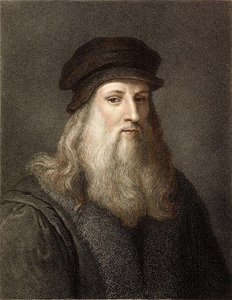
Leonardo di ser Piero da Vinci, geboren in 1452 nabij het Toscaanse dorpje Vinci, blijft ongetwijfeld de meest universeel erkende figuur uit de Renaissance—een ware polymath wiens onverzadigbare nieuwsgierigheid hem over vele disciplines dreef en een onuitwisbare stempel drukte op kunst, wetenschap en techniek. Zijn naam is synoniem geworden met genialiteit, een bewijs van zijn buitengewone breedte aan talent en visionair denkvermogen. Geboren buiten het huwelijk uit Piero da Vinci, een notaris, en Caterina, een boerin, was Leonardo’s vroege leven onconventioneel, maar bood hem tegelijkertijd toegang tot zowel de praktische wereld als een waardering voor de natuur die zijn artistieke visie diepgaand zou vormen. Hij ontving een basisopleiding in lezen, schrijven en rekenen, maar het was zijn leerperiode onder Andrea del Verrocchio in Florence die zijn creatieve vonk echt aanwakkerde. Binnen de werkplaats van Verrocchio leerde Leonardo niet enkel schilderen of beeldhouwen; hij werd ondergedompeld in een wereld van technische vaardigheid, waarbij hij meesterschap verwierf in metaalbewerking, houtbewerking, tekenkunst en de complexiteit van artistieke creatie—een fundament waarop hij zijn veelzijdige genie zou bouwen. Zelfs tijdens deze vormende periode gingen er geruchten rond over zijn uitzonderlijke talent, met verhalen die suggereerden dat Verrocchio zelf het schilderen neerlegde nadat hij getuige was geweest van Leonardo’s superieure bekwaamheid.
Milanese innovaties en artistieke bloei
In 1482 begon Leonardo aan een nieuw hoofdstuk toen hij in dienst trad bij Ludovico Sforza, de hertog van Milaan. Dit was niet louter een artistieke aanstelling; Leonardo fungeerde als militair ingenieur, architect, beeldhouwer en ontwerper voor het hof—een getuigenis van zijn diverse vaardigheden. Hij bedacht innovatieve fortificaties, ontwierp uitgebreide toneeldecors en schetste zelfs plannen voor fantastische machines. Het was echter tijdens deze periode dat hij begon aan een van zijn meest iconische meesterwerken: Het Laatste Avondmaal. Geschilderd als fresco in het refectorium van het klooster Santa Maria delle Grazie, overstijgt dit werk loutere representatie; het is een diepgaande verkenning van menselijke emotie en psychologisch drama, waarbij het exacte moment waarop Christus zijn verraad aankondigt, wordt vastgelegd. De compositie, innovatief voor zijn tijd, en het meesterlijke gebruik van perspectief zouden de westerse kunst eeuwenlang diepgaand beïnvloeden. Hoewel veel beeldhouwprojecten tijdens zijn Milanese periode onvoltooid bleven, bleef Leonardo's inventieve geest floreren, wat de basis legde voor toekomstige wetenschappelijke ontdekkingen.
De terugkeer naar Florence en het streven naar perfectie
Na de Franse invasie van Milaan in 1499 keerde Leonardo terug naar Florence, een stad die een hoogtepunt in artistieke ontwikkeling beleefde. Hoewel hij in deze tijd minder voltooide werken produceerde, was hun impact immens. Het was hier dat hij begon aan wat ongetwijfeld het beroemdste schilderij ter wereld zou worden: de Mona Lisa (La Gioconda). De raadselachtige glimlach en de hypnotiserende blik van het onderwerp hebben toeschouwers generaties lang gefascineerd, terwijl Leonardo’s revolutionaire sfumato-techniek—het subtiele verloop van licht en schaduw om vage contouren en atmosferisch perspectief te creëren—aanzienlijk bijdroeg aan de etherische kwaliteit van het schilderij. Deze periode zag ook de voortdurende verfijning van zijn anatomische studies, gedreven door een onwankelbaar verlangen om het menselijk lichaam met wetenschappelijke precisie te begrijrei. Hij ontleedde lijken en documenteerde nauwgezet spieren, botten en organen in een reeks ongelooflijk gedetailleerde tekeningen die eeuwen voor hun tijd waren.
Een nalatenschap voorbij de kunst: wetenschap, uitvinding en blijvende invloed
De latere jaren van Leonardo werden gekenmerkt door reizen tussen Florence, Milaan en Rome, waarbij hij altijd werd gezocht vanwege zijn expertise, maar vaak projecten onvoltooid achterliet—misschien een weerspiegeling van zijn rusteloze intellect en de enorme omvang van zijn interesses. In 1516 aanvaardde hij een uitnodiging van koning Frans I om te leven en werken in het Château du Clos Lucé nabij Amboise in Frankrijk, waar hij zijn laatste jaren doorbracht. Hij stierf daar in 1519 en liet een enorme nalatenschap na die veel verder reikt dan de wereld van de kunst. Zijn notitieboeken onthullen baanbrekend werk op het gebied van anatomie, optica, hydraulica, geologie en cartografie—en bevatten concepten voor uitvindingen die eeuwen voor hun tijd lagen, waaronder vliegmachines, tanks en geavanceerde wapens. De impact van Leonardo da Vinci op de kunstgeschiedenis is onmeetbaar. Hij verhief de status van kunstenaars van bekwame ambachtslieden naar intellectuele figuren, door aan te tonen dat artistieke creatie gevoed kon worden door wetenschappelijk onderzoek en een diep begrip van de natuurlijke wereld. Zijn schilderijen worden gevierd om hun realisme, psychologische diepgang en innovatieve technieken. Hij blijft een symbool van menselijke nieuwsgierigheid, creativiteit en het onvermoeibare streven naar kennis—een ware belichaming van de geest van de Renaissance, wiens nalatenschap eeuwen na zijn dood nog steeds ontzag en fascinatie oproept.
Belangrijkste prestaties & blijvende impact
- Schilderkunst: Mona Lisa, Het Laatste Avondmaal, Madonna van de Rotsen, Annunciatie
- Tekenen & Schetsen: Uitgebreide anatomische studies, Ingenieursontwerpen (vliegmachines, wapens), Botanische illustraties
- Wetenschap & Techniek: Baanbrekend werk in anatomie, optica, hydraulica, geologie en cartografie. Concepten voor uitvindingen die eeuwen voor hun tijd lagen.
Leonardo Da Vinci
1452 - 1519 , Italië
Snelle feiten
- Artistic Movement Or Style: Hoge Renaissance
- Artists Or Movements Influenced By This Artist: ['Renaissance kunst']
- Artists Who Influenced This Artist: ['Andrea del Verrocchio']
- Date Of Birth: 15 april 1452
- Date Of Death: 2 mei 1519
- Full Name: Leonardo da Vinci
- Nationality: Italiaans
- Notable Artworks (List Of Titles):
- Mona Lisa
- Het Laatste Avondmaal
- Place Of Birth (City And Country): Vinci, Italië
Gerelateerde artikelen
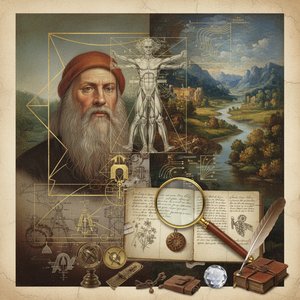
Leonardo da Vinci: A Renaissance Master’s Synthesis of Art, Science & Human Observation – Reinterpreted for the Collector
Explore Leonardo da Vinci’s timeless masterpieces with OriginalUniqueArt. Discover insights into his art, science, and legacy – trusted expertise for discerning collectors seeking authentic reproductions & investment opportunities.
Renaissance Humanisme: 10 Meesterwerken die een Tijdperk Definieerden | OriginalUniqueArt
Ontdek de 10 meest iconische Renaissance meesterwerken die Humanisme definieerden! Leer over Leonardo da Vinci, Michelangelo & Rafaël. Museumkwaliteit kunst reproducties voor uw interieur op OriginalUniqueArt.com. Exploreer de collectie online!
Leonardo da Vinci's Top 25 Meesterwerken: Kunst voor uw Interieur | OriginalUniqueArt
Ontdek de 25 meest iconische meesterwerken van Leonardo da Vinci! Van de Mona Lisa tot De Laatste Avondmaal, leer over zijn techniek & geschiedenis. Museumkwaliteit kunstprints voor uw interieur op OriginalUniqueArt.com
Top 25 Louvre Meesterwerken: Kunstgeschiedenis voor aan de Muur | OriginalUniqueArt
Ontdek de top 25 meesterwerken van het Louvre, Parijs! Van de Mona Lisa tot Delacroix' Vrijheid. Leer over kunstgeschiedenis & koop museumkwaliteit reproducties voor uw interieur op OriginalUniqueArt.com.
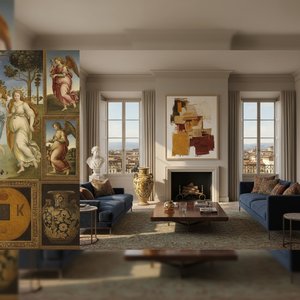
Top 25 Meesterwerken: Een Reis door de Galleria degli Uffizi, Florence | OriginalUniqueArt
Ontdek de top 25 meesterwerken van de Galleria degli Uffizi, Florence! Reis door de Renaissance met Botticelli, Leonardo da Vinci & Michelangelo. Kunst reproducties van museumkwaliteit voor uw interieur. Explore the full collection on OriginalUniqueArt.com.