1902
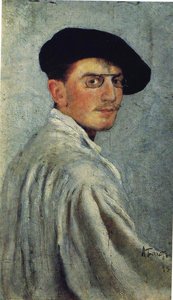
supper (Léon Bakst, 1902)
Léon Bakst (1866–1924) maakte supper. Het dateert uit 1902.
- 1902

 Voorvertoning

 Met de hand geschilderd olieverfwerk
 Verstuur
 Delen
 Informatieblad


 Download
 Vergelijkbare items
 Röntgenonderzoek
 Diavoorstelling
 Vraag & antwoord

 Statistieken
supper, in het kort
- Titel
- supper
- Kunstenaar
- Léon Bakst (1866–1924)
- Geboren in [jaar]
- Hrodna, Wit-Rusland
- Datum
- 1902
- Onderwerp
- food, meal
Hoogwaardige afbeeldingen van supper
Publiek domein: de kunstenaar is overleden in 1924.
Léon Bakst, supper (1902). Publiek domein
Vragen over supper, beantwoord
In welk jaar werd "supper" door Léon Bakst gemaakt?
"supper" door Léon Bakst werd gemaakt in 1902.
Wat stelt "supper" door Léon Bakst voor?
"supper" door Léon Bakst toont: food, meal.
Is de afbeelding van "supper" door Léon Bakst vrij van auteursrecht?
"supper" door Léon Bakst valt onder bevindt zich in het publiek domein - de auteursrechten zijn verlopen. Deze status bepaalt hoe de afbeelding van het werk mag worden gereproduceerd.
Wie heeft "supper" gemaakt?
"supper" wordt toegeschreven aan Léon Bakst.
Hoe oud was Léon Bakst toen "supper" werd gemaakt?
Léon Bakst maakte "supper" op 36-jarige leeftijd. De kunstenaar werd geboren in 1866 en het werk dateert uit 1902.
Waarom heeft het kunstwerk "supper" deze auteursrechtelijke status?
De auteursrechtstatus van "supper" - bevindt zich in het publiek domein - de auteursrechten zijn verlopen - is gebaseerd op het overlijden van de kunstenaar in 1924.
Over de kunstenaar, Léon Bakst
1866–1924, Wit-Rusland
Léon Bakst
Early Life and the Seeds of Artistic Rebellion Léon Bakst, a name synonymous with the dazzling spectacle of Sergei Diaghilev’s Ballets Russes, began his life far from the glittering world of Parisian stages. Born Leyb-Khaim Izrailevich Rosenberg in 1866 within the confines of Grodno—a city then part of the Russian Empire and now located in modern-day Belarus—his early years were shaped by the constraints of Jewish identity and the societal prejudices prevalent at the time. His family, though comfortably middle class and possessing connections to the imperial court through his grandfather’s role as a celebrated tailor, nonetheless faced the realities of living within the “pale of settlement,” a designated area for Jews in Russia. This environment instilled in young Leyb a keen awareness of cultural nuances alongside an early, undeniable passion for drawing—a talent so evident that he won a contest at just twelve years old.
 Ontwerp met bloemen in raster
 Operatic costume designs1911
 Costume design for the ballet ''Cleopatra''1909
 Drawing young divinity Narcisse costume, ballet Diaghilev1911