

 Voorvertoning
 Verstuur
 Delen
Delen
 Details bekijken
 Gids
Gids

 Download
 Vergelijkbare items
 Röntgenonderzoek
 Diavoorstelling
 Q&A
Q&A Statistieken
The Cripples
 Acrylic On Canvas
- WallArt
- Northern Renaissance
 101.0 x 76.0 cm
 The Lowry
 Lees meer
De kunstwerken die op deze pagina worden weergegeven, zijn beschermd door de auteursrechtwetgeving, wat betekent dat het ons wettelijk niet is toegestaan om identieke reproducties te maken of te verkopen. Deze bescherming wordt gehandhaafd onder internationale overeenkomsten zoals de Conventie van Bern en door nationale wetgeving, waaronder de bepalingen van de Amerikaanse auteurswet - Titel 17. Alle rechten voorbehouden. Reproduceren of distribueren van afbeeldingen is niet toegestaan zonder uitdrukkelijke schriftelijke toestemming van WahooArt.com en de rechthebbenden.
Als een respectvol en legaal alternatief bieden wij op maat gemaakte, handgeschilderde kunstwerken aan die geïnspireerd zijn op het origineel. Onze bekwame en professionele kunstenaars bestuderen zorgvuldig de stijl, sfeer en artistieke essentie van het origineel om een nieuw, uniek werk te creëren dat dezelfde emotie oproept – terwijl het een op zichzelf staande, originele creatie blijft.
Deze methode voldoet volledig aan de auteursrechtwetgeving, omdat het niet gaat om het kopiëren of dupliceren van het beschermde kunstwerk. In plaats daarvan is er sprake van een creatieve herinterpretatie — een nieuw schilderij dat door het origineel wordt geïnspireerd, maar er niet identiek aan is.
Handgemaakte olieverfreproductie
Met de hand geschilderd in olieverf op canvas in uw gewenste maat en lijst, op bestelling gemaakt door onze kunstenaars. ( Schakel over naar print Schakel over naar digitale afbeeldingen)




P118B €10

P118H €10

P118W €10

P438Z €10

P508JH €12

P508YH €12

P805H €10

P805Z €10

P919BZ €10

P919G €10

P919XJ €10

P959ZH €10

P968JZ €12

W106C €8

W218G €10

W218JH €8

W218Y €10

W307PJ €10

W316G €10

W316PJ €8

W316Y €10

W398PJ €8

W4111J €10

W500HY €15

W500JH €15

W692G €12

W849H €8

W940BG €15

W953PJ €8




Kies uit onze vooraf ingestelde maten die overeenkomen met de originele verhoudingen van het kunstwerk.

Voer de breedte en hoogte in die u nodig heeft, passend bij uw lijst of uw muur. Omdat dit handgeschilderd is, kan de kunstenaar bij een afmeting met een andere beeldverhouding iets meer rondom het schilderij schilderen of juist iets meer weglaten — u kiest zelf. Wij sturen u een digitaal mockup ter goedkeuring voordat het schilderwerk begint. De afbeelding die op deze pagina wordt getoond, is niet het uiteindelijke resultaat — alleen de mockup geeft dit weer.
Na de bestelling zal het team van OriginalUniqueArt.com per e-mail contact opnemen met de klant voor instructies en een mockup-voorbeeld sturen.
Wereldwijde levering () binnen 3 tot 4 weken in plaats van de standaard 5 weken. (28 oktober). Zonder concessies aan de kwaliteit.

Gratis wereldwijde expressverzending

Hoogwaardig linnen canvas

Volledige verzendverzekering

Garantie op terugbetaling van invoerrechten

Garantie op exacte kleurweergave

Retourbeleid van 100 dagen (alleen bij defecten)

100% Geld-terug-garantie

Korting bij meerdere afnames
 De optie voor glas is alleen beschikbaar bij een formaat kleiner dan 110 cm.

The Cripples
Druktechniek
Afmetingen reproductie
-


Eindtotaal
€ 793
Laurence Stephen Lowry’s “The Cripples”: A Study in Urban Isolation
Laurence Stephen Lowry's "The Cripples," painted in 1949, isn’t merely a depiction of Manchester street life; it’s a poignant and unsettling meditation on anonymity, social exclusion, and the quiet dignity of those often overlooked. This iconic work, now housed within the collection of The Lowry in Salford, offers a rare glimpse into the artist's unique perspective – one that eschewed sentimentality for a starkly observed reality, revealing a profound sensitivity to the human condition amidst the relentless march of industrial progress. Lowry’s decision to avoid explicit emotional expression is key to understanding the painting’s enduring power; instead, he invites viewers to contemplate the lives and experiences of his subjects through their very absence of overt feeling.
The scene unfolds within a densely populated urban square, rendered in Lowry's signature monochrome palette – a deliberate choice that strips away any potential distraction, forcing the viewer to confront the figures with unflinching honesty. A multitude of pedestrians, predominantly men, populate the frame, their faces largely obscured and their movements seemingly aimless. They are not individuals engaged in conversation or activity; rather, they exist as anonymous components within a larger, impersonal landscape. The composition itself is deliberately chaotic, mirroring the perceived disorder of urban life – figures overlap, merge into one another, and recede into the distance, creating a sense of overwhelming density and isolation. The buildings lining the street are simplified architectural forms, serving primarily to establish a spatial context rather than offering any detailed representation.
A Study in Form and Technique
Lowry’s technique is instantly recognizable: a direct, almost childlike approach characterized by loose brushstrokes and a deliberate avoidance of meticulous detail. The figures are rendered with simplified geometric shapes – cylinders for limbs, rectangles for bodies – creating an effect that is both immediate and slightly unsettling. The lines delineating the forms are often imprecise, contributing to their anonymity and reinforcing the painting’s overall sense of detachment. Notably, Lowry employed a medium likely consisting of graphite or charcoal on paper, lending the work a subtle textural quality—a delicate balance between precision and spontaneity. The lack of blending or layering suggests an immediate, intuitive approach, as if Lowry were capturing fleeting impressions rather than constructing a carefully planned composition.
Symbolism and Historical Context
The title itself, “The Cripples,” immediately introduces a layer of complexity. While the painting depicts individuals with physical disabilities – a woman leaning heavily on a cane, a man with a limp – it’s crucial to understand that Lowry wasn't simply portraying charity cases or victims of misfortune. He was drawing inspiration from his own observations of Manchester’s streets and its inhabitants, many of whom were struggling with poverty, illness, and the social consequences of rapid industrialization. The figures are not presented as objects of pity; rather, they are integrated into the fabric of everyday life, existing alongside their able-bodied counterparts without receiving any particular attention or consideration. The presence of carnival headgear – a cardboard crown, a paper shako, a beret – adds another layer of symbolic meaning, suggesting that these individuals represent various social classes and roles within the community.
A Legacy of Observation
Further research reveals intriguing connections to Lowry’s own life and artistic sensibilities. The debate surrounding his potential Asperger's syndrome offers a compelling lens through which to interpret "The Cripples." His meticulous observation of detail, coupled with a seeming indifference to conventional notions of beauty or emotional expression, aligns remarkably well with the characteristics associated with this neurodevelopmental condition. Moreover, Lowry’s work reflects a broader trend in British art during the mid-20th century – a shift away from idealized representations and towards a more realistic, often unflinching portrayal of social realities. "The Cripples" stands as a testament to Lowry's unique vision, inviting viewers to contemplate the complexities of urban life and the enduring power of observation.
Veelgestelde vragen
In welke stroming en in welk tijdperk kan "The Cripples" door Laurence Stephen Lowry worden geplaatst?
"The Cripples" behoort tot de Northern Renaissance-stroming en de maker ervan was werkzaam in het Moderne tijd-tijdperk.
Welke emotie straalt het Northern Renaissance-werk "The Cripples" uit?
De Somber emotie van "The Cripples" gaat samen met de Northern Renaissance stijl.
Hoe brengt "The Cripples" licht en donker in evenwicht?
De vastgestelde waarden voor "The Cripples" door Laurence Stephen Lowry zijn: brilliant helderheid en Luminous luminantie.
Biografie kunstenaar
De Stille Observator van het Industriële Engeland
Laurence Stephen Lowry, geboren in het hart van Stretford, Cheshire, in 1887, blijft een van de meest geliefde en kenmerkende stemmen in de twintigste-eeuwse Britse kunst. Hoewel zijn naam tegenwoordig synoniem staat met de rauwe, evocatieve landschappen van Noord-Engeland, was zijn weg naar internationale lof een traag en ontroerend proces. Gedurende een groot deel van zijn leven leefde Lowry als een stille observator; overdag werkte hij als huurincassator, terwijl hij 's avonds zijn kunst verfijnde. Dit dubbelbestaan stelde hem in staat om de ritmische, vaak harde hartslag van het industriële leven met een unieke intimiteit te getuigen. Zijn werk representeert niet enkel de rookgevulde horizonnen van Salford en Pendlebury; het vangt een diepe gevoeligheid voor de menselijke conditie en vindt een stille waardigheid binnen de rauwe realiteit van het industriële tijdperk.
De artistieke ontwikkeling van Lowry was diep geworteld in zijn omgeving, maar zijn technische fundamenten werden gebouwd op een zorgvuldige studie van vorm en licht. Aanvankelijk beïnvloed door de principes van het impressionisme en postimpressionisme, zocht hij naar de essentie van een scène in plaats van enkel het oppervlak. Zijn vroege opleiding aan de Manchester Art School bood hem de middelen om de uitgestrekte fabrieken en drukke straten te vertalen naar iets dat veel symbolischer was. Naarmate zijn stijl volwassen werd, bewoog hij zich weg van grote narratieven en koos hij in plaats daarvan voor de subtiele nuances van observatie. Hij werkte vaak binnen een zeer beperkt palet—met kleuren zoals krijtwit, ivoorzwart, vermiljoen, Pruisisch blauw en okergeel—om composities te creatsen die zowel geworteld voelden in de realiteit als verheven werden door een droomachtige, bijna surrealistische kwaliteit.
De Magie van de Matchstick Men
Misschien wel zijn meest blijvende nalatenschap is de creatie van de zogenaamde "matchstick men." Deze gestileerde, vereenvoudigde menselijke figuren, vaak afgebeeld zonder schaduwen of duidelijke gelaatstrekken, bevolken zijn stedelijke landschappen met een gevoel van collectieve beweging en een gedeeld lot. Door middel van deze figuren transformeerde Lowry bruisende straatscènes tot poëtische meditaties over gemeenschap en eenzaamheid. Of ze nu onderweg zijn naar een voetbalwedstrijd, samenkomen bij een fabriek of dwalen door een park, deze personages belichamen de veerkracht van de arbeidersklasse. Er schuilt een aangrijpende schoonheid in de manier waarop hij deze kleine, kwetsbare vormen plaatst tegen de achtergrond van massieve, dreigende industriële structuren, waardoor een spanning ontstaat tussen de monumentale schaal van de industrie en de delicate aard van het menselijk leven.
Naast zijn beroemde stedelijke scènes was het repertoire van Lowry verrassend divers, wat getuigt van een kunstenaar met grote diepgang en nieuwsgierigheid. Hoewel het industriële landschap zijn meest gevierde onderwerp is, verkende hij ook:
- Mysterieus onbewoonde landschappen: Dreigende, atmosferische scènes die een gevoel van eenzaamheid en de vergankelijkheid van de tijd oproepen.
- Zeegezichten: Zuivere, elementaire weergaven van zee en lucht die voortkwamen uit zijn fascinatie voor de kust in de jaren 1940.
- Portretten: Intieme, vaak sombere studies van individuen die zijn vermogen tonen om karakter vast te leggen met minimale details.
- De "Marionette"-werken: Een collectie ongepubliceerde, surrealistisch georiënteerde werken die pas na zijn dood werden ontdekt, wat een meer experimentele kant van zijn verbeelding onthulde.
Een Blijvende Nalatenschap in de Britse Kunst
Hoewel hij aanzienlijke nationale roem verwierf na zijn eerste solotentoonstelling in Londen in 1939, wordt de ware impact van Lowry gevoeld in de manier waarop hij het Engelse landschap heeft hergedefinieerd. Hij probeerde de vooruitgang niet te verheerlijken of heroïsche panorama's te schilderen; in plaats daarvan vond hij schoonheid in het alledaagse en het melancholische. Zijn vermogen om ontroerende schoonheid te vinden in de roetvlekkerige straten van het Noordwesten heeft zijn werk tot een hoeksteen van de Britse culturele identiteit gemaakt. Vandaag de dag fungeren instellingen zoals The Lowry in Salford Quays als vitale bewakers van zijn immense nalatenschap, met een van de grootste publieke collecties van zijn werk.
De betekenis van Lowry ligt in zijn weigering om weg te kijken van de moeilijke realiteiten van zijn tijdperk. Door het leven van gewone mensen met zoveel empathie en stilistische innovatie te documenteren, zorgde hij ervoor dat de geest van het industriële Engeland niet alleen als geschiedenis, maar als kunst zou worden bewaard. Hij blijft een meester van de atmosfeer, een kunstenaar die bewees dat zelfs in de meest drukke, industriële omgevingen een diepe, stille magie te vinden is.

Laurence Stephen Lowry
1887 - 1976 , Verenigd Koninkrijk
Belangrijkste feiten
- Artistic Movement Or Style: Industriële schilderkunst
- Artists Or Movements Influenced By This Artist: ['Noord-Engelse kunst']
- Artists Who Influenced This Artist: ['Impressionisme']
- Date Of Birth: Stretford, Verenigd Koninkrijk (1887)
- Date Of Death: 1976
- Full Name: Laurence Stephen Lowry
- Nationality: Brits
- Notable Artworks:
- An Old Street
- Swinton Moss
- Untitled (447)
- Place Of Birth: Stretford, VK
Gerelateerde artikelen
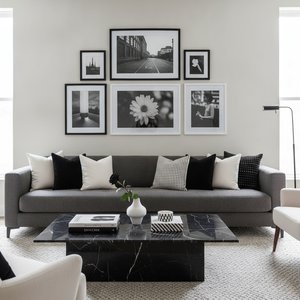
Timeless & Chic: Elevating Your New Home with the Sophistication of Black and White Photography
Transform your new home with the timeless allure of black and white photography. OriginalUniqueArt.com specializes in elegant monochrome decor and custom hand-painted wedding portraits that turn cherished milestones into lasting, soulful masterpieces. Elevate your space with ease.

Shadow & Soul: Why Black & White Photography Remains the Ultimate Power Move in Modern Art
Discover why black & white photography remains a powerful force in contemporary art. Explore the impact of light, shadow, and texture through a visual journey of monochrome mastery and learn how to elevate your space with timeless grayscale aesthetics.

Monochrome Visions: Exploring the Aesthetic & Historical Significance of Black & White Photography
Explore the rich history & artistic power of black and white photography. From early techniques to iconic masters like Ansel Adams, discover why monochrome continues to captivate art lovers today. Expert insights for collectors.

Meesterwerken in Zwart: Top 10 Schilderijen Gedreven door Donkere Tinten | OriginalUniqueArt.nl
Ontdek de kracht van donker! Verlies jezelf in onze top 10 zwarte schilderijen, van Caravaggio tot Manet. Leer over meesterwerken, technieken & emotie. Museumkwaliteit reproducties op OriginalUniqueArt.com – Kunst voor uw interieur.

Top 10 Witte Meesterwerken: Kunstgeschiedenis & Interieurinspiratie
Ontdek de top 10 witte meesterwerken uit de kunstgeschiedenis! Van Monet tot Mondriaan, bewonder abstracte vormen & serene kleuren. Vind museumkwaliteit reproducties en interieurinspiratie op OriginalUniqueArt.com.