

 Bekijk op ware grootte
 Verstuur
 Delen
Delen
 Details bekijken
 Gids voor studentenkunstwerken

 Download
 Vergelijkbare items
 Röntgenonderzoek
 Diavoorstelling
 Statistieken
The Red Army parade
 Oil On Canvas
- WallArt
- Socialist Realism
 1923
1923- Modern
 89.0 x 111.0 cm
 Lees meer
De kunstwerken die op deze pagina worden weergegeven, zijn beschermd door de auteursrechtwetgeving, wat betekent dat het ons wettelijk niet is toegestaan om identieke reproducties te maken of te verkopen. Deze bescherming wordt gehandhaafd onder internationale overeenkomsten zoals de Conventie van Bern en door nationale wetgeving, waaronder de bepalingen van de Amerikaanse auteurswet - Titel 17. Alle rechten voorbehouden. Reproduceren of distribueren van afbeeldingen is niet toegestaan zonder uitdrukkelijke schriftelijke toestemming van WahooArt.com en de rechthebbenden.
Deze methode voldoet volledig aan de auteursrechtwetgeving, omdat het niet gaat om het kopiëren of dupliceren van het beschermde kunstwerk. In plaats daarvan is er sprake van een creatieve herinterpretatie — een nieuw schilderij dat door het origineel wordt geïnspireerd, maar er niet identiek aan is.
Giclée / Kunstafdrukken
Giclée- of canvasafdruk van museumkwaliteit met een snelle productie en flexibele afwerkingsmogelijkheden. ( Koop handgeschilderd kunstwerk Schakel over naar digitale afbeeldingen)




P118B €10

P118H €10

P118W €10

P438Z €10

P508JH €12

P508YH €12

P805H €10

P805Z €10

P919BZ €10

P919G €10

P919XJ €10

P959ZH €10

P968JZ €12

W106C €8

W218G €10

W218JH €8

W218Y €10

W307PJ €10

W316G €10

W316PJ €8

W316Y €10

W398PJ €8

W4111J €10

W500HY €15

W500JH €15

W692G €12

W849H €8

W940BG €15

W953PJ €8




Kies uit onze vooraf ingestelde maten die overeenkomen met de originele verhoudingen van het kunstwerk.

Voer de breedte en de hoogte in die u nodig heeft, passend bij uw lijst of uw muur. Een afdruk kan alleen worden ingekort, nooit groter worden gemaakt dan het origineel, waardoor een formaat met een andere verhouding een deel van de afbeelding verliest. Wij sturen u een digitaal mockup ter goedkeuring voordat we iets drukken. De afbeelding op deze pagina toont niet de werkelijke uitsnede — dit is alleen te zien op het mockup.
Wereldwijde levering () binnen 2 weken in plaats van de standaard 4/5 weken. (24 oktober)

Gratis wereldwijde expressverzending

Hoogwaardig linnen canvas

Volledige verzendverzekering

Garantie op terugbetaling van invoerrechten

Garantie op exacte kleurweergave

Retourbeleid van 100 dagen (alleen bij defecten)

100% Geld-terug-garantie

Korting bij meerdere afnames
 De optie voor glas is alleen beschikbaar bij een formaat kleiner dan 110 cm.

The Red Army parade
Giclée / Kunstafdrukken
Formaat reproductie
-


Totaalprijs
€ 71
The Red Army Parade: A Symbol of Soviet Triumph
Konstantin Yuon's "The Red Army Parade" is a powerful example of Socialist Realism, capturing the spirit of national pride and unity in post-war Soviet Russia. Created in 1923, this oil on canvas painting (89 x 111 cm) depicts a scene of immense scale and order as soldiers march through Moscow. It's more than just a depiction of an event; it’s a visual embodiment of the ideals of the new Soviet state.
Artist and Style: Konstantin Yuon and Socialist Realism
Konstantin Yuon (1875-1958) was a significant figure in Russian art, known for his evolution from Impressionist landscapes to embracing the tenets of Socialist Realism. He co-founded both the Union of Russian Artists and the Association of Artists of Revolutionary Russia, demonstrating his commitment to artistic innovation and social engagement. Socialist Realism itself emerged as the dominant style in Soviet art during the 1920s and 30s. It aimed to depict socialist life in a positive light, emphasizing collective effort, heroism, and optimism. Yuon's use of bold colors, dramatic lighting, and monumental compositions perfectly aligns with this aesthetic.
Composition and Symbolism: A Visual Narrative
The painting’s composition is meticulously structured to convey a sense of grandeur and order. A large crowd lines the streets, their faces reflecting a mixture of awe and pride as they witness the parade. The marching soldiers form rigid columns, creating a powerful visual rhythm that emphasizes discipline and strength. An airplane flying overhead adds a dynamic element, symbolizing technological progress and the reach of Soviet power. Buildings like St. Basil's Cathedral are subtly visible in the background, grounding the scene in Moscow’s historical context while simultaneously showcasing the new Soviet order. The red banners carried by the soldiers symbolize revolution and victory. The sheer scale of the parade – the vast number of participants and spectators – underscores the collective nature of Soviet society.
Historical Context and Emotional Impact
"The Red Army Parade" was created in a period of significant social and political change in Russia, following the Bolshevik Revolution and the Russian Civil War. It served as propaganda, reinforcing the legitimacy of the new regime and celebrating its achievements. The painting evokes feelings of national pride, unity, and optimism. While it reflects a specific historical moment and ideological perspective, its artistic merit lies in Yuon’s ability to capture the energy and emotion of a large-scale public event. The work provides a window into the cultural landscape of early Soviet Russia, offering insights into the values and aspirations of that era.
Vragen & Antwoorden
Onder welke andere namen is Konstantin Yuon bekend?
Andere namen die bekend zijn voor Konstantin Yuon, maker van "The Red Army parade", zijn onder andere Juon Konstantin, KF Yuon, K.F.Yuon, Konstantin F. Yuon, Juon.
Waar en voor welk doel wordt "The Red Army parade" aanbevolen?
"The Red Army parade" door Konstantin Yuon wordt aanbevolen voor Statement, bij voorkeur in een Living Room. Gebruik en ruimte bepalen samen waar een reproductie het beste tot zijn recht komt.
Wie heeft "The Red Army parade" gemaakt, en wanneer?
Konstantin Yuon maakte "The Red Army parade" in 1923.
Biografie van de kunstenaar
Early Life and Artistic Foundations
Konstantin Fyodorovich Yuon, geboren in Moskou op 24 oktober 1875, kwam uit een familie die zowel een Zwitserse-Russische erfenis als een sterke artistieke traditie combineerde. Zijn broer, Paul Juon, zou wereldberoemd worden als componist – een duidelijke aanwijzing voor de creatieve stromingen die door hun opvoeding heen vloeiden. Vanaf jonge leeftijd toonde Konstantin een aangeboren interesse in visuele expressie, gekneed door zijn moeder, die kunstzinnigheid stimuleerde binnen het gezin. Deze vroege blootstelling legde de basis voor zijn formele opleiding aan de Moskouse School van Schilderkunst, Beeldhouwkunst en Architectuur van 1892 tot 1898. Daar kreeg hij leiding van eminente meesters zoals Konstantin Savitsj en Konstantin Korovin, die hun technieken en filosofieën overdraagden – elementen die zijn vroege artistieke traject zouden vormgeven. Deze formative jaren waren niet beperkt tot Rusland; Yuon reisde door Europa, met name Parijs, waar hij de opkomende Impressionistische beweging ontmoette. Hoewel hij gefascineerd was door kunstenaars zoals Camille Pissarro, kopieerde hij deze stijlen niet blindelings – hij synthetiseerde deze invloeden met een uniek Russisch gevoel voor esthetiek, waardoor hij zijn eigen, onderscheidende stijl creëerde.Van Symbolisme tot Socialistische Realiteit
Yuon’s vroege werk kenmerkt zich door een evocatieve mix van Impressionistische landschappen, verrijkt met subtiele Symbolistische ondertonen. Schilderingen zoals *To the Trinity* (1903) en *Tverskoy Boulevard* (1909) illustreren deze periode, waarbij flitsende momenten van licht en atmosfeer worden vastgelegd, terwijl tegelijkertijd diepere emotionele resonanties worden gesuggereerd. Hij was niet tevreden om uitsluitend binnen het Impressionisme te blijven; Yuon begon te experimenteren met lyrische landschappen die elementen integreerden uit traditionele Russische kunstvormen – de delicate precisie van Palekh-miniatuurkunst en de spirituele diepte van iconografie. Deze fusie creëerde een unieke visuele taal, doordrenkt van nationale identiteit, maar toch open voor innovatie. Echter, de politieke omwentelingen van het begin van de 20e eeuw veranderden het pad van Yuon’s artistieke ontwikkeling drastisch. Naarmate de Sovjet-periode aanbrak, navigeerde hij door de verschuivende eisen van een nieuwe ideologische omgeving. Zijn stijl evolueerde geleidelijk naar een meer academische benadering, waarbij de beginselen van Socialistische Realisme werden omarmd – een stijl die gericht was op toegankelijkheid en diende als instrument voor het verspreiden van revolutionaire idealen. Deze verschuiving is krachtig zichtbaar in zijn monumentale werk *Parade on the Red Square on November 7, 1941*, een patriottische weergave van Sovjet kracht tijdens de oorlog.Een Multifacetisch Carrière en Institutioneel Leiderschap
Konstantin Yuon’s bijdragen gingen verder dan het schilderen; hij was ook een invloedrijke figuur in de organisatie en administratie van de Russische kunstwereld. Hij co-stichtte zowel de Unie van Russische Kunstenaars als, later, de Vereniging van Kunstenaars voor Revolutionaire Rusland, waarbij hij actief de richting van artistieke expressie vormgaf tijdens perioden van diepgaande sociale veranderingen. Zijn administratieve talenten werden verder erkend door zijn leiderschapsfuncties: hij diende als directeur van het Onderzoeksinstituut van de Academie der Kunsten (1948-1950) en, culminerend in een gerespecteerde carrière, werd hij Secretaris-Generaal van de Unie van Kunstenaars voor Revolutionaire Rusland (1956-1958). Deze posities stonden hem toe om zijn visie op Russische kunst te bevorderen. Zijn toewijding werd erkend met prestigieuze onderscheidingen, waaronder de Stalinprijs in 1943 en de Orde van Lenin – waardoor hij een nationale schat werd.Een Erfgoed en Een Duurzaam Invloed
Konstantin Yuon’s nalatenschap is complex en veelzijdig – een getuigenis van een kunstenaar die turbulente tijden doorstond terwijl hij toegewijd bleef aan zijn vak. Hij staat als een sleutelfiguur in de Russische kunstgeschiedenis, die de kloof overbrugt tussen de esthetische gevoelens van het laat-19e eeuw en de ideologische eisen van de Sovjet-periode. Zijn vroege Symbolistische landschappen bezitten een spookachtige schoonheid die nog steeds kijkers aanspoort, terwijl zijn latere Socialistische Realistische werken waardevolle inzichten bieden in de artistieke strategieën die door het Sovjetregime werden gebruikt. Vandaag de dag worden Yuon’s schilderijen bewaard in prominente museumcollecties in Rusland, waaronder de Tretyakov Gallery en het Taganrogse Kunstmuseum – waardoor ze voor toekomstige generaties toegankelijk blijven.- Bekende Werken: *New Planet*, *Bean Vine*, *Parade on the Red Square on November 7, 1941*.
- Belangrijke Invloeden: Konstantin Savitsj, Konstantin Korovin, Valentin Serov, Camille Pissarro.
- Artistieke Bewegingen: Impressionisme, Symbolisme, Socialistische Realisme.

Konstantin Yuon
1875 - 1958 , Rusland
Snelle feiten
- Artistic Movement Or Style: Impressionisme, Symbolisme, SocReal
- Artists Or Movements Influenced By This Artist: ['Savitsky']
- Artists Who Influenced This Artist:
- Korovin
- Serov
- Pissarro
- Date Of Birth: 24 okt 1875
- Date Of Death: 11 apr 1958
- Full Name: Konstantin Fyodorovich Yuon
- Nationality: Russisch
- Notable Artworks:
- Nieuwe Planeet
- Bonenstruik
- Parade Red Plein
- Place Of Birth: Moskou, Rusland
Gerelateerde artikelen

Romantic Realism's Finest: 10 Masterpieces for Your Home | OriginalUniqueArt
Explore 10 defining masterpieces of Romantic Realism! Discover Courbet, Millet & Daumier's powerful paintings—capturing emotion and social realities. Find museum-quality reproductions for your home at OriginalUniqueArt.com.
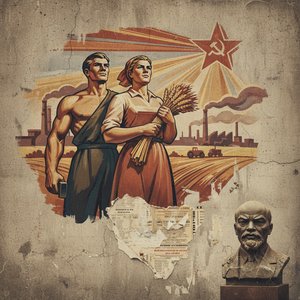
Socialist Realism: Ideology, Aesthetics & Enduring Legacy of Soviet Art
Explore the fascinating world of Socialist Realism! Discover its historical context, key artists like Deyneka & Brodsky, defining aesthetics, and lasting impact on Soviet culture. A comprehensive guide for art lovers.
Realism in Art: A Professional Guide to Authentic Detail and Lifelike Masterpieces for Large-Scale Interior Projects
Master the use of Realism in professional interiors. This expert guide explores 19th-century masterpieces, offering procurement managers and designers technical insights into selecting authentic, hand-painted oil reproductions for high-end hotel and corporate projects.

Crimson Threads of Narrative: Exploring Symbolism & Representation in Artworks Featuring the Red Dress
Explore the rich symbolism of the red dress in art history! From ancient power displays to iconic portraits like Cézanne’s 'Madame Cezanne', discover the cultural and artistic significance behind this captivating color. Expert analysis & insights.
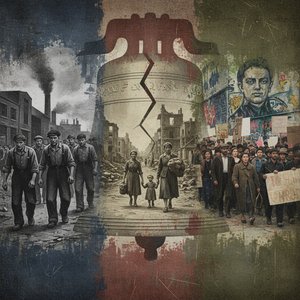
Echoes of Society: Exploring Social Realism's Enduring Legacy in Art
Explore the powerful world of Social Realism art! Discover key artists, masterpieces & its profound social commentary. Expert insights into this influential movement's history and enduring legacy.