 Voorvertoning
 Verstuur
 Delen
Delen
 Details bekijken

 Download
 Vergelijkbare items
 Röntgenonderzoek
 Diavoorstelling
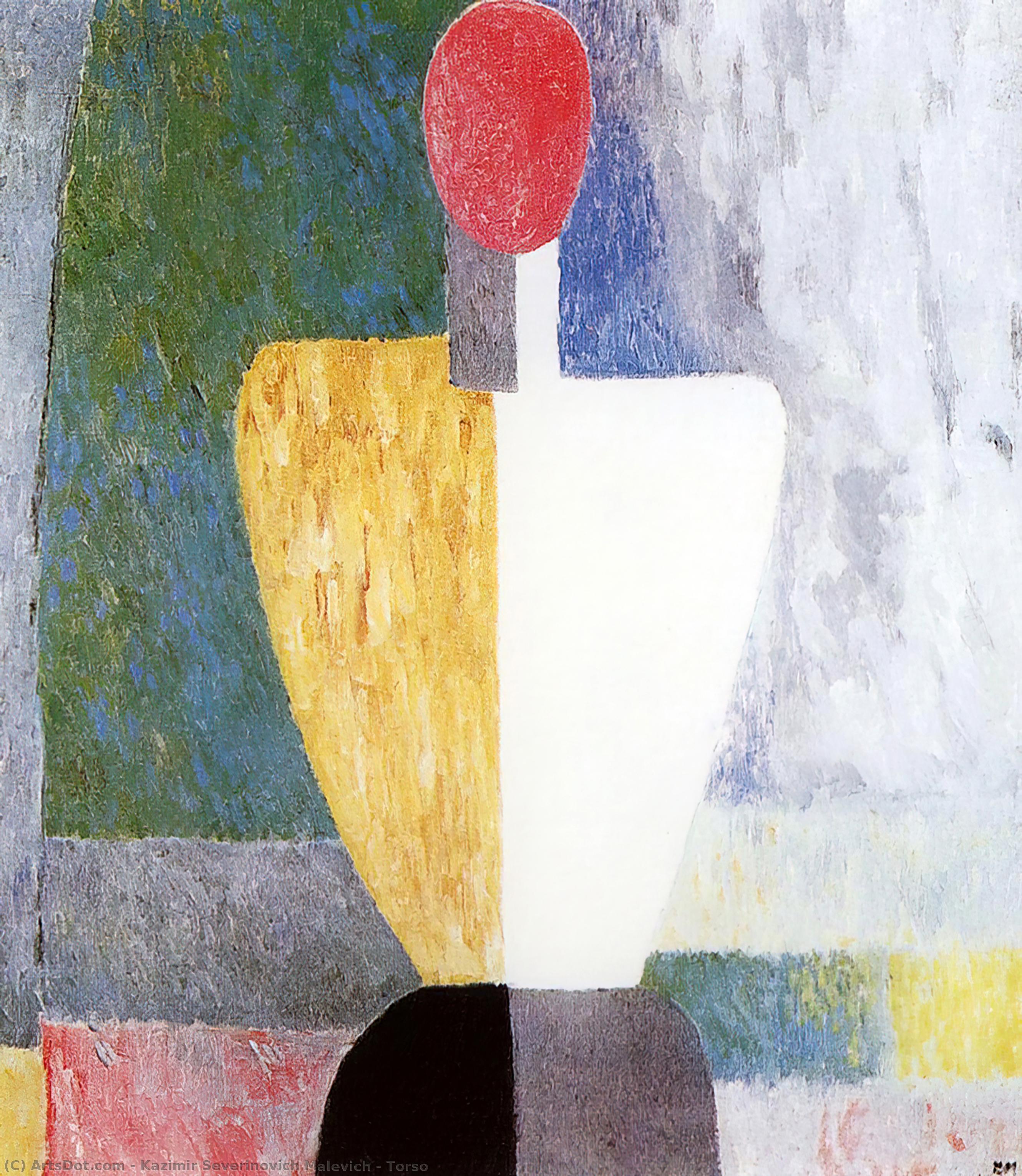
Torso
 Oil On Canvas
- WallArt
- Suprematism
 1929
1929- Modern
 72.0 x 65.0 cm
 Lees meer
Giclée / Kunstafdrukken
Giclée- of canvasafdruk van museumkwaliteit met een snelle productie en flexibele afwerkingsmogelijkheden. ( Bestel handgeschilderde reproductie Koop afbeelding)




































Kies uit onze vooraf ingestelde maten die overeenkomen met de originele verhoudingen van het kunstwerk.

U kunt uw eigen afmetingen opgeven om in een specifieke lijst of ruimte te passen. Als de door u gekozen maat niet overeenkomt met de proporties van het originele kunstwerk, zullen wij de afbeelding bijsnijden of uitbreiden met een gespiegelde of effen rand. Een digitaal mockup wordt ter goedkeuring naar u verzonden voordat de productie begint.
Houd er rekening mee dat de preview op het scherm de werkelijke bijsneding of uitbreiding niet weergeeft. Alleen de mockup toont de uiteindelijke compositie nauwkeurig.
Hoewel aangepaste maten beschikbaar zijn, raden wij aan een afmeting uit de vooraf bepaalde lijst te kiezen om de originele proporties te behouden.
Wereldwijde levering () binnen 2 weken in plaats van de standaard 4/5 weken. (14 augustus)

Gratis wereldwijde expressverzending

Hoogwaardig linnen canvas

Volledige verzendverzekering

Garantie op terugbetaling van invoerrechten

Garantie op exacte kleurweergave

Retourbeleid van 60 dagen (alleen bij defecten)

100% Geld-terug-garantie

Korting bij meerdere afnames
 De optie voor glas is alleen beschikbaar bij een formaat kleiner dan 110 cm.

Torso
Giclée / Kunstafdrukken
Afmetingen reproductie
-


Eindtotaal
$ 81
Beschrijving verzamelobject
Kazimir Malevich’s Torso: A Revolutionary Exploration of Geometric Form
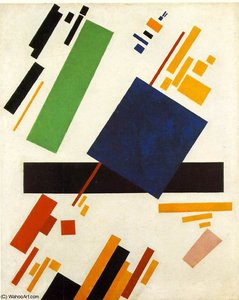
Malevich's *Torso*, created in 1929 during the height of Suprematism, stands as an emblem of artistic liberation—a defiant rejection of representational art and a bold assertion of pure visual sensation. Measuring 72 x 65 cm on canvas, this painting isn’t merely an image; it's a manifesto distilled into pigment and shape, encapsulating Malevich’s profound philosophical convictions about the role of art in confronting the anxieties of the era. The artwork embodies the core tenets of Suprematism—a movement spearheaded by Malevich himself—which sought to dismantle illusionistic conventions and prioritize fundamental geometric forms as conduits for emotional expression.- Style: Suprematism – Characterized by reductive abstraction, prioritizing basic shapes like circles, squares, and rectangles over naturalistic depictions.
- Technique: Oil on Canvas – Malevich employed a meticulous layering technique, applying thin washes of color to build up textured surfaces that subtly convey movement and dynamism.
- Color Palette: Bold and Contrasting – Dominant hues include yellow, white, blue, and black—a deliberate selection designed to stimulate the viewer’s senses and evoke feelings of spontaneity and contemplation.
Historical Context: Suprematism Amidst Artistic Turmoil
Malevich's *Torso* emerged during a period of intense artistic ferment in Russia following the October Revolution of 1917. The Bolshevik government actively promoted avant-garde art as a tool for disseminating revolutionary ideology, recognizing its capacity to challenge established norms and envision a radically new aesthetic landscape. Suprematism positioned itself at the vanguard of this movement, aligning with broader cultural currents that questioned traditional artistic conventions and embraced experimental approaches. Malevich’s work resonated deeply with intellectuals and artists alike who sought to articulate the spiritual and philosophical implications of the revolution—a desire for transcendence and liberation from bourgeois materialism.Symbolism and Emotional Resonance
Beyond its formal qualities, *Torso* carries significant symbolic weight. The geometric shapes themselves represent a rejection of organic forms and an embrace of pure abstraction—a deliberate assertion of intellectual freedom against the constraints of realism. Malevich’s use of color—particularly yellow, white, and black—is imbued with spiritual connotations, reflecting his fascination with Eastern Orthodox iconography and his belief in the transformative power of art to elevate consciousness. The painting's overall effect is one of serene contemplation—a visual meditation on the fundamental principles of existence that continues to inspire viewers today. It’s a testament to Malevich’s conviction that art could serve as a vehicle for conveying profound emotional truths without resorting to representational imagery.Legacy and Influence
Kazimir Malevich's *Torso* remains an enduring icon of abstract art, influencing generations of artists who sought to push the boundaries of visual expression. Its minimalist aesthetic—characterized by bold colors and reductive geometric forms—found its way into subsequent movements such as Neo-Expressionism and Minimalism, demonstrating the lasting impact of Suprematism’s revolutionary vision. Reproductions of *Torso* are available at OriginalUniqueArt.com offering collectors a chance to own a piece of art history—a visual embodiment of Malevich's unwavering commitment to pure feeling and artistic innovation.Biografie van de kunstenaar
Kazimir Malevich: Een Pionier van Abstract Kunst
Kazimir Severinovich Malevich (26 februari 1878 – 15 mei 1935) was een Russische avant-garde kunstenaar en een belangrijke voorloper van abstract kunst. Hij staat vooral bekend om zijn baanbrekende Suprematisme, een stijl die hij ontwikkelde rond 1915 en waarmee hij wordt geassocieerd met het idee dat kleur, lijn en vorm boven alles staan in kunst – een radicaal afwijzing van traditionele representatie. Zijn meest invloedrijke werken omvatten Zwarte Vierkant (1915) en Suprematist Samenstelling: Wit op Wit (1918), stukken die nog steeds worden beschouwd als essentiële voorbeelden van de ontwikkeling van moderne kunst.Vroege Levensloop en Invloeden
- Geboren in Kyiv Oblast, Oekraïne in 1878 bij een Pools gezin, werd Kazimir Severinovich Malevich’s jeugd gevormd door het Russische platteland en zijn rijke volkscultuur.
- Zijn opvoeding instilled in hem een waardering voor traditionele kunstvormen die hij later subtiel zou laten terugkomen in zijn werk.
- Hij begon zijn opleiding aan de Moskouse Academie voor Schilderkunst, Sculptuur en Architectuur in 1903 en verkende verschillende moderne stijlen tijdens zijn eerste jaren actief.
- Belangrijke Invloeden: Een vroegtijdige fascinatie voor volkskunst, gecombineerd met een drang naar moderne expressie, vormde de basis van zijn unieke stijl. Onder invloed van kunstenaars als Vasily Kandinsky en Mikhail Larionov ontwikkelde hij een stijl die werd gekenmerkt door een combinatie van verschillende kunststromingen.
Artistieke Ontwikkeling & Belangrijke Bewegingen
- Aanvankelijk experimenteerde Malevich met verschillende kunststijlen, waaronder Impressionisme, Symbolisme en Cubisme. Een belangrijke reis naar Parijs in 1912 exposeerde hem aan de nieuwste ontwikkelingen binnen Europese kunst en gaf hem toegang tot een wereldwijde kunstscene.
- Hij begon zich af te keren van representatieve vormen en zocht een puur artistieke taal gebaseerd op geometrische vormen en kleur – een zoektocht die leidde tot het ontstaan van Suprematisme rond 1915.
- Suprematisme verklaarde de suprematistische kunstenaar Kazimir Malevich als een belangrijke voorloper van abstract kunst. Zijn stijl werd gekenmerkt door een eenvoudige geometrische compositie, waarbij vormen zoals vierkant en cirkel centraal staan. Deze beweging ontstond als reactie op het Impressionisme en het Fauvisme, en werd sterk beïnvloed door Russische kunstenaars zoals Kandinsky en Larionov.
Belangrijke Prestaties & Beknopte Werken
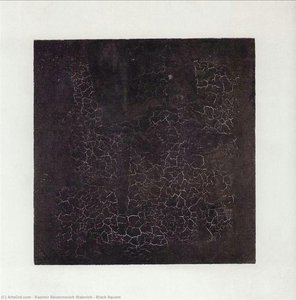
- Zwarte Vierkant (1915): Zijn meest iconische werk, een zwart vierkant op witte achtergrond dat Malevich beschouwde als een symbool van de nieuwe kunstvorm. Het vierkant werd gekozen omdat het volgens Malevich het eenvoudigste geometrische vorm was en daarom het meest geschikt voor het uitdrukken van pure gevoelens zonder enige verwijzing naar het externe wereldsysteem.
- Suprematist Samenstelling: Wit op Wit (1918): Een prachtige illustratie van Malevich’s filosofie over kunst, waarbij een witte vierkant op witte achtergrond werd gebruikt om de essentie van kleur en vorm te verkennen. Deze compositie werd beschouwd als een hoogtepunt van Suprematisme en een belangrijke stap voorwaarts in de ontwikkeling van abstracte kunst.
- Hij ontwikkelde ook een stijl die sterk werd beïnvloed door Russische folklore en religieuze iconografie, waardoor zijn werk een unieke combinatie vormde van traditionele en moderne elementen.
Historische Betekenis & Erfenis
- Malevich’s kunst had een enorme invloed op de ontwikkeling van 20e-eeuwse abstracte kunst, waarbij hij belangrijke kunstenaars inspireerde zoals El Lissitzky en indirect vele anderen vormde door zijn blijvende nalatenschap van Suprematisme.
- Hij daagde conventionele ideeën over representatie uit en opende de weg voor een nieuwe manier van denken over kunst – een manier die nog steeds relevant is voor kunstenaars vandaag de dag.
- Zijn werk wordt beschouwd als een belangrijke mijlpaal in de geschiedenis van kunst en blijft een bron van inspiratie voor kunststudenten en kunstcritici wereldwijd.
Latere Levensloop & Overlijden
- Na zijn studie aan verschillende kunstacademies verkende Malevich verschillende kunststijlen, waaronder Cubisme en Surrealisme, voordat hij zich uiteindelijk richtte op een stijl die sterk werd beïnvloed door Russische folklore en religieuze iconografie.
- Hij bleef actief als kunstenaar en onderwijzer tot zijn dood in Leningrad (St. Petersburg) in 1935, waarbij hij een belangrijke rol speelde bij het vormgeven van de Russische kunstgeschiedenis.

Kazimir Malevitsj
1878 - 1935 , Oekraïne
Belangrijkste feiten
- Artistic Movement Or Style: Suprematisme, Abstractie
- Artists Or Movements Influenced By This Artist:
- Minimalisme
- Constructivisme
- El Lissitzky
- Artists Who Influenced This Artist:
- Cubisme
- Fauvisme
- Impressionisme
- Date Of Birth: 1878
- Date Of Death: 1935
- Full Name: Kazimir Severinovich Malevich
- Nationality: Oekraïens/Russisch
- Notable Artworks:
- Zwarte Cirkel
- Witte op Wit
- Huis onder constructie
- Place Of Birth: Kyiv, Oekraïne
Gerelateerde artikelen
Kazimir Malevich's Top 25 Meesterwerken: Abstracte Kunst voor Uw Interieur | OriginalUniqueArt
Ontdek de 25 meest iconische werken van Kazimir Malevich, pionier van het suprematisme en abstracte kunst. Van 'Zwarte Vierkant' tot 'Witte op Wit', leer over zijn invloedrijke stijl & koop museumkwaliteit reproducties voor uw interieur. Explore the full collection online!

Top 10 Meesterwerken van de Geometrische Abstractie | OriginalUniqueArt.nl
Ontdek de 10 meest invloedrijke meesterwerken van de geometrische abstractie! Van Mondriaan tot Malevich, leer over kunstenaars, technieken & kleuren. Museumkwaliteit reproducties op OriginalUniqueArt.com – voor een unieke interieurstijl.

Beyond Form & Color: Geometric Abstraction's Evolution in 20th/21st Century Art
Explore the evolution of geometric abstraction from Cubism to contemporary art. Discover key artists like Malevich & Mondrian, investment insights, and expert collecting advice at OriginalUniqueArt.
Kazimir Malevich: Pioneering Suprematism & the Quest for Non-Objective Art
Explore the revolutionary art of Kazimir Malevich & his groundbreaking Suprematism movement. Discover the origins, core principles, and lasting impact of this pivotal force in modern abstract painting.
Mastering Suprematism: A Collector's Guide to the Radical Geometric Vision of Kazimir Malevich
Explore the radical world of Kazimir Malevich. Our expert guide for art collectors decodes Suprematism’s geometric revolution, offering profound insights into the spiritual and aesthetic mastery of one of history's most influential abstract pioneers.