
 Voorvertoning
 Verstuur
 Delen
Delen
 Details bekijken
 Gids
Gids

 Download
 Vergelijkbare items
 Röntgenonderzoek
 Diavoorstelling
 Vraag & antwoord
 Statistieken
Self-Portrait

- 69.0 x 70.0 cm


 Lees meer
Giclée / Kunstafdrukken
Giclée- of canvasafdruk van museumkwaliteit met een snelle productie en flexibele afwerkingsmogelijkheden. ( Bestel handgeschilderde reproductie Schakel over naar digitale afbeeldingen)




P118B €10

P118H €10

P118W €10

P438Z €10

P508JH €12

P508YH €12

P805H €10

P805Z €10

P919BZ €10

P919G €10

P919XJ €10

P959ZH €10

P968JZ €12

W106C €8

W218G €10

W218JH €8

W218Y €10

W307PJ €10

W316G €10

W316PJ €8

W316Y €10

W398PJ €8

W4111J €10

W500HY €15

W500JH €15

W692G €12

W849H €8

W940BG €15

W953PJ €8




Kies uit onze vooraf ingestelde maten die overeenkomen met de originele verhoudingen van het kunstwerk.

Voer de gewenste breedte en hoogte in, passend bij uw lijst of muur. Een afdruk kan alleen worden ingekort en nooit groter worden gemaakt dan het origineel; een formaat met andere verhoudingen zal daarom een deel van de afbeelding verliezen. Wij sturen u een digitaal mockup ter goedkeuring voordat we tot drukwerk overgaan. De afbeelding op deze pagina toont niet de werkelijke uitsnede — dit is alleen te zien op het mockup.
Wereldwijde levering () binnen 2 weken in plaats van de standaard 4/5 weken. (5 november)

Gratis wereldwijde expressverzending

Hoogwaardig linnen canvas

Volledige verzendverzekering

Garantie op terugbetaling van invoerrechten

Garantie op exacte kleurweergave

Retourbeleid van 100 dagen (alleen bij defecten)

100% Geld-terug-garantie

Korting bij meerdere afnames
 De optie voor glas is alleen beschikbaar bij een formaat kleiner dan 110 cm.

Self-Portrait
Giclée / Kunstafdrukken
Afmetingen reproductie
-


Eindtotaal
€ 72
Kazimir Malevich's Self-Portrait: A Window into Early Expressionism
Kazimir Severinovich Malevich’s "Self-Portrait," painted in 1907, offers a fascinating glimpse into the artist's formative years and his evolving artistic style. This work, created before his groundbreaking Suprematist period, showcases a blend of Symbolist and early Cubist influences, providing valuable insight into the development of one of modern art’s most revolutionary figures.
Artistic Style and Technique
The "Self-Portrait" exemplifies Malevich's transition away from traditional representational art. While still recognizable as a portrait, the painting deviates significantly from realistic depiction. The style leans towards Expressionism, characterized by distorted features and heightened emotionality. Malevich utilizes bold colors—primarily reds, greens, yellows, and blues—to create a vibrant yet unsettling atmosphere. The application of tempera on cardboard results in a textured surface with visible brushstrokes, contributing to the painting's dynamic energy. Lines are loose and gestural, further enhancing this sense of movement and unrest. The flattened perspective draws attention directly to the central figure, minimizing background details.
Composition and Subject Matter
The composition is dominated by Malevich himself, depicted with a stern expression and a distinctive red tie that serves as a focal point. His black hair and mustache add to his striking appearance. The surrounding figures in the background are less defined, suggesting a sense of isolation or perhaps representing elements of Malevich's inner world or societal connections. The overall effect is one of intense introspection, with the subject’s gaze conveying a complex mix of determination and anxiety.
Symbolism and Historical Context
Beyond its aesthetic qualities, "Self-Portrait" carries symbolic weight. The red tie can be interpreted as a symbol of passion, creativity, or even revolutionary fervor—a common theme in early 20th-century Russian art. The stern expression likely reflects Malevich’s dedication to his artistic pursuits and his unwavering commitment to pushing the boundaries of art. Created during a period of significant social and political upheaval in Russia, the painting can also be seen as reflecting the anxieties and uncertainties of the time. This work was created before Malevich's development of Suprematism, which sought to move even further away from representational art towards pure geometric abstraction.
Emotional Impact and Legacy
“Self-Portrait” evokes a powerful emotional response in viewers. The unsettling combination of bold colors, distorted features, and the subject’s intense gaze creates an atmosphere of psychological intensity. It is a compelling testament to Malevich's artistic journey—a bridge between traditional portraiture and his later groundbreaking abstract works. The painting serves as a valuable historical document, offering insight into the mind of one of the most influential artists of the 20th century.
Other Works by Malevich
- Prayer
- Sketch for fresco
- Triumph of the Skies
Veelgestelde vragen
Is "Self-Portrait" vrij van auteursrecht?
"Self-Portrait" door Kazimir Malevitsj valt onder bevindt zich in het publiek domein - de auteursrechten zijn verlopen. Deze status bepaalt hoe de afbeelding van het werk mag worden gereproduceerd.
Wat voegt "Self-Portrait" door Kazimir Malevitsj toe aan een interieur?
De Dramatisch sfeer van "Self-Portrait" door Kazimir Malevitsj past perfect bij de aanbevolen ruimte: een Woonkamer.
Wat zijn de werkelijke afmetingen van "Self-Portrait" door Kazimir Malevitsj?
"Self-Portrait" heeft in zijn originele vorm de afmetingen 69 x 70 cm. De originele afmetingen dienen als een handig referentiepunt bij het kiezen van de juiste afmeting voor een reproductie.
Biografie kunstenaar
Kazimir Malevich: Een Pionier van Abstract Kunst
Kazimir Severinovich Malevich (26 februari 1878 – 15 mei 1935) was een Russische avant-garde kunstenaar en een belangrijke voorloper van abstract kunst. Hij staat vooral bekend om zijn baanbrekende Suprematisme, een stijl die hij ontwikkelde rond 1915 en waarmee hij wordt geassocieerd met het idee dat kleur, lijn en vorm boven alles staan in kunst – een radicaal afwijzing van traditionele representatie. Zijn meest invloedrijke werken omvatten Zwarte Vierkant (1915) en Suprematist Samenstelling: Wit op Wit (1918), stukken die nog steeds worden beschouwd als essentiële voorbeelden van de ontwikkeling van moderne kunst.Vroege Levensloop en Invloeden
- Geboren in Kyiv Oblast, Oekraïne in 1878 bij een Pools gezin, werd Kazimir Severinovich Malevich’s jeugd gevormd door het Russische platteland en zijn rijke volkscultuur.
- Zijn opvoeding instilled in hem een waardering voor traditionele kunstvormen die hij later subtiel zou laten terugkomen in zijn werk.
- Hij begon zijn opleiding aan de Moskouse Academie voor Schilderkunst, Sculptuur en Architectuur in 1903 en verkende verschillende moderne stijlen tijdens zijn eerste jaren actief.
- Belangrijke Invloeden: Een vroegtijdige fascinatie voor volkskunst, gecombineerd met een drang naar moderne expressie, vormde de basis van zijn unieke stijl. Onder invloed van kunstenaars als Vasily Kandinsky en Mikhail Larionov ontwikkelde hij een stijl die werd gekenmerkt door een combinatie van verschillende kunststromingen.
Artistieke Ontwikkeling & Belangrijke Bewegingen
- Aanvankelijk experimenteerde Malevich met verschillende kunststijlen, waaronder Impressionisme, Symbolisme en Cubisme. Een belangrijke reis naar Parijs in 1912 exposeerde hem aan de nieuwste ontwikkelingen binnen Europese kunst en gaf hem toegang tot een wereldwijde kunstscene.
- Hij begon zich af te keren van representatieve vormen en zocht een puur artistieke taal gebaseerd op geometrische vormen en kleur – een zoektocht die leidde tot het ontstaan van Suprematisme rond 1915.
- Suprematisme verklaarde de suprematistische kunstenaar Kazimir Malevich als een belangrijke voorloper van abstract kunst. Zijn stijl werd gekenmerkt door een eenvoudige geometrische compositie, waarbij vormen zoals vierkant en cirkel centraal staan. Deze beweging ontstond als reactie op het Impressionisme en het Fauvisme, en werd sterk beïnvloed door Russische kunstenaars zoals Kandinsky en Larionov.
Belangrijke Prestaties & Beknopte Werken
- Zwarte Vierkant (1915): Zijn meest iconische werk, een zwart vierkant op witte achtergrond dat Malevich beschouwde als een symbool van de nieuwe kunstvorm. Het vierkant werd gekozen omdat het volgens Malevich het eenvoudigste geometrische vorm was en daarom het meest geschikt voor het uitdrukken van pure gevoelens zonder enige verwijzing naar het externe wereldsysteem.
- Suprematist Samenstelling: Wit op Wit (1918): Een prachtige illustratie van Malevich’s filosofie over kunst, waarbij een witte vierkant op witte achtergrond werd gebruikt om de essentie van kleur en vorm te verkennen. Deze compositie werd beschouwd als een hoogtepunt van Suprematisme en een belangrijke stap voorwaarts in de ontwikkeling van abstracte kunst.
- Hij ontwikkelde ook een stijl die sterk werd beïnvloed door Russische folklore en religieuze iconografie, waardoor zijn werk een unieke combinatie vormde van traditionele en moderne elementen.
Historische Betekenis & Erfenis
- Malevich’s kunst had een enorme invloed op de ontwikkeling van 20e-eeuwse abstracte kunst, waarbij hij belangrijke kunstenaars inspireerde zoals El Lissitzky en indirect vele anderen vormde door zijn blijvende nalatenschap van Suprematisme.
- Hij daagde conventionele ideeën over representatie uit en opende de weg voor een nieuwe manier van denken over kunst – een manier die nog steeds relevant is voor kunstenaars vandaag de dag.
- Zijn werk wordt beschouwd als een belangrijke mijlpaal in de geschiedenis van kunst en blijft een bron van inspiratie voor kunststudenten en kunstcritici wereldwijd.
Latere Levensloop & Overlijden
- Na zijn studie aan verschillende kunstacademies verkende Malevich verschillende kunststijlen, waaronder Cubisme en Surrealisme, voordat hij zich uiteindelijk richtte op een stijl die sterk werd beïnvloed door Russische folklore en religieuze iconografie.
- Hij bleef actief als kunstenaar en onderwijzer tot zijn dood in Leningrad (St. Petersburg) in 1935, waarbij hij een belangrijke rol speelde bij het vormgeven van de Russische kunstgeschiedenis.

Kazimir Malevitsj
1878 - 1935 , Oekraïne
Belangrijkste feiten
- Artistic Movement Or Style: Suprematisme, Abstractie
- Artists Or Movements Influenced By This Artist:
- Minimalisme
- Constructivisme
- El Lissitzky
- Artists Who Influenced This Artist:
- Cubisme
- Fauvisme
- Impressionisme
- Date Of Birth: 1878
- Date Of Death: 1935
- Full Name: Kazimir Severinovich Malevich
- Nationality: Oekraïens/Russisch
- Notable Artworks:
- Zwarte Cirkel
- Witte op Wit
- Huis onder constructie
- Place Of Birth: Kyiv, Oekraïne
Gerelateerde artikelen
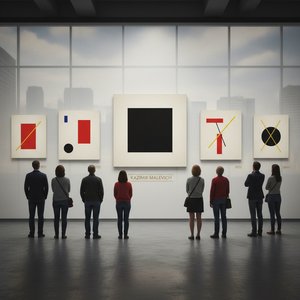
Kazimir Malevich: Pioneering Suprematism & the Quest for Non-Objective Art
Explore the revolutionary art of Kazimir Malevich & his groundbreaking Suprematism movement. Discover the origins, core principles, and lasting impact of this pivotal force in modern abstract painting.
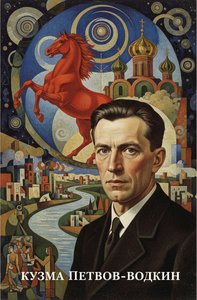
Kuzma Petrov-Vodkin: A Pioneer of Russian Spiritual Symbolism & the Avant-Garde
Explore the captivating world of Kuzma Petrov-Vodkin, a pivotal figure in Russian avant-garde and spiritual symbolism. Discover his iconic works, unique style & lasting influence on 20th-century art.
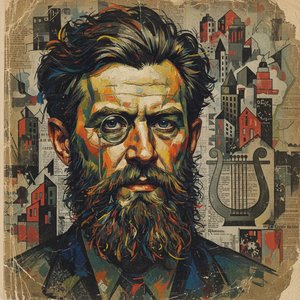
David Burliuk: A Pioneer of Russian Avant-Garde & His Enduring Legacy
Explore the revolutionary art of David Burliuk, a key figure in Russian Avant-Garde & Cubo-Futurism. Discover his impact on painting, poetry, and design with OriginalUniqueArt.

Kazimir Malevich's Top 25 Meesterwerken: Abstracte Kunst voor Uw Interieur | OriginalUniqueArt
Ontdek de 25 meest iconische werken van Kazimir Malevich, pionier van het suprematisme en abstracte kunst. Van 'Zwarte Vierkant' tot 'Witte op Wit', leer over zijn invloedrijke stijl & koop museumkwaliteit reproducties voor uw interieur. Explore the full collection online!

Mikhail Larionov: Rayonism, Primitivism & the Dawn of Russian Avant-Garde Painting
Explore the revolutionary art of Mikhail Larionov & the Russian Avant-Garde. Discover Rayonism, Primitivism's influence, and his lasting impact on modern painting. Expert insights for collectors.


