
 Voorvertoning
 Verstuur
 Delen
Delen
 Details bekijken
 Gids
Gids

 Download
 Vergelijkbare items
 Röntgenonderzoek
 Diavoorstelling
 Vraag & antwoord
 Statistieken
Demon


 Lees meer
Giclée / Kunstafdrukken
Giclée- of canvasafdruk van museumkwaliteit met een snelle productie en flexibele afwerkingsmogelijkheden. ( Bestel handgeschilderde reproductie Schakel over naar digitale afbeeldingen)




P118B €10

P118H €10

P118W €10

P438Z €10

P508JH €12

P508YH €12

P805H €10

P805Z €10

P919BZ €10

P919G €10

P919XJ €10

P959ZH €10

P968JZ €12

W106C €8

W218G €10

W218JH €8

W218Y €10

W307PJ €10

W316G €10

W316PJ €8

W316Y €10

W398PJ €8

W4111J €10

W500HY €15

W500JH €15

W692G €12

W849H €8

W940BG €15

W953PJ €8




Kies uit onze vooraf ingestelde maten die overeenkomen met de originele verhoudingen van het kunstwerk.

Voer de gewenste breedte en hoogte in, passend bij uw lijst of muur. Een afdruk kan alleen worden ingekort en nooit groter worden gemaakt dan het origineel; een formaat met andere verhoudingen zal daarom een deel van de afbeelding verliezen. Wij sturen u een digitaal mockup ter goedkeuring voordat we tot drukwerk overgaan. De afbeelding op deze pagina toont niet de werkelijke uitsnede — dit is alleen te zien op het mockup.
Wereldwijde levering () binnen 2 weken in plaats van de standaard 4/5 weken. (5 november)

Gratis wereldwijde expressverzending

Hoogwaardig linnen canvas

Volledige verzendverzekering

Garantie op terugbetaling van invoerrechten

Garantie op exacte kleurweergave

Retourbeleid van 100 dagen (alleen bij defecten)

100% Geld-terug-garantie

Korting bij meerdere afnames
 De optie voor glas is alleen beschikbaar bij een formaat kleiner dan 110 cm.

Demon
Giclée / Kunstafdrukken
Afmetingen reproductie
-


Eindtotaal
€ 72
A Stark Vision of the Unseen: Kazimir Malevich's 'Demon'
Kazimir Malevich’s 1914 painting, “Demon,” is not merely a depiction of a monstrous figure; it’s a visceral exploration of primal fear and the unsettling power of suggestion. Rendered in a deceptively simple style—bold black outlines against a bleached-white backdrop—the artwork immediately commands attention with its raw intensity. This isn't the polished, idealized representation of art history; instead, we encounter a world stripped bare to its essential elements, echoing the nascent principles of Suprematism and hinting at the anxieties simmering beneath the surface of early 20th-century Europe.
The composition is dominated by the central demon itself. Its elongated form, with disproportionately large head, pointed ears, and a gaping mouth, evokes a sense of grotesque power. Malevich’s deliberate use of thick black lines doesn't simply define the figure; they pulsate with energy, creating an immediate and unsettling visual impact. The simplification of features—the vacant eyes, the sharp angles—heightens the feeling of otherworldliness, as if we are glimpsing a being from beyond our comprehension. Crucially, the painting’s stark palette – primarily black and off-white – amplifies this effect, creating an atmosphere of profound isolation and dread.
The Language of Symbols: Cyrillic Text and Spiritual Weight
What initially appears as a minimalist composition is profoundly enriched by the dense field of Cyrillic text that dominates the right side of the canvas. This isn’t mere decoration; it's integral to understanding the artwork’s meaning. While the exact translation remains debated, scholars believe this incantation or narrative likely served as a key to unlocking the demon’s nature and purpose within Malevich’s artistic vision. The inclusion of text adds layers of mystery, suggesting a connection between the visual image and a deeper spiritual or occult context – reflecting the prevalent interest in mysticism and the supernatural during that period.
The choice of Cyrillic script is particularly significant given Malevich's Ukrainian heritage and the painting’s creation during a time of shifting national identities. It subtly connects the artwork to Eastern European folklore and traditions, hinting at ancient beliefs surrounding demons and spirits. The text acts as a conduit, inviting the viewer to actively participate in deciphering the demon’s story – transforming the image from a static representation into an interactive experience.
Roots in Expressionism and the Dawn of Suprematism
“Demon” sits at a fascinating crossroads within art history. While undeniably influenced by the raw emotionality of Expressionism—evident in its distorted forms and unsettling subject matter—it also anticipates the revolutionary principles of Suprematism, which Malevich would later fully develop. The painting’s emphasis on pure form, reduced to its essential elements, foreshadows his later explorations of geometric abstraction. Malevich's early exposure to folk art, combined with a desire for modern expression, formed the foundation of his unique style. This piece demonstrates that journey—a deliberate move away from representational forms towards a purely abstract and spiritual realm.
Considering Malevich’s biography – born in Kyiv Oblast, Ukraine – adds another layer of complexity to the work. The painting can be viewed as a reflection on the anxieties and uncertainties of a nation undergoing rapid change and grappling with its identity. The demon, therefore, becomes not just a supernatural entity but also a symbol of internal conflict and the darker aspects of human nature.
A Legacy of Shadow and Form
“Demon” is more than simply a depiction of a frightening figure; it’s a profound meditation on fear, spirituality, and the power of visual language. Reproductions of this artwork offer a unique opportunity to experience Malevich's groundbreaking vision – a stark reminder that art can be both unsettling and deeply evocative. Its enduring appeal lies in its ability to tap into our primal anxieties while simultaneously pushing the boundaries of artistic expression.
Veelgestelde vragen
Welke emotie straalt "Demon" door Kazimir Malevitsj uit?
"Demon" roept een Mysterious gevoel op. De emotionele toon beschrijft de indruk die het werk achterlaat.
Hoe groot is het contrast in "Demon" door Kazimir Malevitsj?
Het licht-donkercontrast van "Demon" wordt weergegeven als Statement. Contrast beschrijft hoe sterk de lichte en donkere vlakken van elkaar verschillen.
Zijn de kleuren van "Demon" door Kazimir Malevitsj verzadigd of gedempt?
De kleuren van "Demon" door Kazimir Malevitsj hebben een Muted verzadiging. Verzadiging beschrijft hoe levendig of gedempt de kleuren zijn.
Biografie kunstenaar
Kazimir Malevich: Een Pionier van Abstract Kunst
Kazimir Severinovich Malevich (26 februari 1878 – 15 mei 1935) was een Russische avant-garde kunstenaar en een belangrijke voorloper van abstract kunst. Hij staat vooral bekend om zijn baanbrekende Suprematisme, een stijl die hij ontwikkelde rond 1915 en waarmee hij wordt geassocieerd met het idee dat kleur, lijn en vorm boven alles staan in kunst – een radicaal afwijzing van traditionele representatie. Zijn meest invloedrijke werken omvatten Zwarte Vierkant (1915) en Suprematist Samenstelling: Wit op Wit (1918), stukken die nog steeds worden beschouwd als essentiële voorbeelden van de ontwikkeling van moderne kunst.Vroege Levensloop en Invloeden
- Geboren in Kyiv Oblast, Oekraïne in 1878 bij een Pools gezin, werd Kazimir Severinovich Malevich’s jeugd gevormd door het Russische platteland en zijn rijke volkscultuur.
- Zijn opvoeding instilled in hem een waardering voor traditionele kunstvormen die hij later subtiel zou laten terugkomen in zijn werk.
- Hij begon zijn opleiding aan de Moskouse Academie voor Schilderkunst, Sculptuur en Architectuur in 1903 en verkende verschillende moderne stijlen tijdens zijn eerste jaren actief.
- Belangrijke Invloeden: Een vroegtijdige fascinatie voor volkskunst, gecombineerd met een drang naar moderne expressie, vormde de basis van zijn unieke stijl. Onder invloed van kunstenaars als Vasily Kandinsky en Mikhail Larionov ontwikkelde hij een stijl die werd gekenmerkt door een combinatie van verschillende kunststromingen.
Artistieke Ontwikkeling & Belangrijke Bewegingen
- Aanvankelijk experimenteerde Malevich met verschillende kunststijlen, waaronder Impressionisme, Symbolisme en Cubisme. Een belangrijke reis naar Parijs in 1912 exposeerde hem aan de nieuwste ontwikkelingen binnen Europese kunst en gaf hem toegang tot een wereldwijde kunstscene.
- Hij begon zich af te keren van representatieve vormen en zocht een puur artistieke taal gebaseerd op geometrische vormen en kleur – een zoektocht die leidde tot het ontstaan van Suprematisme rond 1915.
- Suprematisme verklaarde de suprematistische kunstenaar Kazimir Malevich als een belangrijke voorloper van abstract kunst. Zijn stijl werd gekenmerkt door een eenvoudige geometrische compositie, waarbij vormen zoals vierkant en cirkel centraal staan. Deze beweging ontstond als reactie op het Impressionisme en het Fauvisme, en werd sterk beïnvloed door Russische kunstenaars zoals Kandinsky en Larionov.
Belangrijke Prestaties & Beknopte Werken
- Zwarte Vierkant (1915): Zijn meest iconische werk, een zwart vierkant op witte achtergrond dat Malevich beschouwde als een symbool van de nieuwe kunstvorm. Het vierkant werd gekozen omdat het volgens Malevich het eenvoudigste geometrische vorm was en daarom het meest geschikt voor het uitdrukken van pure gevoelens zonder enige verwijzing naar het externe wereldsysteem.
- Suprematist Samenstelling: Wit op Wit (1918): Een prachtige illustratie van Malevich’s filosofie over kunst, waarbij een witte vierkant op witte achtergrond werd gebruikt om de essentie van kleur en vorm te verkennen. Deze compositie werd beschouwd als een hoogtepunt van Suprematisme en een belangrijke stap voorwaarts in de ontwikkeling van abstracte kunst.
- Hij ontwikkelde ook een stijl die sterk werd beïnvloed door Russische folklore en religieuze iconografie, waardoor zijn werk een unieke combinatie vormde van traditionele en moderne elementen.
Historische Betekenis & Erfenis
- Malevich’s kunst had een enorme invloed op de ontwikkeling van 20e-eeuwse abstracte kunst, waarbij hij belangrijke kunstenaars inspireerde zoals El Lissitzky en indirect vele anderen vormde door zijn blijvende nalatenschap van Suprematisme.
- Hij daagde conventionele ideeën over representatie uit en opende de weg voor een nieuwe manier van denken over kunst – een manier die nog steeds relevant is voor kunstenaars vandaag de dag.
- Zijn werk wordt beschouwd als een belangrijke mijlpaal in de geschiedenis van kunst en blijft een bron van inspiratie voor kunststudenten en kunstcritici wereldwijd.
Latere Levensloop & Overlijden
- Na zijn studie aan verschillende kunstacademies verkende Malevich verschillende kunststijlen, waaronder Cubisme en Surrealisme, voordat hij zich uiteindelijk richtte op een stijl die sterk werd beïnvloed door Russische folklore en religieuze iconografie.
- Hij bleef actief als kunstenaar en onderwijzer tot zijn dood in Leningrad (St. Petersburg) in 1935, waarbij hij een belangrijke rol speelde bij het vormgeven van de Russische kunstgeschiedenis.

Kazimir Malevitsj
1878 - 1935 , Oekraïne
Belangrijkste feiten
- Artistic Movement Or Style: Suprematisme, Abstractie
- Artists Or Movements Influenced By This Artist:
- Minimalisme
- Constructivisme
- El Lissitzky
- Artists Who Influenced This Artist:
- Cubisme
- Fauvisme
- Impressionisme
- Date Of Birth: 1878
- Date Of Death: 1935
- Full Name: Kazimir Severinovich Malevich
- Nationality: Oekraïens/Russisch
- Notable Artworks:
- Zwarte Cirkel
- Witte op Wit
- Huis onder constructie
- Place Of Birth: Kyiv, Oekraïne
Gerelateerde artikelen

Kazimir Malevich's Top 25 Meesterwerken: Abstracte Kunst voor Uw Interieur | OriginalUniqueArt
Ontdek de 25 meest iconische werken van Kazimir Malevich, pionier van het suprematisme en abstracte kunst. Van 'Zwarte Vierkant' tot 'Witte op Wit', leer over zijn invloedrijke stijl & koop museumkwaliteit reproducties voor uw interieur. Explore the full collection online!

Top 10 Meesterwerken van de Geometrische Abstractie | OriginalUniqueArt.nl
Ontdek de 10 meest invloedrijke meesterwerken van de geometrische abstractie! Van Mondriaan tot Malevich, leer over kunstenaars, technieken & kleuren. Museumkwaliteit reproducties op OriginalUniqueArt.com – voor een unieke interieurstijl.

Kandinsky's Meesterwerken: 25 Abstracte Kunstparels voor uw Interieur | OriginalUniqueArt
Ontdek de 25 meest iconische werken van Wassily Kandinsky! Duik in zijn abstracte wereld vol kleur, expressionisme & spirituele diepgang. Vind museumkwaliteit reproducties en interieurinspiratie op OriginalUniqueArt.com.

Top 10 Abstract Expressionisme Meesterwerken: Kunst voor uw Interieur | OriginalUniqueArt.com
Ontdek de 10 meest invloedrijke werken van Abstract Expressionisme! Leer over Jackson Pollock, Mark Rothko & meer. Museumkwaliteit kunst reproducties voor uw interieur. Bekijk de collectie op OriginalUniqueArt.com.
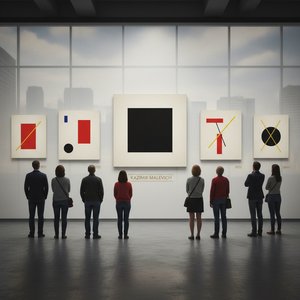
Kazimir Malevich: Pioneering Suprematism & the Quest for Non-Objective Art
Explore the revolutionary art of Kazimir Malevich & his groundbreaking Suprematism movement. Discover the origins, core principles, and lasting impact of this pivotal force in modern abstract painting.


