Tekstgrootte

() ·

Een schilderij speciaal voor u gemaakt, met de hand

Kohada Koheiji

Handgemaakte olieverfreproductie

Met de hand geschilderd in olieverf op canvas in uw gewenste maat en lijst, op bestelling gemaakt door onze kunstenaars. ( Schakel over naar print Schakel over naar digitale afbeeldingen)

Beschrijving verzamelobject

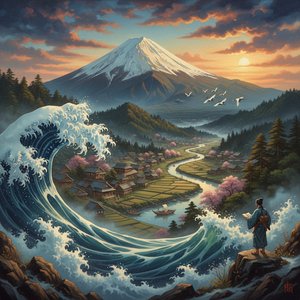
Een angstaanjagende afbeelding van een demonische figuur aan boord een boot bij Mount Fuji, symbool voor de prachtige Edo periode kunst en Hokusai's innovatieve stijl.

Biografie kunstenaar

Ontdek Katsushika Hokusai (1760-1849), de meester van ukiyo-e! Bewonder 'De Grote Golf', landschappen, manga & houtsneden. Invloedrijk voor Impressionisme & meer!

vanaf ·

Hoofdstuk 1

Hoe groot moet het zijn?

Schuif om de afmetingen te wijzigen; de afbeelding aan de linkerzijde toont de lijst in de werkelijke breedte. De oorspronkelijke verhoudingen blijven behouden.

Standaardformaat
op maat gemaakt
CM
INCH

Kies uit onze vooraf ingestelde maten die overeenkomen met de originele verhoudingen van het kunstwerk.

breedte
hoogte

Voer de breedte en hoogte in die u nodig heeft, passend bij uw lijst of uw muur. Omdat dit handgeschilderd is, kan de kunstenaar bij een afmeting met een andere beeldverhouding iets meer rondom het schilderij schilderen of juist iets meer weglaten — u kiest zelf. Wij sturen u een digitaal mockup ter goedkeuring voordat het schilderwerk begint. De afbeelding die op deze pagina wordt getoond, is niet het uiteindelijke resultaat — alleen de mockup geeft dit weer.


Hoofdstuk 2

Hoe moet het worden geleverd?

Kies de randen van het canvas

Kies uw lijst

Corner sample of the WhiteWrap canvas edge finish, stretched on massief hout bars
Wit €1
Corner sample of the BlurSideWrap canvas edge finish, stretched on massief hout bars
Vervagende randen €1
Corner sample of the ExtendedWrap canvas edge finish, stretched on massief hout bars
Doorlopende rand €1
Corner sample of the P118B picture frame: gegoten polystyreen, 5 cm wide and 3 cm thick
P118B €10
Corner sample of the P118H picture frame: gegoten polystyreen, 5 cm wide and 3 cm thick
P118H €10
Corner sample of the P118W picture frame: gegoten polystyreen, 5 cm wide and 3 cm thick
P118W €10
Corner sample of the P438Z picture frame: gegoten polystyreen, 5.5 cm wide and 3.5 cm thick
P438Z €10
Corner sample of the P508JH picture frame: gegoten polystyreen, 7 cm wide and 3.5 cm thick
P508JH €12
Corner sample of the P508YH picture frame: gegoten polystyreen, 7 cm wide and 3.5 cm thick
P508YH €12
Corner sample of the P805H picture frame: gegoten polystyreen, 5 cm wide and 3.5 cm thick
P805H €10
Corner sample of the P805Z picture frame: gegoten polystyreen, 5 cm wide and 3.5 cm thick
P805Z €10
Corner sample of the P919BZ picture frame: gegoten polystyreen, 7 cm wide and 3.5 cm thick
P919BZ €10
Corner sample of the P919G picture frame: gegoten polystyreen, 7 cm wide and 3.5 cm thick
P919G €10
Corner sample of the P919XJ picture frame: gegoten polystyreen, 7 cm wide and 3.5 cm thick
P919XJ €10
Corner sample of the P959ZH picture frame: gegoten polystyreen, 5 cm wide and 3 cm thick
P959ZH €10
Corner sample of the P968JZ picture frame: gegoten polystyreen, 6 cm wide and 4 cm thick
P968JZ €12
Corner sample of the W106C picture frame: massief hout, 5 cm wide and 3 cm thick
W106C €8
Corner sample of the W218G picture frame: massief hout, 5 cm wide and 3 cm thick
W218G €10
Corner sample of the W218JH picture frame: massief hout, 5 cm wide and 3 cm thick
W218JH €8
Corner sample of the W218Y picture frame: massief hout, 5 cm wide and 3 cm thick
W218Y €10
Corner sample of the W307PJ picture frame: massief hout, 6 cm wide and 3 cm thick
W307PJ €10
Corner sample of the W316G picture frame: massief hout, 6 cm wide and 3 cm thick
W316G €10
Corner sample of the W316PJ picture frame: massief hout, 6 cm wide and 3 cm thick
W316PJ €8
Corner sample of the W316Y picture frame: massief hout, 6 cm wide and 3 cm thick
W316Y €10
Corner sample of the W398PJ picture frame: massief hout, 5 cm wide and 3 cm thick
W398PJ €8
Corner sample of the W4111J picture frame: massief hout, 6.5 cm wide and 3.5 cm thick
W4111J €10
Corner sample of the W500HY picture frame: massief hout, 7 cm wide and 5 cm thick
W500HY €15
Corner sample of the W500JH picture frame: massief hout, 7 cm wide and 5 cm thick
W500JH €15
Corner sample of the W692G picture frame: massief hout, 8 cm wide and 4 cm thick
W692G €12
Corner sample of the W849H picture frame: massief hout, 5 cm wide and 3 cm thick
W849H €8
Corner sample of the W940BG picture frame: massief hout, 7.5 cm wide and 4.5 cm thick
W940BG €15
Corner sample of the W953PJ picture frame: massief hout, 6 cm wide and 3.5 cm thick
W953PJ €8
Corner sample of the H24-GOLD picture frame: gesneden hout met gesso, 10 cm wide and 6 cm thick
H24-GOLD €30
Corner sample of the H24-SILVER picture frame: gesneden hout met gesso, 10 cm wide and 6 cm thick
H24-SILVER €30
Corner sample of the H36-GOLD picture frame: gesneden hout met gesso, 15 cm wide and 6.5 cm thick
H36-GOLD €45
Corner sample of the H36-SILVER picture frame: gesneden hout met gesso, 15 cm wide and 6.5 cm thick
H36-SILVER €45
Lijstvoorbeeld
Ingelijst

Lijstrand: . Totale afmetingen inclusief lijst: .

Hoofdstuk 3

Wie schildert het, en moet er iets veranderen?

Voorbeelden van wat aangepast kan worden: Vervang het gezicht door een foto van de klant; Voeg een huisdier toe (bijv. vervang de kat door een hond); Voeg een verborgen boodschap toe aan de achtergrond; Wijzig het landschap of de elementen in de achtergrond.
Na de bestelling zal het team van OriginalUniqueArt.com per e-mail contact opnemen met de klant voor instructies en een mockup-voorbeeld verstrekken

Wereldwijde levering () binnen 3 tot 4 weken in plaats van de standaard 5 weken. (3 november). Zonder concessies aan de kwaliteit.

Hoofdstuk 4

De laatste hand aan

Een naambordje, zoals in een museum?

Details van de gegraveerde bronzen plaat

This elegant plaque features the artist's name and the title of the artwork, finely engraved for a timeless presentation.

It is made from bronze with a refined, elegant finish. The text is precisely laser-engraved for a sharp and permanent result. Measuring 9x2 cm, the plaque is compact yet easy to read. It's built to be durable and scratch-resistant, offering a professional, museum-quality look. Mounting is simple thanks to the included adhesive backing.

Details transparante acrylplaat

The plaque includes essential engraved details such as the artist's name, the title of the artwork, the date it was created, the type of media used-like oil on canvas or watercolor-a brief description of the piece, and a QR code that links to the complete artwork information.

It is crafted from clear acrylic, offering a sleek, modern appearance. The text is UV-engraved in black to ensure strong visual contrast. With a size of 10x15 cm, it ensures optimal readability. It comes equipped with two metal hooks for secure wall mounting. The plaque is designed to be weather-resistant, making it suitable for various environments, and it includes interactive features that work seamlessly with smartphone scanning.

Details zwarte acrylplaat

This elegant plaque includes engraved information such as the artist's name, the title of the artwork, the date it was created, the type of media used (like oil on canvas or watercolor), a short description of the artwork, and a QR code for quick access to more information.

The plaque itself is made from refined black acrylic with a premium finish. The text is laser-engraved in white for high contrast and readability. Its size is 10x15 cm, designed to be easy to read. It comes with two metal hooks for professional mounting. The design is sleek and fits any interior style. It is also weather-resistant and durable, with built-in digital integration for mobile compatibility.

Een beschermende vernis?

Wanneer heeft u het nodig?

Hoofdstuk 5

Uw schilderij, zoals u het heeft besteld

Kohada Koheiji

Druktechniek

Afmetingen reproductie

-

Geselecteerde topkunstenaars

Meer detail, verfijning en extra productietijd

-

Lijst voor reproductie

-

-

Voor kunstwerken of reproducties die aan één zijde groter zijn dan 105 cm (ongeveer 41 inch), wordt de lijst als een losse set verzonden. Deze methode garandeert een veilige levering en voorkomt schade tijdens het transport.

Professionele montage vereist - dit is geen doe-het-zelfproduct.
De set moet worden gemonteerd en het canvas moet worden gespannen door een ervaren professionele lijstenmaker, met gebruik van houtlijm (niet inbegrepen), een doekspanter en klemmen om de sponningen recht te houden terwijl de lijm droogt. Onjuiste montage of een ongelijkmatige spanning op het canvas kan het kunstwerk permanent beschadigen en wordt niet gedekt door onze garantie.

  • Alle massief houten onderdelen zijn inbegrepen, nauwkeurig op maat gesneden voor montage.

  • Te monteren met de meegeleverde schroeven, plus houtlijm voor de hoekverbindingen, die niet wordt meegeleverd en door uw lijstenmaker moet worden aangeschaft.

  • Professioneel gereedschap is vereist en niet inbegrepen: een spanner voor canvas en klemmen om de latten recht te houden terwijl de lijm droogt.

Belangrijk:
De hoekverbindingen vereisen houtlijm, de latten moeten met lijmklemmen worden vastgehouden tot de lijm volledig is opgedroogd, en het spannen van het canvas op het samengestelde frame vereist een doekspanter. Geen van deze artikelen is inbegrepen in de set. Wij adviseren u om een ervaren professionele lijstenmaker te raadplegen voordat u deze maat bestelt.

Naamplaatje

-

-

Beschermende vernislaag

Glanzende vernis (versterkt de kleuren en biedt bescherming tegen licht en vocht)

-

Mijn kunstwerk aanpassen

Voorbeelden van aanpassingen: vervang het gezicht door een eigen foto; voeg een huisdier toe (bijv. vervang de kat door een hond); verwerk een verborgen boodschap in de achtergrond; wijzig het landschap of andere elementen op de achtergrond.

-

Spoedlevering

Wereldwijde levering () binnen 3 tot 4 weken in plaats van de standaard 5 weken. (3 november). Geen concessies aan de kwaliteit.

-

Spoedlevering

Wereldwijde levering naar binnen 5 weken. (10 november).

Inbegrepen

Eindtotaal

€ 268

Totaalprijs € 268

De optie voor glas is alleen beschikbaar bij een formaat kleiner dan 110 cm.

Inbegrepen bij elke bestelling

  • Gratis wereldwijde expressverzending
  • Hoogwaardig linnen canvas
  • Volledige verzendverzekering
  • Garantie op terugbetaling van invoerrechten
  • Garantie op exacte kleurweergave
  • Retourbeleid van 100 dagen (alleen bij defecten)
  • 100% Geld-terug-garantie
  • Korting bij meerdere afnames

Een Visioen van Angst en Transcendentie: Het Ontcijferen van Kohada Koheiji

Katsushika Hokusai’s *Kohada Koheiji* biedt een fascinerende kijk op de angst voor het bovennatuurlijke en de schoonheid van natuur terwijl hij een belangrijke rol speelt in de ontwikkeling van Japanse kunst tijdens het Edo tijdperk. Deze prachtige houtsnipdruk, gecreëerd rond 1830-1832, vangt een moment van aangrijpende dramatie tegen de achtergrond van Mount Fuji’s majestueuze sereniteit – een combinatie die Hokusai’s artistieke visie perfect weergeeft.

Onderwerp en Stijl: Het beeld portretteert een man, waarschijnlijk een demonische figuur of monsterlijke verschijning, die zich vastklampt aan de zijde van een boot. Zijn groteske voorkomen wordt versterkt door een ongekend lange tong, wat angst uitroept voor bovennatuurlijke krachten en verwijst naar de angsten rondom folklore binnen Japanse cultuur. Hokusai’s stijl is kenmerkend voor het ‘Floating World’, een beweging die zich richt op het vastleggen van natuurlijke landschappen en atmosfeer, maar ook gekenmerkt wordt door een prachtige combinatie van kleur en lijnen.

Techniek en Innovatie: Een bijzonder belangrijk element is de gebruikmaking van Pruisische blauw pigment – een baanbrekende import uit Europa op het tijdstip dat Hokusai actief was. Deze gedurfde kleur keuze symboliseerde niet alleen Europese invloed, maar ook angst voor Japan’s toenemende betrokkenheid bij internationale handel. De drukkerijtechniek zelf werd verbeterd door de toepassing van nieuwe drukmethoden waardoor een hoger niveau van detail mogelijk werd.

Historische Context en Symbolisme: *Kohada Koheiji* is ontstaan tijdens Hokusai’s laatste levensjaren, een periode gekenmerkt door groeiende Europese contacten en intellectuele stimulans. Het werk reflecteert angst voor het onbekende – vertegenwoordigd symboolisch door de demon – terwijl hij tegelijkertijd erkenning biedt aan natuurlijke schoonheid en grandeur, zoals Mount Fuji. De drukkerijtechniek werd verbeterd door nieuwe drukmethoden waardoor een hoger niveau van detail mogelijk werd.

Emotionele Impact en Erfgoed: *Kohada Koheiji* roept een krachtige emotionele reactie op – een combinatie van angst en verwondering – die nog steeds aanspoort bij het publiek vandaag de dag. Hokusai’s vermogen om complexe emoties weer te geven via visuele kunst is ongeëvenaard, waardoor hij zijn plaats versterkt als een van Japan’s grootste kunstenaars en een icoon van zowel traditionele als moderne kunstgeschiedenis.

Veelgestelde vragen

Kan ik "Kohada Koheiji" door Hokusai onder ander licht bekijken?

De Röntgenanalyse-pagina van "Kohada Koheiji" door Hokusai is een interactieve viewer waarmee u door elf optische lagen van het kunstwerk kunt glijden, inclusief een weergave in röntgenstijl.

Hoe verhoudt "Kohada Koheiji" zich tot de terugkerende thema's van Hokusai?

"Kohada Koheiji" verbeeldt demon figure, oceanic scene, boat journey, mount fuji, symbolism, prussian blue, dynamic composition, terwijl de bekende thema's van Hokusai landscape impressionism, spiritual symbolism, edo tradition, iconic image zijn. Een vergelijking tussen beide laat zien hoe het werk zich verhoudt tot de gebruikelijke onderwerpen van de kunstenaar.

Is "Kohada Koheiji" vrij van auteursrecht?

Wat betreft het auteursrecht valt "Kohada Koheiji" onder bevindt zich in het publiek domein - de auteursrechten zijn verlopen.

Meer over dit schilderij

Voorvertoning Bekijk in AR Schakel over naar print Schakel over naar digitale afbeeldingen Verstuur
Details bekijken Gids Toevoegen aan favorieten Download Vergelijkbare items Röntgenonderzoek Diavoorstelling Vraag & antwoord Statistieken

In cijfers

  • 29lijsten om uit te kiezen
  • standaardmaten, in hun eigen verhoudingen
  • 5weken om te schilderen en te leveren
Hokusai

Hokusai

1760 - 1849, Japan

Snelle feiten over Hokusai

  • Artistic Movement Or Style: Ukiyo-e
  • Artists Or Movements Influenced By This Artist:
    • Impressionisme
    • Van Gogh
  • Artists Who Influenced This Artist:
    • Chinese landschap
    • Tradities
  • Date Of Birth: 31 okt 1760
  • Date Of Death: 10 mei 1849
  • Full Name: Katsushika Hokusai
  • Nationality: Japanse
  • Notable Artworks:
    • De grote golf
    • Fuji
    • Manga
  • Place Of Birth: Tokyo, Japan

Biografie kunstenaar

A Life Etched in Ink: The World of Katsushika Hokusai

Katsushika Hokusai, a name synonymous with Japanese art and the instantly recognizable image of *The Great Wave off Kanagawa*, was far more than just a printmaker. Born in Edo (modern-day Tokyo) around 1760, his life unfolded as an intensely restless pursuit of artistic mastery – a continuous evolution marked by shifting names and an insatiable curiosity about the world around him. From humble beginnings as the son of a mirror maker, Hokusai’s early inclination towards art wasn't immediately encouraged; yet, he relentlessly honed his skills, reportedly beginning to draw at the age of six. This unwavering dedication would define a career spanning nearly nine decades, leaving behind a legacy that continues to resonate profoundly with audiences worldwide. His father, Nakajima Ise, though not an artist himself, recognized and perhaps fostered this nascent talent, laying the groundwork for a journey that would fundamentally transform Japanese visual culture. Hokusai’s early life wasn't one of privilege, but rather a steady climb fueled by ambition and a deep-seated passion to capture the essence of the world around him.

From Apprenticeship to Innovation: The Blossoming of a Style

Hokusai’s formal artistic training began at twelve when he entered the studio of Katsukawa Shunshō, a leading master of *ukiyo-e* – “pictures of the floating world.” This genre, immensely popular during the Edo period, served as a vibrant mirror reflecting the daily life of Japan: actors performing in Kabuki theaters, courtesans engaging in elaborate rituals, sweeping landscapes, and glimpses into the bustling urban culture. Under Shunshō’s guidance, Hokusai mastered the intricate techniques of woodblock printing – a demanding process requiring exceptional precision and artistic skill. However, he wasn't content to simply replicate his teacher’s established style; even in his early work, a palpable restlessness was evident – a fervent desire to push boundaries and explore new avenues of expression. He began experimenting with diverse subjects, venturing beyond the traditional focus on actors and courtesans, including book illustrations and single-sheet prints, constantly refining his skills and developing a uniquely powerful visual language. This period also witnessed the first of many name changes—a common practice among *ukiyo-e* artists, signifying periods of artistic reinvention or affiliation with different schools – reflecting Hokusai’s constant evolution.

Mount Fuji and the Floating World: Defining Masterpieces

Hokusai's artistic output was astonishingly prolific; tens of thousands of woodblock prints, paintings, and illustrated books bear his signature. While he explored a vast array of subjects—from scenes of everyday life to fantastical creatures—it was his series *Thirty-Six Views of Mount Fuji* (circa 1831) that cemented his enduring fame. This monumental collection wasn’t merely a straightforward depiction of a landscape; it was a masterful exploration of perspective, composition, and the sheer power of nature. The wave itself – a towering, dynamic force about to crash down upon tiny boats – embodies both the breathtaking beauty and the underlying terror of the sea. Beyond *Fuji*, works like *Fireworks at Ryōgoku Bridge* (1790) demonstrated his remarkable ability to capture the energy and dynamism of everyday life in Japan with astonishing detail and a sense of immediacy. His *Hokusai Manga* – a collection of sketches and studies encompassing people, animals, landscapes, and even fantastical creatures—was groundbreaking in its scope and influence, foreshadowing the development of modern manga as an art form. These works weren’t isolated achievements; they were milestones in a continuous artistic journey, each building upon the last to create a body of work that is both deeply rooted in Japanese tradition and remarkably innovative.

The Old Man Mad About Painting

Hokusai's life was one of constant reinvention, marked by numerous name changes – over thirty throughout his career – each reflecting a new phase in his artistic development. He often referred to himself as “Gakyō Rōjin,” or "Old Man Crazy to Paint," a fitting title for an artist who remained passionately devoted to his craft well into his eighties. This relentless pursuit of perfection, coupled with his innovative spirit and profound understanding of both Japanese tradition and the wider world, cemented Hokusai’s legacy as a true master of *ukiyo-e* and a pivotal figure in the history of art. He continued to experiment with new techniques and subjects until his death in 1849 at the age of 89, leaving behind an unparalleled body of work that continues to captivate and inspire.

A Legacy Beyond Borders: Hokusai's Enduring Influence

Hokusai’s impact extended far beyond Japan. In the late 19th century, as Japan opened its doors to the West, *ukiyo-e* prints flooded European markets, sparking a phenomenon known as *Japonisme*. Artists like Claude Monet, Edgar Degas, and Vincent van Gogh were profoundly influenced by Hokusai’s bold compositions, vibrant colors, and unconventional perspectives. Van Gogh, in particular, was deeply moved by *The Great Wave off Kanagawa*, even recreating it in his own paintings. Hokusai's influence wasn't limited to Impressionism; it permeated various modern art movements, shaping the way artists approached composition, color, and subject matter. His emphasis on capturing fleeting moments, his dynamic use of line, and his ability to find beauty in everyday life resonated with a generation of artists seeking new forms of expression. Even today, Hokusai’s work continues to inspire and challenge artists around the world, solidifying his place as one of the most important figures in art history.
  • Major Influences: Ukiyo-e traditions, Chinese landscape painting, everyday life in Edo.
  • Key Characteristics: Bold lines, vibrant colors, dynamic compositions, keen observation of nature.

Snelle feiten

  • Movement: Landscape Impressionism
  • Year: 1830-1832
  • Notable elements or techniques: Bold Linework; Prussian Blue Pigment
  • Title: Kohada Koheiji
  • Artistic style: Japanese Landscape Painting

Kunstquiz

Er is slechts één goed antwoord op elke vraag.

Vraag 1:
¿Cuál es la obra más famosa de Katsushika Hokusai?
Vraag 2:
¿Qué característica distintiva tiene la apariencia del personaje representado en el cuadro?
Vraag 3:
¿Durante qué período histórico alcanzó el estilo artístico de Katsushika Hokusai, ukiyo-e?
Vraag 4:
¿Qué técnica se utilizó principalmente para crear *La Gran Ola off Kanagawa*?
Vraag 5:
¿Quién influyó en la visión artística de Vincent van Gogh y Claude Monet debido a la influencia de Hokusai?