

 Voorvertoning
 Verstuur
 Delen
Delen
 Details bekijken

 Download
 Vergelijkbare items
 Röntgenonderzoek
 Diavoorstelling
 Statistieken
Narcissus
 Lees meer
Giclée / Kunstafdrukken
Giclée- of canvasafdruk van museumkwaliteit met een snelle productie en flexibele afwerkingsmogelijkheden. ( Bestel handgeschilderde reproductie Schakel over naar digitale afbeelding)




































Kies uit onze vooraf ingestelde maten die overeenkomen met de originele verhoudingen van het kunstwerk.

U kunt uw eigen afmetingen opgeven om in een specifieke lijst of ruimte te passen. Als de door u gekozen maat niet overeenkomt met de proporties van het originele kunstwerk, zullen wij de afbeelding bijsnijden of uitbreiden met een gespiegelde of effen rand. Een digitaal mockup wordt ter goedkeuring naar u verzonden voordat de productie begint.
Houd er rekening mee dat de preview op het scherm de werkelijke bijsneding of uitbreiding niet weergeeft. Alleen de mockup toont de uiteindelijke compositie nauwkeurig.
Hoewel aangepaste maten beschikbaar zijn, raden wij aan een afmeting uit de vooraf bepaalde lijst te kiezen om de originele proporties te behouden.
Wereldwijde levering () binnen 2 weken in plaats van de standaard 4/5 weken. (17 september)

Gratis wereldwijde expressverzending

Hoogwaardig linnen canvas

Volledige verzendverzekering

Garantie op terugbetaling van invoerrechten

Garantie op exacte kleurweergave

Retourbeleid van 100 dagen (alleen bij defecten)

100% Geld-terug-garantie

Korting bij meerdere afnames
 De optie voor glas is alleen beschikbaar bij een formaat kleiner dan 110 cm.

Narcissus
Giclée / Kunstafdrukken
Afmetingen reproductie
-


Eindtotaal
$ 81
A Captivating Glimpse into Romanticism: Karl Bryullov's "Narcissus"
Karl Pavlovich Bryullov’s “Narcissus,” a striking neoclassical painting, offers a poignant exploration of beauty, desire, and self-absorption. This evocative work depicts the mythological figure of Narcissus, condemned by Nemesis to fall in love with his own reflection. The scene portrays him reclining on the ground, utterly captivated by an unseen image – a moment frozen in time that speaks volumes about human vanity and the allure of unattainable beauty. Bryullov masterfully captures the languid grace of the human form, showcasing his exceptional skill in anatomical detail and composition, hallmarks of his artistic style. The presence of two angels adds a layer of ethereal quality to the scene, hinting at divine observation or perhaps even pity for Narcissus's tragic fate. A solitary bird perched nearby further enhances the sense of quiet contemplation and isolation that permeates the artwork.Neoclassical Technique with Romantic Sensibilities
Bryullov’s artistic training within a classical framework is evident in the painting’s meticulous attention to detail, balanced composition, and idealized figures. However, “Narcissus” transcends mere neoclassical imitation. Bryullov infuses the work with distinctly Romantic sensibilities – a dramatic use of light and shadow reminiscent of Caravaggio, an emphasis on emotional intensity, and a focus on individual experience rather than purely historical or allegorical narratives. The soft lighting highlights Narcissus’s features, drawing the viewer's eye to his expression of captivated longing. Bryullov’s technique demonstrates a mastery of oil painting, creating a luminous quality that enhances the overall beauty and impact of the piece.Historical Context and Artistic Influences
Created during the 19th century, “Narcissus” reflects the broader artistic trends of Romanticism, which emphasized emotion, individualism, and the sublime. Bryullov’s time spent in Italy significantly shaped his artistic development; he drew inspiration from Renaissance masters like Raphael, Michelangelo, and Caravaggio. This influence is particularly noticeable in the painting's dynamic composition, anatomical accuracy, and dramatic use of light to create a sense of depth and realism. The work was created during a period when Russian art was striving for recognition on the European stage, and Bryullov’s success with “The Last Day of Pompeii” paved the way for greater international acclaim.Symbolism and Emotional Resonance
Beyond its narrative depiction of the Narcissus myth, the painting is rich in symbolism. The figure's self-absorption represents a broader commentary on human vanity and the dangers of excessive pride. The angels could symbolize divine judgment or compassion for Narcissus’s plight. The overall emotional impact of “Narcissus” is one of melancholy and longing – a poignant portrayal of unrequited desire and the ultimately futile pursuit of unattainable beauty. Bryullov's ability to convey such complex emotions through his art makes "Narcissus" a timeless masterpiece that continues to resonate with viewers today.Biografie van de kunstenaar
Karl Pavlovich Bryullov: A Life in Romanticism
Karl Pavlovich Bryullov (born Karl Briullo) stands as a cornerstone of Russian Romantic art, embodying the movement’s ambition to fuse technical mastery with profound emotional expression. His artistic journey began under the nurturing guidance of his father, Pavel Ivanovich Briullo – a sculptor and academician who instilled in young Karl a deep appreciation for the visual arts – before he formally enrolled at the Imperial School for the Arts in St. Petersburg in 1809. This formative period established a foundation for Bryullov’s distinctive style, blending classical academic training with an undeniable Romantic spirit.Early Life and Training
Bryullov's lineage traced back to Huguenot ancestry, providing him with a connection to European intellectual traditions. His father’s influence extended beyond mere encouragement; Pavel Ivanovich actively fostered Karl’s artistic talent, recognizing his innate predisposition for creative pursuits. The Imperial School for the Arts served as Bryullov’s crucible of learning, exposing him to the precepts of Neoclassicism alongside burgeoning Romantic ideals. This duality would prove instrumental in shaping his artistic vision and distinguishing him from many of his contemporaries.Artistic Development and Influences
From a young age, Bryullov harbored an ardent fascination with Italy – specifically its Renaissance masters – whose dramatic use of light and shadow and unparalleled anatomical detail captivated his imagination. Artists like Raphael, Michelangelo, and Caravaggio served as beacons guiding Bryullov’s artistic explorations. He skillfully absorbed these influences, translating them into his own distinctive oeuvre. Bryullov's approach wasn't merely imitative; he actively interrogated the conventions of classical art, seeking ways to infuse them with emotional depth and dynamism – a hallmark of Romanticism.Major Achievements and Notable Works
Bryullov’s artistic breakthrough arrived in 1830-1833 with “The Last Day of Pompeii,” an epic historical painting that catapulted him to international acclaim. This monumental work, depicting the catastrophic eruption of Mount Vesuvius, captured the fervor and terror of the moment with breathtaking precision. Bryullov’s compositional daring—a masterful interplay of perspective and emotion—earned him accolades from luminaries like Pushkin and Gogol, cementing his reputation as a visionary artist. Beyond Pompeii, he produced “The Taking of the Life of Tsar Alexander I” (1827), demonstrating his ability to convey historical narrative with dramatic flair; "The Defense of the Sepulchre" (1846) showcased his talent for blending emotional resonance and meticulous detail; and “Princess Yuliya Pavlovna Samoilova Leaving a Ball With Adopted Daughter Amacilia Pacini” (1832), a portrait that exemplifies Bryullov’s refined aesthetic sensibilities. Furthermore, "Genserich's Invasion of Rome" (1835) stands as another testament to his command of Baroque techniques and dramatic storytelling.Legacy and Influence
Bryullov’s impact on Russian art extended far beyond his individual masterpieces. He championed artistic innovation and served as a mentor to aspiring artists, fostering a generation committed to exploring the expressive potential of painting. His unwavering belief in Romantic ideals—particularly its emphasis on emotion and imagination—influenced countless painters who followed him, shaping the trajectory of Russian visual culture for decades to come. Karl Bryullov’s enduring legacy resides not only in his stunning artworks but also in his role as a catalyst for artistic transformation – a true titan of Romanticism whose influence continues to resonate today.
karl pavlovich bryullov
1799 - 1852 , Rusland
Belangrijkste feiten
- Artistic Movement Or Style: Romanticisme
- Artists Or Movements Influenced By This Artist: ['Gavriil Gorelov']
- Artists Who Influenced This Artist:
- Rafael
- Michelangelo
- Caravaggio
- Date Of Birth: 1799-12-23
- Date Of Death: 1852-06-23
- Full Name: Karl Pavlovich Bryullov
- Nationality: Russisch
- Notable Artworks:
- De Laatste Dag van Pompeii
- Het Strijd om het Leven van een Tsar
- Place Of Birth: Saint Petersburg, Rusland
Gerelateerde artikelen
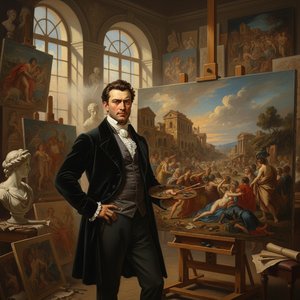
Karl Bryullov: Romanticism's Dramatic Vision & Shaping Russian Historical Painting
Explore the dramatic world of Karl Bryullov, a pivotal figure in Russian Romanticism. Discover his masterpieces like 'The Last Day of Pompeii' and learn about his lasting influence on 19th-century art history.

Ivan Bilibin: A Synthesis of Folklore, Modernism & National Identity in Russian Illustration
Explore the enchanting world of Ivan Bilibin, a master Russian illustrator who synthesized folklore, Art Nouveau & national identity. Discover his iconic fairy tale illustrations and legacy with OriginalUniqueArt.
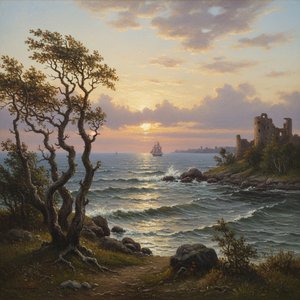
Alexei Bogolyubov: Bridging Realism & Romanticism in the Russian Landscape Tradition
Explore the captivating world of Alexei Bogolyubov, a master of Russian Realism & Romanticism. Discover his stunning landscapes, maritime scenes, and lasting influence on 19th-century art. Learn more at OriginalUniqueArt.

Victor Vasnetsov: Myth, Nationalism & the Revival of Russian Fairy Tale Painting
Explore the captivating world of Victor Vasnetsov, a co-founder of Russian folklorist painting. Discover his iconic works, influence on national identity, and lasting legacy in this expert guide.

Karl Bryullov: Romanticism's Grand Master – Life, Legacy & Artistic Innovation
Explore the life & art of Karl Bryullov, a pivotal figure in Russian Romanticism. Discover his iconic paintings like 'The Last Day of Pompeii' and delve into his lasting influence on 19th-century art history.