

 Voorvertoning
 Verstuur
 Delen
Delen
 Details bekijken

 Download
 Vergelijkbare items
 Röntgenonderzoek
 Diavoorstelling
Fakires
 Oil On Canvas
- WallArt
- Neo-Expressionism
 1993
1993- Modern
 305.0 x 244.0 cm
 Guggenheim Museum Bilbao
 Lees meer
Giclée / Kunstafdrukken
Giclée- of canvasafdruk van museumkwaliteit met een snelle productie en flexibele afwerkingsmogelijkheden. ( Bestel handgeschilderde reproductie Koop afbeelding)




P118B $10

P118H $10

P118W $10

P438Z $10

P508JH $12

P508YH $12

P805H $10

P805Z $10

P919BZ $10

P919G $10

P919XJ $10

P959ZH $10

P968JZ $12

W106C $8

W218G $10

W218JH $8

W218Y $10

W307PJ $10

W316G $10

W316PJ $8

W316Y $10

W398PJ $8

W4111J $10

W500HY $15

W500JH $15

W692G $12

W849H $8

W940BG $15

W953PJ $8




Kies uit onze vooraf ingestelde maten die overeenkomen met de originele verhoudingen van het kunstwerk.

U kunt uw eigen afmetingen opgeven om in een specifieke lijst of ruimte te passen. Als de door u gekozen maat niet overeenkomt met de proporties van het originele kunstwerk, zullen wij de afbeelding bijsnijden of uitbreiden met een gespiegelde of effen rand. Een digitaal mockup wordt ter goedkeuring naar u verzonden voordat de productie begint.
Houd er rekening mee dat de preview op het scherm de werkelijke bijsneding of uitbreiding niet weergeeft. Alleen de mockup toont de uiteindelijke compositie nauwkeurig.
Hoewel aangepaste maten beschikbaar zijn, raden wij aan een afmeting uit de vooraf bepaalde lijst te kiezen om de originele proporties te behouden.
Wereldwijde levering () binnen 2 weken in plaats van de standaard 4/5 weken. (22 augustus)

Gratis wereldwijde expressverzending

Hoogwaardig linnen canvas

Volledige verzendverzekering

Garantie op terugbetaling van invoerrechten

Garantie op exacte kleurweergave

Retourbeleid van 60 dagen (alleen bij defecten)

100% Geld-terug-garantie

Korting bij meerdere afnames
 De optie voor glas is alleen beschikbaar bij een formaat kleiner dan 110 cm.

Fakires
Giclée / Kunstafdrukken
Afmetingen reproductie
-


Eindtotaal
$ 81
Beschrijving verzamelobject
Julian Schnabel’s *Fakires*: A Monumental Exploration of Sacrifice and Spiritual Intensity
Julian Schnabel emerged from the vibrant, often chaotic New York art scene of the 1980s as a force of nature, challenging conventions and redefining the possibilities of painting. Born in Brooklyn in 1951, his early life took an unexpected turn when his family relocated to Brownsville, Texas, in 1965—a formative experience that instilled within him a sense of outsider status and a fascination with raw, untamed environments. This duality – the urban grit of New York versus the expansive landscapes of the Texan borderlands – would become a recurring theme throughout his artistic journey. He pursued formal training at the University of Houston, but it was his audacious application to the Whitney Museum’s Independent Study Program—delivered between two slices of bread—that truly signaled his iconoclastic spirit and willingness to disrupt established norms. This gesture wasn't mere provocation; it was a statement about breaking down barriers to creativity and embracing unconventional methods.- Subject Matter: Schnabel’s *Fakires* (1993) centers around the concept of “fakir,” referring to Hindu or Muslim mystics who practice extreme asceticism—a deliberate renunciation of worldly possessions and desires for spiritual enlightenment. The word itself carries connotations of profound humility, selflessness, and unwavering devotion.
- Style: This artwork firmly establishes Schnabel’s place within Neo-Expressionist painting, a movement that reacted against the dominance of Minimalism and Conceptual art by prioritizing emotive intensity and figurative representation. It embodies a visceral response to the human condition—a confrontation with vulnerability and suffering.
- Technique: Executed on a monumental cotton drop cloth measuring 305.6 x 244.5 cm, *Fakires* utilizes oil paint mixed with resin – a technique that lends considerable textural depth and luminosity to the surface. Schnabel’s signature approach involves layering materials—including cardboard—to create a complex interplay of textures and colors.
Historical Context: The Return to Painting After Minimalism
The early 1980s witnessed a significant backlash against the austere aesthetic principles championed by Minimalist artists like Donald Judd and Carl Andre. Schnabel’s work represents a deliberate rejection of this reductive style, advocating for a return to expressive painting—a medium capable of conveying profound emotional resonance. It coincided with a broader cultural shift toward confronting difficult themes and exploring the darker aspects of human experience.Symbolism: Sacrifice and Transcendence
The prominent word “fakires” emblazoned across the canvas serves as more than just a visual element; it embodies a core symbolic idea—the willingness to endure hardship for the sake of spiritual devotion. Schnabel’s deliberate use of color – predominantly reds and pinks – contributes to this sense of urgency and passion, mirroring the fervor associated with religious rituals and practices. The painting's overall composition communicates a feeling of unity and harmony between disparate materials, reflecting the artist’s belief that beauty can emerge from confronting uncomfortable truths.Emotional Impact: Confrontation and Revelation
Viewing *Fakires* is undeniably unsettling—a deliberate provocation designed to elicit contemplation about mortality, vulnerability, and the pursuit of spiritual transcendence. Schnabel's masterful manipulation of texture and color compels the viewer to engage emotionally with the artwork, prompting reflection on the complexities of human existence. As Kevin Power eloquently described it, “The word suggests Schnabel’s identification with all of those who suffer pain for us—the pain that is inevitably our companion in the world.” It's a painting that demands attention and rewards careful observation—a testament to Schnabel’s unwavering commitment to artistic innovation and emotional honesty.Further Research
WikiArt: https://www.wikiart.org/en/julian-schnabel/fakires-fakirrak-1993 Guggenheim Bilbao Museum: https://www.guggenheim-bilbao.eus/en/the-collection/works/fakires Julian Schnabel IMDb: https://imdb.com/name/julian-schnabel/Biografie van de kunstenaar
Julian Schnabel
Julian Charles Schnabel (born October 26, 1951, Brooklyn, New York) is an American multidisciplinary artist—painter, filmmaker—renowned for his Neo-Expressionist ‘plate paintings’ and large-scale works. His artistic journey began in Texas, where he experienced a formative childhood marked by displacement and exposure to diverse environments, shaping his worldview and fueling his creative impulse. He pursued formal training at the University of Houston, but it was his audacious application to the Whitney Museum’s Independent Study Program—delivered between two slices of bread—that truly signaled his iconoclastic spirit and willingness to disrupt established norms. This gesture wasn't mere provocation; it was a declaration of intent to challenge conventions and redefine artistic boundaries.Early Life and Artistic Beginnings
Schnabel’s upbringing in Brownsville, Texas, instilled within him a profound appreciation for the raw beauty of the American Southwest—a duality that would permeate his oeuvre. Moving from Brooklyn at the age of 13, he embraced the rugged landscapes and cultural traditions of Texas, fostering an outsider perspective that informed his artistic vision. His academic pursuits culminated in a BFA from the University of Houston, where he honed his skills in painting and sculpture, laying the groundwork for his subsequent explorations into diverse mediums. Notably, Schnabel’s decision to apply to the Whitney ISP—a deliberate act of defiance against institutional expectations—demonstrated his unwavering commitment to artistic freedom and innovation. This unconventional approach foreshadowed his broader rejection of traditional artistic formulas and cemented his reputation as a trailblazer in contemporary art.The Neo-Expressionist Breakthrough: Plate Paintings
Schnabel’s breakthrough arrived with the creation of his groundbreaking “plate paintings.” These weren't canvases adorned with imagery, but rather assemblages built upon shattered ceramic plates—a radical departure from Minimalism—layered with plaster, wax, and a rich tapestry of materials—velvet, antlers, photographs, even shards of wood. The sheer physicality of these works was revolutionary; they demanded attention through their weight, texture, and scale, rejecting the sterile aesthetic of previous decades. As Robert Hughes eloquently described, Schnabel’s aim wasn't to achieve “precisionist or calculated formulas,” but rather to convey emotion through tactile intensity—a deliberate rejection of intellectual detachment. The resulting paintings—such as *Ornamental Despair*, *The Student of Prague*, and *Fakires*—became emblematic of Neo-Expressionism, a movement characterized by its expressive brushstrokes, bold colors, and figurative representations that prioritized subjective experience over rational analysis. Schnabel’s fascination with the materiality of art—particularly the juxtaposition of disparate elements—echoed the spirit of Kurt Schwitters' Merz constructions, highlighting his commitment to exploring uncharted artistic territories.Film Direction: Capturing Emotion Through Cinematic Narrative
Beyond painting, Schnabel established himself as a prolific filmmaker, driven by an unwavering belief in the transformative power of cinema. His directorial debut, *Basquiat* (1996), offered a poignant portrait of Jean-Michel Basquiat—the young artist’s life and work—capturing the energy and turmoil of his artistic endeavors with remarkable sensitivity. This wasn't merely biographical retelling; it was an immersive experience that conveyed the raw emotion and creative process behind Basquiat’s art, mirroring Schnabel’s approach to painting. He followed this success with *Before Night Falls* (2000), adapting Reinaldo Arenas’ autobiography—a film that explored themes of sexuality, identity, and artistic expression—winning acclaim for its visual artistry and emotional depth. However, it was *The Diving Bell and the Butterfly* (2007) that catapulted Schnabel to international fame, earning him the Best Director award at Cannes and securing nominations for the Academy Awards—a testament to his ability to craft compelling narratives that resonated with audiences worldwide. His cinematic endeavors consistently prioritized emotional honesty and stylistic innovation, demonstrating a parallel commitment to artistic exploration across mediums.Legacy and Influence: Shaping Contemporary Art
Julian Schnabel’s influence extends far beyond his own artistic output, inspiring generations of artists to embrace experimentation and challenge conventional boundaries. His willingness to utilize unconventional materials—such as sailcloth and tarpaulins—and to explore monumental scale—as exemplified in *Berlin* (2007)—has fundamentally altered the landscape of painting and sculpture. Like Robert Rauschenberg—who championed collage and found objects—Schnabel questioned established artistic conventions, advocating for a more expansive conception of artmaking. His works are now housed in prominent museums globally—including MoMA, Tate Modern, and The Broad Art Foundation—solidifying his position as one of the most significant figures in contemporary art. Schnabel’s enduring legacy resides not only in his groundbreaking paintings but also in his visionary filmmaking—a testament to his unwavering dedication to artistic expression and innovation.
Julian Schnabel
1951 - , Verenigde Staten en Gebouwen
Belangrijkste feiten
- Artistic Movement Or Style: Neo-expressionisme
- Artists Who Influenced This Artist:
- Robert Rauschenberg
- Kurt Schwitters
- Date Of Birth: 1951
- Full Name: Julian Charles Schnabel
- Nationality: Amerikaans
- Notable Artworks:
- Ornamental Despair
- The Student of Prague
- Fakires
- Place Of Birth: Brooklyn, USA
Gerelateerde artikelen
From Initial Sketch to Enduring Legacy: A Comprehensive Exploration of the Oil Painting Reproduction Process
Discover the art of museum-quality oil painting reproduction. Explore our expert process, skilled artists & authentic replicas. Elevate your home with timeless beauty – handcrafted and customized to your vision.
De Subtiele Nuances van Digitale Kunst: Waarom Op Maat Gemaakte Prints de Authenticiteit van een Foto Vangen en Overstijgen
Transformeer uw herinneringen tot unieke kunstwerken met OriginalUniqueArt. Handgeschilderde reproducties & gepersonaliseerde designs van museumkwaliteit. Expertise, betrouwbaarheid & 30 dagen garantie.
Kunst reproducties: Een gids voor olie-, canvas- en papierreproductiemedia
Ontdek hoogwaardige kunst reproducties bij . Kies uit olie op canvas, prints en meer. Maatwerk mogelijk! Vertrouw op onze expertise voor museumkwaliteit replica's.
Verkoop je digitale NFT‑kunst als handgeschilderde olieverf: museumkwaliteit, snelle productie en winstgevende marges
Transformeer je digitale NFT in een museumwaardige olieverf met OriginalUniqueArt. Onze vakmensen combineren eeuwenoud handwerk met moderne technologie voor snelle productie, transparantie en maximale winst. Vertrouw op onze expertise.
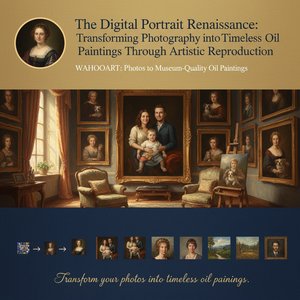
The Digital Portrait Renaissance: Transforming Personal Photography into Timeless Oil Paintings Through Artistic Reproduction
Transform your cherished photos into timeless oil paintings with OriginalUniqueArt's expert artists. Museum-quality reproductions & custom portraits, crafted to last a lifetime. Discover the art of personal legacy.

