
 Voorvertoning
 Verstuur
 Delen
Delen
 Details bekijken
 Gids
Gids

 Download
 Vergelijkbare items
 Röntgenonderzoek
 Diavoorstelling
 Vraag & antwoord
 Statistieken
PAYSAGE AVEC RIVIERE


 Lees meer
Giclée / Kunstafdrukken
Giclée- of canvasafdruk van museumkwaliteit met een snelle productie en flexibele afwerkingsmogelijkheden. ( Bestel handgeschilderde reproductie Schakel over naar digitale afbeeldingen)




P118B €10

P118H €10

P118W €10

P438Z €10

P508JH €12

P508YH €12

P805H €10

P805Z €10

P919BZ €10

P919G €10

P919XJ €10

P959ZH €10

P968JZ €12

W106C €8

W218G €10

W218JH €8

W218Y €10

W307PJ €10

W316G €10

W316PJ €8

W316Y €10

W398PJ €8

W4111J €10

W500HY €15

W500JH €15

W692G €12

W849H €8

W940BG €15

W953PJ €8




Kies uit onze vooraf ingestelde maten die overeenkomen met de originele verhoudingen van het kunstwerk.

Voer de gewenste breedte en hoogte in, passend bij uw lijst of muur. Een afdruk kan alleen worden ingekort en nooit groter worden gemaakt dan het origineel; een formaat met andere verhoudingen zal daarom een deel van de afbeelding verliezen. Wij sturen u een digitaal mockup ter goedkeuring voordat we tot drukwerk overgaan. De afbeelding op deze pagina toont niet de werkelijke uitsnede — dit is alleen te zien op het mockup.
Wereldwijde levering () binnen 2 weken in plaats van de standaard 4/5 weken. (7 november)

Gratis wereldwijde expressverzending

Hoogwaardig linnen canvas

Volledige verzendverzekering

Garantie op terugbetaling van invoerrechten

Garantie op exacte kleurweergave

Retourbeleid van 100 dagen (alleen bij defecten)

100% Geld-terug-garantie

Korting bij meerdere afnames
 De optie voor glas is alleen beschikbaar bij een formaat kleiner dan 110 cm.

PAYSAGE AVEC RIVIERE
Giclée / Kunstafdrukken
Afmetingen reproductie
-


Eindtotaal
€ 72
A Symphony of Light and Shadow: Unveiling Jules Dupré’s “PAYSAGE AVEC RIVIERE”
Jules Dupré's "PAYSAGE AVEC RIVIERE" is more than a simple depiction of a river landscape; it’s a profound meditation on the relationship between humanity and the natural world, rendered with the raw emotion characteristic of the Barbizon School. Painted in 1834, this work transports us to a serene corner of France, where the gentle flow of water and the dappled light filtering through ancient trees evoke a sense of tranquility and timelessness. Dupré, deeply influenced by Constable’s masterful use of atmospheric perspective, sought not merely to represent a scene but to capture its very essence – the feeling of being immersed in nature's embrace.
The Barbizon School: A Return to Nature
To fully appreciate “PAYSAGE AVEC RIVIERE,” it’s crucial to understand the context within which Dupré worked. The mid-19th century witnessed a shift in artistic priorities, as artists increasingly rejected the rigid formality of Neoclassicism and Romanticism in favor of a more direct engagement with nature. This movement coalesced around the Barbizon School, centered near Paris, where painters like Corot, Théodore Rousseau, and Dupré gathered to study landscapes directly from life. Unlike their predecessors who often idealized or embellished natural scenes, the Barbizon artists prioritized observation, aiming for an honest and unvarnished portrayal of the world as they saw it. Dupré’s work exemplifies this commitment – a deliberate rejection of artificiality in favor of capturing the authentic mood and atmosphere of the French countryside.
Technique and Composition: Layers of Atmosphere
Dupré's masterful technique is immediately apparent in the painting’s rich textures and subtle color variations. He employed a layered approach, building up the image through numerous thin glazes of oil paint, creating an illusion of depth and luminosity. The composition is carefully balanced, with the winding river acting as a visual anchor that draws the eye into the distance. Notice how he utilizes atmospheric perspective – distant trees are rendered in paler hues and appear less distinct, conveying a sense of vastness and the passage of time. Linear perspective subtly guides the viewer’s gaze along the riverbank, while the interplay of light and shadow creates a dynamic and engaging visual experience. The brushstrokes themselves, though visible, are controlled and deliberate, contributing to the painting's overall sense of realism.
Symbolism and Emotional Resonance
While “PAYSAGE AVEC RIVIERE” avoids overt symbolism, it’s imbued with a powerful emotional resonance. The tranquil river, the ancient trees, and the diffused light all contribute to a feeling of peace and serenity. Dupré wasn't simply painting a landscape; he was conveying a mood – a sense of connection with nature, a quiet contemplation of the beauty and power of the natural world. There’s an underlying melancholy present, perhaps reflecting the fleeting nature of time or the vulnerability of human existence in the face of nature’s grandeur. The scene invites reflection on our place within this vast and enduring landscape.
A Legacy of Naturalism: Reproductions and Beyond
Jules Dupré's “PAYSAGE AVEC RIVIERE” stands as a testament to the Barbizon School’s commitment to naturalistic representation. Today, high-quality reproductions offer an accessible way to experience this remarkable work of art. Whether adorning a living room wall or gracing a study, a reproduction captures the essence of Dupré's vision – a timeless celebration of the beauty and tranquility of the French countryside. Consider how the painting’s muted palette and atmospheric perspective would complement a variety of interior design styles, adding a touch of rustic elegance and contemplative serenity to any space.
Veelgestelde vragen
Wat voor soort kunstwerk is "PAYSAGE AVEC RIVIERE" door Jules Dupré?
"PAYSAGE AVEC RIVIERE" door Jules Dupré wordt geclassificeerd als WallArt. Deze categorie beschrijft het type kunstwerk dat het origineel is.
Hoe groot is het contrast in "PAYSAGE AVEC RIVIERE" door Jules Dupré?
Het contrastniveau van "PAYSAGE AVEC RIVIERE" door Jules Dupré is Statement.
Zijn de kleuren van "PAYSAGE AVEC RIVIERE" levendig of gedempt?
De kleuren van "PAYSAGE AVEC RIVIERE" door Jules Dupré vertonen een Subtle Color verzadiging met een Balanced intensiteit.
Biografie kunstenaar
De Dramatische Ziel van Barbizon
Jules Dupré (1811–1889) staat als een hoeksteenfiguur binnen de Barbizon-school, een artistieke beweging die pleitte voor rauwe observatie en emotionele resonantie in de landschapsschilderkunst. In tegenstelling tot zijn tijdgenoten zoals Corot, die vaak zochten naar lyrische schoonheid en serene stilte, worstelde Dupré met de donkere, meer stormachtige kant van de natuur. Hij bezat het unieke vermogen om de woede van stormen, de melancholische grandeur van de schemering en de onstuitbare energie van de elementen vast te leggen, waarbij hij deze ervaringen met een ongeëvenaarde intensiteit overbracht. Geboren in Nantes, Frankrijk, begon Dupré's artistieke reis te midden van een groeiende fascinatie voor de natuurlijke wereld en haar vermogen om diepe, vaak turbulente, menselijke gevoelens op te roepen.
Zijn vroege jaren boden een fundament van nauwgezette aandacht voor detail en een waardering voor vakmanschap, kwaliteiten die werden geslepen door het porseleinbedrijf van zijn vader. Deze vormende ervaring zou later doorklinken in zijn eigen artistieke ondernemingen, wat vooral zichtbaar was in zijn vroege werken waarin hij de complexiteit van keramische decoratie verkende. Als leerling-porseleinschilder leerde hij de discipline van fijne lijnen en texturen, een vaardigheid die uiteindelijk zou evolueren naar zijn meesterlijke beheersing van atmosferische diepte en organische vormen.
Een Visie Gevormd door Storm en Hemel
Het verloop van Dupré's carrière werd onherroepelijk bepaald door zijn ontmoeting met de baanbrekende doeken van John Constable. Deze blootstelling aan de Engelse landschapstradities ontketende een verlangen om de essentie van de dynamiek van de natuur te vangen—het meedogenloze duwen en trekken van door de wind bewogen gebladerte en het dramatische samenspel van licht en schaduw tijdens de meest onstuimige uren van de dag. Tijdens zijn reis naar Groot-Brittannië in 1831 maakte Dupré diepgaande studies van deze Engelse meesters, waarna hij terugkeerde naar Frankrijk met een oeuvre aan beelden die zijn benadering van het landschap volledig zouden herdefiniëren.
Hij vond bijzondere inspiratie in de kustgebieden rond Southampton en Plymouth. Deze uitgestrekte watermassa's, waarin turbulente luchten werden weerspiegeld, boden hem het perfecte laboratorium om de stormachtige beweging van wolkenpartijen en de dynamiek van de zee te bestuderen. Zijn schilderijen uit deze periode zijn niet louter afbeeldingen van een landschap; het zijn viscerale expressies van stemming en gevoel, doordrenkt met een tastbaar gevoel van drama en zelfs droefheid. Door de esthetiek van de Barbizon-school te omarmen, gaf Dupré de voorkeur aan expressieve kleurenpaletten en gedurfde penseelstreken boven geïdealiseerde of gepolijste representaties, waardoor de textuur van de verf zelf de ruwheid van de aarde weerspiegelde.
De Nalatenschap van de Barbizon-meester
Als een sleutelfiguur binnen de Barbizon-groep ontwikkelde Dupré nauwe banden met andere legendarische schilders, waaronder Théodore Rousseau. Zijn opkomst binnen de Franse kunstwereld werd gemarkeerd door belangrijke mijlpalen, zoals zijn acceptatie in de Salon en het ontvangen van officiële erkenning via medailles voor zijn landschappen. Zijn werk werd synoniem met een bepaalde sonore en resonerende kleurharmonie, waarbij het licht van een ondergaande zon of de dreiging van een naderende storm door de kijker evenzeer gevoeld als gezien kon worden.
Vandaag de dag wordt Jules Dupré herinnerd als een van de meest invloedrijke Franse landschapsschilders uit de 19e eeuw. Zijn bijdrage aan de kunst ligt in zijn vermogen om de kloof te overbruggen tussen pure observatie en romantische emotie. Door werken zoals La Petite Charrette,

Jules Dupré
1811 - 1889 , Frankrijk
Belangrijkste feiten
- Artistic Movement Or Style: Barbizon School
- Artists Or Movements Influenced By This Artist: ['Romantische schilderkunst']
- Artists Who Influenced This Artist: ['Constable']
- Date Of Birth: Nantes, Frankrijk (1811)
- Date Of Death: 6 oktober 1889
- Full Name: Jules Dupré
- Nationality: Frans
- Notable Artworks:
- Ochtend en avond bij het Louvre
- Oversteken van de brug in de Wallace Collection
- Place Of Birth: Frankrijk
Gerelateerde artikelen

Top 10 Meesterwerken van de Hudson River School: Kunst voor uw interieur
Ontdek de 10 meesterwerken van de Hudson River School! Leer over Thomas Cole, Frederic Church & meer. Prachtige landschappen uit de 19e eeuw voor uw interieur. Kunst reproducties van museumkwaliteit op OriginalUniqueArt.com.
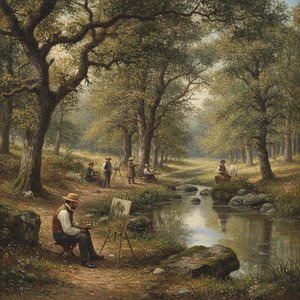
The Barbizon School: The Revolution of Naturalism and the Birth of Plein Air Landscape Painting
Explore the profound impact of the Barbizon School on landscape painting. Discover how masters like Rousseau and Corot revolutionized art through plein air naturalism, moving from academic idealism to the authentic beauty of the French countryside.
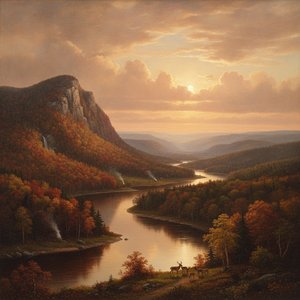
The Hudson River School: A Definitive Guide to America's Romantic Landscape Tradition
Explore the profound legacy of the Hudson River School. Discover how masters like Thomas Cole captured the American sublime through Romanticism and Luminism. A definitive guide for art historians and collectors seeking to understand America's wild beauty.
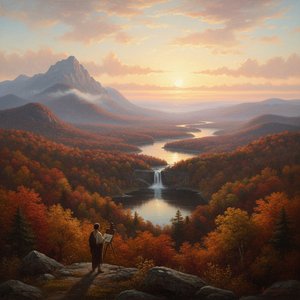
The Sublime Landscape: Exploring the Hudson River School Movement
Explore the captivating world of the Hudson River School! Discover the history, artists, and defining characteristics of this iconic American art movement. Learn about Romanticism's influence & find inspiration for your collection.

The Barbizon School: A Professional Guide to Naturalism and Landscape Mastery for Interior Designers
Explore the Barbizon School's mastery of naturalism. An expert guide for hotel designers and procurement managers on sourcing high-quality landscape reproductions to elevate hospitality and corporate interiors with authentic, large-scale fine art solutions.