
 Voorvertoning
 Verstuur
 Delen
Delen
 Details bekijken
 Gids
Gids

 Download
 Vergelijkbare items
 Röntgenonderzoek
 Diavoorstelling
 Vraag & antwoord
 Statistieken
LA FERME


 Lees meer
Giclée / Kunstafdrukken
Giclée- of canvasafdruk van museumkwaliteit met een snelle productie en flexibele afwerkingsmogelijkheden. ( Bestel handgeschilderde reproductie Schakel over naar digitale afbeeldingen)




P118B €10

P118H €10

P118W €10

P438Z €10

P508JH €12

P508YH €12

P805H €10

P805Z €10

P919BZ €10

P919G €10

P919XJ €10

P959ZH €10

P968JZ €12

W106C €8

W218G €10

W218JH €8

W218Y €10

W307PJ €10

W316G €10

W316PJ €8

W316Y €10

W398PJ €8

W4111J €10

W500HY €15

W500JH €15

W692G €12

W849H €8

W940BG €15

W953PJ €8




Kies uit onze vooraf ingestelde maten die overeenkomen met de originele verhoudingen van het kunstwerk.

Voer de gewenste breedte en hoogte in, passend bij uw lijst of muur. Een afdruk kan alleen worden ingekort en nooit groter worden gemaakt dan het origineel; een formaat met andere verhoudingen zal daarom een deel van de afbeelding verliezen. Wij sturen u een digitaal mockup ter goedkeuring voordat we tot drukwerk overgaan. De afbeelding op deze pagina toont niet de werkelijke uitsnede — dit is alleen te zien op het mockup.
Wereldwijde levering () binnen 2 weken in plaats van de standaard 4/5 weken. (6 november)

Gratis wereldwijde expressverzending

Hoogwaardig linnen canvas

Volledige verzendverzekering

Garantie op terugbetaling van invoerrechten

Garantie op exacte kleurweergave

Retourbeleid van 100 dagen (alleen bij defecten)

100% Geld-terug-garantie

Korting bij meerdere afnames
 De optie voor glas is alleen beschikbaar bij een formaat kleiner dan 110 cm.

LA FERME
Giclée / Kunstafdrukken
Afmetingen reproductie
-


Eindtotaal
€ 72
A Rustic Symphony: Jules Dupré’s “La Ferme”
Jules Dupré's "La Ferme," a captivating oil painting rendered in the heart of the Barbizon School, isn’t merely a depiction of a rural scene; it’s an immersion into a world steeped in quiet observation and profound emotional resonance. Painted between 1860 and 1875, this work offers a glimpse into a vanishing era of agricultural life in France, capturing not just the physical landscape but also the spirit of its inhabitants – a poignant blend of hardship, resilience, and an intimate connection to the land. The painting’s enduring appeal lies in Dupré's masterful ability to translate the raw essence of nature onto canvas, imbuing it with a sense of melancholy beauty that continues to resonate today.A Study in Earth Tones and Atmospheric Depth
The composition immediately draws the eye to the imposing central barn, its weathered timbers and subtly textured surface hinting at decades of exposure to the elements. Dupré skillfully employs a restrained palette dominated by earthy browns, muted greens, and grays – colors that evoke the rich soil, aged wood, and overcast skies characteristic of the French countryside. Light plays a crucial role, diffused and soft, suggesting either an early morning or late afternoon, casting long shadows that deepen the sense of space and volume. Linear perspective is carefully considered, guiding the viewer’s eye towards the distant trees and creating a believable illusion of depth. The artist's technique is characterized by layered brushstrokes, building up form with meticulous detail while maintaining a loose, expressive quality – a hallmark of the Barbizon School’s commitment to direct observation rather than idealized representation. The impasto effect, particularly noticeable on the barn’s surface, adds a tactile dimension to the painting, inviting the viewer to almost feel the roughness of the wood beneath their fingertips.Echoes of Romanticism and the Barbizon Tradition
Dupré's work firmly resides within the Barbizon School, an artistic movement that emerged in the mid-19th century as a reaction against the academic traditions of the Salon. Rejecting the polished surfaces and historical subjects favored by earlier generations, the Barbizon painters sought to capture the essence of nature as they experienced it – directly from life, often painting outdoors (en plein air). Influenced by artists like Constable and Millet, Dupré shares their dedication to portraying the natural world with honesty and emotional intensity. However, unlike the lyrical beauty championed by Corot, Dupré’s work frequently delves into darker themes—the solitude of rural life, the passage of time, and the vulnerability of nature. The painting subtly references Romanticism's focus on sublime landscapes and the power of nature, but tempered with a more grounded realism.Symbolic Resonance: A Portrait of Rural Life
“La Ferme” is rich in symbolic meaning. The barn itself represents not just shelter but also family, tradition, and the enduring connection between humans and the land. The scattered debris in the foreground—hay, wood, perhaps remnants of a harvest—suggests both labor and loss, hinting at the cyclical nature of rural life and the hardships faced by those who depend on it. The absence of figures – livestock or people – further emphasizes this sense of solitude and isolation, inviting contemplation about the lives lived within these humble surroundings. The painting’s muted colors and somber mood evoke a feeling of nostalgia for a bygone era, prompting viewers to reflect on the changing relationship between humanity and nature in the face of industrialization.A Timeless Masterpiece: Reproduction Possibilities
Reproductions of “La Ferme” offer an exceptional opportunity to bring this evocative landscape into any home or office space. OriginalUniqueArt offers high-quality prints that faithfully capture Dupré’s masterful technique and atmospheric depth, allowing you to experience the painting's beauty and emotional resonance firsthand. Whether displayed in a rustic farmhouse, a modern loft, or a sophisticated study, “La Ferme” will serve as a timeless reminder of the enduring power of nature and the simple pleasures of rural life.Veelgestelde vragen
Waar is "LA FERME" door Jules Dupré tegenwoordig te zien?
Het originele werk "LA FERME" is te bewonderen in Louvre, Paris, France.
Welke afmeting voor de reproductie wordt aanbevolen voor "LA FERME" door Jules Dupré?
Voor "LA FERME" wordt een afdrukformaat van Medium aanbevolen. Andere formaten zijn beschikbaar met dezelfde verhoudingen.
Welk kleurenpalet wordt gebruikt in "LA FERME"?
Het kleurenpalet van "LA FERME" door Jules Dupré wordt beschreven als Earthy. Het is een beknopte beschrijving van de kleuren in het werk.
Biografie kunstenaar
De Dramatische Ziel van Barbizon
Jules Dupré (1811–1889) staat als een hoeksteenfiguur binnen de Barbizon-school, een artistieke beweging die pleitte voor rauwe observatie en emotionele resonantie in de landschapsschilderkunst. In tegenstelling tot zijn tijdgenoten zoals Corot, die vaak zochten naar lyrische schoonheid en serene stilte, worstelde Dupré met de donkere, meer stormachtige kant van de natuur. Hij bezat het unieke vermogen om de woede van stormen, de melancholische grandeur van de schemering en de onstuitbare energie van de elementen vast te leggen, waarbij hij deze ervaringen met een ongeëvenaarde intensiteit overbracht. Geboren in Nantes, Frankrijk, begon Dupré's artistieke reis te midden van een groeiende fascinatie voor de natuurlijke wereld en haar vermogen om diepe, vaak turbulente, menselijke gevoelens op te roepen.
Zijn vroege jaren boden een fundament van nauwgezette aandacht voor detail en een waardering voor vakmanschap, kwaliteiten die werden geslepen door het porseleinbedrijf van zijn vader. Deze vormende ervaring zou later doorklinken in zijn eigen artistieke ondernemingen, wat vooral zichtbaar was in zijn vroege werken waarin hij de complexiteit van keramische decoratie verkende. Als leerling-porseleinschilder leerde hij de discipline van fijne lijnen en texturen, een vaardigheid die uiteindelijk zou evolueren naar zijn meesterlijke beheersing van atmosferische diepte en organische vormen.
Een Visie Gevormd door Storm en Hemel
Het verloop van Dupré's carrière werd onherroepelijk bepaald door zijn ontmoeting met de baanbrekende doeken van John Constable. Deze blootstelling aan de Engelse landschapstradities ontketende een verlangen om de essentie van de dynamiek van de natuur te vangen—het meedogenloze duwen en trekken van door de wind bewogen gebladerte en het dramatische samenspel van licht en schaduw tijdens de meest onstuimige uren van de dag. Tijdens zijn reis naar Groot-Brittannië in 1831 maakte Dupré diepgaande studies van deze Engelse meesters, waarna hij terugkeerde naar Frankrijk met een oeuvre aan beelden die zijn benadering van het landschap volledig zouden herdefiniëren.
Hij vond bijzondere inspiratie in de kustgebieden rond Southampton en Plymouth. Deze uitgestrekte watermassa's, waarin turbulente luchten werden weerspiegeld, boden hem het perfecte laboratorium om de stormachtige beweging van wolkenpartijen en de dynamiek van de zee te bestuderen. Zijn schilderijen uit deze periode zijn niet louter afbeeldingen van een landschap; het zijn viscerale expressies van stemming en gevoel, doordrenkt met een tastbaar gevoel van drama en zelfs droefheid. Door de esthetiek van de Barbizon-school te omarmen, gaf Dupré de voorkeur aan expressieve kleurenpaletten en gedurfde penseelstreken boven geïdealiseerde of gepolijste representaties, waardoor de textuur van de verf zelf de ruwheid van de aarde weerspiegelde.
De Nalatenschap van de Barbizon-meester
Als een sleutelfiguur binnen de Barbizon-groep ontwikkelde Dupré nauwe banden met andere legendarische schilders, waaronder Théodore Rousseau. Zijn opkomst binnen de Franse kunstwereld werd gemarkeerd door belangrijke mijlpalen, zoals zijn acceptatie in de Salon en het ontvangen van officiële erkenning via medailles voor zijn landschappen. Zijn werk werd synoniem met een bepaalde sonore en resonerende kleurharmonie, waarbij het licht van een ondergaande zon of de dreiging van een naderende storm door de kijker evenzeer gevoeld als gezien kon worden.
Vandaag de dag wordt Jules Dupré herinnerd als een van de meest invloedrijke Franse landschapsschilders uit de 19e eeuw. Zijn bijdrage aan de kunst ligt in zijn vermogen om de kloof te overbruggen tussen pure observatie en romantische emotie. Door werken zoals La Petite Charrette,

Jules Dupré
1811 - 1889 , Frankrijk
Belangrijkste feiten
- Artistic Movement Or Style: Barbizon School
- Artists Or Movements Influenced By This Artist: ['Romantische schilderkunst']
- Artists Who Influenced This Artist: ['Constable']
- Date Of Birth: Nantes, Frankrijk (1811)
- Date Of Death: 6 oktober 1889
- Full Name: Jules Dupré
- Nationality: Frans
- Notable Artworks:
- Ochtend en avond bij het Louvre
- Oversteken van de brug in de Wallace Collection
- Place Of Birth: Frankrijk
Gerelateerde artikelen

Cultivating Visions: A Historical Journey Through Rural Landscapes in Art
Explore the rich history of rural landscape painting with OriginalUniqueArt. Discover Impressionist masterpieces, key artists & movements. Find your perfect serene artwork and bring nature's beauty home.

John Constable's Top 25 Meesterwerken: Landschappen die de Ziel Raaken | OriginalUniqueArt
Ontdek de 25 mooiste schilderijen van John Constable, meester van de Engelse Romantiek. Van idyllische landschappen tot iconische Hay Wain – bewonder zijn techniek en emotie. Museumkwaliteit reproducties & decoratie op OriginalUniqueArt.com.

The Barbizon School: A Professional Guide to Naturalism and Landscape Mastery for Interior Designers
Explore the Barbizon School's mastery of naturalism. An expert guide for hotel designers and procurement managers on sourcing high-quality landscape reproductions to elevate hospitality and corporate interiors with authentic, large-scale fine art solutions.

Evoking Nature's Sublime: A Comprehensive Exploration of 19th-Century Landscape Painting
Explore the captivating world of 19th-century landscape painting! Discover renowned artists like Friedrich & Monet, key movements, and find the perfect artwork to bring nature's serenity into your home. Expert insights at OriginalUniqueArt.
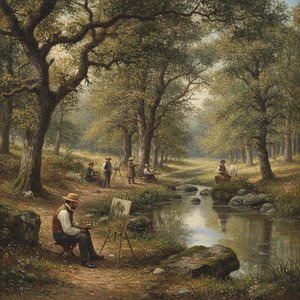
The Barbizon School: The Revolution of Naturalism and the Birth of Plein Air Landscape Painting
Explore the profound impact of the Barbizon School on landscape painting. Discover how masters like Rousseau and Corot revolutionized art through plein air naturalism, moving from academic idealism to the authentic beauty of the French countryside.