
 Voorvertoning
 Verstuur
 Delen
Delen
 Details bekijken
 Gids
Gids

 Download
 Vergelijkbare items
 Röntgenonderzoek
 Diavoorstelling
 Vraag & antwoord
 Statistieken
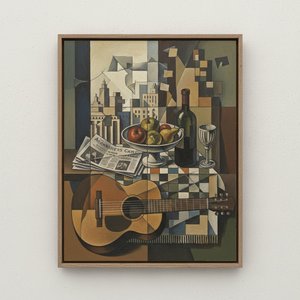
The Bordeaux bottle

- 50.0 x 61.0 cm


 Lees meer
Giclée / Kunstafdrukken
Giclée- of canvasafdruk van museumkwaliteit met een snelle productie en flexibele afwerkingsmogelijkheden. ( Bestel handgeschilderde reproductie Schakel over naar digitale afbeeldingen)




P118B €10

P118H €10

P118W €10

P438Z €10

P508JH €12

P508YH €12

P805H €10

P805Z €10

P919BZ €10

P919G €10

P919XJ €10

P959ZH €10

P968JZ €12

W106C €8

W218G €10

W218JH €8

W218Y €10

W307PJ €10

W316G €10

W316PJ €8

W316Y €10

W398PJ €8

W4111J €10

W500HY €15

W500JH €15

W692G €12

W849H €8

W940BG €15

W953PJ €8




Kies uit onze vooraf ingestelde maten die overeenkomen met de originele verhoudingen van het kunstwerk.

Voer de gewenste breedte en hoogte in, passend bij uw lijst of muur. Een afdruk kan alleen worden ingekort en nooit groter worden gemaakt dan het origineel; een formaat met andere verhoudingen zal daarom een deel van de afbeelding verliezen. Wij sturen u een digitaal mockup ter goedkeuring voordat we tot drukwerk overgaan. De afbeelding op deze pagina toont niet de werkelijke uitsnede — dit is alleen te zien op het mockup.
Wereldwijde levering () binnen 2 weken in plaats van de standaard 4/5 weken. (8 november)

Gratis wereldwijde expressverzending

Hoogwaardig linnen canvas

Volledige verzendverzekering

Garantie op terugbetaling van invoerrechten

Garantie op exacte kleurweergave

Retourbeleid van 100 dagen (alleen bij defecten)

100% Geld-terug-garantie

Korting bij meerdere afnames
 De optie voor glas is alleen beschikbaar bij een formaat kleiner dan 110 cm.

The Bordeaux bottle
Giclée / Kunstafdrukken
Afmetingen reproductie
-


Eindtotaal
€ 72
A Symphony of Geometry: Rediscovering The Bordeaux Bottle
In the quiet, intellectual atmosphere of a Parisian studio, Juan Gris captures a moment of profound stillness through The Bordeaux Bottle. This masterpiece of Synthetic Cubism invites the viewer into a world where the boundaries between objects and space dissolve into a rhythmic dance of planes and and shadows. At its heart lies a single bottle of wine, rendered not as a mere vessel, but as a structural anchor around which a constellation of books and a solitary lighter revolve. The composition is a masterclass in balance, where the weight of literature meets the transparency of glass, creating a visual dialogue that feels both grounded and ethereal. For the discerning collector or interior designer, this piece offers more than just decoration; it provides a sophisticated focal point that commands attention through its intricate layering of form.
The technique employed by Gris in 1915 represents the pinnacle of his analytical yet poetic approach to Cubism. Unlike the fragmented, monochromatic dissections seen in early Analytic Cubism, The Bordeaux Bottle embraces the richness of Synthetic Cubism. Here, the artist uses overlapping shapes and a deliberate arrangement of textures to build a sense of depth and reality. The books are not merely scattered; they are architecturally placed, their spines and edges creating a geometric scaffolding that supports the central subject. Through the use of subtle gradients and sharp, intersecting lines, Gris achieves a tactile quality that makes the paper feel crisp and the glass appear luminous. This interplay of light and shadow creates a dynamic energy, ensuring that the painting remains visually stimulating from every angle.
Symbolism and the Spirit of the Avant-Garde
Beyond its formal brilliance, the artwork carries a deep symbolic resonance, evoking the contemplative life of the early 20th-century avant-garde. The presence of books suggests a sanctuary of thought and erudition, a nod to the intellectual rigor that defined the era. The Bordeaux bottle and the small lighter serve as intimate details of daily existence, transformed by Gris into icons of modern life. This arrangement speaks to the intersection of leisure and intellect, where the sensory pleasure of wine meets the profound exploration of literature. It is an invitation to pause and find beauty in the structured fragments of our surroundings.
For those looking to elevate a living space, this work offers a unique blend of historical gravity and modern aesthetic appeal. Whether placed in a sunlit library or a contemporary minimalist study, the painting’s ability to harmonize complex geometry with soft, evocative tones makes it an incomparable addition to any curated collection. It is not merely a depiction of objects, but a window into a period of radical transformation, captured through the eyes of a Spanish visionary who saw the world as a beautiful, interlocking puzzle.
Veelgestelde vragen
Waar kan ik een print van "The Bordeaux bottle" door Juan Gris kopen?
"The Bordeaux bottle" is verkrijgbaar als een fine art print op katoenen canvas of archiefwaardig canvaspapier. U kunt uw bestelling plaatsen op de Fine Art Print pagina, in de afmeting naar keuze.
Is "The Bordeaux bottle" door Juan Gris een schilderij, een tekening of een prent?
In de catalogus is "The Bordeaux bottle" door Juan Gris geclassificeerd als WallArt. Deze categorie helpt bij het vinden van vergelijkbare werken.
In welke fase van de carrière van Juan Gris behoort "The Bordeaux bottle" (1915)?
De datum uit 1915 plaatst "The Bordeaux bottle" in de Cubism Period van de ontwikkeling van Juan Gris.
Biografie kunstenaar
A Spanish Visionary of Cubism: The Life and Art of Juan Gris
José Victoriano González-Pérez, born in Madrid in 1887, embarked on a remarkable artistic journey that would ultimately define him as Juan Gris – a pivotal figure in the early 20th century’s revolutionary art movement, Cubism. Initially pursuing an engineering degree at the School of Arts and Sciences, a logical mind was already taking shape, hinting at a unique approach to visual representation. Even during these formative years, a creative impulse manifested itself through drawings submitted to local periodicals, revealing a nascent talent eager for expression. It was in 1905 that he adopted the pseudonym Juan Gris – a name imbued with newfound identity and purpose as he began his formal studies in painting under José Moreno Carbonero, marking a decisive shift towards artistic exploration.Parisian Awakening and the Embrace of Cubism
The year 1906 witnessed a transformative relocation to Paris, a city then brimming with artistic fervor and innovation. Gris immersed himself completely within this vibrant environment, forging enduring friendships with some of the era’s most influential artists – Henri Matisse, Georges Braque, and Fernand Léger. Initially, he honed his skills through satirical illustration for publications like *L'Assiette au Beurre*, developing a keen eye for detail and a sophisticated understanding of visual wit. However, the profound influence of Pablo Picasso proved particularly significant. Around 1910, Gris began to dedicate himself wholeheartedly to painting, deliberately distancing himself from caricature and embracing the burgeoning language of Cubism – not merely imitating its techniques but actively seeking a new way to represent reality’s underlying structure. This wasn't simply replication; it was an intellectual quest for order and clarity within visual form.The Geometry of Perception: Style and Key Works
Juan Gris’s artistic output is characterized by an extraordinary clarity and intellectual rigor. He didn’t merely break down objects into fragments; he meticulously reconstructed them, emphasizing geometric forms and a carefully considered palette. This approach led to what became known as his “crystal period,” exemplified in masterpieces such as *Still Life Before an Open Window* (1912) and *Place Ravignan* (1915). These works showcase a remarkable interplay of planes and angles, creating a sense of depth and solidity while simultaneously challenging traditional notions of perspective. The use of muted colors and fragmented forms created a visual experience that was both stimulating and profoundly insightful. Following this period, Gris embraced Synthetic Cubism, pioneering the innovative technique of *papier collé* – incorporating real-world materials like newspaper clippings and textured papers into his compositions. This added another layer of complexity and tactile richness to his work, blurring the boundaries between painting and sculpture. Notable examples include *Guitar in front of the sea* (1925), a testament to his simplified forms and adherence to cubist principles, and *Homage à Pablo Picasso* (1912), which signaled his growing recognition within the avant-garde art world.Influences and Development
Gris’s artistic development was profoundly shaped by several key influences. Initially drawn to the dynamism of Matisse's color palettes, he later found himself deeply engaged with Picasso’s revolutionary approach to form and space. The intellectual rigor of Braque also played a crucial role in shaping his thinking. He wasn’t simply adopting techniques; he was actively engaging in a dialogue with these masters, synthesizing their ideas into a uniquely personal style. His early work demonstrates a clear debt to the analytical phase of Cubism, characterized by meticulous dissection and overlapping planes – however, he quickly moved beyond this stage, embracing the more synthetic approach that emphasized clarity, order, and the integration of everyday objects.Legacy and Lasting Influence
Juan Gris’s contribution to Cubism extends far beyond mere stylistic innovation; he brought a unique intellectual depth and structural clarity to the movement. He moved past the analytical phase, towards a more organized and synthetic approach, emphasizing order and precision. His work profoundly influenced the Purist style championed by Amédée Ozenfant and Charles Edouard Jeanneret (Le Corbusier), advocating for a return to classical principles of form and composition. Gris’s emphasis on geometric forms, harmonious color palettes, and the integration of everyday objects into his art established him as a pivotal figure in 20th-century art. His legacy continues to inspire artists today, demonstrating the enduring power of Cubism and the visionary genius of Juan Gris – a Spanish master who reshaped our understanding of perception and representation.
Juan Gris
1887 - 1927 , Spanje
Belangrijkste feiten
- Artistic Movement Or Style: Cubisme, Synthetisch Cubisme
- Artists Or Movements Influenced By This Artist:
- Purisme
- Ozenfant
- Le Corbusier
- Artists Who Influenced This Artist:
- Picasso
- Matisse
- Braque
- Date Of Birth: 23 maart 1887
- Date Of Death: 11 mei 1927
- Full Name: José Victoriano González-Pérez
- Nationality: Spaans
- Notable Artworks:
- Hommage à Picasso
- Still Life Before an Open Window
- Place Ravignan
- Place Of Birth: Madrid, Spanje
Gerelateerde artikelen
Cultiveren van Sfeer: Een Curatoriële Gids voor Kunstselectie in Wijnkelders en Proeflokalen – Het Verrijken van de Oenologische Ervaring door Landschap, Symboliek en Interieurharmonie
Creëer een onvergetelijke wijnervaring met doordachte kunstselectie! Ontdek hoe u terroir, traditie en sfeer versterkt in uw wijnkelder of proeflokaal. Expert advies & inspiratie.
Deconstructing Reality: Cubism's Revolutionary Impact on 20th-Century Art
Explore the revolutionary world of Cubism with OriginalUniqueArt. Discover Picasso & Braque's groundbreaking techniques, its philosophical roots, and lasting impact on modern art. Expert insights for collectors.
Deconstructing Reality: A Comprehensive Exploration of Synthetic Cubism's Evolution & Impact
Explore the revolutionary world of Synthetic Cubism! Discover its origins, key artists like Picasso & Braque, techniques, and lasting impact on modern art. A comprehensive guide for enthusiasts.
Deconstructing Identity: A Comprehensive Exploration of Cubist Portraiture
Explore the revolutionary world of Cubist portraiture with our comprehensive guide. Discover Picasso, Braque, Gris & the movement's impact on modern art. Expert analysis for collectors and enthusiasts.
Juan Gris: Cubist Deconstruction & Synthesis – A Comprehensive Exploration
Explore the revolutionary art of Juan Gris – a master of Cubism. Discover his unique approach to deconstruction, vibrant Synthetic Cubist works, and lasting influence on modern art. Expert analysis for collectors.


