
 Voorvertoning
 Verstuur
 Delen
Delen
 Details bekijken
 Gids
Gids

 Download
 Vergelijkbare items
 Röntgenonderzoek
 Diavoorstelling
 Q&A
Q&A Statistieken
Pietà

- 161.0 x 144.0 cm


 Lees meer
Giclée / Kunstafdrukken
Giclée- of canvasafdruk van museumkwaliteit met een snelle productie en flexibele afwerkingsmogelijkheden. ( Bestel handgeschilderde reproductie Schakel over naar digitale afbeeldingen)




P118B €10

P118H €10

P118W €10

P438Z €10

P508JH €12

P508YH €12

P805H €10

P805Z €10

P919BZ €10

P919G €10

P919XJ €10

P959ZH €10

P968JZ €12

W106C €8

W218G €10

W218JH €8

W218Y €10

W307PJ €10

W316G €10

W316PJ €8

W316Y €10

W398PJ €8

W4111J €10

W500HY €15

W500JH €15

W692G €12

W849H €8

W940BG €15

W953PJ €8




Kies uit onze vooraf ingestelde maten die overeenkomen met de originele verhoudingen van het kunstwerk.

Voer de gewenste breedte en hoogte in, passend bij uw lijst of muur. Een afdruk kan alleen worden ingekort en nooit groter worden gemaakt dan het origineel; een formaat met andere verhoudingen zal daarom een deel van de afbeelding verliezen. Wij sturen u een digitaal mockup ter goedkeuring voordat we tot drukwerk overgaan. De afbeelding op deze pagina toont niet de werkelijke uitsnede — dit is alleen te zien op het mockup.
Wereldwijde levering () binnen 2 weken in plaats van de standaard 4/5 weken. (1 november)

Gratis wereldwijde expressverzending

Hoogwaardig linnen canvas

Volledige verzendverzekering

Garantie op terugbetaling van invoerrechten

Garantie op exacte kleurweergave

Retourbeleid van 100 dagen (alleen bij defecten)

100% Geld-terug-garantie

Korting bij meerdere afnames
 De optie voor glas is alleen beschikbaar bij een formaat kleiner dan 110 cm.

Pietà
Giclée / Kunstafdrukken
Afmetingen reproductie
-


Eindtotaal
€ 72
The Heart of Sorrow: An Exploration of Valdés Leal’s Pietà
Juan de Valdés Leal's 1657 “Pietà” is not merely a depiction of grief; it’s an immersion into the profound sorrow and spiritual weight of Christian iconography. Born in Seville during the height of the Spanish Baroque, Leal was deeply influenced by the traditions of theatrical sculpture, particularly the evocative “pasos”—elaborate processions featuring religious figures rendered with intense emotion—a practice common in Spain. This painting transcends simple representation, aiming instead to evoke a visceral response from the viewer, mirroring the agony of Mary Magdalene cradling the lifeless body of Christ.
The subject itself – the Pietà – has resonated through Western art for centuries. It’s a timeless image: the Virgin Mary, serene yet heartbroken, holding her son after his crucifixion. Leal masterfully captures this essence, moving beyond the idealized beauty often associated with depictions of the Madonna. Instead, we see a woman marked by sorrow, her expression a complex blend of grief and acceptance. The composition is deliberately tight, drawing our focus entirely to the central figures – a deliberate choice that intensifies the emotional impact. The diagonal line created by Christ’s body, sloping from left to right, guides the eye through the scene, mirroring the descent into despair.
Baroque Drama: Technique and Composition
Leal's mastery lies in his skillful deployment of Baroque techniques. The painting is dominated by *chiaroscuro*, a dramatic contrast between light and dark that sculpts the figures and imbues the scene with an almost theatrical quality. Light focuses intensely on Mary Magdalene and Christ’s body, casting deep shadows around them – these aren't merely stylistic choices; they symbolize the darkness of sin and suffering. The artist employs impasto—thickly applied paint—to create a richly textured surface, adding depth and physicality to the figures. Brushstrokes are bold and expressive, conveying movement and emotion with every mark.
The flattened perspective, characteristic of Baroque art, prioritizes emotional impact over strict realism. Leal doesn’t strive for photographic accuracy; instead, he uses color and form to create a heightened sense of drama and immediacy. The muted palette—primarily dark browns, reds, and blues—contributes to the somber atmosphere, reinforcing the theme of loss and mourning. The use of strong lines further emphasizes the dynamism of the scene, preventing it from feeling static or lifeless.
Symbolism and Spiritual Resonance
Beyond its visual power, the “Pietà” is rich in symbolism. The image directly references Christian iconography, but Leal imbues it with a distinctly Spanish sensibility. The gruesome details of Christ’s suffering—a hallmark of Spanish religious art—are not presented gratuitously; they serve to heighten the spiritual fervor and underscore the sacrifice made for humanity's salvation. Mary Magdalene’s posture – cradling the body with unwavering devotion – represents faith, loyalty, and acceptance of God’s will.
The scene as a whole speaks to universal themes of grief, loss, and redemption. It invites contemplation on mortality, suffering, and the enduring power of love and compassion. Leal's “Pietà” is more than just a religious painting; it’s a profound meditation on the human condition, rendered with breathtaking skill and emotional intensity.
Veelgestelde vragen
Hoe wordt de stemming van "Pietà" door Juan de Valdés Leal beschreven?
De algehele stemming van "Pietà" door Juan de Valdés Leal is Dramatic. De stemming beschrijft de algemene atmosfeer van het werk.
Hoe groot is het contrast in "Pietà" door Juan de Valdés Leal?
"Pietà" door Juan de Valdés Leal vertoont een Gentle contrast tussen de lichte en donkere partijen.
Welk palet en welke hoofdkleur bepalen "Pietà"?
"Pietà" door Juan de Valdés Leal maakt gebruik van een Earthy palet, met Gray (#938366) als dominante kleur.
Biografie kunstenaar
vroege jaren en opleiding
juan de valdés leal, een vooraanstaande Spaanse schilder en etser, werd op 4 mei 1622 geboren in Sevilla, Spanje. Hij toonde al vroeg een bewonderenswaardige veelzijdigheid binnen de kunstwereld door zich te ontwikkelen als schilder, beeldhouwer en architect. In zijn twintiger jaren verfijnde hij zijn techniek tijdens zijn studie onder antonio del castillo in Córdoba, waar hij de essentie van de barok leerde beheersen.opmerkelijke werken en samenwerkingen
De meesterwerken van Valdés Leal getuigen van een ongeëvenaard vermogen om sombere en dramatische thema's tot leven te wekken, waarbij hij vaak de vergankelijkheid, de dood en het concept van vanitas verkende. Enkele van zijn meest indrukwekkende werken zijn:- de geschiedenis van de profeet Elias voor de kerk van de Carmelieten
- het martelaarschap van Sint-Andreas voor de kerk van San Francesco in Córdoba
- de triomf van het kruis voor La Caridad in Sevilla
persoonlijk leven en nalatenschap
In 1647 verbond Valdés Leal zijn leven aan isabella carasquilla, die eveneens een getalenteerd schilder was. Samen vormden zij een artistiek huishouden en kregen zij vijf kinderen, van wie velen, waaronder lucas, maria en laura, zelf de weg van de kunst insloegen. Valdés Leal overleed op 15 oktober 1690 in Sevilla, maar liet een onuitwisbare erfenis na die tot op de dag van vandaag de kunstgeschiedenis siert.bewonder zijn kunstwerken bij OriginalUniqueArt.com
Om meer te ontdekken over het indrukwekkende oeuvre van Valdés Leal, kunt u terecht op https://OriginalUniqueArt.com/@/juan de valdés leal, waar u het volgende vindt:- 165 kunstwerken van juan de valdés leal
- reproducties van museumkwaliteit van zijn schilderijen
- de barokke kunststijl, kenmerkend voor deze epoche wikipedia: juan de valdés leal
ontdek meer op OriginalUniqueArt.com
- museo de bellas artes de asturias (spanje): verken de collectie van dit museum, met Europese kunst van de 12e tot de vroege 20e eeuw.
- het museum voor schone kunsten van Sevilla, Spanje: leer meer over de geschiedenis, de collectie en bezoekinformatie van dit museum. Ervaar de wereld van de kunst met OriginalUniqueArt.com

Juan de Valdés Leal
1622 - 1690 , Spanje
Belangrijkste feiten
- Artistic Movement Or Style: Barok kunst
- Artists Who Influenced This Artist:
- Antonio del Castillo
- Francisco Herrera de Aguilar
- Date Of Birth: 4 mei 1622
- Date Of Death: 15 oktober 1690
- Full Name: Juan de Nisa Valdés Leal
- Nationality: Spaans
- Notable Artworks:
- Geschiedenis van Elias
- Marteldood Sint Andreas
- Triumph van het Kruis
- Place Of Birth: Sevilla, Spanien
Gerelateerde artikelen

Barokke Pracht: Kunst die Grootsheid in Huis Brengt
Ontdek de barokke pracht! Leer over de geschiedenis, kenmerken en toepassingen van deze weelderige kunststijl in uw interieur. Laat u inspireren door meesters en breng grootsheid in huis.

Over ons
Ontdek ons verhaal! Wij brengen wereldklasse kunst in uw leven door een deskundige selectie, gepersonaliseerde creaties en gratis previews. Goedgekeurd door particulieren en bedrijven sinds 2000.
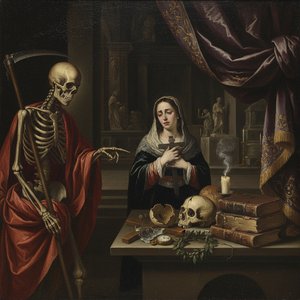
Juan de Valdés Leal: Baroque Realism, Memento Mori & Theatricality of Spanish Grief
Explore the powerful Baroque realism of Juan de Valdés Leal (1622-1690). Discover his somber masterpieces, iconic 'In Ictu Oculi', and profound explorations of mortality. Museum-quality reproductions available at OriginalUniqueArt.

Goya's Meesterwerken: 25 Iconische Schilderijen voor Kunstliefhebbers | OriginalUniqueArt
Ontdek de 25 meest iconische schilderijen van Francisco Goya! Duik in zijn Spaanse romantiek, donkere kleuren & emotionele kracht. Museumkwaliteit reproducties voor jouw interieur op OriginalUniqueArt.com.

The Dramatic Flourish: Exploring the Baroque Movement's Enduring Legacy in Art History
Explore the dramatic world of Baroque art! Discover iconic artists like Caravaggio & Rubens, defining techniques, and its lasting impact on art history. Expert insights for collectors & enthusiasts at OriginalUniqueArt.
