
 Bekijk op ware grootte
 Verstuur
 Delen
Delen
 Details bekijken
 Gids voor studentenkunstwerken

 Download
 Vergelijkbare items
 Röntgenonderzoek
 Diavoorstelling
 Statistieken
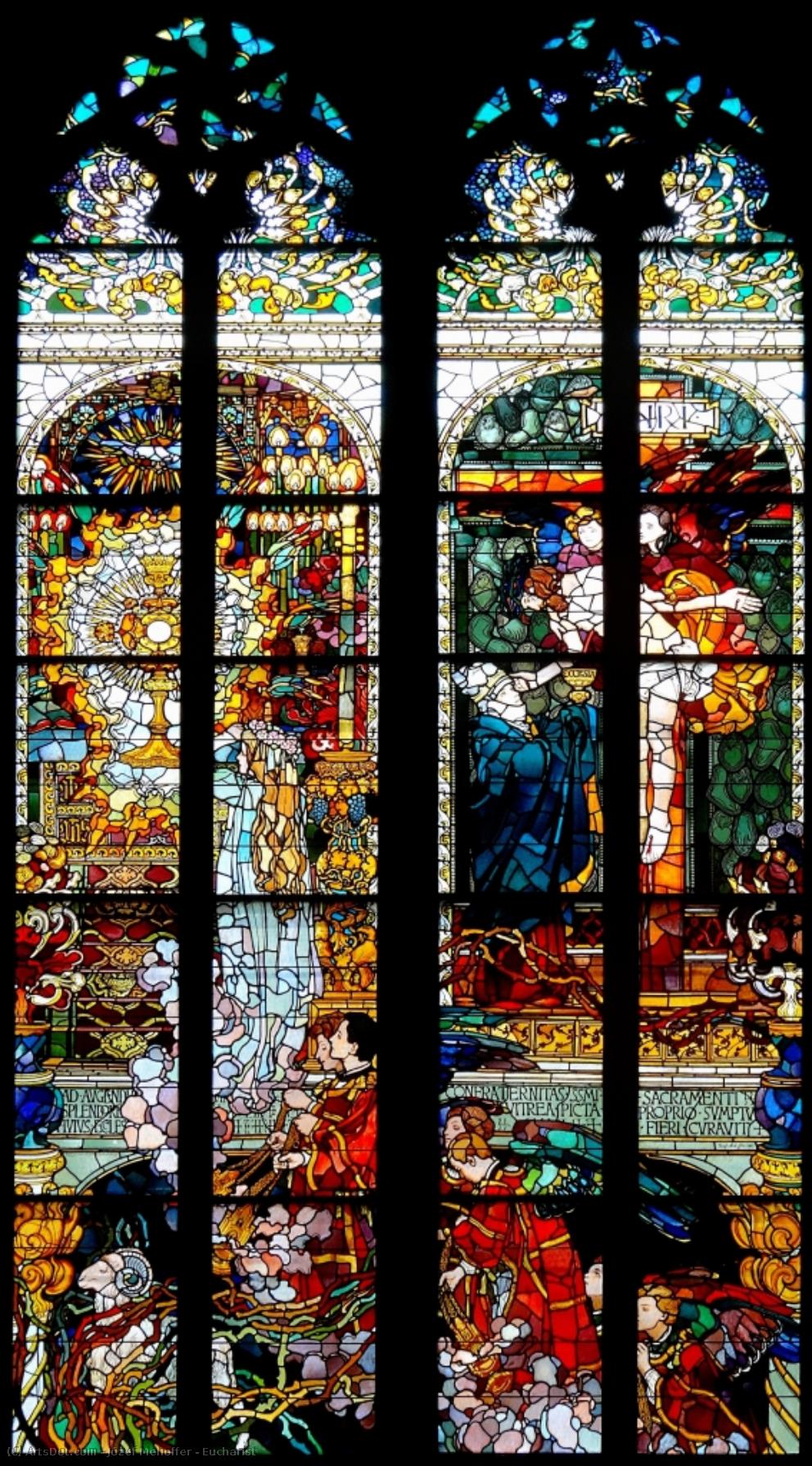
Eucharist


 Lees meer
Koop een digitale afbeelding in hoge resolutie met verbeterde kwaliteit, die veel superieur is aan de online voorvertoning.
Elk bestand wordt met uiterste precisie voorbereid door onze interne specialisten, met behulp van geavanceerde tools en deskundige handmatige retouche. Wij garanderen dat elke afbeelding een uitzonderlijke helderheid, nauwkeurige kleurweergave en verfijnde details bezit.
Het uiteindelijke bestand wordt binnen 72 uur per e-mail geleverd, geoptimaliseerd voor direct gebruik in professionele, redactionele en printomgevingen. Dit is dezelfde kwaliteit waarop vooraanstaande designstudio's, uitgevers en galerieën vertrouwen.
Digitale afbeeldingen
Download een bestand met hoge resolutie voor persoonlijke weergave, afdrukken en creatieve projecten. ( Schakel over naar print Koop handgeschilderd kunstwerk)
Inbegrepen bij elke bestelling van een digitale afbeelding
Professionele digitale levering, gegarandeerd
Wanneer u kiest voor OriginalUniqueArt.com, ontvangt u niet alleen een afbeelding – u krijgt een professioneel verbeterd digitaal kunstwerk, met precisie vervaardigd en voorzien van een tevredenheidsgarantie. Dit is alles wat automatisch bij uw bestelling is inbegrepen:

Directe levering per e-mail
Uw hoogwaardige digitale afbeeldingsbestand wordt binnen 72 uur na bestelling naar u gemaild – klaar voor direct gebruik.

AI-geoptimaliseerd digitaal bestand
Uw kunstwerk wordt professioneel geoptimaliseerd met behulp van geavanceerde AI-tools en handmatige bewerkingen, waardoor maximale details, helderheid en kleurnauwkeurigheid worden gegarandeerd.

Gratis levenslange herlevering
Je bestand per ongeluk verwijderd of kwijtgeraakt? Geen zorgen – we sturen het u op elk gewenst moment gratis opnieuw toe.

Geen invoerkosten – nooit
Geniet direct van uw kunstwerk zonder invoerrechten, belastingen of verzendkosten – digitale downloads zijn altijd belastingvrij.

Garantie op kleurgetrouwheid
Met behulp van professionele hulpmiddelen en kleurbeheer zorgen wij ervoor dat uw digitale afbeelding de originele kleuren zo nauwkeurig mogelijk weergeeft.

100 dagen tevredenheidsgarantie
Als u niet tevreden bent met uw digitale afbeelding, passen wij deze aan of storten wij 100% terug binnen 100 dagen - zonder vragen te stellen.

100% Geld-terug-garantie
Niet tevreden? Ontvang een volledige terugbetaling binnen 100 dagen na ontvangst van uw digitale bestand – zonder vragen te stellen.

Korting bij grote bestellingen
Koop 3 afbeeldingen, bespaar 10% - Koop 5, bespaar 15% - Koop 10+, bespaar 20%. Ideaal voor creatieve projecten, galerieën en bureaus.
Biografie van de kunstenaar
A Life of Color and Glass
Józef Mehoffer arrived in the world in Ropczyce, Poland, in 1869, though his path to the easel was not immediate. Before he embraced the brush, he pursued legal studies, a direction that only shifted after a gift of paints revealed a different vocation. He sought formal training at the Academy of Fine Arts in Kraków under Władysław Łuszczkiewicz, later expanding his horizons through studies in Vienna and Paris at the Académie Colarossi. This period of wandering through Europe’s great art centers allowed him to absorb the diverse currents of his era.
His work became a bridge between the academic traditions of his teachers, such as Jan Matejko, and the emerging avant-garde. He moved with ease between easel painting and the monumental demands of decorative arts. Whether working on portraits, landscapes, or intricate book illustrations, Mehoffer sought a fusion of form and color. His style grew to include elements of Post- Impressionism and the Secession movement, often utilizing bold palettes and fluid lines that mirrored the organic spirit of Art Nouveau.
The Light of Fribourg
While his presence was felt throughout Poland, Mehoffer achieved significant recognition through his work in Switzerland. Between 1895 and 1936, he dedicated decades to a cycle of thirteen stained-glass compositions for the Cathedral of St. Nicholas in Fribourg. This undertaking required immense technical precision, as he treated the lead came not merely as a structural necessity but as an autonomous graphic line. He selected glass of varying thicknesses and textures, using silver stain and vitreous black to manipulate how light moved through the windows.
The success of these windows brought him international attention. At the 1900 Paris World's Fair, his window titled The Martyrs earned a gold medal. This period of his life saw him blending Polish folk motifs with the sophisticated aesthetics of European Art Nouveau. His ability to translate complex religious and symbolic themes into luminous glass remains a central part of his professional identity.
A Decorative Legacy
Mehoffer’s creative output was remarkably broad, refusing to be confined to a single medium. He was as much a designer of furniture, textiles, and posters as he was a painter of canvases. His hand could be found in the mosaics of the Armenian Cathedral in Lviv and the frescoes of Wawel Cathedral. In 1897, he helped found the society Sztuka, an organization that sought to assert the independence of Polish art from the influence of occupying powers.
In his later years, Mehoffer established a home and studio on Krupnicza Street in Kraków. This house, which he purchased in 1932, became a center for musical and literary gatherings, reflecting his role as a figure of the Polish intelligentsia. He lived through the profound shifts of the early twentieth century, continuing to work even during the hardships of the Second World War. When he passed away in Wadowice in 1946, he left behind a body of work that spanned the transition from nineteenth-century tradition to the modern decorative era.

Józef Mehoffer
1869 - 1946
Kerngegevens
- Artistic Movement Or Style:
- Young Poland
- Post-Impressionism
- Secession
- Art Nouveau
- Symbolism
- Artists Who Influenced This Artist:
- Jan Matejko
- Władysław Łuszczkiewicz
- Henri Matisse
- Full Name: Józef Mehoffer
- Nationality: Polish
- Notable Artworks:
- Vita somnium breve
- Three Kings
- The Farewell
- The Muse
- Medusa
- Place Pigalle in Paris
- Place Of Birth: Ropczyce, Poland
- Date Of Birth: 1869
- Date Of Death: 1946